Custom Walk in Albuquerque, New Mexico by griffon_soups_15_9d785e created on 2026-06-20
Guide Location: USA » Albuquerque
Guide Type: Custom Walk
# of Sights: 11
Tour Duration: 12 Hour(s)
Travel Distance: 32.1 Km or 19.9 Miles
Share Key: EEMLW
Guide Type: Custom Walk
# of Sights: 11
Tour Duration: 12 Hour(s)
Travel Distance: 32.1 Km or 19.9 Miles
Share Key: EEMLW
How It Works
Please retrieve this walk in the GPSmyCity app. Once done, the app will guide you from one tour stop to the next as if you had a personal tour guide. If you created the walk on this website or come to the page via a link, please follow the instructions below to retrieve the walk in the app.
Retrieve This Walk in App
Step 1. Download the app "GPSmyCity: Walks in 1K+ Cities" on Apple App Store or Google Play Store.



Step 2. In the GPSmyCity app, download(or launch) the guide "Albuquerque Map and Walking Tours".
Step 3. Tap the menu button located at upper right corner of the "Walks" screen and select "Retrieve custom walk". Enter the share key: EEMLW
1) Los Pollos Hermanos
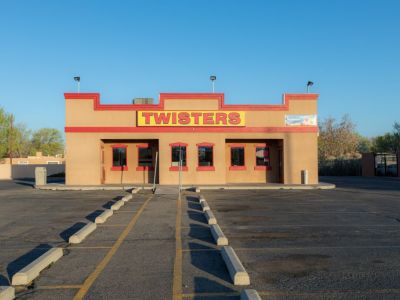
Los Pollos Hermanos is the fast-food fried-chicken chain fronted by Gustavo Fring in Breaking Bad. The restaurant functions as a highly professional, family-friendly franchise in Albuquerque while secretly serving as the public and logistical cover for Fring’s large-scale methamphetamine operation. In the real world, the filming location most associated with Los Pollos Hermanos is the Twisters restaurant, which fans recognise from exterior and drive-through shots.
Within the series, Los Pollos Hermanos is more than a storefront: it is an operational hub. Gus maintains a back office at the restaurant that doubles as a headquarters for both the chicken business and his drug enterprise. That office receives live feeds from surveillance cameras positioned across multiple sites-inside the restaurant, the parking lot, the laundromat, the superlab, and the chicken farm-allowing Gus to monitor staff, facilities, and covert operations in real time. The chain also draws regular visitors tied to Fring’s enterprises, including Walter White, Mike Ehrmantraut, and others involved in the supply network.
Los Pollos Hermanos figures centrally in several plotlines: it is the locus of Gus’s public respectability and private ruthlessness, and it becomes a focus of DEA interest (including stakeouts by Hank Schrader). The contrast between the restaurant’s wholesome image-clean dining rooms, branded packaging, and community presence-and the violent, clandestine activities conducted offstage epitomises the show’s theme of dual identities and hidden criminal infrastructure.
Within the series, Los Pollos Hermanos is more than a storefront: it is an operational hub. Gus maintains a back office at the restaurant that doubles as a headquarters for both the chicken business and his drug enterprise. That office receives live feeds from surveillance cameras positioned across multiple sites-inside the restaurant, the parking lot, the laundromat, the superlab, and the chicken farm-allowing Gus to monitor staff, facilities, and covert operations in real time. The chain also draws regular visitors tied to Fring’s enterprises, including Walter White, Mike Ehrmantraut, and others involved in the supply network.
Los Pollos Hermanos figures centrally in several plotlines: it is the locus of Gus’s public respectability and private ruthlessness, and it becomes a focus of DEA interest (including stakeouts by Hank Schrader). The contrast between the restaurant’s wholesome image-clean dining rooms, branded packaging, and community presence-and the violent, clandestine activities conducted offstage epitomises the show’s theme of dual identities and hidden criminal infrastructure.
2) Tuco’s Headquarters
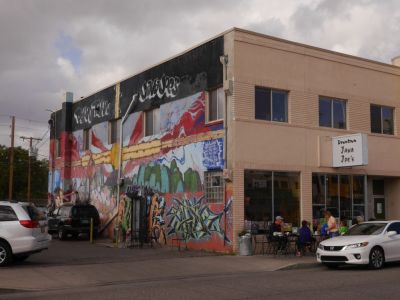
Tuco Salamanca didn’t need a skyscraper or a hidden bunker-his empire ran out of a grimy cantina in Albuquerque. The place bursts onto the scene in Season 1 when Jesse and Skinny Pete show up to sell Tuco a pound of meth. Tuco loves the product, but instead of paying, he beats Jesse to a pulp and snatches the stash. From that moment on, the cantina radiates danger-a cramped pressure cooker where Tuco’s temper and unpredictability set the tone.
The atmosphere ratchets up further when Walter White storms in under his new alias, Heisenberg. Armed with nothing more than a bag of fulminated mercury disguised as crystal, Walt turns the tables. His explosive demonstration shatters the windows and leaves Tuco rattled enough to fork over fifty grand. It’s one of those quintessential Breaking Bad moments where a suburban chemistry teacher morphs into something far more terrifying-and the cantina becomes the stage for that transformation.
Even when Tuco isn’t on screen, the location keeps surfacing. In Season 2, Hank briefs colleagues on DEA raids that swept through Tuco’s hangouts, including the cantina. His lieutenants might have been rounded up, but Tuco slipped away, keeping the legend of his hideout alive within the show’s world.
For fans retracing Albuquerque, Tuco’s cantina embodies that early stretch of Breaking Bad when the balance between comedy, chaos, and menace felt razor sharp. It’s less about what the building looks like now and more about the scenes burned into memory-Tuco’s violent laugh, Jesse’s brutal beating, Walt’s first real brush with power.
The atmosphere ratchets up further when Walter White storms in under his new alias, Heisenberg. Armed with nothing more than a bag of fulminated mercury disguised as crystal, Walt turns the tables. His explosive demonstration shatters the windows and leaves Tuco rattled enough to fork over fifty grand. It’s one of those quintessential Breaking Bad moments where a suburban chemistry teacher morphs into something far more terrifying-and the cantina becomes the stage for that transformation.
Even when Tuco isn’t on screen, the location keeps surfacing. In Season 2, Hank briefs colleagues on DEA raids that swept through Tuco’s hangouts, including the cantina. His lieutenants might have been rounded up, but Tuco slipped away, keeping the legend of his hideout alive within the show’s world.
For fans retracing Albuquerque, Tuco’s cantina embodies that early stretch of Breaking Bad when the balance between comedy, chaos, and menace felt razor sharp. It’s less about what the building looks like now and more about the scenes burned into memory-Tuco’s violent laugh, Jesse’s brutal beating, Walt’s first real brush with power.
3) Dog House
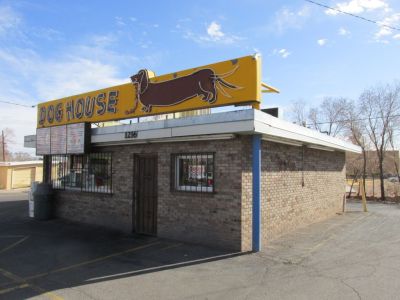
If Walter White’s empire had the A1A Car Wash, Jesse Pinkman’s early hustle had the Dog House. This neon-lit drive-in pops up across Breaking Bad, usually when Jesse’s story veers between recklessness and reflection.
We first see it in Season 1, when Jesse uses the parking lot as a makeshift meth market before teaming up with Walt. The scene is pure small-time grit: a kid in his twenties hustling in the shadow of a fast-food joint, unaware he’s about to stumble into something far larger-and far darker. By Season 2, the Dog House gets grimmer. It’s here Jesse buys a Ruger SP-101 revolver, a quiet reminder that his world has shifted from deals to survival, and that paranoia is starting to steer his choices.
The location resurfaces in Season 5, but with a twist. Instead of a drug deal or a weapon pickup, Jesse sits in his car and hands money to a homeless man knocking on his window. For a character often caught between chaos and conscience, it’s a rare, human pause-a flicker of generosity against the backdrop of everything unraveling. Later, when Jesse vanishes after trying to torch Walt’s house, Patrick Kuby checks the Dog House during the search, cementing its place as one of Jesse’s unofficial haunts.
The Dog House may be just another roadside diner to locals, but on screen it became a shorthand for Jesse’s descent and occasional attempts at redemption. From meth deals to fleeting acts of kindness, this spot captures the contradictions that made him one of Breaking Bad’s most compelling characters.
We first see it in Season 1, when Jesse uses the parking lot as a makeshift meth market before teaming up with Walt. The scene is pure small-time grit: a kid in his twenties hustling in the shadow of a fast-food joint, unaware he’s about to stumble into something far larger-and far darker. By Season 2, the Dog House gets grimmer. It’s here Jesse buys a Ruger SP-101 revolver, a quiet reminder that his world has shifted from deals to survival, and that paranoia is starting to steer his choices.
The location resurfaces in Season 5, but with a twist. Instead of a drug deal or a weapon pickup, Jesse sits in his car and hands money to a homeless man knocking on his window. For a character often caught between chaos and conscience, it’s a rare, human pause-a flicker of generosity against the backdrop of everything unraveling. Later, when Jesse vanishes after trying to torch Walt’s house, Patrick Kuby checks the Dog House during the search, cementing its place as one of Jesse’s unofficial haunts.
The Dog House may be just another roadside diner to locals, but on screen it became a shorthand for Jesse’s descent and occasional attempts at redemption. From meth deals to fleeting acts of kindness, this spot captures the contradictions that made him one of Breaking Bad’s most compelling characters.

4) Jesse Pinkman’s House
Jesse Pinkman’s house sits in a quiet Albuquerque neighborhood, but on Breaking Bad it became anything but peaceful. Originally owned by his Aunt Ginny, who passed from lung cancer, the home slid into Jesse’s hands when his parents let him stay on after her death. From then on, the place doubled as both his refuge and the stage for some of the show’s wildest meltdowns.
The house saw early chaos that set the tone for Jesse’s criminal trajectory. In its basement, Krazy-8 was chained up before Walt made his fateful choice to kill him. Upstairs, the bathtub crash became an unforgettable disaster when Jesse tried dissolving Emilio’s body with hydrofluoric acid, only to watch it eat straight through the floorboards. Things went from bad to worse when Jesse’s parents discovered the meth lab in the basement-promptly evicting him and scrubbing every trace of damage with costly renovations.
With Saul Goodman’s scheming, Jesse eventually wrestled the property back at a bargain price, thanks to his parents’ failure to disclose the home’s meth-lab history. But reclaiming it didn’t bring peace. After Gale Boetticher’s murder, the house turned into ground zero for Jesse’s guilt and avoidance-a nonstop party house, graffitied and trashed by strangers, mirroring the spiral he couldn’t control.
On the surface, it was just another suburban home: a front yard, a garage, a backyard pool. But in the series, it became a mirror of Jesse himself-sometimes messy, sometimes gutted, sometimes briefly restored, but never quite steady. By the time he moved out, the house wasn’t just a setting; it was a chronicle of his unraveling.
The house saw early chaos that set the tone for Jesse’s criminal trajectory. In its basement, Krazy-8 was chained up before Walt made his fateful choice to kill him. Upstairs, the bathtub crash became an unforgettable disaster when Jesse tried dissolving Emilio’s body with hydrofluoric acid, only to watch it eat straight through the floorboards. Things went from bad to worse when Jesse’s parents discovered the meth lab in the basement-promptly evicting him and scrubbing every trace of damage with costly renovations.
With Saul Goodman’s scheming, Jesse eventually wrestled the property back at a bargain price, thanks to his parents’ failure to disclose the home’s meth-lab history. But reclaiming it didn’t bring peace. After Gale Boetticher’s murder, the house turned into ground zero for Jesse’s guilt and avoidance-a nonstop party house, graffitied and trashed by strangers, mirroring the spiral he couldn’t control.
On the surface, it was just another suburban home: a front yard, a garage, a backyard pool. But in the series, it became a mirror of Jesse himself-sometimes messy, sometimes gutted, sometimes briefly restored, but never quite steady. By the time he moved out, the house wasn’t just a setting; it was a chronicle of his unraveling.
5) Breaking Bad Store
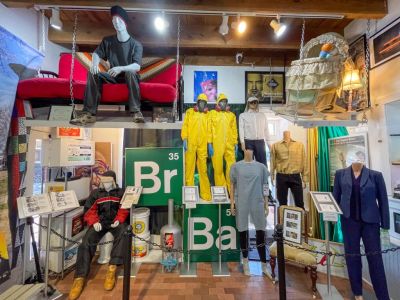
Albuquerque’s Old Town has its fair share of historic storefronts, but one in particular trades adobe charm for Heisenberg hats. The Breaking Bad Store ABQ sits a stone’s throw from the Plaza and devotes itself entirely to Vince Gilligan’s TV universe. Walk through its doors and you’re met with walls of licensed merchandise-shirts, mugs, trinkets with Saul’s smirk, and novelty items sourced both from around the world and crafted by local artisans who keep the fandom personal.
But it’s more than a place to grab a T-shirt. The store doubles as a small-scale museum, free to enter, with rotating displays of genuine props, costumes, and set pieces from Breaking Bad and Better Call Saul. Some pieces come autographed by cast members, and others look like they’ve been lifted straight from the screen-letting fans lean in close to details usually lost in the editing room.
Adding to the fun are interactive corners that echo the shows’ most iconic sets. There’s a Los Pollos Hermanos backdrop for photos, and even Saul Goodman’s office desk where visitors can play attorney for a moment or two. Staff often share anecdotes from filming, turning a casual browse into an impromptu story session about Albuquerque’s days as Hollywood’s grittiest stand-in.
With its mix of souvenirs, production lore, and playful recreations, the Breaking Bad Store ABQ feels part gift shop, part archive, part fan pilgrimage. It’s a space where the line between fiction and memory blurs-proof that Albuquerque’s role in television history is alive and well, even on the shelves of a shop.
But it’s more than a place to grab a T-shirt. The store doubles as a small-scale museum, free to enter, with rotating displays of genuine props, costumes, and set pieces from Breaking Bad and Better Call Saul. Some pieces come autographed by cast members, and others look like they’ve been lifted straight from the screen-letting fans lean in close to details usually lost in the editing room.
Adding to the fun are interactive corners that echo the shows’ most iconic sets. There’s a Los Pollos Hermanos backdrop for photos, and even Saul Goodman’s office desk where visitors can play attorney for a moment or two. Staff often share anecdotes from filming, turning a casual browse into an impromptu story session about Albuquerque’s days as Hollywood’s grittiest stand-in.
With its mix of souvenirs, production lore, and playful recreations, the Breaking Bad Store ABQ feels part gift shop, part archive, part fan pilgrimage. It’s a space where the line between fiction and memory blurs-proof that Albuquerque’s role in television history is alive and well, even on the shelves of a shop.
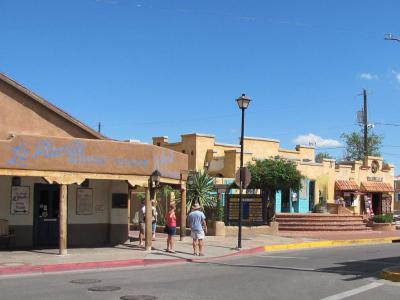
6) Old Town (must see)
Old Town is a historic district, dating back to the founding of the city by the Spanish in 1706. Today it is a popular shopping and tourist destination. Old Town comprises about ten blocks of historic adobe buildings grouped around a central plaza. Many of the buildings in Old Town are houses that have been converted into restaurants and small art and souvenir shops. On the north side of the Plaza is San Felipe de Neri Church, which was built in 1793.
The Albuquerque Museum, New Mexico Museum of Natural History and Science, and ¡Explora! Science Center and Children's Museum are located in the neighborhood. Old Town did not become a part of the City of Albuquerque until the 1940s. The Pueblo-Spanish style architecture with flat-roofed buildings and frequent activities around the center of the plaza made it a popular tourist attraction in Albuquerque. Around Christmas, thousands of luminaries line the streets and walkways.
Why You Should Visit:
Probably the most popular tourist area in Albuquerque with restaurants, bars, cafés, shops and historic buildings.
A great place to get a taste of the classic Southwest New Mexico history and architecture.
Tip:
Visit High Noon Restaurant for margaritas and Church Street Cafe for breakfast.
Don't bypass the Candy Lady or the Old Town Olive, either. Fine places for local arts and crafts!
The Albuquerque Museum, New Mexico Museum of Natural History and Science, and ¡Explora! Science Center and Children's Museum are located in the neighborhood. Old Town did not become a part of the City of Albuquerque until the 1940s. The Pueblo-Spanish style architecture with flat-roofed buildings and frequent activities around the center of the plaza made it a popular tourist attraction in Albuquerque. Around Christmas, thousands of luminaries line the streets and walkways.
Why You Should Visit:
Probably the most popular tourist area in Albuquerque with restaurants, bars, cafés, shops and historic buildings.
A great place to get a taste of the classic Southwest New Mexico history and architecture.
Tip:
Visit High Noon Restaurant for margaritas and Church Street Cafe for breakfast.
Don't bypass the Candy Lady or the Old Town Olive, either. Fine places for local arts and crafts!
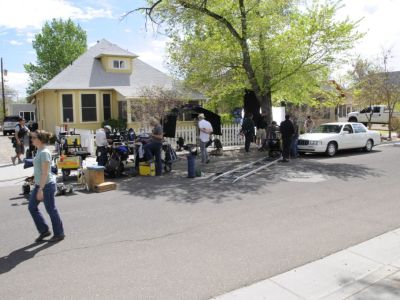
7) Andrea's Second House
Andrea’s second house in Breaking Bad looks unassuming at first glance-a modest place in a quieter neighborhood-but within the story it carries heavy symbolic weight. Introduced in Season 4, it’s where Andrea Cantillo moves with her son Brock after Jesse Pinkman nudges her toward a safer environment. The house reflects Jesse’s hope of giving them a chance at stability, a break from the chaos of his own life. With Saul Goodman handling the details, Jesse even sets up weekly financial support to make that stability possible, showing his ongoing effort to anchor Andrea and Brock to something more secure than the streets he knows too well.
The calm of the house, however, is deceptive. In Season 5, Walter White turns the space into a tool for manipulation. By feeding Andrea a carefully crafted story about Jesse’s supposed relapse, he persuades her to leave Jesse a message, unwittingly drawing her into the web of deceit surrounding Hank Schrader’s surveillance. The simple domestic setting, meant to shelter her family, becomes yet another stage for Walt’s cold calculations.
That fragile safety shatters completely in one of the show’s most harrowing moments. Todd Alquist murders Andrea on her own front porch, executing her in front of Jesse as punishment for his attempted escape. What had once symbolized protection and the possibility of renewal is twisted into a site of cruelty and despair.
For viewers retracing Breaking Bad’s Albuquerque, Andrea’s second house isn’t flashy or iconic like Saul’s strip-mall office or Walter’s suburban home. Instead, it’s the ordinariness of the setting that lingers: a reminder that even the simplest corners of domestic life could not escape the violent gravity of Walter White’s world.
The calm of the house, however, is deceptive. In Season 5, Walter White turns the space into a tool for manipulation. By feeding Andrea a carefully crafted story about Jesse’s supposed relapse, he persuades her to leave Jesse a message, unwittingly drawing her into the web of deceit surrounding Hank Schrader’s surveillance. The simple domestic setting, meant to shelter her family, becomes yet another stage for Walt’s cold calculations.
That fragile safety shatters completely in one of the show’s most harrowing moments. Todd Alquist murders Andrea on her own front porch, executing her in front of Jesse as punishment for his attempted escape. What had once symbolized protection and the possibility of renewal is twisted into a site of cruelty and despair.
For viewers retracing Breaking Bad’s Albuquerque, Andrea’s second house isn’t flashy or iconic like Saul’s strip-mall office or Walter’s suburban home. Instead, it’s the ordinariness of the setting that lingers: a reminder that even the simplest corners of domestic life could not escape the violent gravity of Walter White’s world.
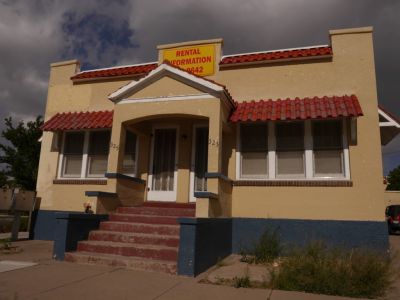
8) Jane's Apartment Unit
Jane’s apartment complex in Breaking Bad sits quietly in Albuquerque, but it ended up carrying some of the show’s most haunting storylines. Two side-by-side units framed the drama: number 323, Jesse Pinkman’s crash pad, and number 325, where Jane Margolis lived under the watchful eye of her father, Donald, the building’s owner. Jane doubled as landlady, starting out strict-no smoking indoors, rules followed to the letter-until her relationship with Jesse turned that tidy order upside down.
The contrast between their spaces says everything. Jesse’s unit quickly slid into disarray: beer bottles, ashtrays, a plasma TV, and later, the clutter of drug use. Walter White himself once kicked through the back door to recover a stash of meth, leaving behind a jagged hole patched up with tape and cardboard-a scar in the set design as much as in the story. Jane’s apartment, by contrast, was curated and personal, with cleaner lines, brighter details, and the mural above her bed that made it unmistakably hers. The divide between neatness and chaos mirrored the relationship itself, as their romance blurred those boundaries and pulled both characters into darker territory.
Scenes here felt more intimate than the desert standoffs or cartel boardrooms, but no less important. Jane and Jesse’s smoking in the backyard, their spiral into heroin use, and finally Jane’s tragic death turned these modest rooms into one of the show’s emotional centers. By the time Jesse abandoned the apartment and drifted back to his old house, the space itself had become symbolic of a turning point-one where personal choices carried unbearable consequences.
Walking past this ordinary building in Albuquerque today, fans recognize it not for its architecture, but for the layered storylines it once contained: love, decline, and the fragile line between order and collapse.
The contrast between their spaces says everything. Jesse’s unit quickly slid into disarray: beer bottles, ashtrays, a plasma TV, and later, the clutter of drug use. Walter White himself once kicked through the back door to recover a stash of meth, leaving behind a jagged hole patched up with tape and cardboard-a scar in the set design as much as in the story. Jane’s apartment, by contrast, was curated and personal, with cleaner lines, brighter details, and the mural above her bed that made it unmistakably hers. The divide between neatness and chaos mirrored the relationship itself, as their romance blurred those boundaries and pulled both characters into darker territory.
Scenes here felt more intimate than the desert standoffs or cartel boardrooms, but no less important. Jane and Jesse’s smoking in the backyard, their spiral into heroin use, and finally Jane’s tragic death turned these modest rooms into one of the show’s emotional centers. By the time Jesse abandoned the apartment and drifted back to his old house, the space itself had become symbolic of a turning point-one where personal choices carried unbearable consequences.
Walking past this ordinary building in Albuquerque today, fans recognize it not for its architecture, but for the layered storylines it once contained: love, decline, and the fragile line between order and collapse.
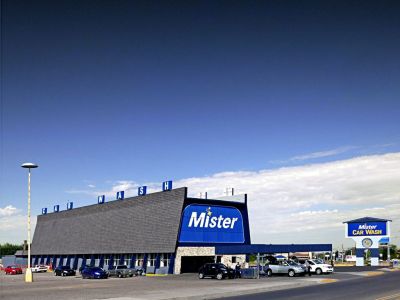
9) A1A Car Wash
The A1A Car Wash looks like any other suburban car wash in Albuquerque, but in Breaking Bad it became one of the show’s most unlikely battlegrounds. Early on, Walter White found himself working there part-time under the watchful eye of Bogdan Wolynetz, whose eyebrows alone could have run the place. Understaffing meant Walt often wound up scrubbing cars himself, culminating in the humiliating moment when he washed a student’s vehicle-a snapshot of just how far his life had slid. After his cancer diagnosis, he quit in spectacular fashion, storming out and leaving Bogdan fuming.
The car wash returned in a far darker capacity. When Walter and Skyler needed a respectable front for laundering drug money, Skyler zeroed in on the very same A1A. Bogdan initially demanded an impossible $20 million, partly out of spite, but Saul Goodman and his associate Patrick Kuby helped stage an “environmental audit” that painted the place as a financial sinkhole. Faced with phantom costs for filtration upgrades, Bogdan gave in, handing over the keys to the Whites.
From then on, the car wash became their fortress of respectability, complete with its cheesy slogan, “Have an A1 Day.” Behind the suds and the neon signage, it masked the flow of illicit millions, while on the surface it remained a place for locals to get their sedans rinsed and vacuumed.
The A1A Car Wash summed up Breaking Bad’s genius for mixing the ordinary with the outrageous. A bland strip-mall business became a front row seat to Walter White’s transformation, equal parts comedy, tension, and criminal improvisation.
The car wash returned in a far darker capacity. When Walter and Skyler needed a respectable front for laundering drug money, Skyler zeroed in on the very same A1A. Bogdan initially demanded an impossible $20 million, partly out of spite, but Saul Goodman and his associate Patrick Kuby helped stage an “environmental audit” that painted the place as a financial sinkhole. Faced with phantom costs for filtration upgrades, Bogdan gave in, handing over the keys to the Whites.
From then on, the car wash became their fortress of respectability, complete with its cheesy slogan, “Have an A1 Day.” Behind the suds and the neon signage, it masked the flow of illicit millions, while on the surface it remained a place for locals to get their sedans rinsed and vacuumed.
The A1A Car Wash summed up Breaking Bad’s genius for mixing the ordinary with the outrageous. A bland strip-mall business became a front row seat to Walter White’s transformation, equal parts comedy, tension, and criminal improvisation.
10) Walter White’s House
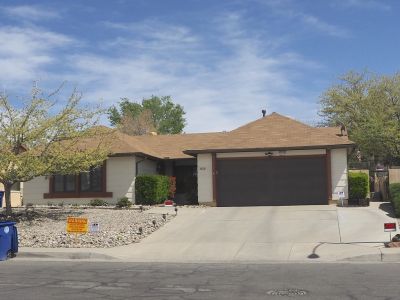
Walter White’s house may look like another low-slung suburban home in Albuquerque, but on screen it became one of the most unsettlingly familiar landmarks in Breaking Bad. Its stucco walls and modest driveway frame the sharpest contrasts of the series: PTA meetings inside, meth lab secrets outside. The living room, kitchen, and hallway were the stage for family quarrels, uneasy truces, and moments where Walter’s double life pushed right through the front door.
Out back, the pool quietly stole the show more than once. Birthday balloons floated on its surface, tense arguments unraveled around its edges, and Walter himself stared into it during moments of doubt and reflection. The attached garage took on its own mythology too-hiding stacks of cash, makeshift equipment, and eventually setting the stage for some of the series’ most charged confrontations. Even the front of the house got a claim to pop-culture fame: the now-legendary “pizza on the roof” scene, where Walter’s frustration produced a perfect, unintentional food sculpture.
Over the five seasons, the house mirrored the Whites’ changing fortunes. A baby’s crib slid into the space, bars went up for security, and the once ordinary rooms thickened with tension as Walter’s empire expanded. The property also tied into other storylines-Jesse showing up uninvited, law enforcement watching from across the street, Skyler trying to hold on to a sense of normalcy. By the finale, the house was no longer just a backdrop but a character itself, etched into the show’s rhythm of suburban calm cracking under criminal weight.
Out back, the pool quietly stole the show more than once. Birthday balloons floated on its surface, tense arguments unraveled around its edges, and Walter himself stared into it during moments of doubt and reflection. The attached garage took on its own mythology too-hiding stacks of cash, makeshift equipment, and eventually setting the stage for some of the series’ most charged confrontations. Even the front of the house got a claim to pop-culture fame: the now-legendary “pizza on the roof” scene, where Walter’s frustration produced a perfect, unintentional food sculpture.
Over the five seasons, the house mirrored the Whites’ changing fortunes. A baby’s crib slid into the space, bars went up for security, and the once ordinary rooms thickened with tension as Walter’s empire expanded. The property also tied into other storylines-Jesse showing up uninvited, law enforcement watching from across the street, Skyler trying to hold on to a sense of normalcy. By the finale, the house was no longer just a backdrop but a character itself, etched into the show’s rhythm of suburban calm cracking under criminal weight.
11) Saul Goodman’s Office
Saul Goodman’s office was never about subtlety-it was theater dressed up as law. Wedged into an Albuquerque strip mall, it announced itself with a giant sign screaming “Better Call Saul!” and an inflatable Statue of Liberty wobbling on the roof like a carnival attraction. The whole façade felt less like legal counsel and more like a roadside attraction, which was exactly the point: Saul wanted clients who couldn’t tell the difference.
Inside, the spectacle continued. You’d be greeted by Francesca at the desk, equal parts secretary and gatekeeper, while Huell-his mountain of a bodyguard-kept a lazy eye on the door. The décor told you everything about Saul’s blend of confidence and insecurity. A diploma from the very real University of American Samoa hung proudly, while the wallpaper shouted the U.S. Constitution in repeat pattern, as if legitimacy could be pasted on by the roll. Plastic columns tried to mimic grandeur, a Scale of Justice perched on the desk, and the whole thing teetered between tacky patriotism and desperate self-promotion.
As Saul’s clients grew more dangerous, paranoia seeped into the space. He started tearing through drawers for bugs, treating every phone as if it were tapped, and retreating to payphones outside the strip mall when things got serious. The office mirrored Saul himself-loud, absurd, sometimes funny, but always shadowed by unease. More than a workplace, it was a stage set for a man who never stopped performing, even when the act was cracking at the edges.
Inside, the spectacle continued. You’d be greeted by Francesca at the desk, equal parts secretary and gatekeeper, while Huell-his mountain of a bodyguard-kept a lazy eye on the door. The décor told you everything about Saul’s blend of confidence and insecurity. A diploma from the very real University of American Samoa hung proudly, while the wallpaper shouted the U.S. Constitution in repeat pattern, as if legitimacy could be pasted on by the roll. Plastic columns tried to mimic grandeur, a Scale of Justice perched on the desk, and the whole thing teetered between tacky patriotism and desperate self-promotion.
As Saul’s clients grew more dangerous, paranoia seeped into the space. He started tearing through drawers for bugs, treating every phone as if it were tapped, and retreating to payphones outside the strip mall when things got serious. The office mirrored Saul himself-loud, absurd, sometimes funny, but always shadowed by unease. More than a workplace, it was a stage set for a man who never stopped performing, even when the act was cracking at the edges.
