Custom Walk in Brno, Czech Republic by divyasr_b87e2c created on 2026-06-21
Guide Location: Czech Republic » Brno
Guide Type: Custom Walk
# of Sights: 10
Tour Duration: 2 Hour(s)
Travel Distance: 4.3 Km or 2.7 Miles
Share Key: BN7RV
Guide Type: Custom Walk
# of Sights: 10
Tour Duration: 2 Hour(s)
Travel Distance: 4.3 Km or 2.7 Miles
Share Key: BN7RV
How It Works
Please retrieve this walk in the GPSmyCity app. Once done, the app will guide you from one tour stop to the next as if you had a personal tour guide. If you created the walk on this website or come to the page via a link, please follow the instructions below to retrieve the walk in the app.
Retrieve This Walk in App
Step 1. Download the app "GPSmyCity: Walks in 1K+ Cities" on Apple App Store or Google Play Store.



Step 2. In the GPSmyCity app, download(or launch) the guide "Brno Map and Walking Tours".
Step 3. Tap the menu button located at upper right corner of the "Walks" screen and select "Retrieve custom walk". Enter the share key: BN7RV
1) St. James' Church and Brno Ossuary (must see)
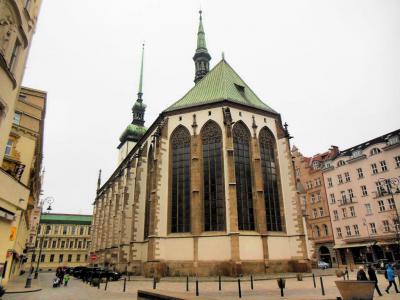
The Church of St. James the Greater is a stunning Late Gothic, three-aisled church adorned with Baroque details. Its origins date back to the early 13th century. Inside, you'll find the grave of Marshal Louis Raduit de Souches, the renowned defender of Brno during the Thirty Years' War, alongside a rare ossuary.
The church has recently undergone renovations, and its brilliance has been fully restored. It features now a brand-new guided tour through its monumental four-story roof structure. Visitors can also enjoy a modern audio-visual light show that delves into the history of Brno and the St. James' Church.
The Brno Ossuary is an underground vault under the Church of Saint James. It is the second-largest ossuary in Europe. The number of people buried here is estimated to exceed 50,000.
The ossuary was founded in the 17th century. The purpose of the space was to find a final resting place for bones while freeing up space in the overly crowded cemetery at the Church of Saint James. It became customary to re-open graves about ten years after burial and have the remains moved into the ossuary.
The reforms introduced by Roman Emperor Joseph II in 1784 resulted in churchyards being closed down for hygienic reasons. The remains from the graves were placed in crypts instead. The headstones at the Saint James Cemetery were removed and used to pave the ground. The ossuary was gradually forgotten.
It was rediscovered in 2001. Brno Ossuary opened to the public in 2012.
The church has recently undergone renovations, and its brilliance has been fully restored. It features now a brand-new guided tour through its monumental four-story roof structure. Visitors can also enjoy a modern audio-visual light show that delves into the history of Brno and the St. James' Church.
The Brno Ossuary is an underground vault under the Church of Saint James. It is the second-largest ossuary in Europe. The number of people buried here is estimated to exceed 50,000.
The ossuary was founded in the 17th century. The purpose of the space was to find a final resting place for bones while freeing up space in the overly crowded cemetery at the Church of Saint James. It became customary to re-open graves about ten years after burial and have the remains moved into the ossuary.
The reforms introduced by Roman Emperor Joseph II in 1784 resulted in churchyards being closed down for hygienic reasons. The remains from the graves were placed in crypts instead. The headstones at the Saint James Cemetery were removed and used to pave the ground. The ossuary was gradually forgotten.
It was rediscovered in 2001. Brno Ossuary opened to the public in 2012.
2) Náměstí Svobody (Liberty Square) (must see)
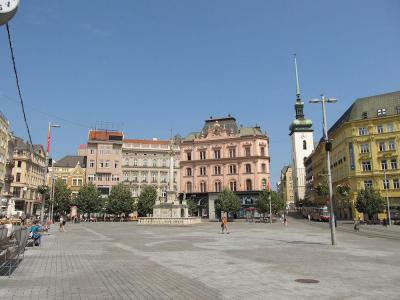
Liberty Square (Náměstí Svobody) is the vibrant heart of Brno. Unlike typical historical city centers, Liberty Square has a unique character that blends the old with the new, creating an atmosphere that is both dynamic and steeped in history.
The square's unusual triangular shape was defined by ancient trade routes and a stream that once served as the city's sewer in the 13th century. This area, historically known as Lower Market (Dolní trh) and later Big Square (Velké náměstí), has been a central part of Brno since it was first mentioned in records from the 13th century.
One of the most striking features of Liberty Square is the black granite astronomical clock, which has become a symbol of the city. This clock, resembling a spaceship, only shows the time 11:00 AM, a nod to Brno's legendary history. It commemorates the successful defense of the city during the Swedish siege in 1645. Every day at this time, a small glass of marble drops from the clock, offering a unique souvenir for those quick enough to catch it.
The square is also home to several historically and architecturally significant buildings. The House of the Lords of Lipá, a Renaissance-style building, is adorned with etched mythological and biblical scenes. Klein Palace, a Renaissance Revival structure, reflects the industrial legacy of the Klein family, known for their ironworks. The House of Four Giants, designed in 1902, features four imposing figures supporting the building's facade.
In addition to its architectural landmarks, Liberty Square is adorned with several sculptures and monuments. The early Baroque plague column from 1689 serves as a poignant reminder of past plague outbreaks in the city. Two bronze fountains, featuring poetic inscriptions by local poet Jan Skácel, add to the square's artistic charm.
Throughout the year, Liberty Square hosts numerous cultural events, including Easter markets, wine festivals celebrating the opening of Saint Martin’s wines, and the festive Brno Christmas market. These events bring the square to life, making it not just a historical site but a lively gathering place for both locals and visitors.
The square's unusual triangular shape was defined by ancient trade routes and a stream that once served as the city's sewer in the 13th century. This area, historically known as Lower Market (Dolní trh) and later Big Square (Velké náměstí), has been a central part of Brno since it was first mentioned in records from the 13th century.
One of the most striking features of Liberty Square is the black granite astronomical clock, which has become a symbol of the city. This clock, resembling a spaceship, only shows the time 11:00 AM, a nod to Brno's legendary history. It commemorates the successful defense of the city during the Swedish siege in 1645. Every day at this time, a small glass of marble drops from the clock, offering a unique souvenir for those quick enough to catch it.
The square is also home to several historically and architecturally significant buildings. The House of the Lords of Lipá, a Renaissance-style building, is adorned with etched mythological and biblical scenes. Klein Palace, a Renaissance Revival structure, reflects the industrial legacy of the Klein family, known for their ironworks. The House of Four Giants, designed in 1902, features four imposing figures supporting the building's facade.
In addition to its architectural landmarks, Liberty Square is adorned with several sculptures and monuments. The early Baroque plague column from 1689 serves as a poignant reminder of past plague outbreaks in the city. Two bronze fountains, featuring poetic inscriptions by local poet Jan Skácel, add to the square's artistic charm.
Throughout the year, Liberty Square hosts numerous cultural events, including Easter markets, wine festivals celebrating the opening of Saint Martin’s wines, and the festive Brno Christmas market. These events bring the square to life, making it not just a historical site but a lively gathering place for both locals and visitors.
3) The Old Town Hall (must see)
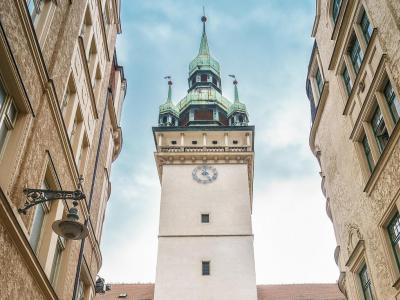
The Old Town Hall is a building in Brno's historical center. While it previously served as a home for public meetings, it is now a cultural center. The Old Town Hall has an art gallery, history exhibit, and information center.
The building is the oldest secular edifice in Brno that is still standing. The original structure, built in 1240, was greatly expanded during the 15th century, with new additions steadily constructed from 1577 through 1905. It ceased its use as a town hall in 1935. Most of the construction and details use the Gothic architecture style by Austrian architect and sculptor Anton Pilgram.
The Old Town Hall's courtyard is a venue for concerts, open-air theatres, film screenings, and festivals. The courtyard uses Renaissance arcades with early Baroque touches.
The Old Town Hall is open year-round. However, only those tourists who visit Brno from June through September may climb the 206-foot tower to see a stunning view of the city.
The building is the oldest secular edifice in Brno that is still standing. The original structure, built in 1240, was greatly expanded during the 15th century, with new additions steadily constructed from 1577 through 1905. It ceased its use as a town hall in 1935. Most of the construction and details use the Gothic architecture style by Austrian architect and sculptor Anton Pilgram.
The Old Town Hall's courtyard is a venue for concerts, open-air theatres, film screenings, and festivals. The courtyard uses Renaissance arcades with early Baroque touches.
The Old Town Hall is open year-round. However, only those tourists who visit Brno from June through September may climb the 206-foot tower to see a stunning view of the city.
4) Labyrinth under Vegetable Market
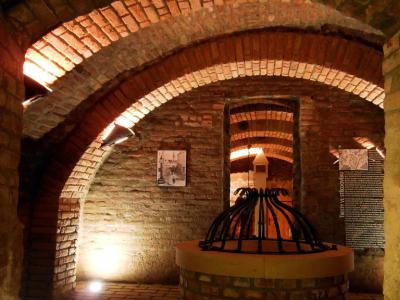
The Labyrinth under the Vegetable Market is a series of underground passages beneath the Vegetable Market Square in Brno. It consists of corridors and cellars that date as far back as the Middle Ages.
Initially, the Labyrinth was used for the grocers who sold their wares at the Vegetable Market. The chilly atmosphere was ideal for keeping fruit and vegetables fresh. The Labyrinth was also utilized for brewing beer and aging wine. During wartime, the cellars served as a shelter from heavy artillery.
The passages were not all connected until 2009 when they underwent reconstruction. They opened to the public in 2011. Tourists should note that there are 221 steps required to reach the Labyrinth from the street level. Once they arrive, they will see displays that show old taverns, archaeological findings, and replicas of the pillory and stockades that once sat in the Vegetable Market Square.
Initially, the Labyrinth was used for the grocers who sold their wares at the Vegetable Market. The chilly atmosphere was ideal for keeping fruit and vegetables fresh. The Labyrinth was also utilized for brewing beer and aging wine. During wartime, the cellars served as a shelter from heavy artillery.
The passages were not all connected until 2009 when they underwent reconstruction. They opened to the public in 2011. Tourists should note that there are 221 steps required to reach the Labyrinth from the street level. Once they arrive, they will see displays that show old taverns, archaeological findings, and replicas of the pillory and stockades that once sat in the Vegetable Market Square.
5) Zelný Trh (Vegetable Market Square) and Parnas Fountain
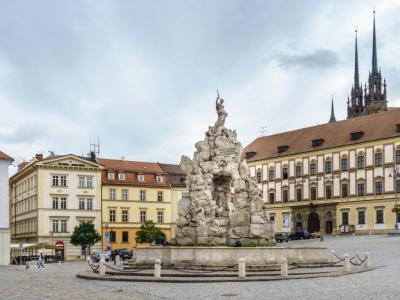
Vegetable Market Square is a traditional marketplace in the historical center of Brno. It first opened in 1190, before Brno was established. It was a general market before it focused on fruits and vegetables. The market has been in continuous use since its opening.
Vegetable Market Square offers shops selling vegetables, fruit, flowers, baked goods, cheese, spices, and other food items. There are also several restaurants and food carts in the square.
Along with shopping, many landmarks are located in and around Vegetable Market Square. Visitors will find easy access to Dietrichstein Palace and the Moravian Museum. They will also see the Reduta Theatre, the oldest theatre building in Central Europe. Tourists enjoy the Labyrinth under the Vegetable Market, a unique system of underground passages and cellars from the Middle Ages.
The Vegetable Market Square houses a monumental Parnas Fountain. The Baroque-style fountain was placed in the square in 1695. It was designed by Austrian architect Johann Bernhard Fischer von Erlach and built by Austrian sculptor Adam Tobias Kracker.
The basin of the fountain supports a six-pointed layout which serves as a base for imitation rocks with caves. There are mythical figures, including Heracles leading the three-headed dog Cerberus on a chain. The work is one of the most valuable monuments of Baroque sculpture in Brno.
Vegetable Market Square offers shops selling vegetables, fruit, flowers, baked goods, cheese, spices, and other food items. There are also several restaurants and food carts in the square.
Along with shopping, many landmarks are located in and around Vegetable Market Square. Visitors will find easy access to Dietrichstein Palace and the Moravian Museum. They will also see the Reduta Theatre, the oldest theatre building in Central Europe. Tourists enjoy the Labyrinth under the Vegetable Market, a unique system of underground passages and cellars from the Middle Ages.
The Vegetable Market Square houses a monumental Parnas Fountain. The Baroque-style fountain was placed in the square in 1695. It was designed by Austrian architect Johann Bernhard Fischer von Erlach and built by Austrian sculptor Adam Tobias Kracker.
The basin of the fountain supports a six-pointed layout which serves as a base for imitation rocks with caves. There are mythical figures, including Heracles leading the three-headed dog Cerberus on a chain. The work is one of the most valuable monuments of Baroque sculpture in Brno.
6) Katedrála Sv. Petra a Pavla (Cathedral of St. Peter and Paul) (must see)
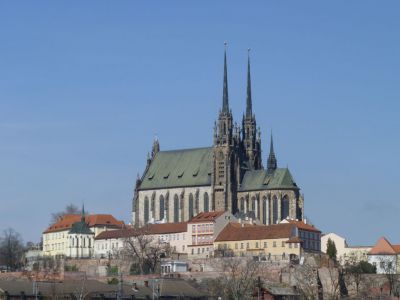
The Cathedral of Saint Peter and Paul is a Roman Catholic cathedral and parish church located on Petrov hill in Brno. It is more commonly referred to as "Petrov" by locals. The cathedral that stands today was built in the late 17th century with many additions and renovations undergone over the years.
Some historical records show churches on the site of Petrov since the 12th century. The first was a Romanesque chapel built in 1140. The next was a Romanesque and Gothic church dedicated to Saint Peter in 1230. A new religious edifice dedicated to Saint Peter and Saint Paul was erected in the 15th century. It burned in 1643 during the Thirty Years War.
The exterior of the Cathedral of Saint Peter and Paul was designed in the Gothic Revival style by architect Frantisek Benedikt Klicnik. The towers, standing at more than 275 feet, were added in 1909. They were designed by architect August Kirstein.
The interior was designed by architect Moric Grimm in the late 18th century. Most of the Baroque features remain in place today. Gothic work on the interior was added by architects August Prokop and K. Woresch in the late 19th century. They added a chapel and presbytery, a high altar with carved scenes of the twelve apostles, and the crucifixion designed by Viennese sculptor Josef Leimer.
The cathedral bells ring at 11 AM rather than noon as a nod to the Thirty Years' War. During that war, the Swedes stated they would end the attack if they had not taken the city by midday on August 15. The church bells rang an hour early to put an end to the siege. They have continued to ring early since then.
Some historical records show churches on the site of Petrov since the 12th century. The first was a Romanesque chapel built in 1140. The next was a Romanesque and Gothic church dedicated to Saint Peter in 1230. A new religious edifice dedicated to Saint Peter and Saint Paul was erected in the 15th century. It burned in 1643 during the Thirty Years War.
The exterior of the Cathedral of Saint Peter and Paul was designed in the Gothic Revival style by architect Frantisek Benedikt Klicnik. The towers, standing at more than 275 feet, were added in 1909. They were designed by architect August Kirstein.
The interior was designed by architect Moric Grimm in the late 18th century. Most of the Baroque features remain in place today. Gothic work on the interior was added by architects August Prokop and K. Woresch in the late 19th century. They added a chapel and presbytery, a high altar with carved scenes of the twelve apostles, and the crucifixion designed by Viennese sculptor Josef Leimer.
The cathedral bells ring at 11 AM rather than noon as a nod to the Thirty Years' War. During that war, the Swedes stated they would end the attack if they had not taken the city by midday on August 15. The church bells rang an hour early to put an end to the siege. They have continued to ring early since then.
7) Capuchin Monastery and Vault
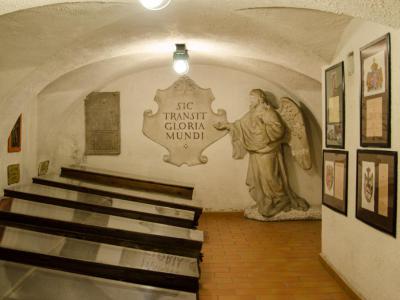
The Capuchin Vault is a crypt in the basement of the Capuchin Monastery, founded in the mid-17th century. It is a funeral room mainly for Capuchin friars.
The Capuchins viewed coffins as a luxury not afforded to them due to their vow of poverty. Therefore, the bodies were simply placed in the crypt. Due to the conditions of the basement, the bodies were mummified. They are used in scientific studies and may be viewed by tourists.
One of the bodies in the Capuchin Crypt is that of Saint Clementaine. She was a Roman noblewoman. Her remains and some of her relics rest near the entrance.
Reaching the crypt requires navigating narrow passageways that also offer views of the bodies of dignitaries. One notable corpse shows a body frozen in fear with a note, showing that she was accidentally buried alive. Above the crypt is an etched warning written in Czech. It states, "As you are now, we once were; as we are now, you shall be."
The Capuchins viewed coffins as a luxury not afforded to them due to their vow of poverty. Therefore, the bodies were simply placed in the crypt. Due to the conditions of the basement, the bodies were mummified. They are used in scientific studies and may be viewed by tourists.
One of the bodies in the Capuchin Crypt is that of Saint Clementaine. She was a Roman noblewoman. Her remains and some of her relics rest near the entrance.
Reaching the crypt requires navigating narrow passageways that also offer views of the bodies of dignitaries. One notable corpse shows a body frozen in fear with a note, showing that she was accidentally buried alive. Above the crypt is an etched warning written in Czech. It states, "As you are now, we once were; as we are now, you shall be."
8) Masarykova Street
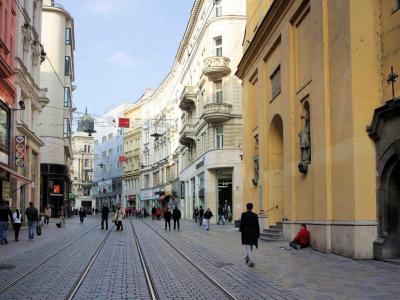
Masarykova Street is a popular shopping area in Brno. Tourists will find shops that sell food, souvenirs, and clothing. They will also encounter a variety of bars and restaurants.
The street was officially named Masarykova Street in 1930, but its history dates hundreds of years before that. It was used as a major trade route since the 12th century. Construction on the street began in 1850 and was completed in 1864.
Masarykova Street, formerly Ferdinand Street, was renamed following the fall of the monarchy. Its current name is in honor of Tomas Garrigue Masaryk, the first president of the Czechoslovak Republic.
Many buildings along Masarykova Street hold interest to lovers of architecture. Architects like Viktor Kovacic, Leopold Bauer, Otto Eisler, and Rudolf Lubinsky designed residential palaces and functional buildings during the late 19th and early 20th centuries.
Masarykova Street connects Liberty Square with the train station.
The street was officially named Masarykova Street in 1930, but its history dates hundreds of years before that. It was used as a major trade route since the 12th century. Construction on the street began in 1850 and was completed in 1864.
Masarykova Street, formerly Ferdinand Street, was renamed following the fall of the monarchy. Its current name is in honor of Tomas Garrigue Masaryk, the first president of the Czechoslovak Republic.
Many buildings along Masarykova Street hold interest to lovers of architecture. Architects like Viktor Kovacic, Leopold Bauer, Otto Eisler, and Rudolf Lubinsky designed residential palaces and functional buildings during the late 19th and early 20th centuries.
Masarykova Street connects Liberty Square with the train station.
9) Villa Tugendhat (must see)
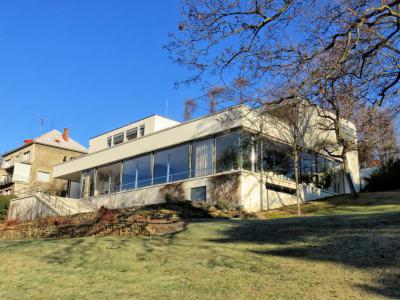
Villa Tugendhat, located in Brno, is a landmark of modern architecture and an iconic example of early 20th-century functionalist design. Designed by the renowned German architects Ludwig Mies van der Rohe and Lilly Reich, the villa was constructed between 1928 and 1930 for Fritz Tugendhat and his wife Greta, members of the affluent and influential Jewish Czech Tugendhat family.
This three-story villa, built on a southwest-facing slope, is a pioneering modernist example featuring innovative use of reinforced concrete, industrial materials, and a revolutionary iron framework. This design allowed for a spacious, open interior without supporting walls, embodying Mies van der Rohe's "less is more" principle. The villa's open floor plan, with large glass walls connecting the interior to the landscape, was groundbreaking. The second floor, the main living area, includes social spaces, a conservatory, a terrace, and a kitchen, while the third floor houses the entrance, family bedrooms, and another terrace. The lower level contains service areas, including advanced air-conditioning and a retractable glass façade.
One of the villa's most striking features is the use of luxurious, naturally patterned materials, such as a brown-gold onyx wall sourced from the Atlas Mountains in Morocco. This onyx wall is partially translucent, changing appearance with the angle of the evening sun, and serves as a centerpiece in the main living area. Mies van der Rohe, in collaboration with Lilly Reich, also designed all the furnishings for the villa, including the iconic Tugendhat and Brno chairs, which remain in production today.
The Villa Tugendhat was a technological marvel for its time, with amenities such as an air-conditioning system, large open spaces, and storage rooms like the Mottenkammer, a dedicated moth-resistant room for storing fur coats. The construction methods and the use of high-quality materials resulted in a very high cost, making the villa unique in its scale and minimalist design.
In recognition of its architectural significance, Villa Tugendhat was inscribed on the UNESCO World Heritage List in 2001, cementing its status as a masterpiece of modern architecture and a symbol of the innovative spirit of the early 20th century.
This three-story villa, built on a southwest-facing slope, is a pioneering modernist example featuring innovative use of reinforced concrete, industrial materials, and a revolutionary iron framework. This design allowed for a spacious, open interior without supporting walls, embodying Mies van der Rohe's "less is more" principle. The villa's open floor plan, with large glass walls connecting the interior to the landscape, was groundbreaking. The second floor, the main living area, includes social spaces, a conservatory, a terrace, and a kitchen, while the third floor houses the entrance, family bedrooms, and another terrace. The lower level contains service areas, including advanced air-conditioning and a retractable glass façade.
One of the villa's most striking features is the use of luxurious, naturally patterned materials, such as a brown-gold onyx wall sourced from the Atlas Mountains in Morocco. This onyx wall is partially translucent, changing appearance with the angle of the evening sun, and serves as a centerpiece in the main living area. Mies van der Rohe, in collaboration with Lilly Reich, also designed all the furnishings for the villa, including the iconic Tugendhat and Brno chairs, which remain in production today.
The Villa Tugendhat was a technological marvel for its time, with amenities such as an air-conditioning system, large open spaces, and storage rooms like the Mottenkammer, a dedicated moth-resistant room for storing fur coats. The construction methods and the use of high-quality materials resulted in a very high cost, making the villa unique in its scale and minimalist design.
In recognition of its architectural significance, Villa Tugendhat was inscribed on the UNESCO World Heritage List in 2001, cementing its status as a masterpiece of modern architecture and a symbol of the innovative spirit of the early 20th century.
10) Luzanky Park
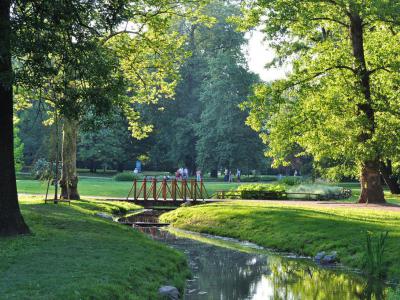
Lužánky Park, originally known as Augarten, is the largest city park in Brno and holds the distinction of being the oldest municipal park in the country. Located in the Brno-střed District, the park spans an impressive area of 22.3 hectares (55 acres), offering a lush, green retreat in the heart of the city.
Lužánky Park dates back to the 13th century when Brno burgess Niger donated the land to the Herburský Monastery. In the 16th century, Jesuits turned it into an ornamental garden for spiritual exercises. The park became public in 1786, under Emperor Joseph II, marking the creation of one of Central Europe's first municipal parks and the first in the Czech lands.
The park as it exists today was largely shaped by the design of gardener Antonín Šebánek in 1840. His work laid the foundation for the park's serene and picturesque environment, complete with precious trees, fountains, sculptures, and statues. Among these is a monument honoring Emperor Joseph II, the park's founder. Lužánky Park was officially declared a National Monument in 1849 and later recognized as a Czech Cultural Monument in 1958.
A notable feature of the park is the Renaissance Revival pavilion, designed by Viennese architect Ludwig Förster in 1885. Originally intended for balls, concerts, and parties, the pavilion, now known as Kasino, serves as a leisure-time center for children, continuing its legacy as a hub of social activity.
Lužánky is not only a place of historical and cultural significance but also a vibrant space for recreation. The park offers various facilities, including tennis and volleyball courts, an outdoor gym, and a public grill area. Visitors can also enjoy a children's playground, watch colorful fish in the park's stream, or admire the charming piglets-a favorite among the youngest visitors.
Lužánky Park dates back to the 13th century when Brno burgess Niger donated the land to the Herburský Monastery. In the 16th century, Jesuits turned it into an ornamental garden for spiritual exercises. The park became public in 1786, under Emperor Joseph II, marking the creation of one of Central Europe's first municipal parks and the first in the Czech lands.
The park as it exists today was largely shaped by the design of gardener Antonín Šebánek in 1840. His work laid the foundation for the park's serene and picturesque environment, complete with precious trees, fountains, sculptures, and statues. Among these is a monument honoring Emperor Joseph II, the park's founder. Lužánky Park was officially declared a National Monument in 1849 and later recognized as a Czech Cultural Monument in 1958.
A notable feature of the park is the Renaissance Revival pavilion, designed by Viennese architect Ludwig Förster in 1885. Originally intended for balls, concerts, and parties, the pavilion, now known as Kasino, serves as a leisure-time center for children, continuing its legacy as a hub of social activity.
Lužánky is not only a place of historical and cultural significance but also a vibrant space for recreation. The park offers various facilities, including tennis and volleyball courts, an outdoor gym, and a public grill area. Visitors can also enjoy a children's playground, watch colorful fish in the park's stream, or admire the charming piglets-a favorite among the youngest visitors.
