Custom Walk in Nassau, Bahamas by layhoma_45df32 created on 2026-06-21
Guide Location: Bahamas » Nassau
Guide Type: Custom Walk
# of Sights: 5
Tour Duration: 1 Hour(s)
Travel Distance: 1.4 Km or 0.9 Miles
Share Key: 6BPC7
Guide Type: Custom Walk
# of Sights: 5
Tour Duration: 1 Hour(s)
Travel Distance: 1.4 Km or 0.9 Miles
Share Key: 6BPC7
How It Works
Please retrieve this walk in the GPSmyCity app. Once done, the app will guide you from one tour stop to the next as if you had a personal tour guide. If you created the walk on this website or come to the page via a link, please follow the instructions below to retrieve the walk in the app.
Retrieve This Walk in App
Step 1. Download the app "GPSmyCity: Walks in 1K+ Cities" on Apple App Store or Google Play Store.



Step 2. In the GPSmyCity app, download(or launch) the guide "Nassau Map and Walking Tours".
Step 3. Tap the menu button located at upper right corner of the "Walks" screen and select "Retrieve custom walk". Enter the share key: 6BPC7
1) Bay Street (must see)
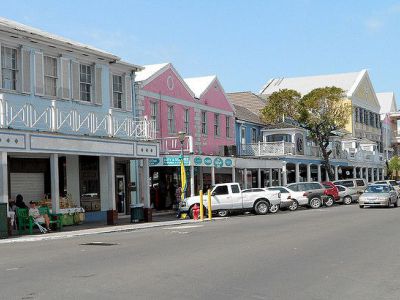
Bay Street is Nassau’s main commercial thoroughfare and its busiest shopping street. Running parallel to the harbor, it blends everyday retail with tourist-oriented shops. As you walk along the street, you’ll pass stores selling jewelry, watches, designer handbags, spirits, and souvenirs, alongside smaller vendors offering locally made crafts and beachwear.
The street also serves as a connective spine for many of downtown Nassau’s historical and cultural sites. Along or just off Bay Street are attractions such as the Pirates of Nassau Museum, the Nassau Public Library-housed in a former Carnegie Library building-Rawson Square, Parliament Square, and the Pompey Museum of Slavery & Emancipation. Toward the waterfront, tour operators and kiosks line the harbor side, offering short boat excursions, snorkeling trips, and island-hopping tours.
Retail highlights include several long-established cigar shops specializing in premium Cuban-style and Caribbean cigars, as well as duty-free stores popular with cruise visitors. Just off Bay Street, the Nassau Straw Market adds a more informal atmosphere, where bargaining is expected and straw goods, handicrafts, and souvenirs are sold in dense rows of stalls.
Dining options along Bay Street range from casual cafes to sit-down restaurants and bars. Many menus feature Bahamian staples such as conch fritters alongside familiar international dishes. For a more concentrated local food scene, Arawak Cay’s Fish Fry is located about one mile west of Rawson Square, where a cluster of restaurants serves traditional Bahamian cuisine in a lively setting.
The street also serves as a connective spine for many of downtown Nassau’s historical and cultural sites. Along or just off Bay Street are attractions such as the Pirates of Nassau Museum, the Nassau Public Library-housed in a former Carnegie Library building-Rawson Square, Parliament Square, and the Pompey Museum of Slavery & Emancipation. Toward the waterfront, tour operators and kiosks line the harbor side, offering short boat excursions, snorkeling trips, and island-hopping tours.
Retail highlights include several long-established cigar shops specializing in premium Cuban-style and Caribbean cigars, as well as duty-free stores popular with cruise visitors. Just off Bay Street, the Nassau Straw Market adds a more informal atmosphere, where bargaining is expected and straw goods, handicrafts, and souvenirs are sold in dense rows of stalls.
Dining options along Bay Street range from casual cafes to sit-down restaurants and bars. Many menus feature Bahamian staples such as conch fritters alongside familiar international dishes. For a more concentrated local food scene, Arawak Cay’s Fish Fry is located about one mile west of Rawson Square, where a cluster of restaurants serves traditional Bahamian cuisine in a lively setting.
2) Straw Market (must see)
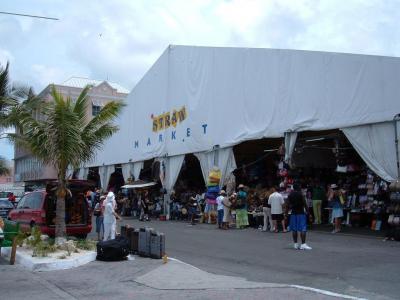
Nassau Straw Market is one of the city’s best-known marketplaces and reflects a long tradition of Bahamian straw work. Long before it became a tourist attraction, straw weaving formed part of everyday island life, with baskets and braided items used for fishing, storage, and carrying produce. The Straw Market itself became firmly established as a public market in the mid-20th century, when rising tourism created demand for handmade goods that visitors could easily carry home.
The original market structure was destroyed by fire in 2001. Its replacement, a two-story building completed in 2011, introduced a more organized layout with mostly covered walkways and partially air-conditioned interior areas, offering relief from heat and rain while preserving the informal feel of a traditional market.
Inside, the market unfolds as a dense grid of hundreds of small vendor stalls, many operated by the same families for generations. Straw bags, hats, and baskets remain the core products, but visitors will also see wood carvings, shell jewelry, paintings, spices, and small locally inspired food items. A mix of handmade crafts and mass-produced souvenirs fills the aisles.
Bargaining is customary and usually friendly rather than confrontational. Prices are rarely fixed, and polite conversation often leads to better deals. A useful tip is to walk through the market once before buying-many stalls sell similar items, and prices can vary. Vendors are often happy to explain how straw items are made or how long a particular piece took to weave.
The original market structure was destroyed by fire in 2001. Its replacement, a two-story building completed in 2011, introduced a more organized layout with mostly covered walkways and partially air-conditioned interior areas, offering relief from heat and rain while preserving the informal feel of a traditional market.
Inside, the market unfolds as a dense grid of hundreds of small vendor stalls, many operated by the same families for generations. Straw bags, hats, and baskets remain the core products, but visitors will also see wood carvings, shell jewelry, paintings, spices, and small locally inspired food items. A mix of handmade crafts and mass-produced souvenirs fills the aisles.
Bargaining is customary and usually friendly rather than confrontational. Prices are rarely fixed, and polite conversation often leads to better deals. A useful tip is to walk through the market once before buying-many stalls sell similar items, and prices can vary. Vendors are often happy to explain how straw items are made or how long a particular piece took to weave.
3) Government House
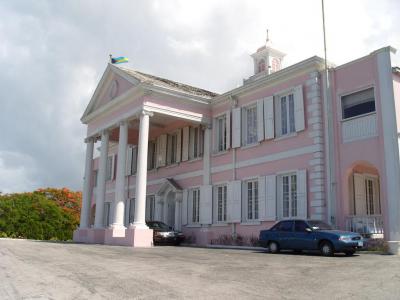
Government House is the official residence of the Governor-General of The Bahamas and one of Nassau’s most prominent examples of Georgian colonial architecture. The building overlooks the harbor and has long served as a symbol of colonial authority and state ceremony.
The house is painted in the traditional conch-pink color associated with Bahamian civic buildings. Its formal entrance is marked by four Ionic columns, reflecting British Georgian design principles. Elements such as wooden shutters and the use of color reflect local adaptation to climate and materials, while the overall symmetry and proportions follow British architectural conventions introduced during the Loyalist period after the American Revolutionary War.
The first Government House on this site was constructed in 1737, though the present building dates largely to 1806, following reconstruction and expansion. Over time, the residence has undergone several modifications. An east wing was added in 1909, and after hurricane damage in 1929, major repairs in the 1930s included changes to the roof, facade, and entrance.
One of the residence’s most notable occupants was Edward VIII, who served as Governor of The Bahamas from 1940 to 1945 under the title Duke of Windsor, after abdicating the British throne in 1936 to marry Wallis Simpson. During their tenure, a west wing, known as the Windsor Wing, was added. The Duchess also installed a distinctive black glass plaque on the front door, shipped from the couple’s residence in France and bearing the Duke’s Order of the Garter.
The house is painted in the traditional conch-pink color associated with Bahamian civic buildings. Its formal entrance is marked by four Ionic columns, reflecting British Georgian design principles. Elements such as wooden shutters and the use of color reflect local adaptation to climate and materials, while the overall symmetry and proportions follow British architectural conventions introduced during the Loyalist period after the American Revolutionary War.
The first Government House on this site was constructed in 1737, though the present building dates largely to 1806, following reconstruction and expansion. Over time, the residence has undergone several modifications. An east wing was added in 1909, and after hurricane damage in 1929, major repairs in the 1930s included changes to the roof, facade, and entrance.
One of the residence’s most notable occupants was Edward VIII, who served as Governor of The Bahamas from 1940 to 1945 under the title Duke of Windsor, after abdicating the British throne in 1936 to marry Wallis Simpson. During their tenure, a west wing, known as the Windsor Wing, was added. The Duchess also installed a distinctive black glass plaque on the front door, shipped from the couple’s residence in France and bearing the Duke’s Order of the Garter.
4) Prince George Wharf
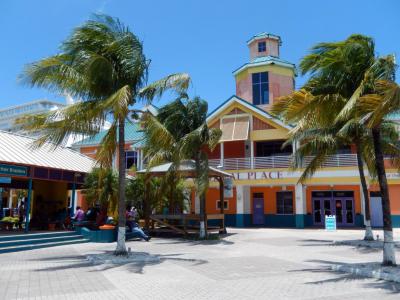
Prince George Wharf is the main cruise port of The Bahamas and one of the busiest cruise gateways in the Caribbean. Large cruise liners berth directly along the downtown waterfront. Following a major redevelopment completed in 2023, the port significantly expanded its berthing capacity and visitor infrastructure, accommodating multiple megaships simultaneously and handling several million cruise passengers annually in peak years.
Passenger arrivals now pass through the Nassau Cruise Port terminal complex, which replaced the former “Festival Place” branding. The terminal combines arrival halls with retail zones designed to manage high passenger volumes efficiently. Dozens of vendor stalls and shops offer resort wear, souvenirs, and locally made crafts, including straw goods, textiles, paintings, and small decorative items associated with Bahamian visual culture.
The wharf functions as a practical starting point for short excursions and services. Nearby operators arrange activities such as horse-drawn carriage rides, scooter rentals, boat trips, and hair-braiding, many catering specifically to cruise schedules. On busy port days, live Bahamian music and informal performances are often staged within the terminal area, reinforcing the waterfront’s active, transit-oriented atmosphere.
Adjacent to the terminals, Woodes Rogers Walk offers an elevated viewpoint overlooking the harbor. From here, visitors can observe the constant movement of ships and passengers along a stretch of waterfront that has shaped Nassau’s maritime role for centuries.
Passenger arrivals now pass through the Nassau Cruise Port terminal complex, which replaced the former “Festival Place” branding. The terminal combines arrival halls with retail zones designed to manage high passenger volumes efficiently. Dozens of vendor stalls and shops offer resort wear, souvenirs, and locally made crafts, including straw goods, textiles, paintings, and small decorative items associated with Bahamian visual culture.
The wharf functions as a practical starting point for short excursions and services. Nearby operators arrange activities such as horse-drawn carriage rides, scooter rentals, boat trips, and hair-braiding, many catering specifically to cruise schedules. On busy port days, live Bahamian music and informal performances are often staged within the terminal area, reinforcing the waterfront’s active, transit-oriented atmosphere.
Adjacent to the terminals, Woodes Rogers Walk offers an elevated viewpoint overlooking the harbor. From here, visitors can observe the constant movement of ships and passengers along a stretch of waterfront that has shaped Nassau’s maritime role for centuries.
5) Parliament Square
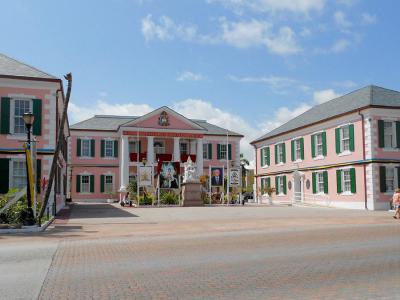
Parliament Square developed in its present form in the early 19th century, following the arrival of Loyalists from the former American colonies who remained loyal to the British Crown after the American Revolutionary War. Their influence shaped both the layout of the square and the establishment of Nassau as a permanent seat of colonial government.
The square is visually defined by a tight grouping of pastel pink, Georgian-style government buildings arranged around an open civic space. Directly facing the square are the House of Assembly and the Senate of The Bahamas. The Supreme Court of The Bahamas sits slightly behind this frontage, visible beyond the main buildings rather than forming part of the square’s immediate edge.
The House of Assembly serves as the lower chamber of Parliament and is one of the oldest continuously operating legislative bodies in the Western Hemisphere, having first convened in 1729. When sessions are underway, visitors may observe debates from the public gallery, offering a direct view into parliamentary procedure within a historic setting. In front of the Senate Building stands a marble statue of Queen Victoria, erected in 1905.
Beyond the main parliamentary buildings, behind the Supreme Court, lies the Garden of Remembrance. This quieter, enclosed space contains a cenotaph commemorating Bahamian soldiers who died in the First and Second World Wars, with engraved plaques listing their names.
The square is visually defined by a tight grouping of pastel pink, Georgian-style government buildings arranged around an open civic space. Directly facing the square are the House of Assembly and the Senate of The Bahamas. The Supreme Court of The Bahamas sits slightly behind this frontage, visible beyond the main buildings rather than forming part of the square’s immediate edge.
The House of Assembly serves as the lower chamber of Parliament and is one of the oldest continuously operating legislative bodies in the Western Hemisphere, having first convened in 1729. When sessions are underway, visitors may observe debates from the public gallery, offering a direct view into parliamentary procedure within a historic setting. In front of the Senate Building stands a marble statue of Queen Victoria, erected in 1905.
Beyond the main parliamentary buildings, behind the Supreme Court, lies the Garden of Remembrance. This quieter, enclosed space contains a cenotaph commemorating Bahamian soldiers who died in the First and Second World Wars, with engraved plaques listing their names.
