Custom Walk in Gibraltar, Gibraltar by gary_borrett_5d6a84 created on 2026-06-24
Guide Location: Gibraltar » Gibraltar
Guide Type: Custom Walk
# of Sights: 12
Tour Duration: 2 Hour(s)
Travel Distance: 3.3 Km or 2.1 Miles
Share Key: N5FEK
Guide Type: Custom Walk
# of Sights: 12
Tour Duration: 2 Hour(s)
Travel Distance: 3.3 Km or 2.1 Miles
Share Key: N5FEK
How It Works
Please retrieve this walk in the GPSmyCity app. Once done, the app will guide you from one tour stop to the next as if you had a personal tour guide. If you created the walk on this website or come to the page via a link, please follow the instructions below to retrieve the walk in the app.
Retrieve This Walk in App
Step 1. Download the app "GPSmyCity: Walks in 1K+ Cities" on Apple App Store or Google Play Store.



Step 2. In the GPSmyCity app, download(or launch) the guide "Gibraltar Map and Walking Tours".
Step 3. Tap the menu button located at upper right corner of the "Walks" screen and select "Retrieve custom walk". Enter the share key: N5FEK

1) Grand Casemates Square
Grand Casemates Square, now the bustling heart of Gibraltar, has a history as layered as the Rock itself. Long before cafés and concerts filled the space, it was a shore of ambition and conflict. In 1160, the Almohad ruler Abd al-Mu'min sent a fleet from Morocco to the sandy beach that once stretched here, hoping to build Medinat al-Fath-“The City of Victory.” His dream city, meant to embody the glory of Islamic Gibraltar, was never completed. The tides reclaimed the beach, but the vision left a mark, hinting at the enduring desire to shape this narrow peninsula into something grand.
By the 14th century, Castilian forces took over, turning the same ground into a fortified shipyard surrounded by Moorish walls. Centuries later, under British rule, the site’s purpose shifted again. During the 18th century, when Gibraltar braced for repeated Spanish sieges, the area was transformed into a parade ground and execution site, its name deriving from the bombproof “casemates” built to shelter troops and artillery. Soldiers once drilled where today’s visitors sip coffee; the echoes of command still seem to linger in the open air.
For generations, Grand Casemates Square remained a military space, even serving as a car park until the 1990s, when excavations uncovered the ancient foundations of the Moorish galley house. Now fully pedestrianized, it’s the city’s social core-a place for festivals, music, and national celebrations. Standing here, one feels the pulse of Gibraltar’s past and present beating in unison.
By the 14th century, Castilian forces took over, turning the same ground into a fortified shipyard surrounded by Moorish walls. Centuries later, under British rule, the site’s purpose shifted again. During the 18th century, when Gibraltar braced for repeated Spanish sieges, the area was transformed into a parade ground and execution site, its name deriving from the bombproof “casemates” built to shelter troops and artillery. Soldiers once drilled where today’s visitors sip coffee; the echoes of command still seem to linger in the open air.
For generations, Grand Casemates Square remained a military space, even serving as a car park until the 1990s, when excavations uncovered the ancient foundations of the Moorish galley house. Now fully pedestrianized, it’s the city’s social core-a place for festivals, music, and national celebrations. Standing here, one feels the pulse of Gibraltar’s past and present beating in unison.

2) Irish Town
Irish Town, despite its name, is neither Irish nor a town-it’s one of Gibraltar’s oldest and most storied streets, running parallel to Main Street just south of Casemates Square. When the British took Gibraltar in 1704, it was known as Saint Anne’s Street, but by the 18th century, the presence of Irish regiments stationed there gave rise to the name that still sticks today. Locals like to say it was the laughter and singing of the Irish soldiers and their families that gave the street its spirited reputation-one that lingered long after the troops departed.
In the 1800s, Irish Town was the liveliest stretch in Gibraltar, known for its rowdy taverns, boarding lodges, and bustling trade. Sailors and merchants from across the British Empire filled its narrow lanes, while soldiers brought the latest news and a good deal of commotion. One legend tells of a particularly strict officer who tried to enforce curfews, only to find his own men carousing in the pubs he meant to close. Even the convent on the street, the old Convent of Mercy, was repurposed over time-its cloisters now supporting part of a wine bar wall, a perfect symbol of the street’s blend of faith, history, and everyday life.
Today, Irish Town retains its old charm but has mellowed into a peaceful lane lined with cafés, boutiques, and historic buildings. Its red-brick police station, synagogue, and pastel façades remind visitors that this quiet street once pulsed with empire, laughter, and the unmistakable hum of Gibraltar’s multicultural past.
In the 1800s, Irish Town was the liveliest stretch in Gibraltar, known for its rowdy taverns, boarding lodges, and bustling trade. Sailors and merchants from across the British Empire filled its narrow lanes, while soldiers brought the latest news and a good deal of commotion. One legend tells of a particularly strict officer who tried to enforce curfews, only to find his own men carousing in the pubs he meant to close. Even the convent on the street, the old Convent of Mercy, was repurposed over time-its cloisters now supporting part of a wine bar wall, a perfect symbol of the street’s blend of faith, history, and everyday life.
Today, Irish Town retains its old charm but has mellowed into a peaceful lane lined with cafés, boutiques, and historic buildings. Its red-brick police station, synagogue, and pastel façades remind visitors that this quiet street once pulsed with empire, laughter, and the unmistakable hum of Gibraltar’s multicultural past.

3) Main Street (must see)
Main Street is Gibraltar’s most famous thoroughfare-a place where the story of the Rock unfolds in every stone and balcony. Once known as Royal Street, it was first laid out in 1575 with the opening of the Africa Gate, now called the Southport Gates. But the street we know today began to take shape after 1704, when the British took Gibraltar and transformed it into a fortified garrison town. Main Street became the city’s central artery, buzzing with the energy of soldiers, merchants, and sailors from across Europe and North Africa.
Its history has not always been peaceful. During the Great Siege of 1779–1783, when French and Spanish forces bombarded Gibraltar for four years, much of Main Street was reduced to rubble. Yet from the ashes, it rose again. Governor Charles O’Hara oversaw its rebuilding in 1801, straightening the road and reshaping its facades into the elegant blend of Georgian, Mediterranean, and Moorish styles that still defines it.
There’s a story that during the siege, locals carried on trading and chatting in defiance, even as cannon fire echoed overhead-a sign of the Gibraltarian resilience that still characterizes the street. Later, in the 19th century, it evolved into a thriving commercial center. Tailors, tobacconists, and perfumeries lined its length, serving travelers and British officers alike, while families lived in apartments above the shops.
Today, Main Street remains the heart of Gibraltar’s daily life. It’s pedestrianized now, filled with duty-free stores, cozy pubs, and sunlit cafés. Tourists stroll between the cathedrals and colonial façades, hearing snippets of both English and Spanish-sometimes even Llanito, Gibraltar’s unique local dialect. Walking down Main Street isn’t just a shopping trip; it’s a walk through centuries of endurance, adaptation, and cultural exchange, where the Mediterranean meets a touch of Britain under the Rock’s watchful gaze.
Its history has not always been peaceful. During the Great Siege of 1779–1783, when French and Spanish forces bombarded Gibraltar for four years, much of Main Street was reduced to rubble. Yet from the ashes, it rose again. Governor Charles O’Hara oversaw its rebuilding in 1801, straightening the road and reshaping its facades into the elegant blend of Georgian, Mediterranean, and Moorish styles that still defines it.
There’s a story that during the siege, locals carried on trading and chatting in defiance, even as cannon fire echoed overhead-a sign of the Gibraltarian resilience that still characterizes the street. Later, in the 19th century, it evolved into a thriving commercial center. Tailors, tobacconists, and perfumeries lined its length, serving travelers and British officers alike, while families lived in apartments above the shops.
Today, Main Street remains the heart of Gibraltar’s daily life. It’s pedestrianized now, filled with duty-free stores, cozy pubs, and sunlit cafés. Tourists stroll between the cathedrals and colonial façades, hearing snippets of both English and Spanish-sometimes even Llanito, Gibraltar’s unique local dialect. Walking down Main Street isn’t just a shopping trip; it’s a walk through centuries of endurance, adaptation, and cultural exchange, where the Mediterranean meets a touch of Britain under the Rock’s watchful gaze.

4) Cathedral of St. Mary the Crowned
The Cathedral of St. Mary the Crowned in Gibraltar is more than just a religious landmark-it’s a living reflection of the territory’s layered and resilient history. Its origins date back to the 15th century, when the site was occupied by a Moorish mosque. After the Spanish reconquest in 1462, King Ferdinand and Queen Isabella ordered the mosque to be demolished and replaced with a Christian church dedicated to the Virgin Mary, crowned as the Queen of Heaven. The coats of arms of the monarchs can still be seen in the courtyard, a quiet reminder of the city’s shifting faith and politics.
Legend has it that when the new church was consecrated in 1492, Gibraltar’s bells rang for three days straight, their sound echoing across the bay as a celebration of victory and renewal. But the church’s story was far from peaceful. During the Great Siege of 1779–1783, the building was almost entirely destroyed, leaving only its walls and fragments of the vaulted ceiling. It was painstakingly rebuilt, later redesigned under British rule, when Governor Charles O’Hara widened the street and gave the cathedral its present Gothic-Renaissance appearance.
Today, St. Mary the Crowned stands quietly on busy Main Street, its pink façade and graceful arches offering calm amid the city’s bustle. Inside, sunlight filters through soft tones, illuminating family memorials and the cherished statue of the Virgin Mary, carried each Holy Week in processions that fill the streets with song and devotion. For visitors, the cathedral is both sanctuary and storyteller-a place where Gibraltar’s spirit of endurance continues to echo through time.
Legend has it that when the new church was consecrated in 1492, Gibraltar’s bells rang for three days straight, their sound echoing across the bay as a celebration of victory and renewal. But the church’s story was far from peaceful. During the Great Siege of 1779–1783, the building was almost entirely destroyed, leaving only its walls and fragments of the vaulted ceiling. It was painstakingly rebuilt, later redesigned under British rule, when Governor Charles O’Hara widened the street and gave the cathedral its present Gothic-Renaissance appearance.
Today, St. Mary the Crowned stands quietly on busy Main Street, its pink façade and graceful arches offering calm amid the city’s bustle. Inside, sunlight filters through soft tones, illuminating family memorials and the cherished statue of the Virgin Mary, carried each Holy Week in processions that fill the streets with song and devotion. For visitors, the cathedral is both sanctuary and storyteller-a place where Gibraltar’s spirit of endurance continues to echo through time.

5) Gibraltar National Museum
The Gibraltar National Museum tells the extraordinary story of a tiny peninsula with a monumental past, stretching from the age of Neanderthals to the modern day. Its origins go back to 1930, when Governor Sir Alexander Godley decided that Gibraltar’s heritage deserved a permanent home. The chosen site, a building called “Bomb House,” held a surprise of its own-beneath it lay a perfectly preserved Moorish bathhouse from the 14th century, hidden for centuries until its rediscovery. Visitors can still walk through its vaulted chambers, where steam once drifted through the air as merchants and nobles came to wash and talk.
One of the museum’s most celebrated treasures is a replica of the Gibraltar 1 skull, the first Neanderthal fossil ever discovered. Found in 1848 at Forbes’ Quarry-years before anyone knew what a “Neanderthal” was-it puzzled scientists for decades. It wasn’t until later that its true importance was understood: this fragment of bone proved that humans had lived on the Rock tens of thousands of years ago. The skull is now a symbol of Gibraltar’s ancient role as a bridge between Africa and Europe.
Beyond that, the museum weaves together layers of history-from Roman oyster shells and Moorish artifacts to relics of British military might and naval trade. It offers not just displays, but a sense of continuity, where prehistoric hunters, soldiers, and sailors all seem to leave their footprints in the same stone. For travelers, the museum is the soul of Gibraltar-a place where the Rock itself tells its story.
One of the museum’s most celebrated treasures is a replica of the Gibraltar 1 skull, the first Neanderthal fossil ever discovered. Found in 1848 at Forbes’ Quarry-years before anyone knew what a “Neanderthal” was-it puzzled scientists for decades. It wasn’t until later that its true importance was understood: this fragment of bone proved that humans had lived on the Rock tens of thousands of years ago. The skull is now a symbol of Gibraltar’s ancient role as a bridge between Africa and Europe.
Beyond that, the museum weaves together layers of history-from Roman oyster shells and Moorish artifacts to relics of British military might and naval trade. It offers not just displays, but a sense of continuity, where prehistoric hunters, soldiers, and sailors all seem to leave their footprints in the same stone. For travelers, the museum is the soul of Gibraltar-a place where the Rock itself tells its story.
6) Garrison Library
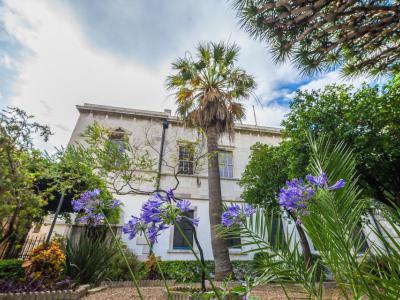
The Garrison Library is one of Gibraltar’s most atmospheric heritage sites: a Regency-style building completed in 1804 and surrounded by quiet gardens. The library was conceived during the aftermath of the Great Siege and formally founded in 1793 by Captain John Drinkwater Bethune. Much of the design is credited to Royal Engineers officer Captain Fyers, whose elegant, white-stone façade and ironwork details still define the place.
Inside, researchers and curious visitors find a reference collection that runs to roughly forty to forty-five thousand volumes, alongside maps, prints, and periodicals. The library is also home to the complete archive of the Gibraltar Chronicle-famed for its early report on the Battle of Trafalgar-and continues to serve as a research centre for Gibraltar’s history and print culture. Recent efforts have focused on digitising parts of the newsprint and image collections to widen access.
Beyond reading rooms lined with bookcases and club chairs, a courtyard and garden form a sheltered pocket of green in the town centre. Look for the dragon tree, a long-lived species associated locally with early plantings and often noted in accounts of the grounds; combined with the veranda and spiral stair, it gives the library a distinctly Mediterranean character.
The library doubles as a cultural venue, hosting small exhibitions and talks that connect Gibraltar with the wider region’s history and arts. In recent seasons these have ranged from displays of local artists’ drawings to academic conferences on Campo de Gibraltar history.
Inside, researchers and curious visitors find a reference collection that runs to roughly forty to forty-five thousand volumes, alongside maps, prints, and periodicals. The library is also home to the complete archive of the Gibraltar Chronicle-famed for its early report on the Battle of Trafalgar-and continues to serve as a research centre for Gibraltar’s history and print culture. Recent efforts have focused on digitising parts of the newsprint and image collections to widen access.
Beyond reading rooms lined with bookcases and club chairs, a courtyard and garden form a sheltered pocket of green in the town centre. Look for the dragon tree, a long-lived species associated locally with early plantings and often noted in accounts of the grounds; combined with the veranda and spiral stair, it gives the library a distinctly Mediterranean character.
The library doubles as a cultural venue, hosting small exhibitions and talks that connect Gibraltar with the wider region’s history and arts. In recent seasons these have ranged from displays of local artists’ drawings to academic conferences on Campo de Gibraltar history.

7) Cathedral of the Holy Trinity
The Cathedral of the Holy Trinity is one of Gibraltar’s most distinctive and storied landmarks, embodying the Rock’s layered mix of cultures and faiths. Built between 1825 and 1832 under the direction of the Royal Engineers, it was originally meant to serve the Anglican soldiers and civilians stationed in this British stronghold. The cathedral was later consecrated in 1838 and elevated to its current status in 1842, becoming the spiritual heart of Anglican worship across Gibraltar and Europe.
An anecdote often shared about its construction speaks of the confusion its Moorish-inspired design once caused. When travelers first saw its domed roof and graceful horseshoe arches, they assumed it was a mosque-a reminder that Gibraltar’s identity has long been shaped by the meeting of Christian and Islamic worlds. Rather than correct the assumption, the locals took pride in the misunderstanding, seeing in the cathedral’s design a quiet tribute to the region’s centuries of coexistence.
Inside, the church offers a sense of calm beneath its simple vaulted nave. The pews, brought from a decommissioned naval dockyard church in England, add another layer of maritime history. A small chapel dedicated to Saint George honors those who lost their lives in the Mediterranean during World War II, giving the space a poignant sense of remembrance. Today, the Cathedral of the Holy Trinity remains not only a place of worship but also a venue for concerts and community events-a graceful symbol of Gibraltar’s faith, resilience, and cross-cultural spirit.
An anecdote often shared about its construction speaks of the confusion its Moorish-inspired design once caused. When travelers first saw its domed roof and graceful horseshoe arches, they assumed it was a mosque-a reminder that Gibraltar’s identity has long been shaped by the meeting of Christian and Islamic worlds. Rather than correct the assumption, the locals took pride in the misunderstanding, seeing in the cathedral’s design a quiet tribute to the region’s centuries of coexistence.
Inside, the church offers a sense of calm beneath its simple vaulted nave. The pews, brought from a decommissioned naval dockyard church in England, add another layer of maritime history. A small chapel dedicated to Saint George honors those who lost their lives in the Mediterranean during World War II, giving the space a poignant sense of remembrance. Today, the Cathedral of the Holy Trinity remains not only a place of worship but also a venue for concerts and community events-a graceful symbol of Gibraltar’s faith, resilience, and cross-cultural spirit.

8) King's Chapel
King's Chapel holds the distinction of being the first purpose-built church in Gibraltar, originally constructed in the 1530s as part of a Franciscan friary complex. It served as a Catholic chapel until 1704 when Gibraltar was captured by Britain, after which it was transferred to the Church of England and renamed “King’s Chapel.”
Though originally built as a full-sized church, the chapel suffered extensive damage during the Great Siege of Gibraltar. The western portion, including the south transept, was destroyed and subsequently incorporated into the Governor’s residence, The Convent, leaving only the eastern half as the present chapel.
In 1951, the chapel was again severely damaged by a devastating harbour explosion, which destroyed its ceiling and stained glass. It was meticulously restored afterward, including the installation of new stained-glass windows in 1952 that depict King George VI, Christ surrounded by archangels, the crucifixion, and other significant motifs.
From 1844 to 1990, King's Chapel served as the main church for the British Army in Gibraltar. Since 1990, it has become the shared place of worship for all three branches of the British Armed Forces-Army, Royal Navy, and Royal Air Force-with civilian clergy supporting the resident Royal Navy chaplain. It also continues to serve Roman Catholic worshippers today.
Stepping inside, visitors encounter a beautiful sanctuary adorned with regimental colours, memorial plaques, and the tombs of key figures-such as the wife of a 1648 Spanish governor and British governors Charles O’Hara and Colin Campbell. For those seeking spiritual insight or local history, occasional services are held-ecumenical on the second Sunday and Anglican Eucharist on the fourth Sunday of each month.
Though originally built as a full-sized church, the chapel suffered extensive damage during the Great Siege of Gibraltar. The western portion, including the south transept, was destroyed and subsequently incorporated into the Governor’s residence, The Convent, leaving only the eastern half as the present chapel.
In 1951, the chapel was again severely damaged by a devastating harbour explosion, which destroyed its ceiling and stained glass. It was meticulously restored afterward, including the installation of new stained-glass windows in 1952 that depict King George VI, Christ surrounded by archangels, the crucifixion, and other significant motifs.
From 1844 to 1990, King's Chapel served as the main church for the British Army in Gibraltar. Since 1990, it has become the shared place of worship for all three branches of the British Armed Forces-Army, Royal Navy, and Royal Air Force-with civilian clergy supporting the resident Royal Navy chaplain. It also continues to serve Roman Catholic worshippers today.
Stepping inside, visitors encounter a beautiful sanctuary adorned with regimental colours, memorial plaques, and the tombs of key figures-such as the wife of a 1648 Spanish governor and British governors Charles O’Hara and Colin Campbell. For those seeking spiritual insight or local history, occasional services are held-ecumenical on the second Sunday and Anglican Eucharist on the fourth Sunday of each month.
9) The Convent
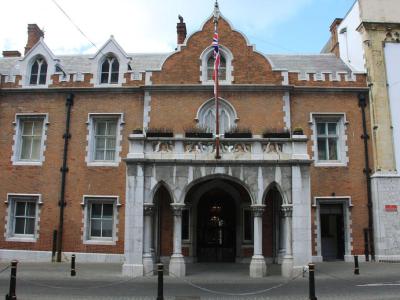
Originally built in 1531 as a Franciscan monastery, The Convent takes its name from that early ecclesiastical function. Following the Anglo‑Dutch capture of Gibraltar in 1704, the building was repurposed and, since 1728, has served as the official residence of the Governor of Gibraltar, a role it continues to fulfil today. Architecturally, it reflects a blend of early Georgian style with later Victorian enhancements.
Inside, The Convent’s dining room features the most extensive display of heraldry in the entire Commonwealth of Nations, a point of pride and historical richness. Outside, a guard mount-the changing of the guard-takes place several times a week, offering visitors a glimpse of tradition and ceremony in practice.
Adding to its mystique, local lore speaks of a ghostly presence-the “Lady in Grey,” reputedly a nun walled up alive in the building-who is said to haunt parts of The Convent. The Convent is also surrounded by tranquil gardens, which offer a peaceful respite from the town’s bustle. The gardens are also living monuments: trees planted here by historic figures such as Edward VII, Emperor Wilhelm II, Emperor Hirohito, and Queen Elizabeth II.
While its interior isn’t regularly open to the public, the building’s historic significance, visual appeal, and surrounding gardens still make it a compelling stop on any walking tour. Keep an eye out for special open‑day events or occasional concerts, which can offer rare access inside.
Inside, The Convent’s dining room features the most extensive display of heraldry in the entire Commonwealth of Nations, a point of pride and historical richness. Outside, a guard mount-the changing of the guard-takes place several times a week, offering visitors a glimpse of tradition and ceremony in practice.
Adding to its mystique, local lore speaks of a ghostly presence-the “Lady in Grey,” reputedly a nun walled up alive in the building-who is said to haunt parts of The Convent. The Convent is also surrounded by tranquil gardens, which offer a peaceful respite from the town’s bustle. The gardens are also living monuments: trees planted here by historic figures such as Edward VII, Emperor Wilhelm II, Emperor Hirohito, and Queen Elizabeth II.
While its interior isn’t regularly open to the public, the building’s historic significance, visual appeal, and surrounding gardens still make it a compelling stop on any walking tour. Keep an eye out for special open‑day events or occasional concerts, which can offer rare access inside.

10) Trafalgar Cemetery
Trafalgar Cemetery, a small, shaded burial ground just outside Gibraltar’s old city walls, holds the echoes of an empire at sea. Established in 1798 and once known as the Southport Ditch Cemetery, it served as the final resting place for soldiers, sailors, and civilians who died during Gibraltar’s turbulent years at the turn of the 19th century. Though it carries the name of the famous Battle of Trafalgar, only two men who fought in that legendary naval encounter are buried here-Lieutenant William Forster of HMS Colossus and Captain Thomas Norman of HMS Mars. Both succumbed to their wounds after the 1805 battle, which saw Admiral Nelson secure Britain’s naval supremacy at the cost of his own life.
The cemetery also bears silent witness to other tragedies, such as the yellow fever epidemics that swept through Gibraltar in 1804 and 1814. Many gravestones, now worn by time, tell stories of youth and duty cut short-sailors who never returned home, officers lost to illness, and families who followed the fortunes of war to this distant outpost of the British Empire.
After decades of neglect, Trafalgar Cemetery was restored in 1992 and rededicated as a memorial to the men of Trafalgar. That same year, a monument featuring an anchor and a statue of Admiral Nelson was unveiled, honoring those who gave their lives for victory at sea. Each October, on Trafalgar Day, a solemn ceremony takes place here, with wreaths laid and naval hymns sung beneath the Rock’s watchful cliffs. For today’s visitors, the cemetery offers not grandeur but reflection-a peaceful, green corner of Gibraltar where the wind off the Mediterranean carries faint echoes of cannon fire and the bravery of those who never sailed home.
The cemetery also bears silent witness to other tragedies, such as the yellow fever epidemics that swept through Gibraltar in 1804 and 1814. Many gravestones, now worn by time, tell stories of youth and duty cut short-sailors who never returned home, officers lost to illness, and families who followed the fortunes of war to this distant outpost of the British Empire.
After decades of neglect, Trafalgar Cemetery was restored in 1992 and rededicated as a memorial to the men of Trafalgar. That same year, a monument featuring an anchor and a statue of Admiral Nelson was unveiled, honoring those who gave their lives for victory at sea. Each October, on Trafalgar Day, a solemn ceremony takes place here, with wreaths laid and naval hymns sung beneath the Rock’s watchful cliffs. For today’s visitors, the cemetery offers not grandeur but reflection-a peaceful, green corner of Gibraltar where the wind off the Mediterranean carries faint echoes of cannon fire and the bravery of those who never sailed home.
11) South Bastion
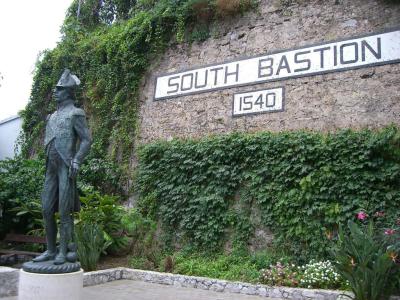
The South Bastion, constructed circa 1540 under the reign of Philip II of Spain, was part of the original fortifications that guarded the entrance to Gibraltar’s town from the Bay of Gibraltar. Strategically positioned at the western base of the Charles V Wall, this bastion formed a critical lynchpin in the city's defenses. The wall protected the southern limits of the town and stretched upward along the steep slopes of the Rock.
Designed under influence from Italian military engineers like Giovanni Battista Calvi and Giacomo Fratino, the bastion was built upon early Spanish blueprints and enhanced over the following centuries. By 1627, it was known as the “Bastion of Our Lady of the Rosary”. Its thick parapets-over 18 feet thick on the sea-facing side-were built to withstand naval bombardment, and its walls remained a cornerstone of Gibraltar’s defenses.
Over time, British engineers further reinforced the bastion-most notably in 1757, when Lord Tyrawley strengthened its southern flank. In 1870, it was again rebuilt to house powerful 10-inch Rifled Muzzle Loading guns within iron-shielded casemates.
Today, the South Bastion balances maritime heritage with modern life-it houses the Gibraltar College atop its historic ramparts. At its base stands a statue of Admiral Lord Nelson, unveiled in memory of his famous victory-and death-at the Battle of Trafalgar. The sculpture was created by John Doubleday and adds both commemorative weight and visual appeal.
Designed under influence from Italian military engineers like Giovanni Battista Calvi and Giacomo Fratino, the bastion was built upon early Spanish blueprints and enhanced over the following centuries. By 1627, it was known as the “Bastion of Our Lady of the Rosary”. Its thick parapets-over 18 feet thick on the sea-facing side-were built to withstand naval bombardment, and its walls remained a cornerstone of Gibraltar’s defenses.
Over time, British engineers further reinforced the bastion-most notably in 1757, when Lord Tyrawley strengthened its southern flank. In 1870, it was again rebuilt to house powerful 10-inch Rifled Muzzle Loading guns within iron-shielded casemates.
Today, the South Bastion balances maritime heritage with modern life-it houses the Gibraltar College atop its historic ramparts. At its base stands a statue of Admiral Lord Nelson, unveiled in memory of his famous victory-and death-at the Battle of Trafalgar. The sculpture was created by John Doubleday and adds both commemorative weight and visual appeal.
12) Commonwealth Park
Commonwealth Park in Gibraltar is a significant landmark as the town's first public park since 1816. Located next to the King's Bastion Leisure Centre, it is connected through a corridor in the solid wall. This beautifully landscaped park, nestled within the old city walls, offers a serene and verdant recreational area. The park was inaugurated on June 12th, 2014.
Since its opening, Commonwealth Park has transformed the urban landscape of Gibraltar. It has become a versatile venue, hosting events such as the Jazz Festival and serving as an outdoor cinema location during the summer months. Described by the Gibraltar Heritage Trust as "an oasis of calm from a hectic and busy city," this park has become a cherished space for both residents and visitors alike.
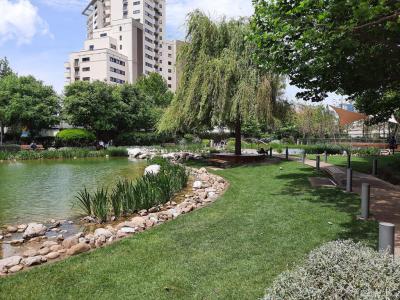
The park boasts a diverse and captivating landscape that incorporates Mediterranean-style ornamental planting beds, 143 trees, expansive grass areas, water fountains, grass mounds, permeable paved pathways, an artificial lake, a bridge, sculptures, and a contemporary bandstand. By combining lush grass areas and a bandstand, the park pays homage to traditional British parks, while the Mediterranean ornamental planting establishes a natural connection to the surrounding environment and climate.
Given Gibraltar's geological composition, it is challenging to find suitable soil on the island. Instead of importing soil from other regions, the project team collaborated with renowned soil specialist Tim O'Hare to produce 3,000 m3 of topsoil locally using recycled soil from local and reclamation areas. This innovative approach demonstrates a commitment to sustainability and resourcefulness in creating this remarkable green space.
Since its opening, Commonwealth Park has transformed the urban landscape of Gibraltar. It has become a versatile venue, hosting events such as the Jazz Festival and serving as an outdoor cinema location during the summer months. Described by the Gibraltar Heritage Trust as "an oasis of calm from a hectic and busy city," this park has become a cherished space for both residents and visitors alike.
The park boasts a diverse and captivating landscape that incorporates Mediterranean-style ornamental planting beds, 143 trees, expansive grass areas, water fountains, grass mounds, permeable paved pathways, an artificial lake, a bridge, sculptures, and a contemporary bandstand. By combining lush grass areas and a bandstand, the park pays homage to traditional British parks, while the Mediterranean ornamental planting establishes a natural connection to the surrounding environment and climate.
Given Gibraltar's geological composition, it is challenging to find suitable soil on the island. Instead of importing soil from other regions, the project team collaborated with renowned soil specialist Tim O'Hare to produce 3,000 m3 of topsoil locally using recycled soil from local and reclamation areas. This innovative approach demonstrates a commitment to sustainability and resourcefulness in creating this remarkable green space.
