Custom Walk in Aarhus, Denmark by rdrush_ca266 created on 2026-06-29
Guide Location: Denmark » Aarhus
Guide Type: Custom Walk
# of Sights: 5
Tour Duration: 1 Hour(s)
Travel Distance: 2 Km or 1.2 Miles
Share Key: S8JL3
Guide Type: Custom Walk
# of Sights: 5
Tour Duration: 1 Hour(s)
Travel Distance: 2 Km or 1.2 Miles
Share Key: S8JL3
How It Works
Please retrieve this walk in the GPSmyCity app. Once done, the app will guide you from one tour stop to the next as if you had a personal tour guide. If you created the walk on this website or come to the page via a link, please follow the instructions below to retrieve the walk in the app.
Retrieve This Walk in App
Step 1. Download the app "GPSmyCity: Walks in 1K+ Cities" on Apple App Store or Google Play Store.



Step 2. In the GPSmyCity app, download(or launch) the guide "Aarhus Map and Walking Tours".
Step 3. Tap the menu button located at upper right corner of the "Walks" screen and select "Retrieve custom walk". Enter the share key: S8JL3
1) Concert Hall
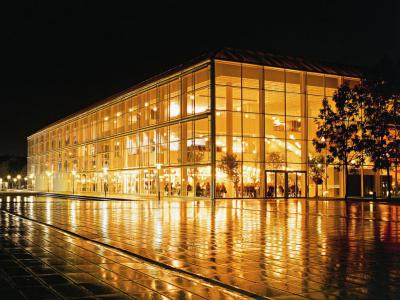
The Concert Hall in Aarhus stands as Scandinavia's largest concert venue and a beacon of cultural vibrancy. Officially opened in 1982, this architectural gem was designed by the local firm Kjær & Richter and later expanded in 2007 to include additional halls and facilities by another local firm, C.F. Møller. Today, it spans an impressive 35,000 square meters, featuring nine concert halls, six stages, and 500 rooms, making it a central hub for musical and cultural education.
Home to the Royal Academy of Music in Aarhus, the Aarhus Symphony Orchestra, and the Danish National Opera, the Concert Hall enriches the musical landscape of the region. It hosts an astounding array of over 1,500 events annually, drawing up to a million guests each year. The diverse programming includes everything from pop, rock, and opera to baroque music, featuring both student performers and international stars.
Not just a venue for music, the Concert Hall of Aarhus offers a wide range of live experiences designed to evoke every emotion-from laughter to tears. Its lineup includes children’s shows, musicals, comedy, dance, theater, and more, alongside traditional concert performances. It also serves as a versatile space for meetings, business events, and conferences. Visitors can enjoy the free activities available, dine at the onsite café, or explore the flavors of the brasserie and cocktail bar, Maestro.
Over the years, the Concert Hall has hosted an impressive list of performers, including Bob Dylan, The Beach Boys, Tina Turner, and Placido Domingo, among others. This rich history of distinguished performances solidifies its reputation as not only a local cultural center but also an important venue on the international music scene.
Home to the Royal Academy of Music in Aarhus, the Aarhus Symphony Orchestra, and the Danish National Opera, the Concert Hall enriches the musical landscape of the region. It hosts an astounding array of over 1,500 events annually, drawing up to a million guests each year. The diverse programming includes everything from pop, rock, and opera to baroque music, featuring both student performers and international stars.
Not just a venue for music, the Concert Hall of Aarhus offers a wide range of live experiences designed to evoke every emotion-from laughter to tears. Its lineup includes children’s shows, musicals, comedy, dance, theater, and more, alongside traditional concert performances. It also serves as a versatile space for meetings, business events, and conferences. Visitors can enjoy the free activities available, dine at the onsite café, or explore the flavors of the brasserie and cocktail bar, Maestro.
Over the years, the Concert Hall has hosted an impressive list of performers, including Bob Dylan, The Beach Boys, Tina Turner, and Placido Domingo, among others. This rich history of distinguished performances solidifies its reputation as not only a local cultural center but also an important venue on the international music scene.
2) Møllestien (The Mill Path) (must see)
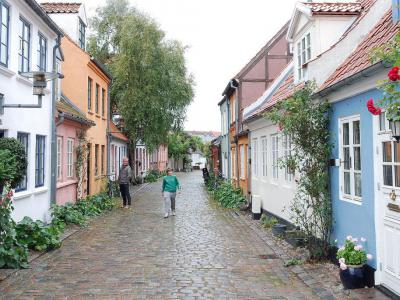
The Mill Path is a historic street in Aarhus. It is a cobblestone street with buildings constructed between 1870 and 1885. However, the street itself has been used in Aarhus since the 13th century.
The name "Mill Path" refers to the Aarhus Mill, which was first mentioned in 1289. The mill was located where the former Aarhus Main Library now stands at the western end of the street.
Sadly, the beautiful homes built in the late 19th century mostly fell into disrepair by 1925. The healthy soil that created an excellent basis for farmland because marshy and tenants were unable to maintain upkeep of the homes. Most of the street remained uninhabitable through 1960 when a renovation plan for the street was put together.
Students and artists moved into the neighborhood during the late 20th century. They painted many of the homes in bright colors, giving it the charm that is seen today. Renovations on the street led to many buildings being removed and replaced with modern structures. What is left is interesting architecture that is a favorite among the visitors to Aarhus.
The name "Mill Path" refers to the Aarhus Mill, which was first mentioned in 1289. The mill was located where the former Aarhus Main Library now stands at the western end of the street.
Sadly, the beautiful homes built in the late 19th century mostly fell into disrepair by 1925. The healthy soil that created an excellent basis for farmland because marshy and tenants were unable to maintain upkeep of the homes. Most of the street remained uninhabitable through 1960 when a renovation plan for the street was put together.
Students and artists moved into the neighborhood during the late 20th century. They painted many of the homes in bright colors, giving it the charm that is seen today. Renovations on the street led to many buildings being removed and replaced with modern structures. What is left is interesting architecture that is a favorite among the visitors to Aarhus.
3) Latinerkvarteret (Latin Quarter)
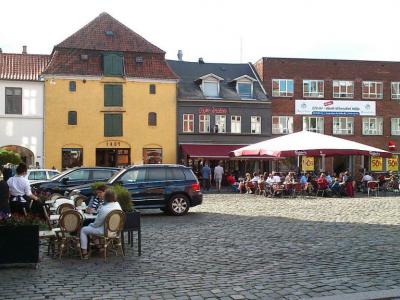
Latin Quarter is a neighborhood in the inner city of Aarhus. It is the oldest part of the city with a history that dates to the 14th century. The oldest houses and buildings in the Latin Quarter were built in the 16th century. One of these is Juuls Gard, which is one of the oldest buildings in the city.
Latin Quarter includes the main square of Pustervig Torv and several streets around the square. The name of the neighborhood was chosen in the 1990s due to the area's resemblance to Paris's Latin Quarter.
The quarter has a large number of shops, cafes and restaurants. It is also known for its active nightlife and entertainment venues. There are a number of small stages throughout the Latin Quarter where live music plays in the evening. Visitors will also find a number of galleries, studios and public art displays.
Latin Quarter includes the main square of Pustervig Torv and several streets around the square. The name of the neighborhood was chosen in the 1990s due to the area's resemblance to Paris's Latin Quarter.
The quarter has a large number of shops, cafes and restaurants. It is also known for its active nightlife and entertainment venues. There are a number of small stages throughout the Latin Quarter where live music plays in the evening. Visitors will also find a number of galleries, studios and public art displays.
4) Aarhus Cathedral (must see)
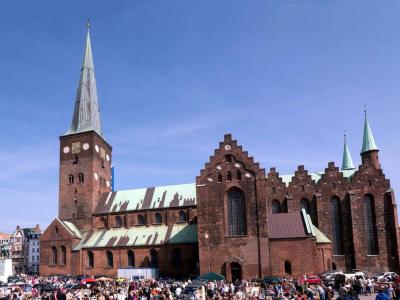
Aarhus Cathedral is a Church of Denmark cathedral that was previously a part of the Roman Catholic church. The Gothic and Romanesque cathedral was completed in 1300 and dedicated to Saint Clement, the patron saint of sailors.
Construction of the church started around 1190. It was built around Saint Clement's church, a timber church built in 1102. The Romanesque architectural style included half-rounded arches, a flat timber ceiling and four chapels.
The cathedral suffered great damage in 1330 when a fire burned much of Aarhus. It was abandoned until 1449 when it was renovated and enlarged. The new design of the church used Gothic vaulting with high windows and a lengthened nave. It is now both the tallest and longest church in Denmark at 305 feet long and 315 feet high. The current, 314-foot tower was built in 1931.
There are more frescoes in Aarhus Cathedral than in any church in the country. They were painted between 1470 and 1520. Likewise, the painting of Saint Christopher and Saint Clement are the tallest in Denmark. The cathedral's one stained glass window was created by Emanuel Vigeland in 1926. At almost 46-feet tall, it is the largest stained glass window in Denmark.
Construction of the church started around 1190. It was built around Saint Clement's church, a timber church built in 1102. The Romanesque architectural style included half-rounded arches, a flat timber ceiling and four chapels.
The cathedral suffered great damage in 1330 when a fire burned much of Aarhus. It was abandoned until 1449 when it was renovated and enlarged. The new design of the church used Gothic vaulting with high windows and a lengthened nave. It is now both the tallest and longest church in Denmark at 305 feet long and 315 feet high. The current, 314-foot tower was built in 1931.
There are more frescoes in Aarhus Cathedral than in any church in the country. They were painted between 1470 and 1520. Likewise, the painting of Saint Christopher and Saint Clement are the tallest in Denmark. The cathedral's one stained glass window was created by Emanuel Vigeland in 1926. At almost 46-feet tall, it is the largest stained glass window in Denmark.
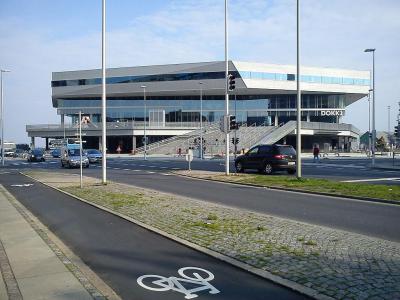
5) Dokk1
Dokk1 in Aarhus serves as a multifunctional space combining a government building, public library, and culture center. This iconic facility is situated at Hack Kampmanns Plads in the city's waterfront area, near the Custom House.
Designed by the renowned Schmidt Hammer Lassen Architects along with landscape architect Kristine Jensen, the construction of Dokk1 was managed by NCC AB. The groundwork began on June 8, 2011, and the facility was officially opened on June 20, 2015. The name "Dokk1," chosen through a public contest in the autumn of 2012, reflects its harborside location and history, suggesting "The Dock" or "Dock One."
The structure itself is a striking architectural achievement, characterized by its Neo-futuristic design resembling a heptagonal metal disc atop a glass prism. This design not only enhances its aesthetic appeal but also ensures transparency, allowing unobstructed views of the surrounding harbor, bay, forest, and cityscape. The building spans 60,000 square meters in total floor space, with the library occupying 17,500 square meters and another 10,500 square meters leased to businesses.
Dokk1's offerings include the Aarhus Main Library, municipal public services, various business spaces, theater scenes, and even a large automated parking garage. This eclectic mix of uses underscores a broader trend in Denmark of blending cultural, commercial, and municipal functionalities under one roof. Overall, Dokk1 stands as a testament to modern architectural innovation and civic utility in urban design.
Designed by the renowned Schmidt Hammer Lassen Architects along with landscape architect Kristine Jensen, the construction of Dokk1 was managed by NCC AB. The groundwork began on June 8, 2011, and the facility was officially opened on June 20, 2015. The name "Dokk1," chosen through a public contest in the autumn of 2012, reflects its harborside location and history, suggesting "The Dock" or "Dock One."
The structure itself is a striking architectural achievement, characterized by its Neo-futuristic design resembling a heptagonal metal disc atop a glass prism. This design not only enhances its aesthetic appeal but also ensures transparency, allowing unobstructed views of the surrounding harbor, bay, forest, and cityscape. The building spans 60,000 square meters in total floor space, with the library occupying 17,500 square meters and another 10,500 square meters leased to businesses.
Dokk1's offerings include the Aarhus Main Library, municipal public services, various business spaces, theater scenes, and even a large automated parking garage. This eclectic mix of uses underscores a broader trend in Denmark of blending cultural, commercial, and municipal functionalities under one roof. Overall, Dokk1 stands as a testament to modern architectural innovation and civic utility in urban design.
