Custom Walk in Copenhagen, Denmark by anna_stjernfalk_d622a created on 2026-07-11
Guide Location: Denmark » Copenhagen
Guide Type: Custom Walk
# of Sights: 6
Tour Duration: 2 Hour(s)
Travel Distance: 5.3 Km or 3.3 Miles
Share Key: YP8WG
Guide Type: Custom Walk
# of Sights: 6
Tour Duration: 2 Hour(s)
Travel Distance: 5.3 Km or 3.3 Miles
Share Key: YP8WG
How It Works
Please retrieve this walk in the GPSmyCity app. Once done, the app will guide you from one tour stop to the next as if you had a personal tour guide. If you created the walk on this website or come to the page via a link, please follow the instructions below to retrieve the walk in the app.
Retrieve This Walk in App
Step 1. Download the app "GPSmyCity: Walks in 1K+ Cities" on Apple App Store or Google Play Store.



Step 2. In the GPSmyCity app, download(or launch) the guide "Copenhagen Map and Walking Tours".
Step 3. Tap the menu button located at upper right corner of the "Walks" screen and select "Retrieve custom walk". Enter the share key: YP8WG
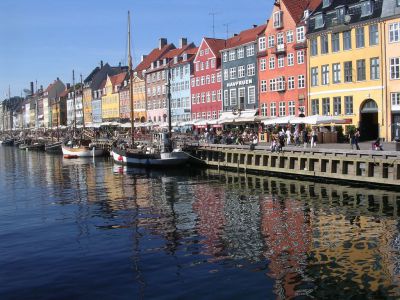
1) New Harbor (Nyhavn) (must see)
New Harbor-with all its bright colors, wooden ships, and a dash of nautical nostalgia-is by far Copenhagen’s most photogenic waterfront. Here, 17th-century Danish townhouses line up like they’re auditioning for a postcard.
Built between 1670 and 1675 under the direction of King Christian V-using a workforce of Danish soldiers and captured Swedish war prisoners-New Harbor was designed to boost trade with the Dutch. In reality, however, it quickly became Copenhagen’s go-to district for beer, brawls, and brothels. Trade and trouble? Why not both?
In his turn, the famed Danish author Hans Christian Andersen also called New Harbor home for a whopping 18 years. He first moved into Number 20, the red house, in 1834. Then, he shuffled over to Number 18 and eventually spent his longest stretch lounging around Number 67 from 1848 to 1865. Basically, he was living that prime canal-side real estate life before it was cool.
After World War II, the harbor’s hustle slowed to a crawl, and the area nearly faded into obscurity. But the 1960s gave it a second act. In 1977, the Veteran Ship and Museum Harbor dropped anchor, and by 1980, the quay was pedestrianized-aka, turned into the selfie paradise and café haven we know today.
Take a stroll now, and you’ll spot all sorts of restored museum ships moored along the canal-each one with enough maritime drama to fill a Netflix series. At the far end of the harbor sits the Memorial Anchor, quietly honoring Danish sailors lost in World War II.
Wander a bit further south, and things take a modern turn. Jazz clubs, tattoo parlors, trendy cafés, and enough open-faced sandwiches to keep your Instagram busy for hours.
Tip:
If you're on a tight budget or just pretending to be Danish, skip the overpriced bar scene. Grab a beer or coffee from a convenience store, plop yourself down at the quayside, and soak in the view. For something classier, head to the Royal Playhouse at the far end-great drinks, decent prices, and panoramic views that will make your camera weep with joy.
And hey, if your feet are screaming for mercy, you can always hop on a boat tour right at the harbor entrance. One hour of effortless sightseeing and zero walking required.
Built between 1670 and 1675 under the direction of King Christian V-using a workforce of Danish soldiers and captured Swedish war prisoners-New Harbor was designed to boost trade with the Dutch. In reality, however, it quickly became Copenhagen’s go-to district for beer, brawls, and brothels. Trade and trouble? Why not both?
In his turn, the famed Danish author Hans Christian Andersen also called New Harbor home for a whopping 18 years. He first moved into Number 20, the red house, in 1834. Then, he shuffled over to Number 18 and eventually spent his longest stretch lounging around Number 67 from 1848 to 1865. Basically, he was living that prime canal-side real estate life before it was cool.
After World War II, the harbor’s hustle slowed to a crawl, and the area nearly faded into obscurity. But the 1960s gave it a second act. In 1977, the Veteran Ship and Museum Harbor dropped anchor, and by 1980, the quay was pedestrianized-aka, turned into the selfie paradise and café haven we know today.
Take a stroll now, and you’ll spot all sorts of restored museum ships moored along the canal-each one with enough maritime drama to fill a Netflix series. At the far end of the harbor sits the Memorial Anchor, quietly honoring Danish sailors lost in World War II.
Wander a bit further south, and things take a modern turn. Jazz clubs, tattoo parlors, trendy cafés, and enough open-faced sandwiches to keep your Instagram busy for hours.
Tip:
If you're on a tight budget or just pretending to be Danish, skip the overpriced bar scene. Grab a beer or coffee from a convenience store, plop yourself down at the quayside, and soak in the view. For something classier, head to the Royal Playhouse at the far end-great drinks, decent prices, and panoramic views that will make your camera weep with joy.
And hey, if your feet are screaming for mercy, you can always hop on a boat tour right at the harbor entrance. One hour of effortless sightseeing and zero walking required.
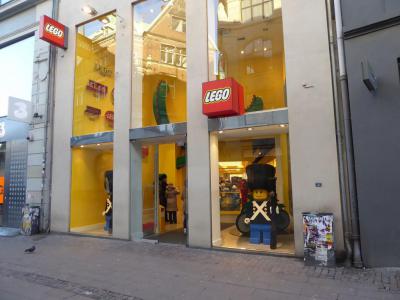
2) LEGO
Who has not at some point played with LEGO toy building bricks as a child? The popular Danish plastic toy was introduced in 1947 by founder Ole Kirk Christiansen. The name LEGO comes from the Danish words leg godt, meaning play well.
The original toy building bricks were just the start. Later, in 1969, came Duplo building bricks, a series of simple blocks twice as big as the original and aimed at young children. LEGO also produces plastic figures, merchandise and themed sets often with a macho theme, like Star Wars, Indiana Jones, Toy Story, Batman, Cars, Pirates of the Caribbean, Avatar, Spider Man and so on.
LEGO has a massive following and subculture of movies, games, magazines, clothing line and of course theme parks. The original LEGOLAND is located in the town of Billund in Denmark. LEGO toys come in many variations with a starting price as little as $5. If you are Copenhagen, you should not miss the opportunity to visit the world of LEGO in its brand new flagship store.
The original toy building bricks were just the start. Later, in 1969, came Duplo building bricks, a series of simple blocks twice as big as the original and aimed at young children. LEGO also produces plastic figures, merchandise and themed sets often with a macho theme, like Star Wars, Indiana Jones, Toy Story, Batman, Cars, Pirates of the Caribbean, Avatar, Spider Man and so on.
LEGO has a massive following and subculture of movies, games, magazines, clothing line and of course theme parks. The original LEGOLAND is located in the town of Billund in Denmark. LEGO toys come in many variations with a starting price as little as $5. If you are Copenhagen, you should not miss the opportunity to visit the world of LEGO in its brand new flagship store.
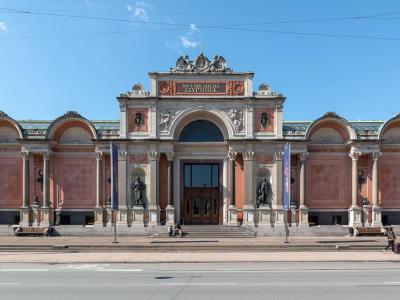
3) Ny Carlsberg Glyptotek – Art Museum (must see)
The New Carlsberg Glyptotheque (Ny Carlsberg Glyptotek), commonly known simply as The Glyptotheque (Glyptoteket), is the sculpture museum that features the private art collection of Carl Jacobsen (1842–1914), the son of the founder of the Carlsberg Breweries.
The museum contains over 10,000 artworks spanning ancient Mediterranean cultures and modern European art, including the largest collection of Auguste Rodin's sculptures outside France. It also boasts numerous paintings by French Impressionists and Post-Impressionists (such as Monet, Manet, Degas, Cézanne, Van Gogh, Picasso, Renoir, Toulouse-Lautrec, etc.), as well as Danish Golden Age artists, complete with the extensive collections of Greek, Roman, Etruscan, and Egyptian antiquities.
Carl Jacobsen, a dedicated art collector, amassed a wealth of antique, French, and Danish sculptures during his life, which were initially displayed in his private villa's winter garden in 1882. As the collection outgrew its space, in 1888, Jacobsen donated all of it to the Danish State and the City of Copenhagen, contingent on them providing a suitable exhibition facility. A new location was chosen near Tivoli Gardens and opened on May 1, 1897.
Celebrated for its architectural elegance, the building harmoniously blends art with its structure. Featuring the historicist Dahlerup Wing with its Venetian Renaissance style and the neo-classical Kampmann Wing, it also includes a connecting Winter Garden and the minimalist Henning Larsen Wing, used for prestigious events.
What is more, the museum's wings are built around a very soothing, Victorian-style garden, rich with greenery and sculpture, under a translucent glass dome. If you can afford some extra time, it's always a nice place to relax for a while and enjoy coffee or lunch – especially in the winter, as you can be in nature and enjoy the warmth.
The Glyptotek Auditorium regularly hosts classical concerts featuring notable artists, as well as other cultural events including poetry readings and debates. Known for its excellent acoustics, the venue also accommodates rehearsals and performances by musical ensembles.
Why You Should Visit:
To enjoy a surprisingly good collection in a gorgeously modified setting (the open rooftop affords great views of the city!), plus the magnificent palm garden with many benches, ponds, a delicious café, and some horticultural wonders.
Tip:
Pick up a floor plan as you enter to help navigate the somewhat confusing layout. Take breaks to go through one wing at a time. You will need breaks, as the place is huge in an unexpected way.
Keep in mind that Tuesdays are free, so perhaps you could go multiple times to make sure you see it all.
The on-site classical music concerts are frequently free too, so try to catch one.
The museum contains over 10,000 artworks spanning ancient Mediterranean cultures and modern European art, including the largest collection of Auguste Rodin's sculptures outside France. It also boasts numerous paintings by French Impressionists and Post-Impressionists (such as Monet, Manet, Degas, Cézanne, Van Gogh, Picasso, Renoir, Toulouse-Lautrec, etc.), as well as Danish Golden Age artists, complete with the extensive collections of Greek, Roman, Etruscan, and Egyptian antiquities.
Carl Jacobsen, a dedicated art collector, amassed a wealth of antique, French, and Danish sculptures during his life, which were initially displayed in his private villa's winter garden in 1882. As the collection outgrew its space, in 1888, Jacobsen donated all of it to the Danish State and the City of Copenhagen, contingent on them providing a suitable exhibition facility. A new location was chosen near Tivoli Gardens and opened on May 1, 1897.
Celebrated for its architectural elegance, the building harmoniously blends art with its structure. Featuring the historicist Dahlerup Wing with its Venetian Renaissance style and the neo-classical Kampmann Wing, it also includes a connecting Winter Garden and the minimalist Henning Larsen Wing, used for prestigious events.
What is more, the museum's wings are built around a very soothing, Victorian-style garden, rich with greenery and sculpture, under a translucent glass dome. If you can afford some extra time, it's always a nice place to relax for a while and enjoy coffee or lunch – especially in the winter, as you can be in nature and enjoy the warmth.
The Glyptotek Auditorium regularly hosts classical concerts featuring notable artists, as well as other cultural events including poetry readings and debates. Known for its excellent acoustics, the venue also accommodates rehearsals and performances by musical ensembles.
Why You Should Visit:
To enjoy a surprisingly good collection in a gorgeously modified setting (the open rooftop affords great views of the city!), plus the magnificent palm garden with many benches, ponds, a delicious café, and some horticultural wonders.
Tip:
Pick up a floor plan as you enter to help navigate the somewhat confusing layout. Take breaks to go through one wing at a time. You will need breaks, as the place is huge in an unexpected way.
Keep in mind that Tuesdays are free, so perhaps you could go multiple times to make sure you see it all.
The on-site classical music concerts are frequently free too, so try to catch one.
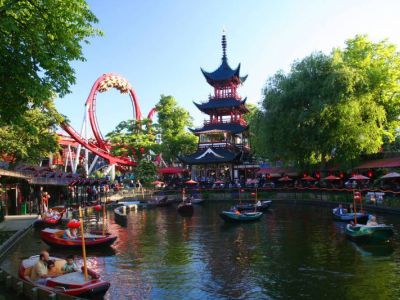
4) Tivoli Gardens (must see)
Conveniently located in central Copenhagen, very close to the train station (for those traveling into town), Tivoli Gardens is the original inspiration for Walt Disney World – and it shows. The lovingly tended grounds – a wonderland of rides, games, restaurants, marching bands, funny mirrors, and roulette wheels – are picturesque and equally friendly for both kids and adults.
Tivoli is actually the second oldest, still operational amusement park in the world; the oldest one is also in Denmark. The wooden "Mountain" Roller Coaster (Bjergbanen or Rutschebanen) was built in 1914; its operator actually controls the ride by braking, so that it does not gain too much speed while descending the hills! Another roller coaster, The Demon (Dæmonen), features an “Immelmann” vertical loop and a zero-gravity roll – all in one ride that lasts one minute and 46 seconds. Also of note is The Star Flyer swing ride, opened in 2006, offering panoramic views of the city from an 80-meter (260-foot) elevation.
Apart from these exciting rides and a few thrilling towers, Tivoli is a venue for performing arts, counting among the major cultural hubs in Copenhagen. So even if you are not interested in the rides, there is plenty of space just to walk around, admire the prodigious flowers and large fountains, catch a free concert, or try a wide range of different foods: Mexican, Asian, Japanese, Italian, French, Danish, or regular street food like sandwiches/burgers, etc.
Tickets are both "pay as you go" and "pay once for all", which is affordable for every budget and worth it just to see the Danes – both young and old – at play. In the summer months they have fireworks displays every Saturday at 11:45 pm and if you don't want to stay all day, just have your hand stamped so you can re-enter at a later time.
Why You Should Visit:
Supposedly, this was the template that inspired Walt Disney to create his theme parks!
Fun to walk around in even if you don't go on any rides – a lovely way to spend time with friends.
Tip:
Great to come a bit before sunset, so you can see the place both in daylight and illuminated in the evening.
You can also take your own food and drink in a bag (they don't check them), as it's rather expensive inside.
Tivoli is actually the second oldest, still operational amusement park in the world; the oldest one is also in Denmark. The wooden "Mountain" Roller Coaster (Bjergbanen or Rutschebanen) was built in 1914; its operator actually controls the ride by braking, so that it does not gain too much speed while descending the hills! Another roller coaster, The Demon (Dæmonen), features an “Immelmann” vertical loop and a zero-gravity roll – all in one ride that lasts one minute and 46 seconds. Also of note is The Star Flyer swing ride, opened in 2006, offering panoramic views of the city from an 80-meter (260-foot) elevation.
Apart from these exciting rides and a few thrilling towers, Tivoli is a venue for performing arts, counting among the major cultural hubs in Copenhagen. So even if you are not interested in the rides, there is plenty of space just to walk around, admire the prodigious flowers and large fountains, catch a free concert, or try a wide range of different foods: Mexican, Asian, Japanese, Italian, French, Danish, or regular street food like sandwiches/burgers, etc.
Tickets are both "pay as you go" and "pay once for all", which is affordable for every budget and worth it just to see the Danes – both young and old – at play. In the summer months they have fireworks displays every Saturday at 11:45 pm and if you don't want to stay all day, just have your hand stamped so you can re-enter at a later time.
Why You Should Visit:
Supposedly, this was the template that inspired Walt Disney to create his theme parks!
Fun to walk around in even if you don't go on any rides – a lovely way to spend time with friends.
Tip:
Great to come a bit before sunset, so you can see the place both in daylight and illuminated in the evening.
You can also take your own food and drink in a bag (they don't check them), as it's rather expensive inside.

5) Copenhagen Central Station
One of the busiest and largest stations in Denmark, Copenhagen Central Station can be accessed from Reventlowsgade, Banegardspladsen, Tietgensgade and Bernstorffsgade at Tivoli Gardens. People throng here to use the S-trains, regional trains and InterCity.
International trains plying from this station servicing passengers to and from Sweden include the frequent and regular Oresund services. There are a total of 13 platforms in this station and a lot of fast food outlets, cafeterias and small shops on the concourse.
The city’s first ever railway station came into existence in 1847. Made of wood, this station served Roskildebanen. Due to a strong need to extend the railway station, another station was designed and built by H.J. Herholdt in 1864.
Eventually, this station also proved to be small. Heinrich Wenck designed and built the present station connecting it to Osterport station with a tube and with tracks to the south of the city. Construction of the station was completed in 1911.
A complete overhaul in 1980 resulted in the addition of lifts and escalators. Another overhaul between 2004 and 2008 was done to replace the roof and to refurbish platforms 3 and 6 and raise them to international standards. This station is definitely worth visiting. In fact, do not miss the unique experience of traveling in the train.
International trains plying from this station servicing passengers to and from Sweden include the frequent and regular Oresund services. There are a total of 13 platforms in this station and a lot of fast food outlets, cafeterias and small shops on the concourse.
The city’s first ever railway station came into existence in 1847. Made of wood, this station served Roskildebanen. Due to a strong need to extend the railway station, another station was designed and built by H.J. Herholdt in 1864.
Eventually, this station also proved to be small. Heinrich Wenck designed and built the present station connecting it to Osterport station with a tube and with tracks to the south of the city. Construction of the station was completed in 1911.
A complete overhaul in 1980 resulted in the addition of lifts and escalators. Another overhaul between 2004 and 2008 was done to replace the roof and to refurbish platforms 3 and 6 and raise them to international standards. This station is definitely worth visiting. In fact, do not miss the unique experience of traveling in the train.
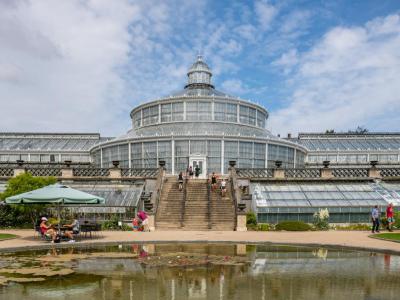
6) Copenhagen Botanical Garden (must see)
If you like plants and wish to know all about their diversity, you must visit the Copenhagen Botanical Garden on your trip to the city. This garden teaches you all about the fungal kingdoms and even about how to conserve nature on a national and global basis. It covers an area of 10 hectares and is particularly noted for its extensive complex of historical glasshouses dating from 1874.
Enter the garden and you will find the area divided into three distinct parts namely the Botanic Garden, Botanical Library and the Botanical Museum. The garden is arranged in different sections including Danish plants (600 species), perennial plants (1,100 species), annual plants (1,100 species), rock gardens with plants from mountainous areas in Central and Southern Europe and Conifer Hill which is planted with coniferous trees.
At the Botanical Museum, you will find a range of fungi and dried plant collections, while Denmark’s botanical literature collection is housed at the Botanical Library (admission by appointment only). The garden, as well as the museum, help develop and maintain scientific collections of dried and living fungi and plants in keeping with international conventions and practice.
Why You Should Visit:
Plenty of open space, trees, water features, and, in the summer, scented flowers and (hopefully) sunshine.
Great place to relax or walk quietly. There's also a café where you can order refreshments.
Tip:
Take a picnic and allow for lots of time. If you're a keen gardener you'll also need a notebook!
Enter the garden and you will find the area divided into three distinct parts namely the Botanic Garden, Botanical Library and the Botanical Museum. The garden is arranged in different sections including Danish plants (600 species), perennial plants (1,100 species), annual plants (1,100 species), rock gardens with plants from mountainous areas in Central and Southern Europe and Conifer Hill which is planted with coniferous trees.
At the Botanical Museum, you will find a range of fungi and dried plant collections, while Denmark’s botanical literature collection is housed at the Botanical Library (admission by appointment only). The garden, as well as the museum, help develop and maintain scientific collections of dried and living fungi and plants in keeping with international conventions and practice.
Why You Should Visit:
Plenty of open space, trees, water features, and, in the summer, scented flowers and (hopefully) sunshine.
Great place to relax or walk quietly. There's also a café where you can order refreshments.
Tip:
Take a picnic and allow for lots of time. If you're a keen gardener you'll also need a notebook!
