Custom Walk in Trieste, Italy by deirdrelavinia898 created on 2026-07-25
Guide Location: Italy » Trieste
Guide Type: Custom Walk
# of Sights: 15
Tour Duration: 4 Hour(s)
Travel Distance: 6.6 Km or 4.1 Miles
Share Key: TAN6Q
Guide Type: Custom Walk
# of Sights: 15
Tour Duration: 4 Hour(s)
Travel Distance: 6.6 Km or 4.1 Miles
Share Key: TAN6Q
How It Works
Please retrieve this walk in the GPSmyCity app. Once done, the app will guide you from one tour stop to the next as if you had a personal tour guide. If you created the walk on this website or come to the page via a link, please follow the instructions below to retrieve the walk in the app.
Retrieve This Walk in App
Step 1. Download the app "GPSmyCity: Walks in 1K+ Cities" on Apple App Store or Google Play Store.



Step 2. In the GPSmyCity app, download(or launch) the guide "Trieste Map and Walking Tours".
Step 3. Tap the menu button located at upper right corner of the "Walks" screen and select "Retrieve custom walk". Enter the share key: TAN6Q
1) Caffe San Marco
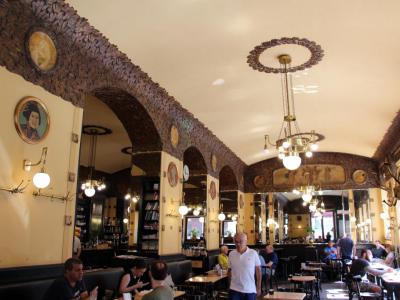
Caffè San Marco opened its doors in 1914 and almost immediately turned into Trieste’s unofficial parliament of words. Writers, artists, students, and political dreamers filled its tables, with James Joyce, Italo Svevo, and Umberto Saba scribbling thoughts between sips. Austrian troops leveled it during the First World War, suspicious of the nationalist chatter inside, but the café didn’t stay down for long. It rebuilt its walls and its reputation, becoming once again a stage for Trieste’s restless ideas.
Step inside and you walk straight into the early 20th century. The décor is a manifesto of Art Nouveau and Vienna Secession-dark wood, red marble, chandeliers that shine like the sun, mirrors framed in brass, and frescoes overhead. After a full restoration in 2013, the café added a bookstore and reinvented itself as a cultural venue, where book launches and discussions now take place under the same chandeliers that once listened in on Joyce.
Nowadays, the café is less about caffeine alone and more about continuity. Visitors find themselves sipping in the same seats where literature, politics, and rebellion once mingled. The air still carries the weight of past conversations-it’s Trieste’s living archive, dressed up with marble tables and the sound of spoons against porcelain.
Step inside and you walk straight into the early 20th century. The décor is a manifesto of Art Nouveau and Vienna Secession-dark wood, red marble, chandeliers that shine like the sun, mirrors framed in brass, and frescoes overhead. After a full restoration in 2013, the café added a bookstore and reinvented itself as a cultural venue, where book launches and discussions now take place under the same chandeliers that once listened in on Joyce.
Nowadays, the café is less about caffeine alone and more about continuity. Visitors find themselves sipping in the same seats where literature, politics, and rebellion once mingled. The air still carries the weight of past conversations-it’s Trieste’s living archive, dressed up with marble tables and the sound of spoons against porcelain.

2) Pasticceria La Bomboniera (La Bomboniera Pastry Shop)
Walking around Trieste, you can't help noticing a multitude of patisseries. One such, called La Bomboniera, not far from the church of Sant'Antonio a Ponte Rosso, is a fixed stop for a sweet tooth in the know. Being among the oldest pastry shops in the city, La Bomboniera, established in 1836, is a real jewel box.
Located right in the heart of downtown but far from its noise, La Bomboniera deceives you into thinking that you are in Vienna. Indeed, this typical Austro-Hungarian patisserie is very representative of middle Europe. The range of sweets offered here includes typical Trieste desserts based on Austro-Hungarian tradition, like Rigo Jansci chocolate cake, Pischinger, Sacher, Linzer, and Dobos tortes and cakes, as well as putizza cake, presnitz pastry, pinza cake, homemade chocolate eggs, Jewish marzipan desserts, "fave dei morti" almond biscuits, and white and brown chequerboard mandorlati almond biscuits… all baked in the original wood-fired oven.
The Art Nouveau-style interior is just as appealing as the elaborate menu and has remained intact for over a century, producing the impression of stopped time. All the furniture, including glass cabinets and wooden boiserie, not to mention the wood-burning oven, are original, which is really special these days.
Inside, the glass panel separating the pastry “lab” from the shop still carries a bullet hole from a gunshot fired during the so-called Trieste Riots in 1953. Ask one of the courteous staff and they'll tell you more about it.
A mix of history and confectionery in one place makes it a really nice spot to visit. Just make sure to limit your appetite for sweets, which, on this occasion, may prove a bit difficult.
Located right in the heart of downtown but far from its noise, La Bomboniera deceives you into thinking that you are in Vienna. Indeed, this typical Austro-Hungarian patisserie is very representative of middle Europe. The range of sweets offered here includes typical Trieste desserts based on Austro-Hungarian tradition, like Rigo Jansci chocolate cake, Pischinger, Sacher, Linzer, and Dobos tortes and cakes, as well as putizza cake, presnitz pastry, pinza cake, homemade chocolate eggs, Jewish marzipan desserts, "fave dei morti" almond biscuits, and white and brown chequerboard mandorlati almond biscuits… all baked in the original wood-fired oven.
The Art Nouveau-style interior is just as appealing as the elaborate menu and has remained intact for over a century, producing the impression of stopped time. All the furniture, including glass cabinets and wooden boiserie, not to mention the wood-burning oven, are original, which is really special these days.
Inside, the glass panel separating the pastry “lab” from the shop still carries a bullet hole from a gunshot fired during the so-called Trieste Riots in 1953. Ask one of the courteous staff and they'll tell you more about it.
A mix of history and confectionery in one place makes it a really nice spot to visit. Just make sure to limit your appetite for sweets, which, on this occasion, may prove a bit difficult.
3) Canal Grande (Grand Canal) (must see)
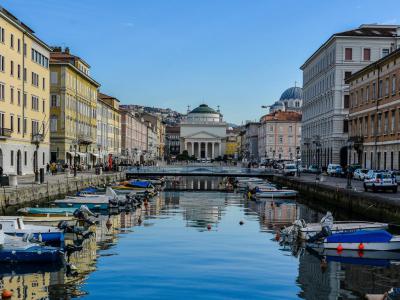
High in spectacle but modest in length, Trieste’s Grand Canal cuts through the Borgo Teresiano neighborhood. It was carved out in the mid-18th century, between 1754 and 1756, by Matteo Pirona, a Venetian engineer working under the reign of Holy Roman Empress Maria Theresa. His goal was practical: bring ships straight into the city’s heart, so goods could be offloaded directly into warehouses and markets. Back then, the canal stretched all the way to the steps of Saint Antonio Taumaturgo, until 1934, when the last stretch was filled in to create the square we see today-rumor has it, with a torpedo boat entombed beneath the rubble.
The canal’s history is written in its bridges. The Red Bridge first appeared in 1756, a wooden crossing later remade in iron. The Green Bridge followed in 1858, and the White Bridge arrived in 1904 as a railway link. A more recent addition, the Joyce Passage of 2012, honors James Joyce, whose bronze likeness stands casually on the Red Bridge, still thinking of a good rhyme sequence.
Around the waterway, the façades of merchant palaces and warehouses still mark Trieste’s free-port glory, their Neoclassical, Baroque, and Viennese styles reflecting the wealth of the 18th and 19th centuries. The scene is framed at one end by Saint Antonio Taumaturgo’s imposing neoclassical church and flanked nearby by the domes of Saint Spyridon, tying Catholic and Orthodox legacies into the same view.
By daylight, the canal doubles as a promenade lined with cafés and shops; by night, the water mirrors lamplights, making even casual strolls theatrical. Markets, boat races, and festivals still spill onto its edges, ensuring the canal remains both a reminder of Trieste’s past and a lively artery of its present.
The canal’s history is written in its bridges. The Red Bridge first appeared in 1756, a wooden crossing later remade in iron. The Green Bridge followed in 1858, and the White Bridge arrived in 1904 as a railway link. A more recent addition, the Joyce Passage of 2012, honors James Joyce, whose bronze likeness stands casually on the Red Bridge, still thinking of a good rhyme sequence.
Around the waterway, the façades of merchant palaces and warehouses still mark Trieste’s free-port glory, their Neoclassical, Baroque, and Viennese styles reflecting the wealth of the 18th and 19th centuries. The scene is framed at one end by Saint Antonio Taumaturgo’s imposing neoclassical church and flanked nearby by the domes of Saint Spyridon, tying Catholic and Orthodox legacies into the same view.
By daylight, the canal doubles as a promenade lined with cafés and shops; by night, the water mirrors lamplights, making even casual strolls theatrical. Markets, boat races, and festivals still spill onto its edges, ensuring the canal remains both a reminder of Trieste’s past and a lively artery of its present.
4) Molo Audace (Bold Wharf) (must see)
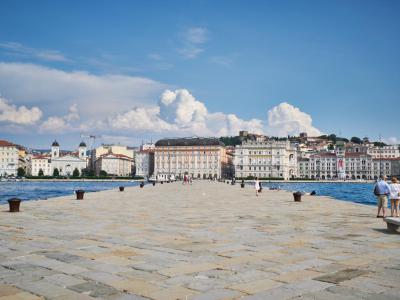
Bold Wharf, or Molo Audace as Triestini know it, seems like a stone arm stretched confidently into the Gulf. From here the city puts on a full display: Unity of Italy Square lined up neatly behind you, the lighthouse winking in the distance, and-on a clear day-the Alps gliding on the water.
Its beginnings were less poetic. In 1740, the ship San Carlo sank close to shore. Instead of salvaging the wreck, the city simply built over it, turning misfortune into foundation. Thus rose the San Carlo Pier, first a modest 95 meters and tethered to land by a wooden bridge. By the 19th century, with Trieste thriving as the Habsburg free port, the pier was extended to 246 meters and secured firmly to the waterfront, buzzing with sailors, merchants, and crates of goods destined for half of Europe.
History pivoted in November 1918, when the Italian destroyer Audace was the first ship of the new regime to dock here. Four years later, the pier was renamed in its honor. The ship’s anchor rests today by the Victory Lighthouse, while a bronze compass rose installed in 1925 still marks the end of the pier, a reminder that Trieste has always looked seaward.
Triestini and visitors alike drift here to watch sunsets, take photographs, or let the sea breeze untangle their thoughts. Half promenade, half open-air memorial, it continues to balance the weight of history with the lightness of everyday life.
Its beginnings were less poetic. In 1740, the ship San Carlo sank close to shore. Instead of salvaging the wreck, the city simply built over it, turning misfortune into foundation. Thus rose the San Carlo Pier, first a modest 95 meters and tethered to land by a wooden bridge. By the 19th century, with Trieste thriving as the Habsburg free port, the pier was extended to 246 meters and secured firmly to the waterfront, buzzing with sailors, merchants, and crates of goods destined for half of Europe.
History pivoted in November 1918, when the Italian destroyer Audace was the first ship of the new regime to dock here. Four years later, the pier was renamed in its honor. The ship’s anchor rests today by the Victory Lighthouse, while a bronze compass rose installed in 1925 still marks the end of the pier, a reminder that Trieste has always looked seaward.
Triestini and visitors alike drift here to watch sunsets, take photographs, or let the sea breeze untangle their thoughts. Half promenade, half open-air memorial, it continues to balance the weight of history with the lightness of everyday life.
5) Golfo di Trieste (Gulf of Trieste)
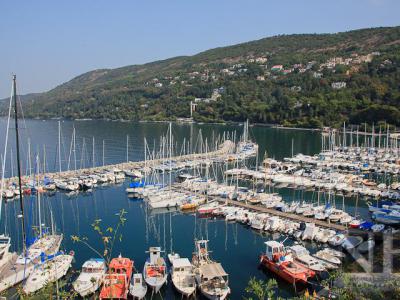
The Gulf of Trieste, the northernmost arm of the Adriatic Sea, is a unique crossroads where Italy, Slovenia, and Croatia meet. Shaped by centuries of maritime trade and cultural exchange, it has long served as a strategic hub for empires from the Romans to the Habsburgs. Today, Trieste remains the region's principal port city, blending a cosmopolitan heritage with a maritime character that continues to define the area. The Gulf’s mild climate and calm waters have made it not only a place of commerce but also an inviting destination for leisure and exploration.
Geographically, the gulf is a shallow bay, covering about 550 square kilometres with an average depth of just under 19 metres. It is part of the larger Gulf of Venice and is enclosed to the south by the Istrian Peninsula, the largest in the Adriatic. Its coastline is shared by Italy, Slovenia, and Croatia, with the entire Slovenian shoreline-home to the towns of Koper, Izola, and Piran-falling within its boundaries. While the eastern coasts are rugged, shaped by cliffs and karst hills, the western stretches are softer, with coastal plains and lagoons. The waters circulate counterclockwise with gentle currents, while the tides, though among the highest in the Adriatic, remain modest in scale.
The Gulf’s landscapes are as varied as its waters. From the wetlands at the Isonzo River delta, rich in birdlife, to rocky beaches and hidden coves, it is a natural haven for divers, sailors, and birdwatchers alike. The changing light across the sea and hills has inspired artists for centuries, making the area a favorite subject for painting and photography.
For visitors, the Gulf of Trieste is more than a backdrop-it is an experience. The Molo Audace in Trieste offers sweeping views of the horizon, while smaller villages like Muggia preserve a slower rhythm tied to fishing traditions. In summer, sailing regattas bring life and color to the water, while boat excursions open up panoramic perspectives of the Adriatic. Whether for history, scenery, or recreation, the Gulf remains a place where sea and culture meet in perfect balance.
Geographically, the gulf is a shallow bay, covering about 550 square kilometres with an average depth of just under 19 metres. It is part of the larger Gulf of Venice and is enclosed to the south by the Istrian Peninsula, the largest in the Adriatic. Its coastline is shared by Italy, Slovenia, and Croatia, with the entire Slovenian shoreline-home to the towns of Koper, Izola, and Piran-falling within its boundaries. While the eastern coasts are rugged, shaped by cliffs and karst hills, the western stretches are softer, with coastal plains and lagoons. The waters circulate counterclockwise with gentle currents, while the tides, though among the highest in the Adriatic, remain modest in scale.
The Gulf’s landscapes are as varied as its waters. From the wetlands at the Isonzo River delta, rich in birdlife, to rocky beaches and hidden coves, it is a natural haven for divers, sailors, and birdwatchers alike. The changing light across the sea and hills has inspired artists for centuries, making the area a favorite subject for painting and photography.
For visitors, the Gulf of Trieste is more than a backdrop-it is an experience. The Molo Audace in Trieste offers sweeping views of the horizon, while smaller villages like Muggia preserve a slower rhythm tied to fishing traditions. In summer, sailing regattas bring life and color to the water, while boat excursions open up panoramic perspectives of the Adriatic. Whether for history, scenery, or recreation, the Gulf remains a place where sea and culture meet in perfect balance.

6) Caffe Tommaseo
Caffè Tommaseo, founded in 1830, is the oldest coffeehouse in Trieste and a treasured emblem of the city’s vibrant café culture. Located near the seafront, it was established by Swiss businessman Tommaso Marcato and quickly became a fashionable meeting place for intellectuals, artists, and merchants. Its opening coincided with Trieste’s rise as a major port of the Austro-Hungarian Empire, a time when the city was flourishing as a cosmopolitan crossroads. The café’s longevity and prestige have made it a living witness to nearly two centuries of local history, from imperial prosperity to modern Italian life.
Inside, Caffè Tommaseo retains much of its 19th-century elegance. The walls are adorned with large mirrors imported from Belgium, while ornate stucco work and period furnishings preserve the refined atmosphere of a bygone era. Natural light floods the interior through tall windows, creating a warm and welcoming space that encourages conversation and contemplation. While its roots are steeped in tradition, the café continues to adapt, offering a blend of historic charm and contemporary service that appeals to both locals and visitors.
Beyond its architectural beauty, the café is celebrated for its rich coffee and pastry selection, reflecting Trieste’s unique blend of Italian and Central European influences. Visitors can enjoy expertly prepared espresso, cappuccino, or traditional Viennese-style coffee alongside freshly baked treats. In the warmer months, outdoor tables provide views of the nearby sea, making it an ideal spot to relax and soak in the city’s maritime character. Whether for a morning coffee, an afternoon respite, or an evening aperitif, Caffè Tommaseo offers an authentic taste of Trieste’s heritage.
Inside, Caffè Tommaseo retains much of its 19th-century elegance. The walls are adorned with large mirrors imported from Belgium, while ornate stucco work and period furnishings preserve the refined atmosphere of a bygone era. Natural light floods the interior through tall windows, creating a warm and welcoming space that encourages conversation and contemplation. While its roots are steeped in tradition, the café continues to adapt, offering a blend of historic charm and contemporary service that appeals to both locals and visitors.
Beyond its architectural beauty, the café is celebrated for its rich coffee and pastry selection, reflecting Trieste’s unique blend of Italian and Central European influences. Visitors can enjoy expertly prepared espresso, cappuccino, or traditional Viennese-style coffee alongside freshly baked treats. In the warmer months, outdoor tables provide views of the nearby sea, making it an ideal spot to relax and soak in the city’s maritime character. Whether for a morning coffee, an afternoon respite, or an evening aperitif, Caffè Tommaseo offers an authentic taste of Trieste’s heritage.
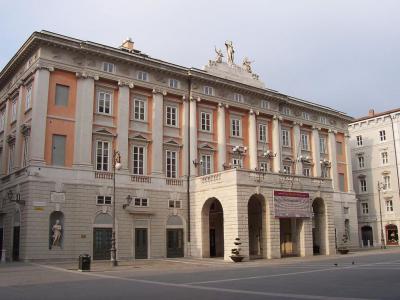
7) Teatro Lirico Giuseppe Verdi (Giuseppe Verdi Opera House)
The Giuseppe Verdi Opera House (Teatro Lirico Giuseppe Verdi) stands as one of the city’s cultural landmarks and a symbol of its long-standing ties to European musical tradition. Constructed privately to replace the inadequate Saint Peter's Theatre, it opened in 1801 as the New Theatre with Johann Simon Mayr’s Ginevra di Scozia. Designed by Gian Antonio Selva, the architect of Venice’s La Fenice, its horseshoe-shaped auditorium reflected classical elegance, while its exterior-reworked by Matteo Pertsch-borrowed grandeur from Milan’s La Scala. This fusion of architectural influences gave Trieste a theatre of both refinement and distinction, one capable of accommodating an audience of 1,400.
The opera house soon became a cultural magnet. Renamed the Great Theatre in 1821, it hosted premieres of Giuseppe Verdi’s Il corsaro (1848) and Stiffelio (1850), both milestones that cemented the theatre’s importance on the operatic map. Verdi’s works dominated the repertoire during the 19th century, alongside celebrated productions of Puccini and Wagner. In 1861, the theatre passed into public ownership and became the Teatro Comunale, expanding its seating capacity to 2,000 before closing for safety renovations in the 1880s. By the late 19th century, it had already secured its reputation as Trieste’s cultural heartbeat.
Following Verdi’s death in 1901, the theatre was renamed in his honour, a tribute that reflected the profound influence of his music on its history. After extensive restorations in the 1990s, the Verdi Theatre reopened with 1,300 seats, restored to its former splendour while adapted to modern standards. Today, it remains a prestigious venue for opera and classical music, known especially for its annual International Festival of Operetta. For visitors, the Verdi Theatre offers not only a window into Trieste’s artistic past but also a chance to experience the city’s vibrant cultural life in one of its most iconic settings.
The opera house soon became a cultural magnet. Renamed the Great Theatre in 1821, it hosted premieres of Giuseppe Verdi’s Il corsaro (1848) and Stiffelio (1850), both milestones that cemented the theatre’s importance on the operatic map. Verdi’s works dominated the repertoire during the 19th century, alongside celebrated productions of Puccini and Wagner. In 1861, the theatre passed into public ownership and became the Teatro Comunale, expanding its seating capacity to 2,000 before closing for safety renovations in the 1880s. By the late 19th century, it had already secured its reputation as Trieste’s cultural heartbeat.
Following Verdi’s death in 1901, the theatre was renamed in his honour, a tribute that reflected the profound influence of his music on its history. After extensive restorations in the 1990s, the Verdi Theatre reopened with 1,300 seats, restored to its former splendour while adapted to modern standards. Today, it remains a prestigious venue for opera and classical music, known especially for its annual International Festival of Operetta. For visitors, the Verdi Theatre offers not only a window into Trieste’s artistic past but also a chance to experience the city’s vibrant cultural life in one of its most iconic settings.
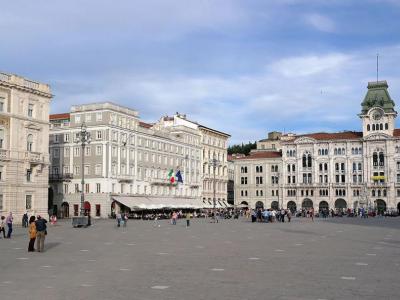
8) Piazza Unità d'Italia (Unity of Italy Square) (must see)
Imagine standing at the edge of Europe’s biggest sea-facing square, where the Adriatic itself seems to join the crowd. Unity of Italy Square is the pulse of Trieste, a stage where history kept rewriting the script. Back in the day it answered to the name Saint Peter Square, then “the Great Square” when locals were feeling proud. Under the Habsburgs, it bowed to Emperor Franz Joseph, only to reinvent itself in 1918 as Unity Square, marking Trieste’s annexation to Italy. By 1955, the name settled into Unity of Italy Square, locking in its role as a badge of national belonging.
But let’s be clear: this square is not a backdrop, it’s the main actor. Open on one side to the sea, it declares Trieste’s long affair with maritime trade. During the boom years of the Austro-Hungarian Empire, palaces rose around it like ornate frames for a painting. The City Hall with its clock tower, the Lloyd Palace, and the Government Palace shimmering with golden mosaics still gives off prosperity and power. Add in the Fountain of the Four Continents-a baroque sculpture celebrating the world’s far reaches-and you’ve got a plaza that doubles as a history book. These days, blue LED strips at night give the stone a modern glow.
And the show goes on. The square has hosted everything from heavy metal concerts featuring Green Day and Iron Maiden to diplomatic summits with the likes of Putin, Merkel, and Macron. Cafés tucked beneath the arcades offer front-row seats to the scene, while the Castle and Cathedral of Saint Giusto loom nearby, serving as a quieter alternative. The square changed identities multiple times, however its reputation can unite anyone and anything, even the land and the sea.
But let’s be clear: this square is not a backdrop, it’s the main actor. Open on one side to the sea, it declares Trieste’s long affair with maritime trade. During the boom years of the Austro-Hungarian Empire, palaces rose around it like ornate frames for a painting. The City Hall with its clock tower, the Lloyd Palace, and the Government Palace shimmering with golden mosaics still gives off prosperity and power. Add in the Fountain of the Four Continents-a baroque sculpture celebrating the world’s far reaches-and you’ve got a plaza that doubles as a history book. These days, blue LED strips at night give the stone a modern glow.
And the show goes on. The square has hosted everything from heavy metal concerts featuring Green Day and Iron Maiden to diplomatic summits with the likes of Putin, Merkel, and Macron. Cafés tucked beneath the arcades offer front-row seats to the scene, while the Castle and Cathedral of Saint Giusto loom nearby, serving as a quieter alternative. The square changed identities multiple times, however its reputation can unite anyone and anything, even the land and the sea.

9) Fontana dei Quattro Continenti (Fountain of the Four Continents)
The Fountain of the Four Continents stands as one of Trieste’s most recognisable landmarks, anchoring the expansive Piazza Unità d’Italia. Completed in 1754 by sculptor Giovanni Battista Mazzoleni, it was commissioned to celebrate the city’s growing role as a free port of the Habsburg Empire. The fountain’s design reflects both Trieste’s maritime identity and the Enlightenment-era fascination with geography and global trade. Its central theme-the four then-known continents-symbolised the city’s commercial reach and its ambition to connect Europe with the wider world.
The composition features allegorical statues personifying Europe, Asia, Africa, and the Americas, each accompanied by animals and symbols representing their cultures and landscapes. Europe appears crowned, holding a sceptre and a model of Trieste, emphasising the city’s loyalty to the Habsburgs. Asia is adorned with exotic fabrics, Africa is depicted with a lion and palm trees, while the Americas are represented by a figure in a feathered headdress, all gathered around a tiered rock formation from which water flows into a wide basin. At the summit, a small obelisk reinforces the fountain’s sense of balance and verticality.
Originally placed at the centre of the square, the fountain was moved in the 1930s to accommodate urban redesigns, eventually returning to its original position in the early 2000s after careful restoration. Today, the Fountain of the Four Continents is not only a fine example of 18th-century civic sculpture but also a focal point for visitors, offering a vivid glimpse into the cosmopolitan aspirations of Trieste’s past. Its location makes it an ideal spot to pause, admire the details, and reflect on the city’s historic ties to the sea and global commerce.
The composition features allegorical statues personifying Europe, Asia, Africa, and the Americas, each accompanied by animals and symbols representing their cultures and landscapes. Europe appears crowned, holding a sceptre and a model of Trieste, emphasising the city’s loyalty to the Habsburgs. Asia is adorned with exotic fabrics, Africa is depicted with a lion and palm trees, while the Americas are represented by a figure in a feathered headdress, all gathered around a tiered rock formation from which water flows into a wide basin. At the summit, a small obelisk reinforces the fountain’s sense of balance and verticality.
Originally placed at the centre of the square, the fountain was moved in the 1930s to accommodate urban redesigns, eventually returning to its original position in the early 2000s after careful restoration. Today, the Fountain of the Four Continents is not only a fine example of 18th-century civic sculpture but also a focal point for visitors, offering a vivid glimpse into the cosmopolitan aspirations of Trieste’s past. Its location makes it an ideal spot to pause, admire the details, and reflect on the city’s historic ties to the sea and global commerce.
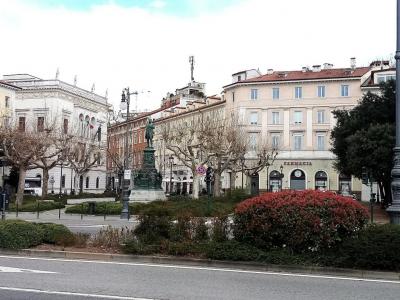
10) Piazza Venezia (Venice Square)
Venice Square stands as one of Trieste’s most renowned public spaces, set at the heart of the historic Borgo Giuseppino district. The square, once known as Josephine Square (Piazza Giuseppina) or Ganza Square (Piazza Ganza), was created following the land reclamation of streets previously facing the sea, with its paving completed in 1865. Its position offers breathtaking views across the Adriatic Sea to the majestic Dolomites, including peaks such as Civetta, Monte Pelmo, and Antelao.
Architectural and cultural highlights abound around the square. At civic number 5 stands the Revoltella Palace, built in 1858 by architect Friedrich Hitzig, once the home of Baron Pasquale Revoltella. Today it houses the Revoltella Museum, showcasing the baron’s gifted collection of around 350 paintings and sculptures. Nearby lies the Mizzan Pharmacy, inaugurated in 1903, renowned for its original carved boiserie and stained‑glass windows with mythological motifs. Though officially called “Al Sant’Andrea,” many locals still refer to it affectionately as “Mizzan”.
At the center of the square is the imposing monument to Maximilian I of Mexico, sculpted by Johannes Schilling. Inaugurated in 1875 before Emperor Franz Joseph’s presence, the bronze statue (over nine meters tall) depicts Maximilian in an admiral’s uniform, gazing toward Miramare Castle. Its octagonal base features allegories of the four continents and symbolic motifs honoring the arts, science, poetry, and industry. The monument was removed after World War I and subsequently returned in 2009.
Surrounding the square, Torino Road (via Torino) extends from Venice Square and has long been acknowledged as the vibrant core of Trieste’s nightlife and social life. For visitors, Venice Square offers more than scenic beauty-it serves as a rich tapestry of history, art, and culture, ideal for those eager to experience the layered heritage of Trieste at a leisurely pace.
Architectural and cultural highlights abound around the square. At civic number 5 stands the Revoltella Palace, built in 1858 by architect Friedrich Hitzig, once the home of Baron Pasquale Revoltella. Today it houses the Revoltella Museum, showcasing the baron’s gifted collection of around 350 paintings and sculptures. Nearby lies the Mizzan Pharmacy, inaugurated in 1903, renowned for its original carved boiserie and stained‑glass windows with mythological motifs. Though officially called “Al Sant’Andrea,” many locals still refer to it affectionately as “Mizzan”.
At the center of the square is the imposing monument to Maximilian I of Mexico, sculpted by Johannes Schilling. Inaugurated in 1875 before Emperor Franz Joseph’s presence, the bronze statue (over nine meters tall) depicts Maximilian in an admiral’s uniform, gazing toward Miramare Castle. Its octagonal base features allegories of the four continents and symbolic motifs honoring the arts, science, poetry, and industry. The monument was removed after World War I and subsequently returned in 2009.
Surrounding the square, Torino Road (via Torino) extends from Venice Square and has long been acknowledged as the vibrant core of Trieste’s nightlife and social life. For visitors, Venice Square offers more than scenic beauty-it serves as a rich tapestry of history, art, and culture, ideal for those eager to experience the layered heritage of Trieste at a leisurely pace.
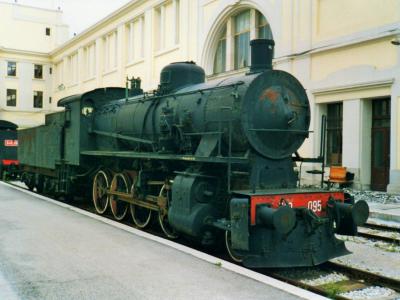
11) Museo Ferroviario di Trieste Campo Marzio (Trieste Campo Marzio Railway Museum)
The Trieste Campo Marzio Railway Museum offers visitors a fascinating journey into the history of rail travel in northeastern Italy. Housed in the former Campo Marzio railway station, a building dating back to the early 20th century, the museum preserves the atmosphere of a bygone era when Trieste served as a crucial hub in the Austro-Hungarian railway network. The station itself, designed in 1906 and inaugurated in 1908, once connected the city with Vienna and other parts of the empire, making it an architectural and historical landmark in its own right.
Inside, the museum presents a wide-ranging collection of locomotives, rolling stock, and railway equipment that traces the evolution of train travel from the steam era through to the 20th century. Restored steam engines, diesel locomotives, and passenger carriages stand alongside signals, uniforms, and tools, giving visitors both the technical and human side of railway history. The displays not only highlight Italy’s engineering achievements but also reflect Trieste’s unique position at the crossroads of Central Europe and the Mediterranean.
The museum also emphasizes the social and cultural role of the railway, showing how it transformed trade, mobility, and daily life in Trieste and beyond. Historical photographs, documents, and models provide deeper insight into the expansion of the railway system and its role in uniting diverse regions. Visitors can explore platforms and tracks that once bustled with international passengers, now turned into a space of memory and discovery.
Today, the Trieste Campo Marzio Railway Museum is managed with the support of local enthusiasts and volunteers, making it not just a historical archive but also a living testimony to the passion for trains and travel. For railway fans and curious travelers alike, the museum offers a rewarding stop that combines history, technology, and the charm of old-world travel.
Inside, the museum presents a wide-ranging collection of locomotives, rolling stock, and railway equipment that traces the evolution of train travel from the steam era through to the 20th century. Restored steam engines, diesel locomotives, and passenger carriages stand alongside signals, uniforms, and tools, giving visitors both the technical and human side of railway history. The displays not only highlight Italy’s engineering achievements but also reflect Trieste’s unique position at the crossroads of Central Europe and the Mediterranean.
The museum also emphasizes the social and cultural role of the railway, showing how it transformed trade, mobility, and daily life in Trieste and beyond. Historical photographs, documents, and models provide deeper insight into the expansion of the railway system and its role in uniting diverse regions. Visitors can explore platforms and tracks that once bustled with international passengers, now turned into a space of memory and discovery.
Today, the Trieste Campo Marzio Railway Museum is managed with the support of local enthusiasts and volunteers, making it not just a historical archive but also a living testimony to the passion for trains and travel. For railway fans and curious travelers alike, the museum offers a rewarding stop that combines history, technology, and the charm of old-world travel.
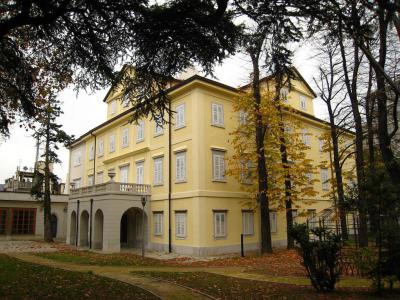
12) Museo Sartorio (Sartorio Museum)
The Sartorio Museum in Trieste offers visitors an intimate glimpse into the life of a wealthy merchant family during the 18th and 19th centuries. Once the elegant residence of the Sartorio family, this villa was transformed into a museum when Baroness Anna Segrè Sartorio bequeathed it to the city in 1910. Preserved much as it was when inhabited, the house combines the warmth of a private home with the richness of a cultural institution, making it one of Trieste’s most distinctive museums.
Inside, the rooms are decorated with original furnishings, family portraits, and decorative arts that evoke the refined lifestyle of Trieste’s mercantile elite. Visitors can admire collections of porcelain, glassware, silver, and tapestries alongside works of fine art, including pieces by Venetian painters. The preserved salons, dining rooms, and private quarters maintain the atmosphere of an aristocratic residence, allowing guests to step back in time and experience the rhythms of domestic life in a bygone era.
One of the museum’s most remarkable treasures is its collection of drawings by Giambattista Tiepolo, numbering in the hundreds and considered among the most important of its kind in the world. These works highlight the artistic connections between Trieste and Venice, reinforcing the city’s role as a crossroads of cultures. The museum also hosts temporary exhibitions and cultural events, further enriching its permanent displays.
Surrounded by gardens and located close to Trieste’s historic heart, the Sartorio Museum provides not only a journey into family and artistic history but also a tranquil escape from the city’s bustle. It is a place where history, art, and daily life intersect, offering visitors a uniquely personal perspective on Trieste’s cultural heritage.
Inside, the rooms are decorated with original furnishings, family portraits, and decorative arts that evoke the refined lifestyle of Trieste’s mercantile elite. Visitors can admire collections of porcelain, glassware, silver, and tapestries alongside works of fine art, including pieces by Venetian painters. The preserved salons, dining rooms, and private quarters maintain the atmosphere of an aristocratic residence, allowing guests to step back in time and experience the rhythms of domestic life in a bygone era.
One of the museum’s most remarkable treasures is its collection of drawings by Giambattista Tiepolo, numbering in the hundreds and considered among the most important of its kind in the world. These works highlight the artistic connections between Trieste and Venice, reinforcing the city’s role as a crossroads of cultures. The museum also hosts temporary exhibitions and cultural events, further enriching its permanent displays.
Surrounded by gardens and located close to Trieste’s historic heart, the Sartorio Museum provides not only a journey into family and artistic history but also a tranquil escape from the city’s bustle. It is a place where history, art, and daily life intersect, offering visitors a uniquely personal perspective on Trieste’s cultural heritage.
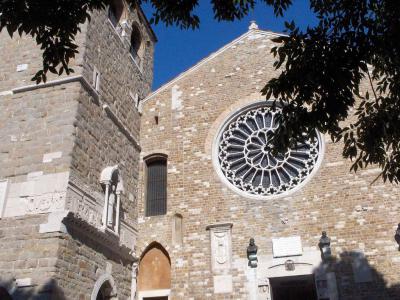
13) Cattedrale di San Giusto (Trieste Cathedral) (must see)
Up on the hill where Trieste’s past keeps piling on itself, the Cathedral of Saint Giusto sits like a memorial in stone. Long before bells ever rang here, the spot was home to a Roman Capitoline Temple for Jupiter, Juno, and Minerva. Bits of that pagan shrine-a pyramidal altar, a temple entrance-were recycled into the first Christian church of the 6th century. That early sanctuary didn’t survive the Lombards, but the habit of building anew on ruins did. By the early Middle Ages, two basilicas appeared side by side: one for Our Lady of the Assumption, the other for Saint Giusto. In the 14th century, their walls were knocked down and stitched into a single cathedral, crowned with a Romanesque façade and a Gothic rose window that still stares down the hill.
The bell tower is a story in itself. Built partly out of Roman blocks, it swallowed the old entrance whole, leaving a niche for a weathered statue of Saint Giusto that has been watching over the city since the 14th century. Step inside, and the layout opens into one nave and four aisles, anchored by two apses glowing with Byzantine-Ravenna mosaics from the 12th century-Christ, the Virgin, and the saints rendered in flickering tiles. Gothic frescoes cling to the walls, while the chapels layer on yet more history: Saint Charles Borromeo’s chapel holds the tombs of Spanish Carlist throne pretenders, while the Chapel of the Treasure guards the urn of Saint Giusto, a Crucifix, and even the halberd of Saint Sergius, a relic that comes with its own local legends.
For those chasing artifacts as much as atmosphere, the Cathedral Treasury Museum lines up reliquaries, manuscripts, and precious liturgical objects. Out in the churchyard, small medieval chapels to Saint John and Saint Michael survive as tokens of an older rhythm of worship. And when you finally step outside, the hilltop location proves itself: Trieste sprawls below, the Gulf gleams beyond, and the centuries collapse into a single panorama-faith, empire, and sea all tangled in one view.
The bell tower is a story in itself. Built partly out of Roman blocks, it swallowed the old entrance whole, leaving a niche for a weathered statue of Saint Giusto that has been watching over the city since the 14th century. Step inside, and the layout opens into one nave and four aisles, anchored by two apses glowing with Byzantine-Ravenna mosaics from the 12th century-Christ, the Virgin, and the saints rendered in flickering tiles. Gothic frescoes cling to the walls, while the chapels layer on yet more history: Saint Charles Borromeo’s chapel holds the tombs of Spanish Carlist throne pretenders, while the Chapel of the Treasure guards the urn of Saint Giusto, a Crucifix, and even the halberd of Saint Sergius, a relic that comes with its own local legends.
For those chasing artifacts as much as atmosphere, the Cathedral Treasury Museum lines up reliquaries, manuscripts, and precious liturgical objects. Out in the churchyard, small medieval chapels to Saint John and Saint Michael survive as tokens of an older rhythm of worship. And when you finally step outside, the hilltop location proves itself: Trieste sprawls below, the Gulf gleams beyond, and the centuries collapse into a single panorama-faith, empire, and sea all tangled in one view.
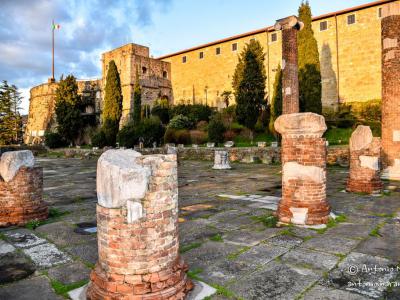
14) Propylaeum and Roman Basilica
The word "propylaeum" is derived from the old Greek word "propylaion," meaning literally "gateway to higher culture." In Ancient Greece and Rome, a propylaeum would usually take the form of a portico supported by columns inside and outside the actual gateway.
In pre-Christian Rome, basilicas were mostly used as public buildings. They served as law courts, financial centers, drill halls, and reception centers. Basilicas usually had apses, a semi-circular shape off the short wall of the building. The law court would be in the apse. The rest of the basilica was an audience hall.
From these forms evolved the early Christian basilicas, often keeping some elements of propylaeum. The ancient Roman buildings of Trieste are concentrated on top of San Giusto Hill. The Catholic Cathedral of Trieste was built in 1320 on the site of a 6th-century Roman Propylaeum. The remains are absorbed in the bell towers of the cathedral.
The old stairway of the propylaeum is still visible. The lapidary garden of archeologist Domenico Rossetti dates from the 19th century. There are epigraphs, monuments, and sculptures of Roman and Medieval times.
Excavations of the early 20th century uncovered bits of the old civil basilica. It had three naves. Close to the basilica is what remains of the Forum of Roman Trieste.
In pre-Christian Rome, basilicas were mostly used as public buildings. They served as law courts, financial centers, drill halls, and reception centers. Basilicas usually had apses, a semi-circular shape off the short wall of the building. The law court would be in the apse. The rest of the basilica was an audience hall.
From these forms evolved the early Christian basilicas, often keeping some elements of propylaeum. The ancient Roman buildings of Trieste are concentrated on top of San Giusto Hill. The Catholic Cathedral of Trieste was built in 1320 on the site of a 6th-century Roman Propylaeum. The remains are absorbed in the bell towers of the cathedral.
The old stairway of the propylaeum is still visible. The lapidary garden of archeologist Domenico Rossetti dates from the 19th century. There are epigraphs, monuments, and sculptures of Roman and Medieval times.
Excavations of the early 20th century uncovered bits of the old civil basilica. It had three naves. Close to the basilica is what remains of the Forum of Roman Trieste.
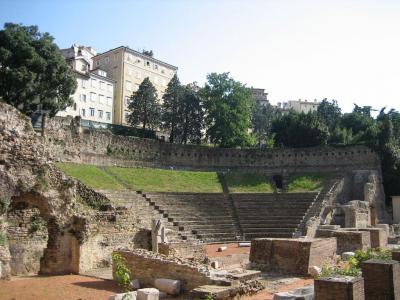
15) Teatro Romano di Trieste (Roman Theatre of Trieste)
Down at the base of Saint Giusto Hill, Trieste keeps shows that the Romans knew how to put on a show. The theatre, first raised in the 1st century AD and bulked up under Emperor Trajan in the 2nd, could pack in thousands-anywhere from 3,500 to 6,000 spectators. They leaned into the hillside for tiered seating, with the stage facing the sea, giving audiences drama on stage and scenery behind it. Plays, political speeches, and civic gatherings all unfolded here, making the spot a hub of Roman public life.
Eventually, though, the theatre slipped out of use and into obscurity, smothered under later buildings. By the 19th century, sharp-eyed scholars like Pietro Nobile and Attilio Tamaro were already convinced it was hiding beneath the Old Arena district. They were right-when the city reshaped itself in 1938, the theatre finally came back into daylight. Excavations exposed its stone seating, the orchestra pit, and the stage foundations, with statues and inscriptions carted off to the Civic Museum of History and Art.
Today, the theatre is wide open to wander. From the street, its semicircle of stone benches climbs the slope in quiet rhythm, still echoing with the memory of Roman voices. Lit up at night, it doubles as an open-air relic glowing between the bustle of the Unity of Italy Square and the climb toward Saint Giusto Hill. Despite all of Trieste's attractions, this one still gathers crowds regularly. Be a part of the spectacle, no ticket needed.
Eventually, though, the theatre slipped out of use and into obscurity, smothered under later buildings. By the 19th century, sharp-eyed scholars like Pietro Nobile and Attilio Tamaro were already convinced it was hiding beneath the Old Arena district. They were right-when the city reshaped itself in 1938, the theatre finally came back into daylight. Excavations exposed its stone seating, the orchestra pit, and the stage foundations, with statues and inscriptions carted off to the Civic Museum of History and Art.
Today, the theatre is wide open to wander. From the street, its semicircle of stone benches climbs the slope in quiet rhythm, still echoing with the memory of Roman voices. Lit up at night, it doubles as an open-air relic glowing between the bustle of the Unity of Italy Square and the climb toward Saint Giusto Hill. Despite all of Trieste's attractions, this one still gathers crowds regularly. Be a part of the spectacle, no ticket needed.
