Custom Walk in Dingle, Ireland by michael_loughman_a5f3ff created on 2026-07-26
Guide Location: Ireland » Dingle
Guide Type: Custom Walk
# of Sights: 6
Tour Duration: 7 Hour(s)
Travel Distance: 20.7 Km or 12.9 Miles
Share Key: FUPMV
Guide Type: Custom Walk
# of Sights: 6
Tour Duration: 7 Hour(s)
Travel Distance: 20.7 Km or 12.9 Miles
Share Key: FUPMV
How It Works
Please retrieve this walk in the GPSmyCity app. Once done, the app will guide you from one tour stop to the next as if you had a personal tour guide. If you created the walk on this website or come to the page via a link, please follow the instructions below to retrieve the walk in the app.
Retrieve This Walk in App
Step 1. Download the app "GPSmyCity: Walks in 1K+ Cities" on Apple App Store or Google Play Store.



Step 2. In the GPSmyCity app, download(or launch) the guide "Dingle Map and Walking Tours".
Step 3. Tap the menu button located at upper right corner of the "Walks" screen and select "Retrieve custom walk". Enter the share key: FUPMV
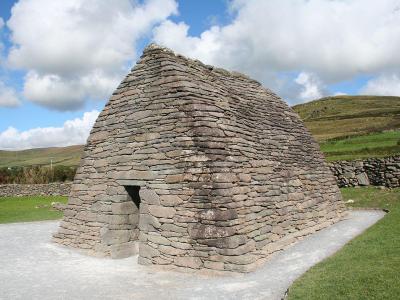
1) Gallarus Oratory (must see)
The Gallarus Oratory, known as Séipéilín Ghallarais in Irish, is a captivating chapel located on the Dingle Peninsula in County Kerry. The meaning of the name "Gallarus" has sparked various interpretations, with some suggesting it refers to a rocky headland (Gall-iorrus) and others proposing it signifies a "house or shelter for foreigner(s)" (Gall Aras). The oratory overlooks the harbor at Ard na Caithne, which was formerly called Smerwick.
Throughout history, the Gallarus Oratory has been described differently by scholars and researchers. Antiquary Charles Smith presented it as an early-Christian stone church in 1756. Archaeologist Peter Harbison later suggested it was a 12th-century Romanesque church in 1970 and later considered it to be a shelter for pilgrims in 1994. Additionally, local tradition during Smith's time attributed the construction of the oratory to Griffith More, who supposedly built it as a funerary chapel for his family's burial place.
The oratory stands as a solitary and well-preserved example of its kind, attracting significant attention since its discovery by Charles Smith in the 18th century. Its construction materials consist of large cut stones sourced from the Dingle Beds of the Upper Silurian Old Red Sandstone. Smith described these stones as "a brown free-stone, brought from the cliffs of the sea shore, which cuts readily and is very durable."
The stones are precisely cut on all sides and ends, fitting together seamlessly to create the structure. The exterior facings of the stones exhibit a smooth finish that follows the slant of the walls. While it is commonly believed that the oratory was constructed without mortar, evidence suggests that while mortar may not have been visible in the wall facings, it was used as a structural medium within the interior of the walls. A thin layer of lime mortar was applied to bond the stones and fill small hollows in the inner faces.
Throughout history, the Gallarus Oratory has been described differently by scholars and researchers. Antiquary Charles Smith presented it as an early-Christian stone church in 1756. Archaeologist Peter Harbison later suggested it was a 12th-century Romanesque church in 1970 and later considered it to be a shelter for pilgrims in 1994. Additionally, local tradition during Smith's time attributed the construction of the oratory to Griffith More, who supposedly built it as a funerary chapel for his family's burial place.
The oratory stands as a solitary and well-preserved example of its kind, attracting significant attention since its discovery by Charles Smith in the 18th century. Its construction materials consist of large cut stones sourced from the Dingle Beds of the Upper Silurian Old Red Sandstone. Smith described these stones as "a brown free-stone, brought from the cliffs of the sea shore, which cuts readily and is very durable."
The stones are precisely cut on all sides and ends, fitting together seamlessly to create the structure. The exterior facings of the stones exhibit a smooth finish that follows the slant of the walls. While it is commonly believed that the oratory was constructed without mortar, evidence suggests that while mortar may not have been visible in the wall facings, it was used as a structural medium within the interior of the walls. A thin layer of lime mortar was applied to bond the stones and fill small hollows in the inner faces.
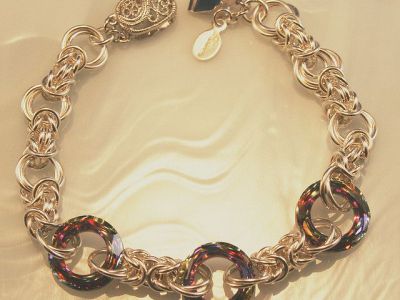
2) N U Goldsmith
N U Goldsmith, nestled on Green Street in the picturesque town of Dingle, is the brainchild of local artist Niamh Utsch, who has been fashioning her unique brand of handmade jewelry since 1996, under the NU label. With a small but exquisite collection of over 100 unique pieces, N U Goldsmith offers a treasure trove of meticulously crafted items that reflect the individuality and natural beauty of the wearer.
Niamh Utsch is celebrated for her use of 18-carat yellow gold, silver, and semi-precious gemstones, weaving them into unparalleled pieces of art. Her jewelry, ranging from rings and bracelets to pendants, cufflinks, earrings, and brooches, is imbued with an immaculate form and vibrant style that has garnered admiration not only in Ireland but also internationally. The store's fame has spread through word of mouth, becoming a local legend and a must-visit destination, especially during the holiday season, for those in search of unique gift ideas.
What sets N U Goldsmith apart is Niamh’s philosophy that "Repetition is the death of creativity." Each piece of jewelry is singular in the world, echoing her belief that jewelry should be an extension of the wearer's character and natural charm. This commitment to originality and the personal touch has earned Niamh Utsch a devoted clientele, who value the exclusive and personal aspect of her work.
Niamh Utsch is celebrated for her use of 18-carat yellow gold, silver, and semi-precious gemstones, weaving them into unparalleled pieces of art. Her jewelry, ranging from rings and bracelets to pendants, cufflinks, earrings, and brooches, is imbued with an immaculate form and vibrant style that has garnered admiration not only in Ireland but also internationally. The store's fame has spread through word of mouth, becoming a local legend and a must-visit destination, especially during the holiday season, for those in search of unique gift ideas.
What sets N U Goldsmith apart is Niamh’s philosophy that "Repetition is the death of creativity." Each piece of jewelry is singular in the world, echoing her belief that jewelry should be an extension of the wearer's character and natural charm. This commitment to originality and the personal touch has earned Niamh Utsch a devoted clientele, who value the exclusive and personal aspect of her work.
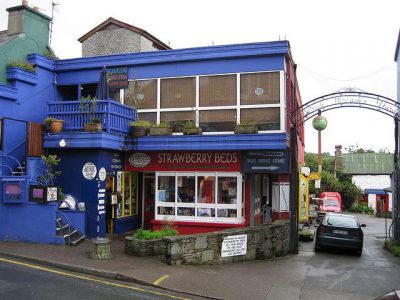
3) Dingle Record Shop
The Dingle Record Shop is a cultural hub for promoting and preserving local music. As an independent music store, it prides itself on its dedication to championing the rich musical heritage of Ireland, focusing especially on traditional Irish singers, folk songs, and the works of local artists. The shop boasts a wide selection of CDs and albums, catering to the diverse tastes of traditional Irish music enthusiasts.
Renowned among the Dingle community, the Dingle Record Shop has earned a charming reputation as what locals like to believe is the smallest record shop in the world. This unique characteristic, combined with its exclusive collection of Irish music, sets it apart as the only place in town where one can find such a top selection of traditional Irish tunes.
The shop's warm and inviting atmosphere extends beyond just music sales. Visitors are encouraged to share a cup of tea with the owner, a knowledgeable and passionate custodian of the area's long-standing musical tradition. This personal touch adds to the shop's allure, making it a must-visit destination for anyone looking to immerse themselves in the authentic sounds of Ireland.
The Dingle Record Shop is more than just a music store; it is a cultural hub that celebrates and preserves the soulful melodies of traditional Irish music. Its commitment to promoting local talent and its unique approach to customer engagement make it a standout gem in Dingle's vibrant music scene.
Renowned among the Dingle community, the Dingle Record Shop has earned a charming reputation as what locals like to believe is the smallest record shop in the world. This unique characteristic, combined with its exclusive collection of Irish music, sets it apart as the only place in town where one can find such a top selection of traditional Irish tunes.
The shop's warm and inviting atmosphere extends beyond just music sales. Visitors are encouraged to share a cup of tea with the owner, a knowledgeable and passionate custodian of the area's long-standing musical tradition. This personal touch adds to the shop's allure, making it a must-visit destination for anyone looking to immerse themselves in the authentic sounds of Ireland.
The Dingle Record Shop is more than just a music store; it is a cultural hub that celebrates and preserves the soulful melodies of traditional Irish music. Its commitment to promoting local talent and its unique approach to customer engagement make it a standout gem in Dingle's vibrant music scene.
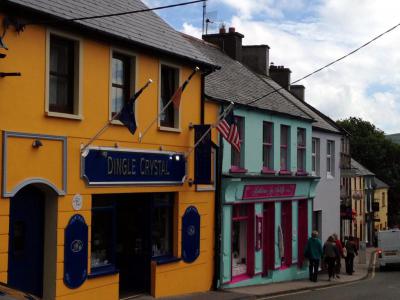
4) Dingle Crystal
Dingle Crystal, nestled in Dingle, epitomizes Irish craftsmanship. Founded by Sean Daly, a master of crystal cutting, this family business is dedicated to preserving a nearly lost art. Daly, formerly an apprentice at Waterford Crystal for 15 years, rose to the esteemed title of master cutter.
In an endeavor to keep this tradition alive, Sean, together with his wife Liz, established Dingle Crystal in 1999. Choosing Dingle for its beauty and community, they sought to create something truly Irish and utterly unique. Today, Dingle Crystal is celebrated worldwide, gracing the homes of families, celebrities, and dignitaries, showcasing the enduring appeal of meticulously hand-cut Irish crystal.
The tradition of Irish crystal cutting, dating back to the 18th century, is a testament to the country's rich heritage in fine craftsmanship. However, this tradition faces the threat of extinction, as Sean Daly emerges as one of the few remaining master cutters in Ireland. With the passing of many of his early mentors and the shift of crystal manufacturing overseas, the significance of Dingle Crystal extends beyond its aesthetic value; it is a critical lifeline for the survival of Irish crystal cutting.
Visitors to Dingle can enjoy the scenic Slea Head drive and witness Sean Daly's crystal cutting craftsmanship at his workshop. The Daly family welcomes guests to their shop in Dingle town, where Adam and Bella Daly proudly display the six unique Celtic designs of the Dingle Crystal collection. For those unable to visit in person, Dingle Crystal's treasures are available online, inviting enthusiasts worldwide to experience the legacy of Irish crystal cutting.
In an endeavor to keep this tradition alive, Sean, together with his wife Liz, established Dingle Crystal in 1999. Choosing Dingle for its beauty and community, they sought to create something truly Irish and utterly unique. Today, Dingle Crystal is celebrated worldwide, gracing the homes of families, celebrities, and dignitaries, showcasing the enduring appeal of meticulously hand-cut Irish crystal.
The tradition of Irish crystal cutting, dating back to the 18th century, is a testament to the country's rich heritage in fine craftsmanship. However, this tradition faces the threat of extinction, as Sean Daly emerges as one of the few remaining master cutters in Ireland. With the passing of many of his early mentors and the shift of crystal manufacturing overseas, the significance of Dingle Crystal extends beyond its aesthetic value; it is a critical lifeline for the survival of Irish crystal cutting.
Visitors to Dingle can enjoy the scenic Slea Head drive and witness Sean Daly's crystal cutting craftsmanship at his workshop. The Daly family welcomes guests to their shop in Dingle town, where Adam and Bella Daly proudly display the six unique Celtic designs of the Dingle Crystal collection. For those unable to visit in person, Dingle Crystal's treasures are available online, inviting enthusiasts worldwide to experience the legacy of Irish crystal cutting.
5) Greenlane Gallery
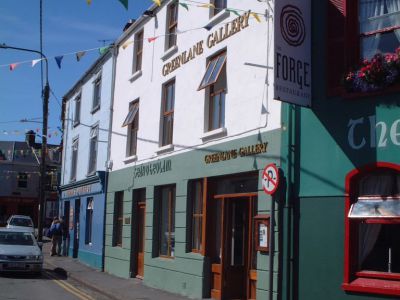
The Greenlane Gallery, situated in the charming town of Dingle on the southwest coast of Ireland, has been a prominent hub for contemporary Irish art since it was founded in 1992 by Susan Callery. Located in the beautiful area of West County Kerry, the gallery benefits from the stunning backdrop of the Dingle Peninsula, which greatly influences the themes and styles of the artworks showcased.
Focused on presenting a lively and unique collection of contemporary Irish art, the Greenlane Gallery has established itself in the art scene by highlighting pieces that draw inspiration from Ireland's natural beauty. Its exhibitions are renowned for capturing the essence and allure of the surroundings, creating a distinct space where the spirit of the Dingle Peninsula is expressed through art.
Representing a diverse range of prominent Irish artists, the gallery collaborates closely with them to promote and exhibit their work. Throughout the year, the Greenlane Gallery hosts numerous exhibitions alongside seasonal collections, offering a platform for both established and emerging artists to showcase their talent to a broader audience.
Visitors to the gallery can explore a variety of contemporary Irish paintings, sculptures, and jewelry, featuring pieces that celebrate local landscapes as well as modern abstract works that challenge traditional forms. With a strong emphasis on quality and originality, the gallery ensures a consistently fresh and captivating display for its visitors.
Focused on presenting a lively and unique collection of contemporary Irish art, the Greenlane Gallery has established itself in the art scene by highlighting pieces that draw inspiration from Ireland's natural beauty. Its exhibitions are renowned for capturing the essence and allure of the surroundings, creating a distinct space where the spirit of the Dingle Peninsula is expressed through art.
Representing a diverse range of prominent Irish artists, the gallery collaborates closely with them to promote and exhibit their work. Throughout the year, the Greenlane Gallery hosts numerous exhibitions alongside seasonal collections, offering a platform for both established and emerging artists to showcase their talent to a broader audience.
Visitors to the gallery can explore a variety of contemporary Irish paintings, sculptures, and jewelry, featuring pieces that celebrate local landscapes as well as modern abstract works that challenge traditional forms. With a strong emphasis on quality and originality, the gallery ensures a consistently fresh and captivating display for its visitors.
6) Fahan BeeHive Huts (must see)
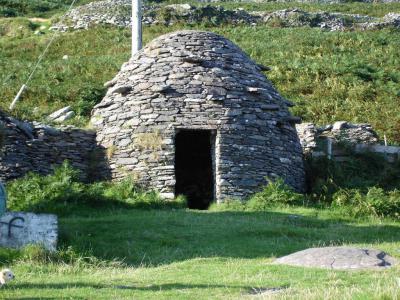
Nestled along the winding roads of Ireland's scenic Dingle Peninsula, you'll encounter a captivating sight: clusters of peculiar cone-shaped huts known as Fahan Beehive Huts. These humble dwellings, weathered and marked by the passage of time, stand as enduring testaments to the craftsmanship of medieval stonemasons on the island.
While beehive houses, or clocháns, can be found throughout County Kerry, the collection at Fahan is considered the most remarkable in the country. The exact age of these unique structures remains uncertain, with different theories placing their origins anywhere between the 8th and 12th centuries AD. It is believed that hermit monks and followers of Saint Peter once inhabited these huts, although some may have served as homes for pagans even earlier.
In the past, over 400 of these intriguing dwellings adorned the hillside. While the ravages of time have taken their toll on many, a significant number of these remarkable structures still stand. Visitors have the opportunity to approach these huts closely, and in some cases, even enter them, allowing for an up-close admiration of the masterful stonework that has withstood centuries of wind, rain, and the curious grazing of sheep.
What sets these beehive houses apart is the absence of mortar in their construction. Instead, the builders employed a meticulous method of stacking stone rings one on top of the other. Each subsequent layer was positioned a little further inward, gradually forming a snug, pointed roof that capped off the structure. This technique, known as corbelling, is one of the reasons why accurately dating these huts is challenging, as it transcends specific time periods and has been utilized in Ireland for thousands of years.
While beehive houses, or clocháns, can be found throughout County Kerry, the collection at Fahan is considered the most remarkable in the country. The exact age of these unique structures remains uncertain, with different theories placing their origins anywhere between the 8th and 12th centuries AD. It is believed that hermit monks and followers of Saint Peter once inhabited these huts, although some may have served as homes for pagans even earlier.
In the past, over 400 of these intriguing dwellings adorned the hillside. While the ravages of time have taken their toll on many, a significant number of these remarkable structures still stand. Visitors have the opportunity to approach these huts closely, and in some cases, even enter them, allowing for an up-close admiration of the masterful stonework that has withstood centuries of wind, rain, and the curious grazing of sheep.
What sets these beehive houses apart is the absence of mortar in their construction. Instead, the builders employed a meticulous method of stacking stone rings one on top of the other. Each subsequent layer was positioned a little further inward, gradually forming a snug, pointed roof that capped off the structure. This technique, known as corbelling, is one of the reasons why accurately dating these huts is challenging, as it transcends specific time periods and has been utilized in Ireland for thousands of years.
