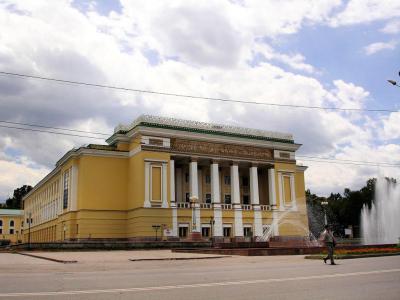


Abay National Theater and Opera House, Almaty
The Abay National Theater and Opera House, situated in Almaty, holds a significant position in Kazakhstani opera and ballet. It was originally established as a music studio in 1933 but transitioned into a theater by 1934, marking the beginning of its journey in the performing arts. In 1941, it moved to a new building and was later named after Abay Qunanbayuli, a revered Kazakh poet, composer, and philosopher, in 1945, highlighting its cultural importance and commitment to Kazakh arts.
The theater's roots can be traced back to the staging of the musical comedy "Aiman Sholpan" in 1934, which led to the establishment of the Kazakh Musical Theater. Evgeny Brusilovsky, the first composer at the theater, played a crucial role in laying the foundation for national opera art in Kazakhstan with compositions like "Kyz-Zhibek" and "Er Targyn," as well as staging Russian and world opera classics. By 1937, it had evolved into the Kazakh Opera and Ballet Theater, expanding its repertoire to include ballet.
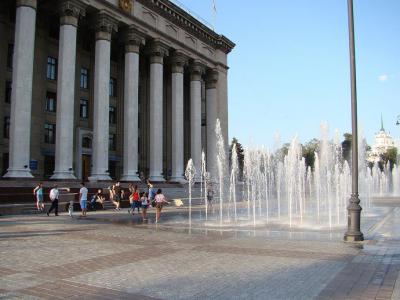
The architectural design of the theater, completed in 1941, combines the Stalinist empire style, Italian classicism, and Kazakh elements, reflecting its cultural significance. The façade is adorned with decorative details such as bas-reliefs and thematic reliefs celebrating Kazakh art figures, making it a landmark in Almaty.
Throughout its history, the Abay National Theater and Opera House has been a source of cultural pride for Kazakhstan, preserving and evolving Kazakh performing arts. Its repertoire, encompassing opera and ballet traditions, coupled with its architectural splendor, highlights its pivotal role.
The theater's roots can be traced back to the staging of the musical comedy "Aiman Sholpan" in 1934, which led to the establishment of the Kazakh Musical Theater. Evgeny Brusilovsky, the first composer at the theater, played a crucial role in laying the foundation for national opera art in Kazakhstan with compositions like "Kyz-Zhibek" and "Er Targyn," as well as staging Russian and world opera classics. By 1937, it had evolved into the Kazakh Opera and Ballet Theater, expanding its repertoire to include ballet.
The architectural design of the theater, completed in 1941, combines the Stalinist empire style, Italian classicism, and Kazakh elements, reflecting its cultural significance. The façade is adorned with decorative details such as bas-reliefs and thematic reliefs celebrating Kazakh art figures, making it a landmark in Almaty.
Throughout its history, the Abay National Theater and Opera House has been a source of cultural pride for Kazakhstan, preserving and evolving Kazakh performing arts. Its repertoire, encompassing opera and ballet traditions, coupled with its architectural splendor, highlights its pivotal role.
Want to visit this sight? Check out these Self-Guided Walking Tours in Almaty. Alternatively, you can download the mobile app "GPSmyCity: Walks in 1K+ Cities" from Apple App Store or Google Play Store. The app turns your mobile device to a personal tour guide and it works offline, so no data plan is needed when traveling abroad.
Download The GPSmyCity App



Abay National Theater and Opera House on Map
Sight Name: Abay National Theater and Opera House
Sight Location: Almaty, Kazakhstan (See walking tours in Almaty)
Sight Type: Attraction/Landmark
Sight Location: Almaty, Kazakhstan (See walking tours in Almaty)
Sight Type: Attraction/Landmark
Nearby Sights


Walking Tours in Almaty, Kazakhstan

Create Your Own Walk in Almaty
Creating your own self-guided walk in Almaty is easy and fun. Choose the city attractions that you want to see and a walk route map will be created just for you. You can even set your hotel as the start point of the walk.
Almaty City Center Walking Tour
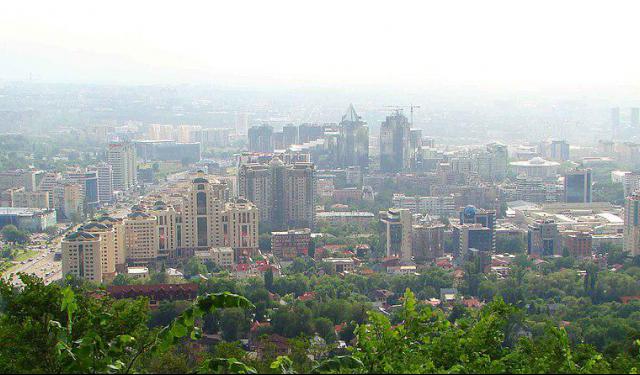
Almaty is the largest city in Kazakhstan and, despite no longer being the national capital, remains its cultural, financial, and historical center. Nursultan Nazarbayev, the first President of Kazakhstan, once described Almaty as “the pearl of Kazakhstan, the most beautiful city in Central Asia.”
The area of present-day Almaty has been inhabited since ancient times. Archaeological evidence... view more
Tour Duration: 2 Hour(s)
Travel Distance: 3.6 Km or 2.2 Miles
The area of present-day Almaty has been inhabited since ancient times. Archaeological evidence... view more
Tour Duration: 2 Hour(s)
Travel Distance: 3.6 Km or 2.2 Miles