

Agioi Apostoloi (Church of Holy Apostles), Thessaloniki
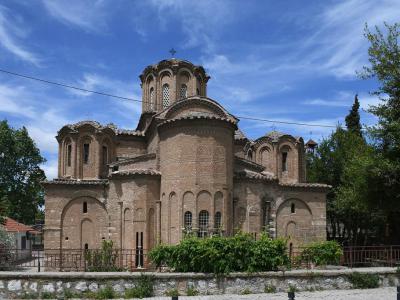
The Church of the Holy Apostles, situated in Thessaloniki, is a notable structure dating back to the 14th century, showcasing the rich legacy of Byzantine architecture and religious customs. Originally part of a larger monastery, the church features remnants of a column to the south and a cistern to the northwest, indicating its past as the principal church, or katholikon, of the monastery.
Fascinating clues, such as the portrayal of hegumenos Paul in a reverent stance before the Virgin Mary, alongside various scenes depicting Mary, imply that the church was dedicated to her. It is believed to have been linked to the Monastery of Theotokos Gorgoepikoos, and this dedication is evident in its artistic and architectural elements.
Architecturally, the Church of the Holy Apostles represents the composite, five-domed cross-in-square style, supported by four columns. Its exterior walls feature intricate brickwork patterns, showcasing the fine craftsmanship typical of Byzantine architecture. This elaborate ornamentation underscores the church's significance in the religious and social milieu of its era.
Inside, the church boasts impressive mosaics on the upper levels inspired by Constantinopolitan models, reflecting the cultural and artistic exchanges of the Byzantine Empire. The frescoes, adorning the lower levels, the narthex, and one of the chapels, contribute to the church's opulent interior decoration, echoing the spiritual and artistic aspirations of its creators.
However, the Ottoman conquest led to substantial alterations to the church's interior. Following their custom, the Ottomans covered the mosaics and frescoes with plaster after extracting the gold tesserae, obscuring the church's original artistic grandeur for centuries.
Despite these changes, the church's significance persevered, and it was not until the 19th century that it acquired its present-day name, "Holy Apostles." This name reflects the evolving history and the layers of religious importance attributed to this sacred site over time. Today, the Church of the Holy Apostles in Thessaloniki serves as a testament to Byzantine art, architecture, and devotion, inviting visitors to explore and appreciate its historical and spiritual depth.
Fascinating clues, such as the portrayal of hegumenos Paul in a reverent stance before the Virgin Mary, alongside various scenes depicting Mary, imply that the church was dedicated to her. It is believed to have been linked to the Monastery of Theotokos Gorgoepikoos, and this dedication is evident in its artistic and architectural elements.
Architecturally, the Church of the Holy Apostles represents the composite, five-domed cross-in-square style, supported by four columns. Its exterior walls feature intricate brickwork patterns, showcasing the fine craftsmanship typical of Byzantine architecture. This elaborate ornamentation underscores the church's significance in the religious and social milieu of its era.
Inside, the church boasts impressive mosaics on the upper levels inspired by Constantinopolitan models, reflecting the cultural and artistic exchanges of the Byzantine Empire. The frescoes, adorning the lower levels, the narthex, and one of the chapels, contribute to the church's opulent interior decoration, echoing the spiritual and artistic aspirations of its creators.
However, the Ottoman conquest led to substantial alterations to the church's interior. Following their custom, the Ottomans covered the mosaics and frescoes with plaster after extracting the gold tesserae, obscuring the church's original artistic grandeur for centuries.
Despite these changes, the church's significance persevered, and it was not until the 19th century that it acquired its present-day name, "Holy Apostles." This name reflects the evolving history and the layers of religious importance attributed to this sacred site over time. Today, the Church of the Holy Apostles in Thessaloniki serves as a testament to Byzantine art, architecture, and devotion, inviting visitors to explore and appreciate its historical and spiritual depth.
Want to visit this sight? Check out these Self-Guided Walking Tours in Thessaloniki. Alternatively, you can download the mobile app "GPSmyCity: Walks in 1K+ Cities" from Apple App Store or Google Play Store. The app turns your mobile device to a personal tour guide and it works offline, so no data plan is needed when traveling abroad.
Download The GPSmyCity App



Agioi Apostoloi (Church of Holy Apostles) on Map
Sight Name: Agioi Apostoloi (Church of Holy Apostles)
Sight Location: Thessaloniki, Greece (See walking tours in Thessaloniki)
Sight Type: Religious
Sight Location: Thessaloniki, Greece (See walking tours in Thessaloniki)
Sight Type: Religious
Nearby Sights




Walking Tours in Thessaloniki, Greece

Create Your Own Walk in Thessaloniki
Creating your own self-guided walk in Thessaloniki is easy and fun. Choose the city attractions that you want to see and a walk route map will be created just for you. You can even set your hotel as the start point of the walk.
Thessaloniki Waterfront Tour
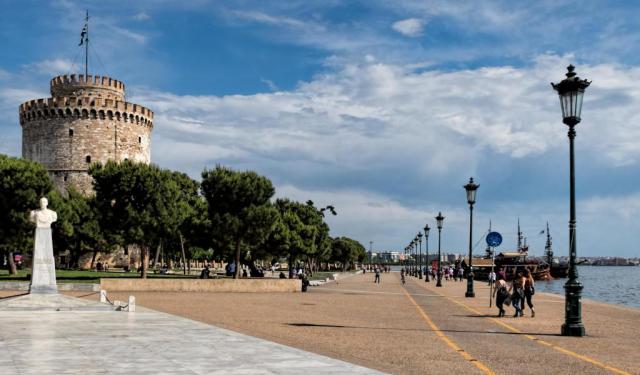
The Mediterranean has always been an integral part of Thessaloniki’s appeal. The city's orientation toward the sea is largely due to the vision of Ernest Hébrard, the French urban planner and architect, who redesigned the downtown area after the devastating fire of 1917.
To really get the taste of Thessaloniki you need to visit not just its historical landmarks, but also those spots... view more
Tour Duration: 1 Hour(s)
Travel Distance: 2.6 Km or 1.6 Miles
To really get the taste of Thessaloniki you need to visit not just its historical landmarks, but also those spots... view more
Tour Duration: 1 Hour(s)
Travel Distance: 2.6 Km or 1.6 Miles
Thessaloniki Upper Town Walking Tour
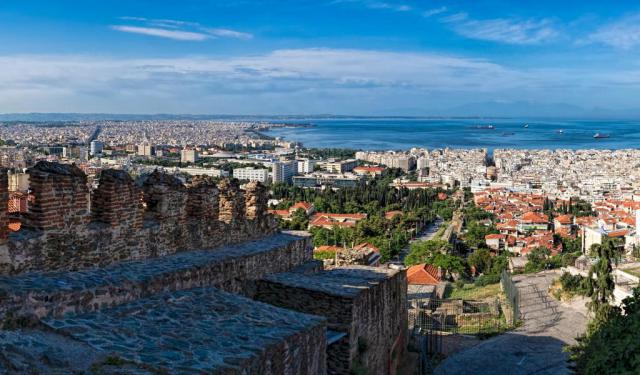
Thessaloniki’s Upper Town, known locally as Ano Poli, which literally translates as “Upper City” is the city’s oldest continuously inhabited district and the only area to survive the Great Fire of 1917 largely intact. While the lower city was rebuilt along modern, planned lines in the early 20th century, Ano Poli retained its Byzantine street layout, Ottoman-era houses, and defensive... view more
Tour Duration: 2 Hour(s)
Travel Distance: 4.0 Km or 2.5 Miles
Tour Duration: 2 Hour(s)
Travel Distance: 4.0 Km or 2.5 Miles
Thessaloniki Downtown Walking Tour
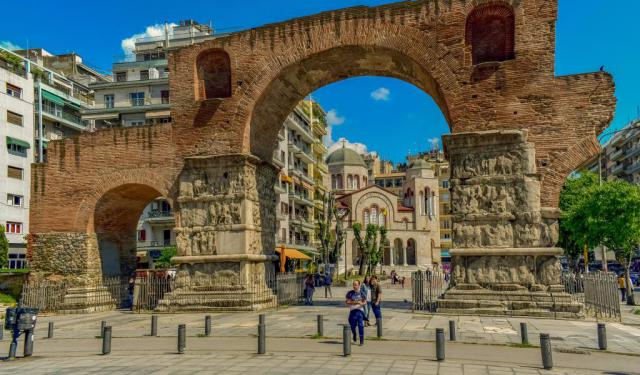
Thessaloniki has been shaped by layers of empire, trade, and migration for more than two millennia. It was founded in 315 BCE by Cassander, king of Macedon, who merged several smaller settlements around the Thermaic Gulf into a single city. He named it after his wife, Thessalonike, the half-sister of Alexander the Great. The name Thessalonikē combines Thessaloi and nikē, meaning victory,... view more
Tour Duration: 2 Hour(s)
Travel Distance: 3.7 Km or 2.3 Miles
Tour Duration: 2 Hour(s)
Travel Distance: 3.7 Km or 2.3 Miles