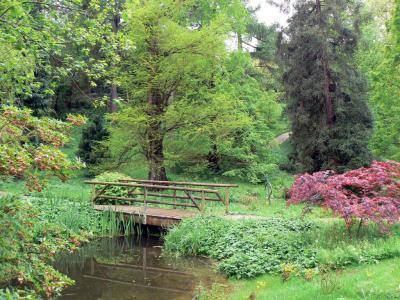


Alter Botanischer Garten (Old Botanical Garden), Kiel
The Old Botanical Garden is a publicly accessible park in Kiel. The approximately 2.5 hectare site has a hilly character with a height difference of over 20 meters. In addition to the partly very old woody plants comprising over 280 species, the Old Botanical Garden also has a diverse herbaceous flora. There are two ponds, meadow areas and several perennial beds in the garden. The slopes are planted with bulbous plants and offer an extraordinary display of flowers in spring. The entire site is criss-crossed by numerous winding paths that underline the natural character of the site. The old greenhouses are no longer preserved. The first botanical garden in Kiel was established in 1669 as a “ hortus medicus ” in the castle gardens and is therefore the sixth oldest in Germany. Gardens followed at the locations Falckstrasse (1727) and Prüne (1803). All of these gardens no longer exist and were built over after they were abandoned. One of the largest Ginkgo trees in Schleswig-Holstein is located in the Old Botanical Garden in Kiel. The larger of the two dawn redwoods is one of the oldest of its kind on the European mainland (estimated planting: around 1948, grown from seed from the Arnold Arboretum ) and a coastal redwood, which is rather untypical for this climatic region, can also be seen there. The Old Botanical Garden exhibits sculptures by the artist Susan Walke and often hosts literary events. The former house of the garden inspector (built in 1906 in half-timbered style ) has housed the Schleswig-Holstein Literature House since 1998, where readings are regularly held. A pavilion with a wrought iron crown was built on the highest point of the garden in 1891. The octagonal brick building offers a beautiful view of the garden and the Kiel Fjord from its viewing platform. The pavilion has a permanent exhibition on the history of the Botanical Gardens in Kiel. On the north side of the building there is a niche in which a replica of the founding plaque of the third Botanical Garden can be seen; the original is in the current Botanical Garden. Originally the niche provided a permanently shady place for the first public exhibition of marine algae. Like the inspector's house, the tool shed was also built in the half-timbered style and thus blends harmoniously into the garden. Southwest of the observation pavilion is the former greenhouse, which was built in 1884/85 together with the Botanical Institute. The brick building is 31 meters long and 5 meters deep. It has been extended several times with glass buildings, which no longer exist today. Only the core building made of brick with the gardener and stoker's apartment, with repotting rooms and a full basement have been preserved. The so-called pot house is a unique monument to the history of botany in Schleswig-Holstein, but it is in need of restoration.
The Botanical Garden was opened in 1884 and is located north of the city center, close to the Kiel Fjord, the Art Gallery and the university hospitals. Thanks to the initiative of the Association for the Preservation and Promotion of the Old Botanical Garden, the garden still exists today and is a natural and cultural monument in its entirety. The approximately 2.5 hectare hilly terrain is characterized by partly very old trees of unique beauty, dominated by exotic plants such as the coastal redwood and one of the oldest and tallest dawn redwoods on the European mainland, an important ginkgo tree , a rare Amur cork tree , a remarkable Chinese sura tree and a group of bald cypresses over 20 meters high. Winding paths lead visitors to various small biotopes, past slopes with a multitude of shrubs, perennials, bulbous and tuberous plants with, especially in spring, extraordinary blossoms. Since the association was founded, more than a hundred interesting and beautiful trees have been planted. These include magnolias, Japanese ornamental cherries, snowball species and rhododendrons, Japanese cedar, Japanese umbrella fir and Chinese spruce. In 1891, a viewing pavilion with a wrought-iron crown was built on the highest point of the garden. The octagonal brick building offers a beautiful view of the garden and the Kiel Fjord from its viewing platform. To the southwest of the pavilion is the Topfhaus , which was built together with the Botanical Institute in 1884/85. After being fundamentally restored since 2016 on the initiative of the Topfhaus Foundation Kiel and thanks to generous donations, it can be rented for various purposes. Down by the pond is the former pump house, a small half-timbered building that is now used as a tool shed . A bridge leads across the pond between very tall bald cypresses and sequoias. The former garden inspector's house, built in 1906 in half-timbered style, has housed the Schleswig-Holstein Literature House since 1998 , where readings are regularly held. ***PH***
The Botanical Garden was opened in 1884 and is located north of the city center, close to the Kiel Fjord, the Art Gallery and the university hospitals. Thanks to the initiative of the Association for the Preservation and Promotion of the Old Botanical Garden, the garden still exists today and is a natural and cultural monument in its entirety. The approximately 2.5 hectare hilly terrain is characterized by partly very old trees of unique beauty, dominated by exotic plants such as the coastal redwood and one of the oldest and tallest dawn redwoods on the European mainland, an important ginkgo tree , a rare Amur cork tree , a remarkable Chinese sura tree and a group of bald cypresses over 20 meters high. Winding paths lead visitors to various small biotopes, past slopes with a multitude of shrubs, perennials, bulbous and tuberous plants with, especially in spring, extraordinary blossoms. Since the association was founded, more than a hundred interesting and beautiful trees have been planted. These include magnolias, Japanese ornamental cherries, snowball species and rhododendrons, Japanese cedar, Japanese umbrella fir and Chinese spruce. In 1891, a viewing pavilion with a wrought-iron crown was built on the highest point of the garden. The octagonal brick building offers a beautiful view of the garden and the Kiel Fjord from its viewing platform. To the southwest of the pavilion is the Topfhaus , which was built together with the Botanical Institute in 1884/85. After being fundamentally restored since 2016 on the initiative of the Topfhaus Foundation Kiel and thanks to generous donations, it can be rented for various purposes. Down by the pond is the former pump house, a small half-timbered building that is now used as a tool shed . A bridge leads across the pond between very tall bald cypresses and sequoias. The former garden inspector's house, built in 1906 in half-timbered style, has housed the Schleswig-Holstein Literature House since 1998 , where readings are regularly held. ***PH***
Want to visit this sight? Check out these Self-Guided Walking Tours in Kiel. Alternatively, you can download the mobile app "GPSmyCity: Walks in 1K+ Cities" from Apple App Store or Google Play Store. The app turns your mobile device to a personal tour guide and it works offline, so no data plan is needed when traveling abroad.
Download The GPSmyCity App



Alter Botanischer Garten (Old Botanical Garden) on Map
Sight Name: Alter Botanischer Garten (Old Botanical Garden)
Sight Location: Kiel, Germany (See walking tours in Kiel)
Sight Type: Park/Outdoor
Sight Location: Kiel, Germany (See walking tours in Kiel)
Sight Type: Park/Outdoor
Nearby Sights

Walking Tours in Kiel, Germany

Create Your Own Walk in Kiel
Creating your own self-guided walk in Kiel is easy and fun. Choose the city attractions that you want to see and a walk route map will be created just for you. You can even set your hotel as the start point of the walk.
Kiel Introduction Walking Tour
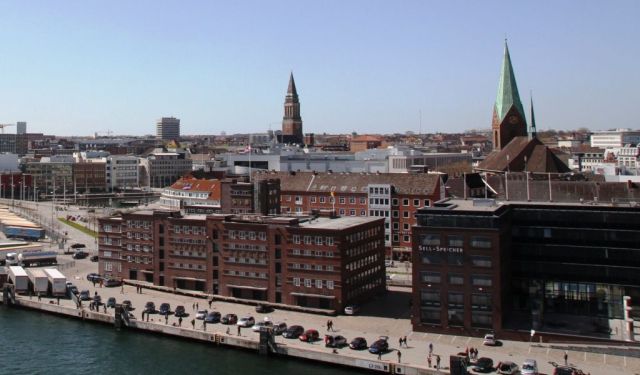
Kiel, nestled along Germany’s Baltic coast, is steeped in maritime lore and history. First a Viking settlement, it grew into a humble fishing village before shining in the Middle Ages as a member of the influential Hanseatic League trade confederation. By the 13th century, Kiel had secured its place as a thriving port town strategically positioned on key trade routes.
Fast forward to the 19th... view more
Tour Duration: 2 Hours
Travel Distance: 2.6 Km or 1.6 Miles
Fast forward to the 19th... view more
Tour Duration: 2 Hours
Travel Distance: 2.6 Km or 1.6 Miles
City Walks Overview
