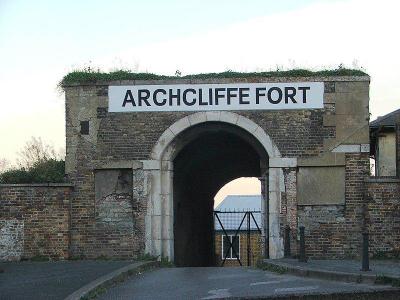


Archcliffe Fort, Dover
Archcliffe Fort is a historical military installation located at the base of the Dover Western Heights, overlooking Shakespeare Beach and the approaches to the Port of Dover. The site has been a strategic point of defense since 1370 when a watchtower was erected. This initial structure was replaced by a more substantial fortification commissioned by Henry VIII in 1539.
Over the centuries, Archcliffe Fort underwent several transformations. Concerns over the Spanish Armada led to renovations in 1588, and during the Stuart era, James VI and I and Charles I made significant improvements. Following the Stuart Restoration in 1660, Charles II heavily garrisoned the fort. The fortifications were further enhanced during the long eighteenth century due to frequent invasion scares.
In the 20th century, Archcliffe Fort saw a decline in military importance. It was manned during the First World War but largely demolished in the 1920s to accommodate expansions of the South Eastern Main Line railway. By the Second World War, the fort was considered obsolete and was decommissioned in 1956, with further demolition occurring to widen the A20 road.
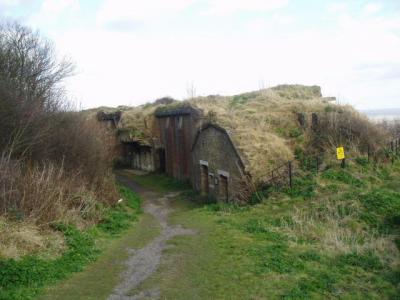
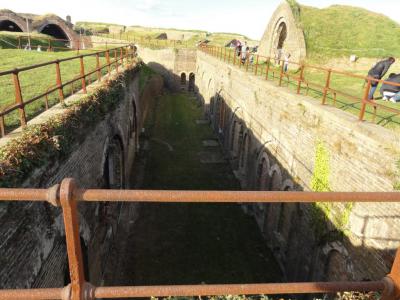
Today, remnants of Archcliffe Fort include two ramparts and two intact corner bastions. The site also houses modern structures and has been repurposed by the Emmaus Community, a charity supporting formerly homeless individuals. Emmaus provides accommodation for 27 residents and operates a furniture recycling and retail center. In 2024, a commemorative plaque was unveiled to honor four soldiers who died clearing mines from Dover's beaches in 1944–45.
Archaeological finds at the site, including worked flint from the Neolithic and Bronze Age periods and pottery dating back to the 12th–14th centuries, highlight its long history of human activity. While the original 1370 watchtower no longer exists, plans from that era depict a pentagonal structure connected by a ditch to a gatehouse, approximating the locations of the current western and eastern bastions.
Archcliffe Fort stands as a testament to Dover’s layered history, transitioning from a medieval watchtower to a fortification, and now a place of community and hope.
Over the centuries, Archcliffe Fort underwent several transformations. Concerns over the Spanish Armada led to renovations in 1588, and during the Stuart era, James VI and I and Charles I made significant improvements. Following the Stuart Restoration in 1660, Charles II heavily garrisoned the fort. The fortifications were further enhanced during the long eighteenth century due to frequent invasion scares.
In the 20th century, Archcliffe Fort saw a decline in military importance. It was manned during the First World War but largely demolished in the 1920s to accommodate expansions of the South Eastern Main Line railway. By the Second World War, the fort was considered obsolete and was decommissioned in 1956, with further demolition occurring to widen the A20 road.
Today, remnants of Archcliffe Fort include two ramparts and two intact corner bastions. The site also houses modern structures and has been repurposed by the Emmaus Community, a charity supporting formerly homeless individuals. Emmaus provides accommodation for 27 residents and operates a furniture recycling and retail center. In 2024, a commemorative plaque was unveiled to honor four soldiers who died clearing mines from Dover's beaches in 1944–45.
Archaeological finds at the site, including worked flint from the Neolithic and Bronze Age periods and pottery dating back to the 12th–14th centuries, highlight its long history of human activity. While the original 1370 watchtower no longer exists, plans from that era depict a pentagonal structure connected by a ditch to a gatehouse, approximating the locations of the current western and eastern bastions.
Archcliffe Fort stands as a testament to Dover’s layered history, transitioning from a medieval watchtower to a fortification, and now a place of community and hope.
Want to visit this sight? Check out these Self-Guided Walking Tours in Dover. Alternatively, you can download the mobile app "GPSmyCity: Walks in 1K+ Cities" from Apple App Store or Google Play Store. The app turns your mobile device to a personal tour guide and it works offline, so no data plan is needed when traveling abroad.
Download The GPSmyCity App



Archcliffe Fort on Map
Sight Name: Archcliffe Fort
Sight Location: Dover, England (See walking tours in Dover)
Sight Type: Attraction/Landmark
Sight Location: Dover, England (See walking tours in Dover)
Sight Type: Attraction/Landmark
Nearby Sights
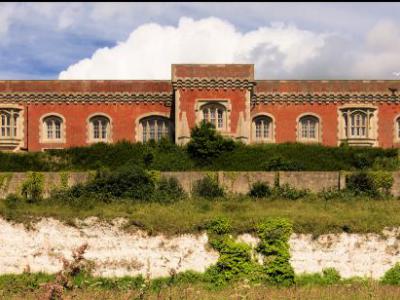
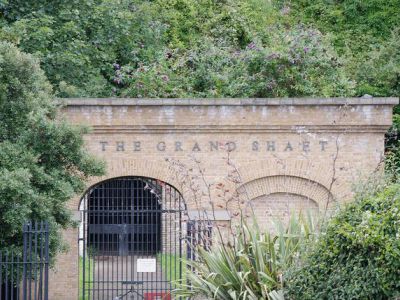
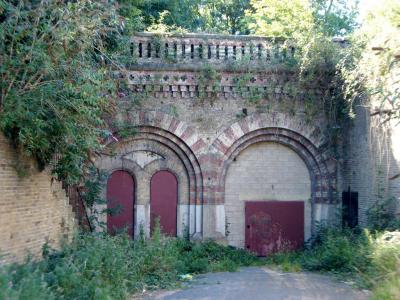
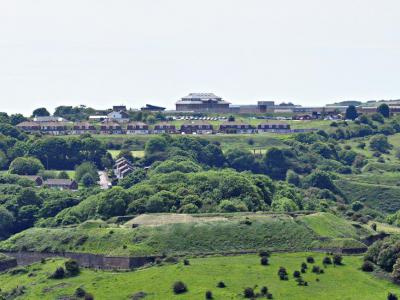
Walking Tours in Dover, England

Create Your Own Walk in Dover
Creating your own self-guided walk in Dover is easy and fun. Choose the city attractions that you want to see and a walk route map will be created just for you. You can even set your hotel as the start point of the walk.
Dover's Western Heights Walking Tour
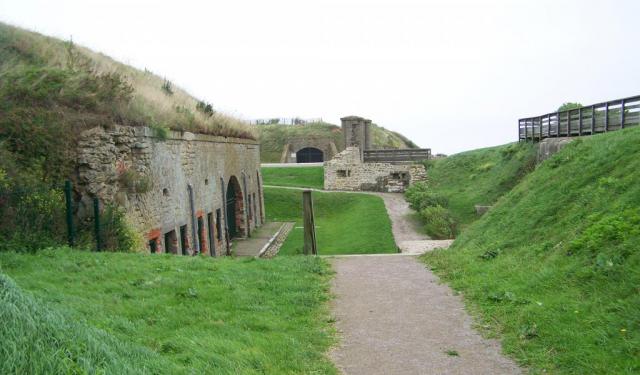
The Western Heights of Dover is an impressive fortification built for protection against invaders. Construction took place at the time of the Napoleonic Wars, with improvements continuing during the 19th century. This immense hilltop fortress features an incredible network of forts, barracks, tunnels, ramparts, and massive ditches.
There are two forts at Western Heights, the Drop Redoubt and... view more
Tour Duration: 1 Hour(s)
Travel Distance: 1.9 Km or 1.2 Miles
There are two forts at Western Heights, the Drop Redoubt and... view more
Tour Duration: 1 Hour(s)
Travel Distance: 1.9 Km or 1.2 Miles
Dover Castle and City Center Walking Tour
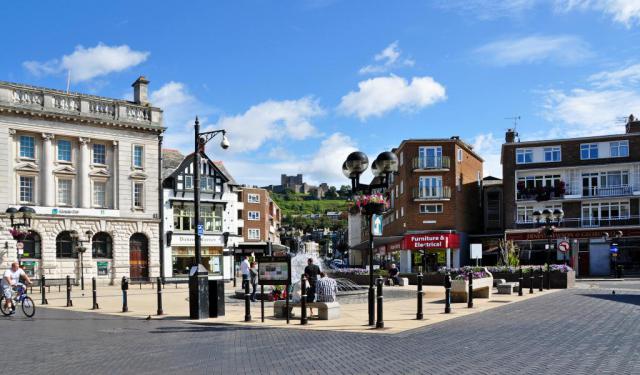
The lovely coastal town of Dover in Kent, England, overlooking the English Channel from the height of the striking white chalk cliffs, has long been a major sea gate to the country. It is to this iconic landmark, known as the "White Cliffs of Dover", that the isle of Great Britain owes its nickname, the Albion.
According to archaeological findings, this location at the narrowest... view more
Tour Duration: 1 Hour(s)
Travel Distance: 2.8 Km or 1.7 Miles
According to archaeological findings, this location at the narrowest... view more
Tour Duration: 1 Hour(s)
Travel Distance: 2.8 Km or 1.7 Miles