

Audio Guide: Reykjavik Downtown Walking Tour (Self Guided), Reykjavik
In spite of the city’s small size and remote location, the Reykjavik Summit helped ease Cold War tensions between the Soviet Union and the United States in 1986.
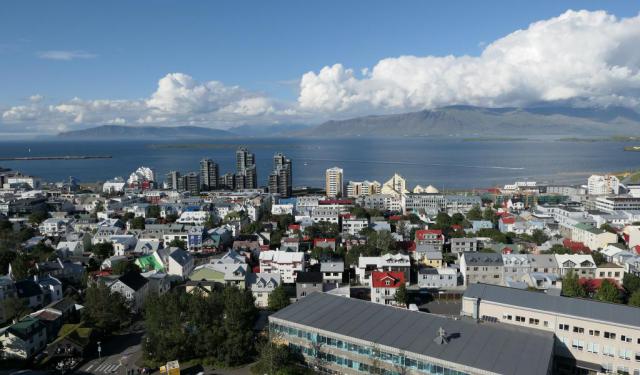
Reykjavík, the capital of Iceland, is both the country’s largest city and its historical starting point. Its origins trace back to around 874 AD, when the Norse settler Ingólfr Arnarson established a farmstead on the southwestern coast. According to a medieval chronicle, he chose the site after seeing steam rising from nearby geothermal vents, which inspired the name Reykjavík-commonly translated as "Smoky Bay.'' The name comes from Old Norse reykja, meaning "smoke,'' and vík, meaning "bay.'' The "smoke'' was in fact steam from hot springs, a defining feature of the area.
For centuries, Reykjavík remained a modest farming settlement with little urban development. Its transformation began in the 18th century under Danish rule, particularly during the reforms of Skúli Magnússon, often called the “father of Reykjavík.” He promoted early industry, including wool workshops, marking the town’s first steps toward becoming a commercial centre. In 1786, Reykjavík was officially granted municipal status.
The 19th century brought growing national consciousness. Reykjavík became the focal point of Iceland’s independence movement. Administrative and cultural institutions gradually concentrated in the city, strengthening its role as the country’s political and intellectual hub. In 1918, Iceland achieved sovereignty, and in 1944, it became a republic, with Reykjavík as its capital.
Throughout the 20th century, Reykjavík expanded rapidly, driven by modernization, improved infrastructure, and the harnessing of geothermal and hydroelectric energy. Despite its growth, the city retained a relatively small scale, blending urban life with proximity to nature.
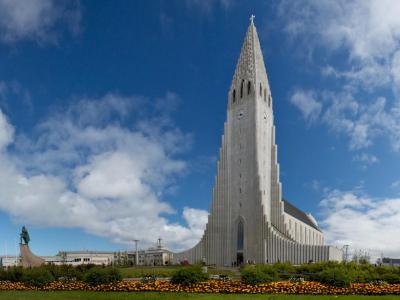
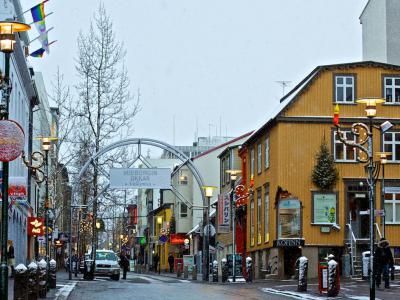
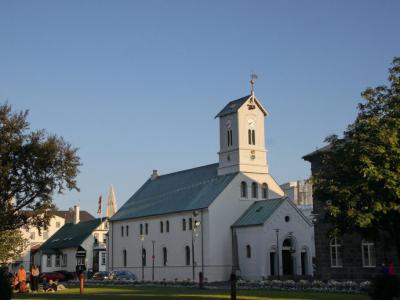
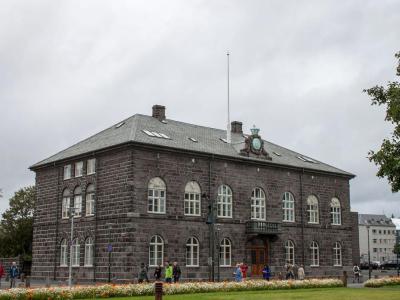
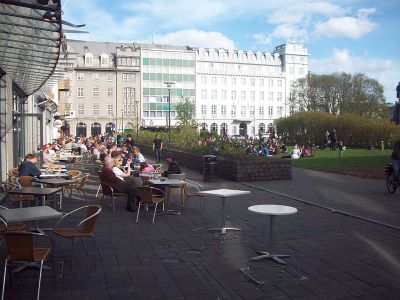
Walking through central Reykjavík, visitors encounter a compact mix of history and contemporary life. Streets lined with colorful houses lead toward landmarks like Church of Hallgrímur, whose tower rises above the skyline, and the lake Tjörnin, bordered by civic buildings and birdlife. Nearby, Austurvöllur Square and Parliament House anchor the historic core, while shops, cafés, and galleries cluster along Laugavegur Street, giving the city centre a lively yet relaxed atmosphere.
And as you move through these streets, it’s worth remembering that this modest capital had a say in the world as we know it today. Take the time to explore it closely, because Reykjavík proves that even the smallest places can leave a lasting mark on the world.
Reykjavík, the capital of Iceland, is both the country’s largest city and its historical starting point. Its origins trace back to around 874 AD, when the Norse settler Ingólfr Arnarson established a farmstead on the southwestern coast. According to a medieval chronicle, he chose the site after seeing steam rising from nearby geothermal vents, which inspired the name Reykjavík-commonly translated as "Smoky Bay.'' The name comes from Old Norse reykja, meaning "smoke,'' and vík, meaning "bay.'' The "smoke'' was in fact steam from hot springs, a defining feature of the area.
For centuries, Reykjavík remained a modest farming settlement with little urban development. Its transformation began in the 18th century under Danish rule, particularly during the reforms of Skúli Magnússon, often called the “father of Reykjavík.” He promoted early industry, including wool workshops, marking the town’s first steps toward becoming a commercial centre. In 1786, Reykjavík was officially granted municipal status.
The 19th century brought growing national consciousness. Reykjavík became the focal point of Iceland’s independence movement. Administrative and cultural institutions gradually concentrated in the city, strengthening its role as the country’s political and intellectual hub. In 1918, Iceland achieved sovereignty, and in 1944, it became a republic, with Reykjavík as its capital.
Throughout the 20th century, Reykjavík expanded rapidly, driven by modernization, improved infrastructure, and the harnessing of geothermal and hydroelectric energy. Despite its growth, the city retained a relatively small scale, blending urban life with proximity to nature.
Walking through central Reykjavík, visitors encounter a compact mix of history and contemporary life. Streets lined with colorful houses lead toward landmarks like Church of Hallgrímur, whose tower rises above the skyline, and the lake Tjörnin, bordered by civic buildings and birdlife. Nearby, Austurvöllur Square and Parliament House anchor the historic core, while shops, cafés, and galleries cluster along Laugavegur Street, giving the city centre a lively yet relaxed atmosphere.
And as you move through these streets, it’s worth remembering that this modest capital had a say in the world as we know it today. Take the time to explore it closely, because Reykjavík proves that even the smallest places can leave a lasting mark on the world.
How it works: Download the app "GPSmyCity: Walks in 1K+ Cities" from Apple App Store or Google Play Store to your mobile phone or tablet. The app turns your mobile device into a personal tour guide and its built-in GPS navigation functions guide you from one tour stop to next. The app works offline, so no data plan is needed when traveling abroad.
Download The GPSmyCity App



Reykjavik Downtown Walking Tour Map
Guide Name: Reykjavik Downtown Walking Tour
Guide Location: Iceland » Reykjavik (See other walking tours in Reykjavik)
Guide Type: Self-guided Walking Tour (Sightseeing)
Tour Duration: 2 Hour(s)
Travel Distance: 3.8 Km or 2.4 Miles
Tour Best Suited For: First-time visit
Guide Location: Iceland » Reykjavik (See other walking tours in Reykjavik)
Guide Type: Self-guided Walking Tour (Sightseeing)
Tour Duration: 2 Hour(s)
Travel Distance: 3.8 Km or 2.4 Miles
Tour Best Suited For: First-time visit
Sights Featured in This Walk


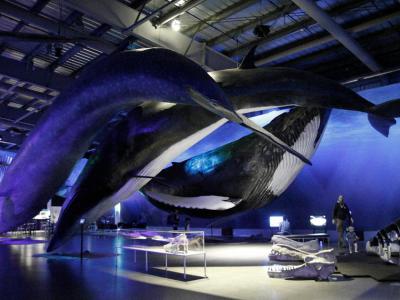
10) Aurora Reykjavik (must see)
Walking Tours in Reykjavik, Iceland

Create Your Own Walk in Reykjavik
Creating your own self-guided walk in Reykjavik is easy and fun. Choose the city attractions that you want to see and a walk route map will be created just for you. You can even set your hotel as the start point of the walk.
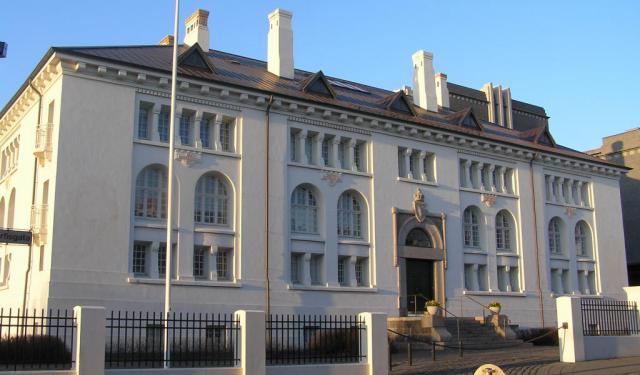
Reykjavik Historical Buildings Tour
Reykjavik, although primarily famous as a base from which to explore the rest of Iceland, is surprisingly full of unique historic locations, many of which are off the beaten path and thus not overrun with tourists. In fact, unless you're accompanied by a historian or knowledgeable local, you can easily walk right past them and not realize their historical importance.
Relatively small in... view more
Tour Duration: 2 Hour(s)
Travel Distance: 2.9 Km or 1.8 Miles
Relatively small in... view more
Tour Duration: 2 Hour(s)
Travel Distance: 2.9 Km or 1.8 Miles
The Most Popular Cities
/ view all