

Barber Institute of Fine Arts, Birmingham
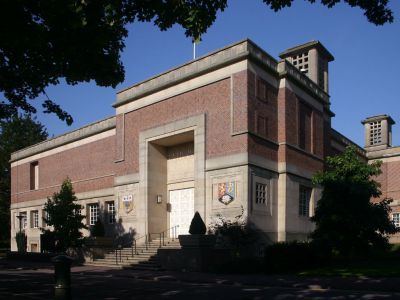
The Barber Institute of Fine Arts, located on the campus of the University of Birmingham, is a celebrated art gallery and concert hall. Encased in a Grade I listed Art Deco building designed by Robert Atkinson and inaugurated in 1939 by Queen Mary, the institute stands as a pivotal structure for the study of art history in the UK.
Central to the building’s design is a concert hall, surrounded by a layout that includes lecture halls, offices, and libraries on the ground floor, while the first floor houses the art galleries. The exterior features two Heraldic Shields, created by Gordon Herickx, representing the University of Birmingham and the Barber Family, intricately crafted in painted and gilded Darley Dale stone.
The Barber Institute's collections are internationally renowned, having been rated five stars by Penguin Books' publication "Britain's Best Museums and Galleries." The galleries showcase a rich array of artworks spanning several centuries and styles. Key highlights include masterpieces by Vincent van Gogh, Claude Monet, and Auguste Rodin. It also features significant works from the Renaissance period by artists like Sandro Botticelli and Giovanni Bellini, and from the 17th century by Rubens and Van Dyck. French Impressionism and Post-impressionism are well represented with pieces by Degas, Renoir, and Gauguin. The British art collection boasts names such as Aubrey Beardsley and J. M. W. Turner.
Additionally, the institute houses a distinguished collection of sculptures, Old Master prints, portrait miniatures, and objets d'art. Its extensive coin collection, particularly of Roman and Byzantine coins, is among the largest globally, significantly enhanced by acquisitions from Phillip Whitting and Geoffrey Haines.
Prominently, the Equestrian Statue of George I, Birmingham’s oldest public sculpture, welcomes visitors at the entrance. Recent notable acquisitions include a late work by Sir Joshua Reynolds and George Bellows’ "Miss Bentham," marking a significant addition of American art to its collections.
The Barber Institute is also a vibrant cultural hub, hosting numerous concerts and an annual music festival, drawing both local and international visitors. Its music library holds 860 items from the Shaw-Hellier collection, further emphasizing its role in both the visual and performing arts.
Central to the building’s design is a concert hall, surrounded by a layout that includes lecture halls, offices, and libraries on the ground floor, while the first floor houses the art galleries. The exterior features two Heraldic Shields, created by Gordon Herickx, representing the University of Birmingham and the Barber Family, intricately crafted in painted and gilded Darley Dale stone.
The Barber Institute's collections are internationally renowned, having been rated five stars by Penguin Books' publication "Britain's Best Museums and Galleries." The galleries showcase a rich array of artworks spanning several centuries and styles. Key highlights include masterpieces by Vincent van Gogh, Claude Monet, and Auguste Rodin. It also features significant works from the Renaissance period by artists like Sandro Botticelli and Giovanni Bellini, and from the 17th century by Rubens and Van Dyck. French Impressionism and Post-impressionism are well represented with pieces by Degas, Renoir, and Gauguin. The British art collection boasts names such as Aubrey Beardsley and J. M. W. Turner.
Additionally, the institute houses a distinguished collection of sculptures, Old Master prints, portrait miniatures, and objets d'art. Its extensive coin collection, particularly of Roman and Byzantine coins, is among the largest globally, significantly enhanced by acquisitions from Phillip Whitting and Geoffrey Haines.
Prominently, the Equestrian Statue of George I, Birmingham’s oldest public sculpture, welcomes visitors at the entrance. Recent notable acquisitions include a late work by Sir Joshua Reynolds and George Bellows’ "Miss Bentham," marking a significant addition of American art to its collections.
The Barber Institute is also a vibrant cultural hub, hosting numerous concerts and an annual music festival, drawing both local and international visitors. Its music library holds 860 items from the Shaw-Hellier collection, further emphasizing its role in both the visual and performing arts.
Want to visit this sight? Check out these Self-Guided Walking Tours in Birmingham. Alternatively, you can download the mobile app "GPSmyCity: Walks in 1K+ Cities" from Apple App Store or Google Play Store. The app turns your mobile device to a personal tour guide and it works offline, so no data plan is needed when traveling abroad.
Download The GPSmyCity App



Barber Institute of Fine Arts on Map
Sight Name: Barber Institute of Fine Arts
Sight Location: Birmingham, England (See walking tours in Birmingham)
Sight Type: Museum/Gallery
Sight Location: Birmingham, England (See walking tours in Birmingham)
Sight Type: Museum/Gallery
Nearby Sights
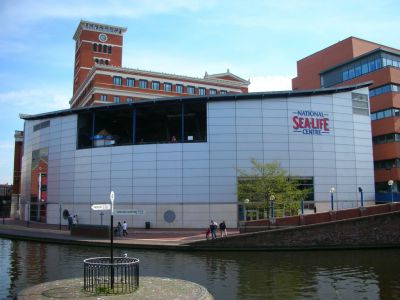
Walking Tours in Birmingham, England

Create Your Own Walk in Birmingham
Creating your own self-guided walk in Birmingham is easy and fun. Choose the city attractions that you want to see and a walk route map will be created just for you. You can even set your hotel as the start point of the walk.
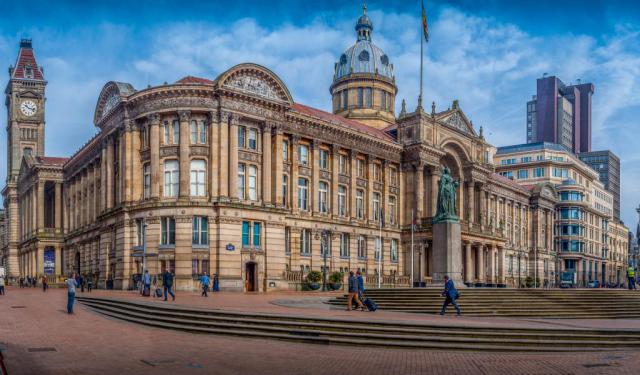
Birmingham Introduction Walking Tour
The name Birmingham derives from the Old English Beormingahām, meaning “the home or settlement of Beorma’s people.” The Beormingas were therefore the people or followers of someone called Beorma. Who exactly was Beorma? No one really knows. He may have been a local leader, an ancestor, or even a legendary figure. What is certain is that a small Anglo-Saxon settlement was established here... view more
Tour Duration: 2 Hour(s)
Travel Distance: 3.2 Km or 2 Miles
Tour Duration: 2 Hour(s)
Travel Distance: 3.2 Km or 2 Miles
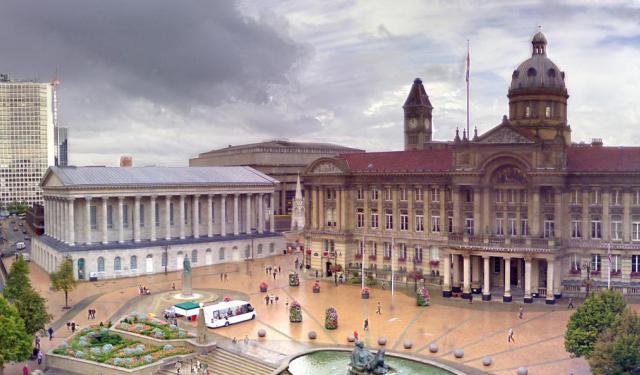
Birmingham Historical Buildings Tour
Although existent as a settlement since the early 7th century AD, Birmingham, UK is a relatively young city that has grown rapidly, as a result of the Industrial Revolution, from the 18th century onward. Thus, the local architecture is overwhelmingly a product of the 18th, 19th, and 20th centuries, with little survived from the earlier days.
Traces of the ancient settlement, dating back to... view more
Tour Duration: 2 Hour(s)
Travel Distance: 4.0 Km or 2.5 Miles
Traces of the ancient settlement, dating back to... view more
Tour Duration: 2 Hour(s)
Travel Distance: 4.0 Km or 2.5 Miles