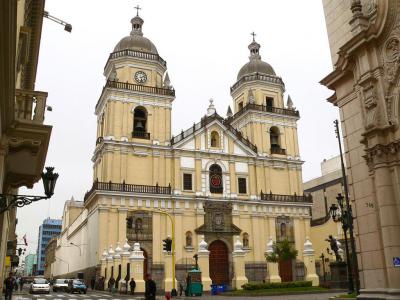


Basilica and Convent of San Pedro, Lima
In the heart of the historic center, amidst other colonial churches, you'll find the San Pedro Church. This religious structure was constructed by the Spanish in the 16th century shortly after the establishment of Lima. Its facade boasts a uniform Neoclassical design, making it a fine representation of this architectural style. Both the church and the adjoining monastery are under the administration of the Jesuit order. This is actually the third building to occupy this site, with its inauguration taking place in 1638.
Upon entering, the church's interior gleams beneath the radiance of the grand main altar, the focal point visible immediately upon passing through the portal. The profusion of gold leaf, particularly highlighted by the lighting, is truly impressive. The corridors also house altars, and the playful pillars supporting the patterns of coffered vaulted ceilings feature additional artworks and paintings adorned with intricately carved wooden frames, their bases adorned with tiles.
In contrast to the neoclassical exterior, the church's interior underwent several redecorations over the centuries, resulting in the incorporation of elements of Baroque design. Furthermore, the San Pedro Church proudly houses significant relics, including fragments of the Cross of Calvary, a thorn from the crown of Jesus, and a tibia from the Apostle Paul. In one of the two towers, the oldest bell in Lima, known as "Abuelita," hangs alongside its German counterpart, "Abuela."
The church is part of the Historic Centre of Lima, which was added to the UNESCO World Heritage List in 1991.
Upon entering, the church's interior gleams beneath the radiance of the grand main altar, the focal point visible immediately upon passing through the portal. The profusion of gold leaf, particularly highlighted by the lighting, is truly impressive. The corridors also house altars, and the playful pillars supporting the patterns of coffered vaulted ceilings feature additional artworks and paintings adorned with intricately carved wooden frames, their bases adorned with tiles.
In contrast to the neoclassical exterior, the church's interior underwent several redecorations over the centuries, resulting in the incorporation of elements of Baroque design. Furthermore, the San Pedro Church proudly houses significant relics, including fragments of the Cross of Calvary, a thorn from the crown of Jesus, and a tibia from the Apostle Paul. In one of the two towers, the oldest bell in Lima, known as "Abuelita," hangs alongside its German counterpart, "Abuela."
The church is part of the Historic Centre of Lima, which was added to the UNESCO World Heritage List in 1991.
Want to visit this sight? Check out these Self-Guided Walking Tours in Lima. Alternatively, you can download the mobile app "GPSmyCity: Walks in 1K+ Cities" from Apple App Store or Google Play Store. The app turns your mobile device to a personal tour guide and it works offline, so no data plan is needed when traveling abroad.
Download The GPSmyCity App



Basilica and Convent of San Pedro on Map
Sight Name: Basilica and Convent of San Pedro
Sight Location: Lima, Peru (See walking tours in Lima)
Sight Type: Religious
Sight Location: Lima, Peru (See walking tours in Lima)
Sight Type: Religious
Nearby Sights
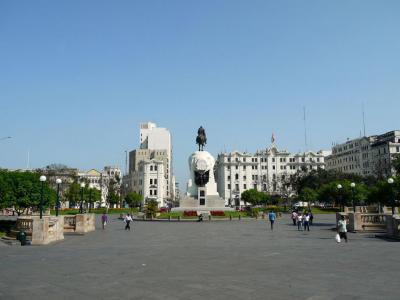
Walking Tours in Lima, Peru

Create Your Own Walk in Lima
Creating your own self-guided walk in Lima is easy and fun. Choose the city attractions that you want to see and a walk route map will be created just for you. You can even set your hotel as the start point of the walk.
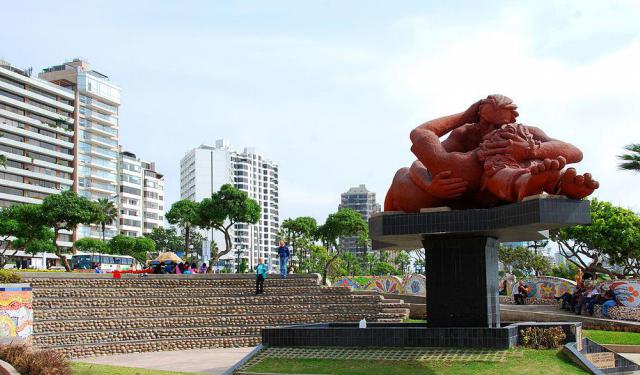
Miraflores Walking Tour
The district of Miraflores is one of Lima's key tourist destinations, renowned for its affluent setting, upscale shopping, phenomenal oceanic views, seashore restaurants, parks, and interesting archaeological sites. The attractions here are numerous and include, among others, the following:
La Huaca Pucllana – an archaeological complex, featuring a clay pyramid made of seven staggered... view more
Tour Duration: 2 Hour(s)
Travel Distance: 3.1 Km or 1.9 Miles
La Huaca Pucllana – an archaeological complex, featuring a clay pyramid made of seven staggered... view more
Tour Duration: 2 Hour(s)
Travel Distance: 3.1 Km or 1.9 Miles
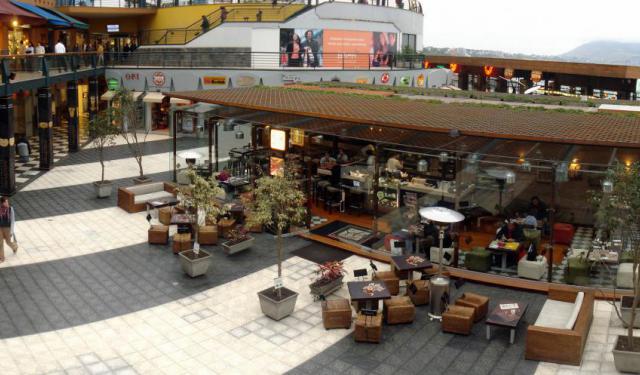
Food and Shopping Walk
Today's Lima is a large, commerce-booming and tourist-friendly capital, equally rich in terms of ancient culture as well as intricate cuisine and wealth of shopping opportunities suitable for various budgets.
Although in recent years many international brands have found their way to Lima’s stores, the majority of tourists keep looking to street fairs and artisan “Indian” markets... view more
Tour Duration: 2 Hour(s)
Travel Distance: 3.3 Km or 2.1 Miles
Although in recent years many international brands have found their way to Lima’s stores, the majority of tourists keep looking to street fairs and artisan “Indian” markets... view more
Tour Duration: 2 Hour(s)
Travel Distance: 3.3 Km or 2.1 Miles
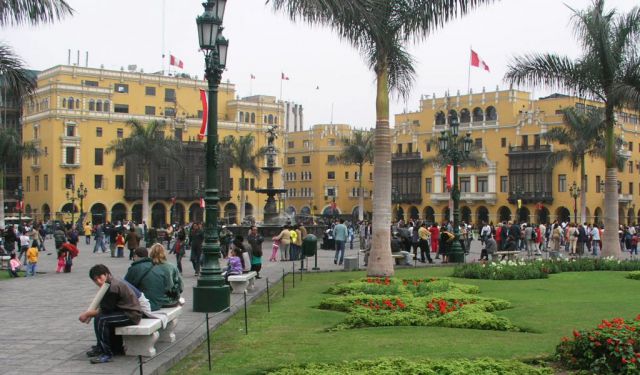
Lima Historic City Center Walking Tour
Alexander Humboldt, a German explorer and proponent of Romantic philosophy, once said Lima felt like two worlds colliding in the same street-and two centuries later, that still holds true.
Lima, the capital of Peru, was founded on January 18, 1535, by Spanish conquistador Francisco Pizarro, who named it the “City of Kings” in honor of the Epiphany and the Spanish crown. Yet the name... view more
Tour Duration: 2 Hour(s)
Travel Distance: 2.7 Km or 1.7 Miles
Lima, the capital of Peru, was founded on January 18, 1535, by Spanish conquistador Francisco Pizarro, who named it the “City of Kings” in honor of the Epiphany and the Spanish crown. Yet the name... view more
Tour Duration: 2 Hour(s)
Travel Distance: 2.7 Km or 1.7 Miles
Useful Travel Guides for Planning Your Trip
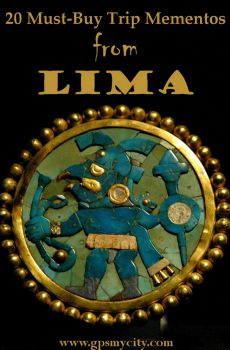
20 Must-Buy Trip Mementos from Lima
Today's Peru is a basket of natural, cultural and historical riches manifested in the multitude of handicrafts that have flourished in the country for thousands of years and embraced Inca, Spanish and other influences. Local jewelry, wool, pottery, leather, music, food and drinks - all have a...
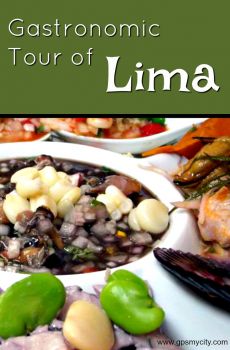
Gastronomic Tour of Lima
Peruvian cuisine reflects a rich cultural and geographical diversity. During half a millennium of fusion, flavors from Europe, Africa, and Asia have mingled with Incan fare. Perú’s approximately 90 microclimates produce a startling repertoire of ingredients, many unique to Peruvian soil. A...