

Basilica dei Santi Cosma e Damiano (Basilica of Saints Cosmas and Damian), Rome
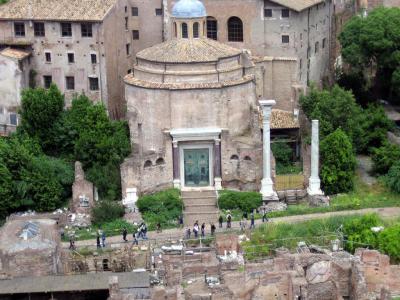
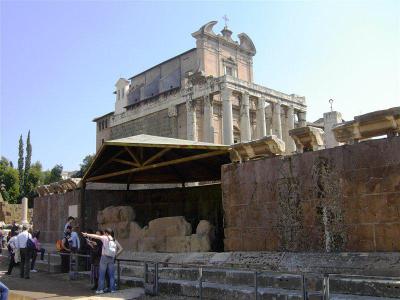
The Basilica of Saints Cosmas and Damian is a significant titular church. The lower portion of the building is accessible through the Roman Forum and incorporates original Roman structures, while the entrance to the upper level is situated outside the Forum. At the entrance of the Forum, visitors will find a circular building that currently houses a small archaeological exhibit. This structure is believed to have been constructed in the early 4th century and may have served as a Roman temple, possibly dedicated to Valerius Romulus, the deified son of Emperor Maxentius. The main building, which is now the basilica, was likely the library of an imperial forum.
The basilica was converted into a church in 527 and contains significant early Christian art, although much of it has been restored, particularly in its mosaics. Today, it is one of the ancient churches known as tituli, with cardinals serving as patrons as cardinal-deacons. As of November 28, 2020, the title has been held by Cardinal Mario Grech.
The basilica is devoted to the Arabian Christian brothers, doctors, martyrs, and saints Cosmas and Damian. It is situated in the Forum of Vespasian, also known as the Forum of Peace. The temple, originally believed to have been dedicated by Emperor Maxentius to his son Valerius Romulus, who died in 309 and was deified, was later Christianized and dedicated to Saints Cosmas and Damian in 527. This conversion occurred when Theodoric the Great, the king of the Ostrogoths, and his daughter Amalasuntha donated the library of the Forum of Peace (Bibliotheca Pacis) and a portion of the Temple of Romulus to Pope Felix IV.
Adjacent to the new entrance of the complex, visitors can explore the rooms with the original marble paving of the Forum of Peace and the wall where the 150 marble slabs of the Forma Urbis Romae were hung. The mosaics within the basilica are masterpieces of 6th- and 7th-century art. At the center is Christ, with Saint Peter presenting Saint Cosmas and Saint Theodorus on the right, and Saint Paul presenting Saint Damian and Pope Felix IV on the left. Pope Felix IV is depicted holding a model of the church. These intricate mosaics add to the historical and artistic significance of the Basilica of Saints Cosmas and Damian, attracting visitors with their beauty and religious symbolism.
The basilica was converted into a church in 527 and contains significant early Christian art, although much of it has been restored, particularly in its mosaics. Today, it is one of the ancient churches known as tituli, with cardinals serving as patrons as cardinal-deacons. As of November 28, 2020, the title has been held by Cardinal Mario Grech.
The basilica is devoted to the Arabian Christian brothers, doctors, martyrs, and saints Cosmas and Damian. It is situated in the Forum of Vespasian, also known as the Forum of Peace. The temple, originally believed to have been dedicated by Emperor Maxentius to his son Valerius Romulus, who died in 309 and was deified, was later Christianized and dedicated to Saints Cosmas and Damian in 527. This conversion occurred when Theodoric the Great, the king of the Ostrogoths, and his daughter Amalasuntha donated the library of the Forum of Peace (Bibliotheca Pacis) and a portion of the Temple of Romulus to Pope Felix IV.
Adjacent to the new entrance of the complex, visitors can explore the rooms with the original marble paving of the Forum of Peace and the wall where the 150 marble slabs of the Forma Urbis Romae were hung. The mosaics within the basilica are masterpieces of 6th- and 7th-century art. At the center is Christ, with Saint Peter presenting Saint Cosmas and Saint Theodorus on the right, and Saint Paul presenting Saint Damian and Pope Felix IV on the left. Pope Felix IV is depicted holding a model of the church. These intricate mosaics add to the historical and artistic significance of the Basilica of Saints Cosmas and Damian, attracting visitors with their beauty and religious symbolism.
Want to visit this sight? Check out these Self-Guided Walking Tours in Rome. Alternatively, you can download the mobile app "GPSmyCity: Walks in 1K+ Cities" from Apple App Store or Google Play Store. The app turns your mobile device to a personal tour guide and it works offline, so no data plan is needed when traveling abroad.
Download The GPSmyCity App



Basilica dei Santi Cosma e Damiano (Basilica of Saints Cosmas and Damian) on Map
Sight Name: Basilica dei Santi Cosma e Damiano (Basilica of Saints Cosmas and Damian)
Sight Location: Rome, Italy (See walking tours in Rome)
Sight Type: Religious
Sight Location: Rome, Italy (See walking tours in Rome)
Sight Type: Religious
Nearby Sights
Walking Tours in Rome, Italy

Create Your Own Walk in Rome
Creating your own self-guided walk in Rome is easy and fun. Choose the city attractions that you want to see and a walk route map will be created just for you. You can even set your hotel as the start point of the walk.
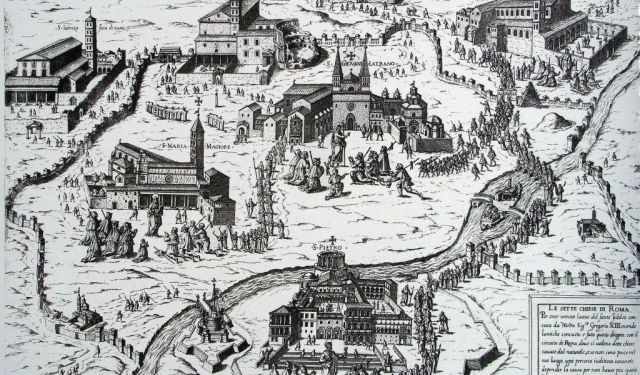
Seven Pilgrim Churches of Rome Walking Tour
Rome has long played host to pilgrims-after all, it's home to the Pope, the Catholic Curia, and a treasure trove of relics linked to apostles, saints, and martyrs. Back in the day, the Via Francigena provided a straight shot for the faithful traveling from England to Rome. Upon arrival, it was tradition to visit the tombs of Saints Peter and Paul. When a Jubilee rolled around, the spiritual... view more
Tour Duration: 6 Hour(s)
Travel Distance: 17.4 Km or 10.8 Miles
Tour Duration: 6 Hour(s)
Travel Distance: 17.4 Km or 10.8 Miles

"Roman Holiday" Movie Walking Tour
Filmed entirely in the heart of Rome, Roman Holiday is one of those timeless films that beckons you to hop on a Vespa and lose yourself in the intoxicating beauty of the Italian capital. Released in 1953, this beloved classic has captured hearts across generations, thanks to its irresistible blend of romance, adventure, and charm-anchored by two of Hollywood’s brightest stars, Audrey Hepburn and... view more
Tour Duration: 4 Hour(s)
Travel Distance: 8.5 Km or 5.3 Miles
Tour Duration: 4 Hour(s)
Travel Distance: 8.5 Km or 5.3 Miles
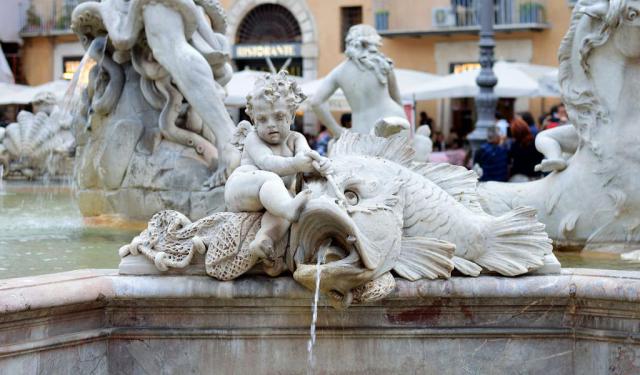
Fountains and Squares Walking Tour
In Rome there is a lively piazza round almost every corner, each with its own unique atmosphere and its own story to tell. These public squares have been the center of Roman culture for centuries, and some of the city’s most popular attractions are located within them.
Most piazzas have a fountain in the center and a lot of cafes around. In fact, Rome holds the largest number of fountains in... view more
Tour Duration: 2 Hour(s)
Travel Distance: 4.1 Km or 2.5 Miles
Most piazzas have a fountain in the center and a lot of cafes around. In fact, Rome holds the largest number of fountains in... view more
Tour Duration: 2 Hour(s)
Travel Distance: 4.1 Km or 2.5 Miles
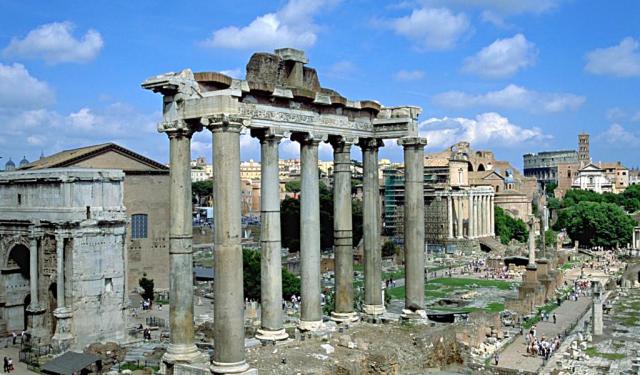
Roman Forum and Imperial Forums Walking Tour
t's a known fact that Rome wasn't built in a day. But since it was built, the city has stood the test of time and become "eternal." A popular proverb says, "all roads lead to Rome," but very few realize that, inside Rome itself, all roads lead to the Forum.
Indeed, the central hub of ancient Rome, the Roman Forum and the Imperial Forums once served as the... view more
Tour Duration: 2 Hour(s)
Travel Distance: 2.0 Km or 1.2 Miles
Indeed, the central hub of ancient Rome, the Roman Forum and the Imperial Forums once served as the... view more
Tour Duration: 2 Hour(s)
Travel Distance: 2.0 Km or 1.2 Miles
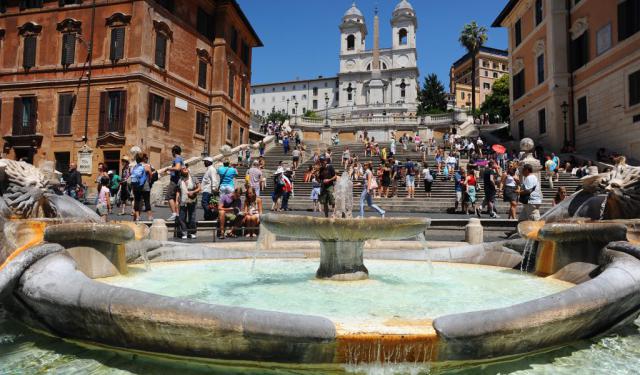
Rome Introduction Walking Tour II
Rome, the Eternal City, carries a legacy shaped by centuries of resilience, transformation, and cultural flourishing. The fall of the Roman Empire in 476 AD marked the end of an era, plunging Western Europe into the dark Middle Ages. Yet, even amid the disarray, Rome endured as a beacon of unity, largely due to its status as the center of Catholicism. The papacy wielded spiritual influence,... view more
Tour Duration: 2 Hour(s)
Travel Distance: 3.4 Km or 2.1 Miles
Tour Duration: 2 Hour(s)
Travel Distance: 3.4 Km or 2.1 Miles
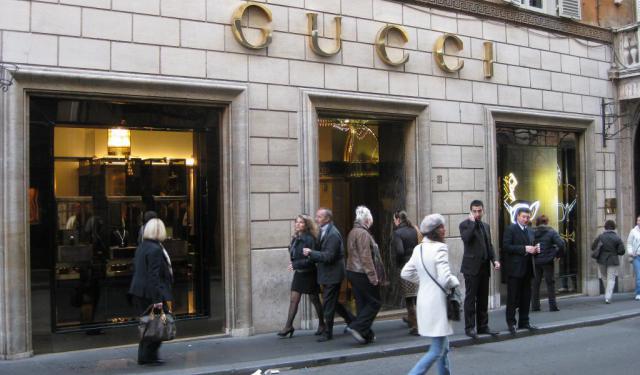
Rome Shopping Streets Walking Tour
Loved by tourists for its busy fashionable streets and significant baroque icons, the so-called ‘Tridente’ is one of the Eternal City's most lusted-after areas, formed by Via dei Condotti, Via Borgognona, Via Frattina and the adjacent Via del Corso. It is perhaps the most high-end destination for Roman shopping, with a concentration of renowned jewelers and important Italian/international... view more
Tour Duration: 2 Hour(s)
Travel Distance: 2.9 Km or 1.8 Miles
Tour Duration: 2 Hour(s)
Travel Distance: 2.9 Km or 1.8 Miles
Useful Travel Guides for Planning Your Trip
17 Best Gelaterias in Rome Italy
For ice cream lovers and dabblers this guide is a treasure chest of Rome’s best gelato shops. There are gelaterias everywhere. Many visitors to Rome only have a few days to explore the city. You owe it to yourself to make the most of your time and find the gelato locals eat. Often the authentic...
Souvenirs Shopping: 15 Authentic Italian Things To Buy in Rome
Rome is the Eternal City and, as such, the list of gift options available here is countless. Whether it's something edible, drinkable, wearable or pleasing to the eye that you want - you will find it all here in abundance. However, if time or budget is the factor, perhaps you might want to...
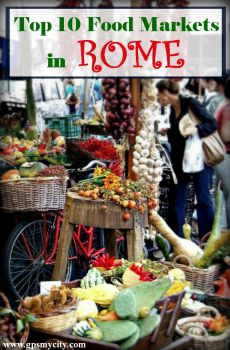
10 Best Food Markets in Rome Italy
Of all the things Italy is most famous for (cars, music, fashion, movies, etc.), food is, undoubtedly, top of the list. Rome may well not be the whole Italy, but no Italy is whole without Rome... And the Romans, much as all their fellow-Italians, like it "fresco", hence the abundance of...