

Audio Guide: Palatine Hill Walking Tour (Self Guided), Rome
Palatine Hill — one of Rome’s legendary Seven Hills — is the most ancient part of the city. According to mythology (and a fair bit of archaeology backing it up), this is where the whole Roman saga began to unfold in the year 753 BC when young Romulus pointed dramatically at the hill and probably thought to himself: “Yes, this is the spot.” And just like that, a city that would eventually dominate half the world came to be...
Fun linguistic nugget: the word “palace” (or “Palatium” in Latin), indicating the emperor’s residence, comes from this very hill (known in Italian as Palatino). Its name is linked to the ancient deity Pales, honored during the Parilia festival every 21 April — which is still celebrated as Rome’s birthday (talk about a place that knows how to throw an anniversary party...).
As Rome evolved from kingdom to republic to empire-with-serious-ego, Palatine Hill became the “Beverly Hills” of antiquity. Emperors and nobility moved in, building sprawling residences here with views that would make modern real-estate agents weep. Domitian’s palace was the show-off masterpiece, while Emperor Augustus and his wife Livia kept things elegantly luxurious in their own homes nearby.
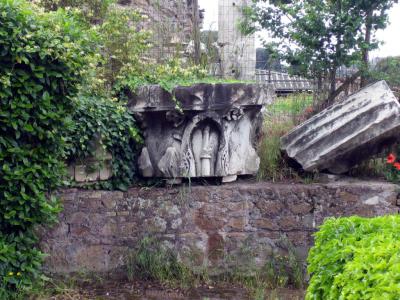
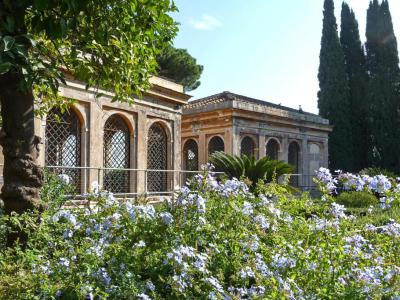
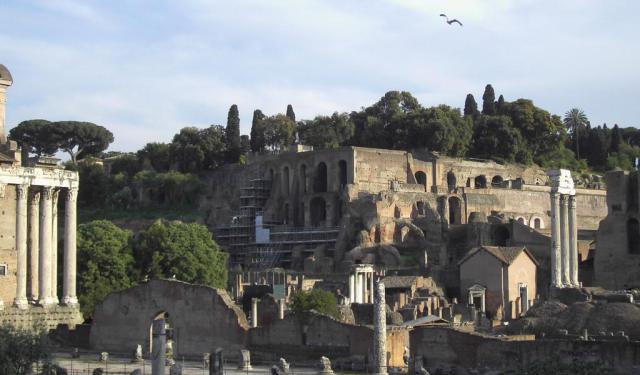
Today, wandering through the ruins feels like exploring the backstage of ancient power. You’ll see fragments of once-splendid palaces, courtyards, and gardens that whisper Rome’s former swagger. After the empire declined, looters and neglect took a toll on this place, but thankfully, the Renaissance era brought about a partial makeover. The Farnese Gardens — one of Europe’s earliest botanical gardens, created during that period — now serve top-tier views of the Roman Forum and Colosseum.
Presently, as you stroll along, you can imagine toga-clad influencers of ancient times striking poses by marble columns. This hill isn’t just old — this is where Rome’s mythology, politics, and gossip were born. So, if you're ready to step into a world where legends were minted and empires got their start, take this self-guided walk on the Palatine Hill, and let the stones do the storytelling...
Fun linguistic nugget: the word “palace” (or “Palatium” in Latin), indicating the emperor’s residence, comes from this very hill (known in Italian as Palatino). Its name is linked to the ancient deity Pales, honored during the Parilia festival every 21 April — which is still celebrated as Rome’s birthday (talk about a place that knows how to throw an anniversary party...).
As Rome evolved from kingdom to republic to empire-with-serious-ego, Palatine Hill became the “Beverly Hills” of antiquity. Emperors and nobility moved in, building sprawling residences here with views that would make modern real-estate agents weep. Domitian’s palace was the show-off masterpiece, while Emperor Augustus and his wife Livia kept things elegantly luxurious in their own homes nearby.
Today, wandering through the ruins feels like exploring the backstage of ancient power. You’ll see fragments of once-splendid palaces, courtyards, and gardens that whisper Rome’s former swagger. After the empire declined, looters and neglect took a toll on this place, but thankfully, the Renaissance era brought about a partial makeover. The Farnese Gardens — one of Europe’s earliest botanical gardens, created during that period — now serve top-tier views of the Roman Forum and Colosseum.
Presently, as you stroll along, you can imagine toga-clad influencers of ancient times striking poses by marble columns. This hill isn’t just old — this is where Rome’s mythology, politics, and gossip were born. So, if you're ready to step into a world where legends were minted and empires got their start, take this self-guided walk on the Palatine Hill, and let the stones do the storytelling...
How it works: Download the app "GPSmyCity: Walks in 1K+ Cities" from Apple App Store or Google Play Store to your mobile phone or tablet. The app turns your mobile device into a personal tour guide and its built-in GPS navigation functions guide you from one tour stop to next. The app works offline, so no data plan is needed when traveling abroad.
Palatine Hill Walking Tour Map
Guide Name: Palatine Hill Walking Tour
Guide Location: Italy » Rome (See other walking tours in Rome)
Guide Type: Self-guided Walking Tour (Sightseeing)
# of Attractions: 10
Tour Duration: 2 Hour(s)
Travel Distance: 2.6 Km or 1.6 Miles
Author: audrey
Sight(s) Featured in This Guide:
Guide Location: Italy » Rome (See other walking tours in Rome)
Guide Type: Self-guided Walking Tour (Sightseeing)
# of Attractions: 10
Tour Duration: 2 Hour(s)
Travel Distance: 2.6 Km or 1.6 Miles
Author: audrey
Sight(s) Featured in This Guide:
- Antiquarium del Palatino (Palatine Museum)
- Palazzo di Domiziano (Palace of Domitian)
- Stadio Palatino (Palatine Stadium)
- Neronian Cryptoporticus
- Villa di Livia (Villa of Livia)
- Tempio di Apollo Palatino (Temple of Palatine Apollo)
- Domus Augusti (House of Augustus)
- Casa Romuli (Hut of Romulus)
- Orti Farnesiani (Farnese Gardens)
- Terrazza Belvedere del Palatino (Palatine Hill Viewing Platform)
1) Antiquarium del Palatino (Palatine Museum)
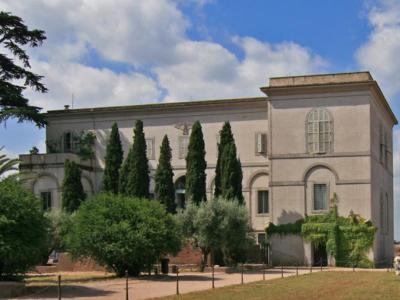
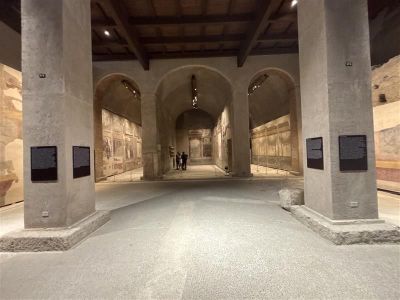
If ancient Rome were a “greatest hits” album, the Palatine Museum would be its deluxe edition with bonus tracks... Indeed, sitting proudly atop the Palatine Hill, this museum has been collecting Rome’s leftovers and architectural treasures for over a century, showcasing sculptures, fresco fragments, and archaeological finds unearthed on this very hill, where emperors once strolled around in sandals of questionable comfort...
The museum’s first iteration emerged in the late 1800s, courtesy of one Pietro Rosa, and it was housed inside the Farnese building. Among its exhibits were the marble statues dug up from the dirt during Napoleon III’s era of excavation enthusiasm. In 1882, archaeologist Rodolfo Lanciani decided that the building must be demolished to create a pathway between the Roman Forum and the Palatine Hill. Before the dust settled, Gherardo Ghirardini heroically catalogued everything and shipped the collection off to the Museum of Baths of Diocletian, which later evolved into the National Roman Museum. It's fair to say that Rome’s artifacts had moved around more than a traveling circus...
Fast forward to the 1930s, another archaeologist (and coincidentally the director of excavations on the Palatine Hill), Alfonso Bartoli, decided the museum needed a proper home. Using what remained of the old Villa Mills, he created today’s building—with two floors, four rooms each, and plenty of ancient drama inside. The ground floor is dedicated to the Palatine history from its origins to the Republican era, showcasing items and myths related to that period. Head upstairs, and you'll enter the imperial era—aka Rome at its most extra, with opulence, power, and emperor-level ego on display.
Today, the Palatine Museum is like a time-travel starter pack. It lets visitors wander through the hill’s evolution—from humble beginnings to imperial glory—and offers a front-row seat to the story of ancient Rome (without having to fight any gladiators for it). So, enjoy the view, enjoy the history, and maybe whisper a thank-you to the archaeologists who prevented these artifacts from becoming someone’s garden décor...
The museum’s first iteration emerged in the late 1800s, courtesy of one Pietro Rosa, and it was housed inside the Farnese building. Among its exhibits were the marble statues dug up from the dirt during Napoleon III’s era of excavation enthusiasm. In 1882, archaeologist Rodolfo Lanciani decided that the building must be demolished to create a pathway between the Roman Forum and the Palatine Hill. Before the dust settled, Gherardo Ghirardini heroically catalogued everything and shipped the collection off to the Museum of Baths of Diocletian, which later evolved into the National Roman Museum. It's fair to say that Rome’s artifacts had moved around more than a traveling circus...
Fast forward to the 1930s, another archaeologist (and coincidentally the director of excavations on the Palatine Hill), Alfonso Bartoli, decided the museum needed a proper home. Using what remained of the old Villa Mills, he created today’s building—with two floors, four rooms each, and plenty of ancient drama inside. The ground floor is dedicated to the Palatine history from its origins to the Republican era, showcasing items and myths related to that period. Head upstairs, and you'll enter the imperial era—aka Rome at its most extra, with opulence, power, and emperor-level ego on display.
Today, the Palatine Museum is like a time-travel starter pack. It lets visitors wander through the hill’s evolution—from humble beginnings to imperial glory—and offers a front-row seat to the story of ancient Rome (without having to fight any gladiators for it). So, enjoy the view, enjoy the history, and maybe whisper a thank-you to the archaeologists who prevented these artifacts from becoming someone’s garden décor...
2) Palazzo di Domiziano (Palace of Domitian)
Have you ever thought your dream home was “a little extra”? — Just wait till you hear about Emperor Domitian’s Palace. Built between 81 and 92 AD, this place was more than just a royal residence, but the imperial address in the true sense of it! — The Palatine Hill’s VIP penthouse, where Domitian and the emperors who followed him lived like the original Roman influencers they were...
This complex was so massive it had to be divided into zones, like a very exclusive, marble-laden multiplex. First, the Domus Flavia: the “public wing,” where Domitian strutted his political stuff, greeted important guests, and showed off his command of the empire. Then, the Domus Augustana: the “private wing,” where the emperor could unwind, avoid senators, and... hopefully not get assassinated.
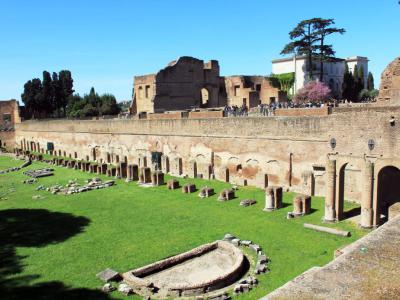
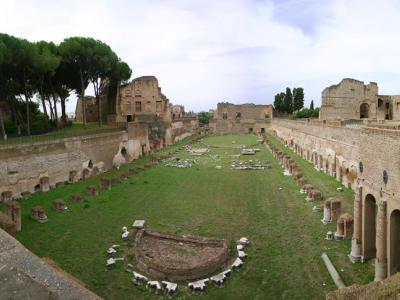
And for a bit of scenic flair, there was the so-called Hippodrome (or Stadium) — a long, 160-by-48-meter “track” — that looked like a circus (yet too small to accommodate chariots) but was in fact a luxury sunken garden. Think of it as a royal runway for statues, strolls, and maybe Domitian’s pet peacocks...
Designed by the imperial architect Rabirius, this palace wasn’t built from scratch — in fact, Domitian recycled the already existing property, stacking his on top of Nero’s Domus Transitoria and the Republican House of the Griffins. Ancient Rome may not have invented sustainability, but it did love a dramatic renovation project...
Later on, during the reign of Emperor Septimius Severus, a sprawling extension overlooking the Circus Maximus was added. Yet despite all the upgrades, Domitian’s original structure largely survived the empire’s ups and downs. For centuries, it remained the official imperial residence, right up until the Western Roman Empire's decline in the 5th century AD.
In short: this wasn’t just a palace but the blueprint for every “lavish lifestyle” brag that came after it. Roman emperors didn’t do minimalism. They did Palatine!
This complex was so massive it had to be divided into zones, like a very exclusive, marble-laden multiplex. First, the Domus Flavia: the “public wing,” where Domitian strutted his political stuff, greeted important guests, and showed off his command of the empire. Then, the Domus Augustana: the “private wing,” where the emperor could unwind, avoid senators, and... hopefully not get assassinated.
And for a bit of scenic flair, there was the so-called Hippodrome (or Stadium) — a long, 160-by-48-meter “track” — that looked like a circus (yet too small to accommodate chariots) but was in fact a luxury sunken garden. Think of it as a royal runway for statues, strolls, and maybe Domitian’s pet peacocks...
Designed by the imperial architect Rabirius, this palace wasn’t built from scratch — in fact, Domitian recycled the already existing property, stacking his on top of Nero’s Domus Transitoria and the Republican House of the Griffins. Ancient Rome may not have invented sustainability, but it did love a dramatic renovation project...
Later on, during the reign of Emperor Septimius Severus, a sprawling extension overlooking the Circus Maximus was added. Yet despite all the upgrades, Domitian’s original structure largely survived the empire’s ups and downs. For centuries, it remained the official imperial residence, right up until the Western Roman Empire's decline in the 5th century AD.
In short: this wasn’t just a palace but the blueprint for every “lavish lifestyle” brag that came after it. Roman emperors didn’t do minimalism. They did Palatine!
3) Stadio Palatino (Palatine Stadium)
At one point, Emperor Domitian, who had already got himself a flashy public property (such as Domus Flavia) and a lavish private pad (the Domus Augustana), felt there was still something missing... But what was it? The answer was obvious — a personal stadium, of course! This is how the Palatine Stadium — Domitian’s deluxe backyard playground — came into being, perched atop the Palatine Hill. It was built between 81 and 92 AD, replacing the earlier Republican and Nero-era buildings, because... why renovate when you can raze it and build anew with imperial flair?
Designed by Domitian’s go-to architect, Rabirius (the ancient equivalent of a celebrity interior designer), the stadium was more “royal leisure garden” than roaring arena. Forget gladiator battles: this was a VIP landscaped hangout and private riding track (known as a Viridarium) — a kind of emperor’s members-only country club...
The stadium stretched out like a mini circus — long, stylish, and curved at one end — roughly 160 by 48 meters. It hugged the eastern edge of the Domus Augustana, offering the emperor prime views of his own luxury sports field. Later emperors like Hadrian and the Severans gave it some touch-ups, because palaces do need a little rebranding every now and then throughout the centuries. A small oval structure added in Theodoric’s time may have hosted small-scale shows, but not gladiator fights — those had been canceled by Emperor Honorius (yes, even Rome had to deal with discontinued entertainment...).
To top it off, the stadium once flaunted a two-story portico wrapped in marble — the ancient equivalent of tasteful exterior lighting and expensive landscaping. The lower level featured marble-clad brick pillars, the upper level shimmered with marble columns, and a fancy VIP tribune jutted out for emperor-approved spectating. Down the center ran a “spina” — the divider usually seen in circuses — of which only the semicircular elements remain today, like structural breadcrumbs hinting at past grandeur...
Sadly, in the 18th century, the building suffered extensive looting by treasure hunters, who helped themselves to a “souvenir or ten,” damaging certain parts beyond repair. But even in its weathered state, the Palatine Stadium still whispers of emperors, exclusivity, and elite leisure — the ancient world’s ultimate private sports and garden lounge.
Designed by Domitian’s go-to architect, Rabirius (the ancient equivalent of a celebrity interior designer), the stadium was more “royal leisure garden” than roaring arena. Forget gladiator battles: this was a VIP landscaped hangout and private riding track (known as a Viridarium) — a kind of emperor’s members-only country club...
The stadium stretched out like a mini circus — long, stylish, and curved at one end — roughly 160 by 48 meters. It hugged the eastern edge of the Domus Augustana, offering the emperor prime views of his own luxury sports field. Later emperors like Hadrian and the Severans gave it some touch-ups, because palaces do need a little rebranding every now and then throughout the centuries. A small oval structure added in Theodoric’s time may have hosted small-scale shows, but not gladiator fights — those had been canceled by Emperor Honorius (yes, even Rome had to deal with discontinued entertainment...).
To top it off, the stadium once flaunted a two-story portico wrapped in marble — the ancient equivalent of tasteful exterior lighting and expensive landscaping. The lower level featured marble-clad brick pillars, the upper level shimmered with marble columns, and a fancy VIP tribune jutted out for emperor-approved spectating. Down the center ran a “spina” — the divider usually seen in circuses — of which only the semicircular elements remain today, like structural breadcrumbs hinting at past grandeur...
Sadly, in the 18th century, the building suffered extensive looting by treasure hunters, who helped themselves to a “souvenir or ten,” damaging certain parts beyond repair. But even in its weathered state, the Palatine Stadium still whispers of emperors, exclusivity, and elite leisure — the ancient world’s ultimate private sports and garden lounge.
4) Neronian Cryptoporticus
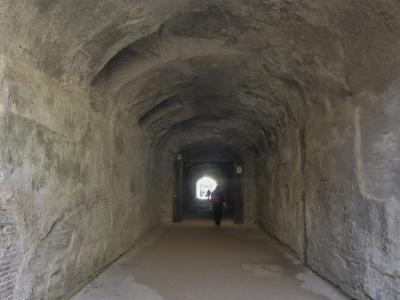
If ancient Romans had a secret runway for emperors to stroll, scheme, and avoid bad weather, the cryptoporticus was it. The name itself sounds mysterious, but no—it's pure Latin: “crypta” means hidden space, and “porticus” means portico. Put them together, and you get a covered, semi-underground corridor—basically the Romans’ idea of a climate-controlled hallway long before air-conditioning was cool...
These vaulted passageways often propped up the fancy structures built above them, like villas and forums. Picture a sleek Roman marble terrace on top… and underneath, a shady corridor perfect for political gossip, secret strolls, or escaping the scorching sun. In the ancient letters, the term "cryptoporticus" was often used interchangeably with "crypt," indicating an underground space.
One of the most famous examples of a cryptoporticus is part of the Domus Tiberiana complex, the first imperial palace on the Palatine Hill. Built during Emperor Nero’s era—from around 54 to 68 AD—it stretches a dramatic 130 meters (because emperors didn’t do “short”). Tiberius and his successors—Caligula, Claudius, and Nero—eventually blended their separate palaces into one mega-residence, and the cryptoporticus helped stitch it all together.
Eventually buried beneath the Renaissance Farnese Gardens, the corridor still survives with its tiny windows, mosaic floors, and what remains of its once-fancy ceiling. The original stucco—complete with cupids and leafy décor—now lives at the Palatine Museum, safely preserved from humidity… and curious fingers.
So, next time you walk through a dull hallway, just remember: the Romans invented one so stylish it became a palace highlight—minus the fluorescent lighting and office carpet...
These vaulted passageways often propped up the fancy structures built above them, like villas and forums. Picture a sleek Roman marble terrace on top… and underneath, a shady corridor perfect for political gossip, secret strolls, or escaping the scorching sun. In the ancient letters, the term "cryptoporticus" was often used interchangeably with "crypt," indicating an underground space.
One of the most famous examples of a cryptoporticus is part of the Domus Tiberiana complex, the first imperial palace on the Palatine Hill. Built during Emperor Nero’s era—from around 54 to 68 AD—it stretches a dramatic 130 meters (because emperors didn’t do “short”). Tiberius and his successors—Caligula, Claudius, and Nero—eventually blended their separate palaces into one mega-residence, and the cryptoporticus helped stitch it all together.
Eventually buried beneath the Renaissance Farnese Gardens, the corridor still survives with its tiny windows, mosaic floors, and what remains of its once-fancy ceiling. The original stucco—complete with cupids and leafy décor—now lives at the Palatine Museum, safely preserved from humidity… and curious fingers.
So, next time you walk through a dull hallway, just remember: the Romans invented one so stylish it became a palace highlight—minus the fluorescent lighting and office carpet...
5) Villa di Livia (Villa of Livia)
Imagine cruising north of ancient Rome along the Via Flaminia (Rome’s version of a VIP driveway). Some 12 kilometers (or 7.5 miles) out, you were bound to stumble upon the luxurious country hideaway. This was the property of none other than Livia Drusilla, the future Empress and wife of Octavian, later known as Emperor Augustus.
The Villa of Livia (or Ad Gallinas Albas, if you want to impress your Latin-loving friends) wasn’t just any summer home. It was either part of Livia’s marriage package (when she tied the knot with her second husband, Octavian) in 39 BC, or a very generous engagement gift from the man himself. Either way, it wasn't exactly one's standard “congratulations” fruit basket...
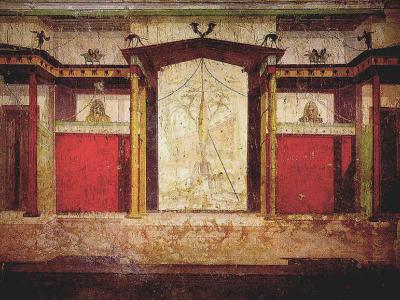
This hilltop retreat had views: some truly cinematic panoramas of the Tiber Valley and Rome, the kind of backdrop that makes you want to sip wine and judge the political world from a distance... Inside, Livia had her own immersive garden. The villa’s famous frescoes turned the walls into a lush, evergreen paradise. Some remnants of the retaining walls that once supported the villa's terraces can still be observed today. As for the frescoes, they now rest at Massimo Palace (because ancient décor oftentimes gets upgraded to a museum penthouse...).
Location wasn’t chosen at random, either. Set amid iron-rich cliffs of red tuff and key roads converging at Rome’s northern entrance, this villa was prime real estate. The name Prima Porta, meaning "First Door," originated from an aqueduct arch that crossed the road and signaled to travelers that Rome was just ahead (talk about great curb appeal...).
Over the years, the villa underwent modifications in four distinct stages, with the earliest phase dating back to the Republican era and the most recent one occurring during the reign of Constantine the Great.
As for that quirky Latin name, “Ad Gallinas Albas,” which means “At the White Chickens',” it was inspired by a flock of divinely prophetic white hens associated with this site (and said to bring good omens). Indeed, when your poultry has a reputation for predicting the future, you know the place has character...
The Villa of Livia (or Ad Gallinas Albas, if you want to impress your Latin-loving friends) wasn’t just any summer home. It was either part of Livia’s marriage package (when she tied the knot with her second husband, Octavian) in 39 BC, or a very generous engagement gift from the man himself. Either way, it wasn't exactly one's standard “congratulations” fruit basket...
This hilltop retreat had views: some truly cinematic panoramas of the Tiber Valley and Rome, the kind of backdrop that makes you want to sip wine and judge the political world from a distance... Inside, Livia had her own immersive garden. The villa’s famous frescoes turned the walls into a lush, evergreen paradise. Some remnants of the retaining walls that once supported the villa's terraces can still be observed today. As for the frescoes, they now rest at Massimo Palace (because ancient décor oftentimes gets upgraded to a museum penthouse...).
Location wasn’t chosen at random, either. Set amid iron-rich cliffs of red tuff and key roads converging at Rome’s northern entrance, this villa was prime real estate. The name Prima Porta, meaning "First Door," originated from an aqueduct arch that crossed the road and signaled to travelers that Rome was just ahead (talk about great curb appeal...).
Over the years, the villa underwent modifications in four distinct stages, with the earliest phase dating back to the Republican era and the most recent one occurring during the reign of Constantine the Great.
As for that quirky Latin name, “Ad Gallinas Albas,” which means “At the White Chickens',” it was inspired by a flock of divinely prophetic white hens associated with this site (and said to bring good omens). Indeed, when your poultry has a reputation for predicting the future, you know the place has character...
6) Tempio di Apollo Palatino (Temple of Palatine Apollo)
Back in its heyday, the Temple of Palatine Apollo was a celebrity mansion with the velvet-rope entrance. Conceived by Augustus — Rome’s first emperor — this was no ordinary temple. It was built after a lightning bolt dramatically struck the emperor's property. Today, most people would have called an electrician to fix the damage, but Augustus erected a marble temple instead and declared it divine destiny.
He dedicated it to Apollo, his patron deity. The temple was officially opened on October 9, 28 BC, with the emperor’s private home conveniently connected to it — the ultimate “en-suite temple” experience...
For years, archaeologists thought its ruins belonged to the temple of Jupiter Victor, until in 1956, excavations revealed the truth: these were the remains of Augustus’s showpiece to Apollo. Clad in Carrara marble, the temple was a cultural campus. The precinct area, known as Apollinis, included a grand (70-by-30-meter) terrace, decorated altars, and a star gallery of ancient art. The northern part of the terrace elevated the temple on a high podium constructed with tufa and travertine blocks in load-bearing sections and cement elsewhere.
Among the finds here were colorful terracotta reliefs packed with mythological drama — ancient Rome’s version of premium wall décor... Attached to the temple was the Library of Apollo Palatinus, a posh twin-hall where Rome’s finest minds gathered to read, debate, and probably judge each other’s scroll-choices.
Ancient sources indicate that the temple had ivory doors and contained numerous sculptures. The real scene-stealer was the portico of the Danaids with golden-hued columns, black marble statues of the fifty infamous sisters, their sword-wielding father Danaos, and equestrian statues of Egypt’s royal sons. If you ever needed proof that the ancient world loved dramatic storytelling as much as we do, this temple’s décor alone could win an award...
He dedicated it to Apollo, his patron deity. The temple was officially opened on October 9, 28 BC, with the emperor’s private home conveniently connected to it — the ultimate “en-suite temple” experience...
For years, archaeologists thought its ruins belonged to the temple of Jupiter Victor, until in 1956, excavations revealed the truth: these were the remains of Augustus’s showpiece to Apollo. Clad in Carrara marble, the temple was a cultural campus. The precinct area, known as Apollinis, included a grand (70-by-30-meter) terrace, decorated altars, and a star gallery of ancient art. The northern part of the terrace elevated the temple on a high podium constructed with tufa and travertine blocks in load-bearing sections and cement elsewhere.
Among the finds here were colorful terracotta reliefs packed with mythological drama — ancient Rome’s version of premium wall décor... Attached to the temple was the Library of Apollo Palatinus, a posh twin-hall where Rome’s finest minds gathered to read, debate, and probably judge each other’s scroll-choices.
Ancient sources indicate that the temple had ivory doors and contained numerous sculptures. The real scene-stealer was the portico of the Danaids with golden-hued columns, black marble statues of the fifty infamous sisters, their sword-wielding father Danaos, and equestrian statues of Egypt’s royal sons. If you ever needed proof that the ancient world loved dramatic storytelling as much as we do, this temple’s décor alone could win an award...
7) Domus Augusti (House of Augustus)
The House of Augustus, situated near the Hut of Romulus on the Palatine Hill, is not to be confused with another prime real estate in the area — the Domus Augustana (the fancier one built later for emperors with bigger egos, who enjoyed bigger reception rooms…). As for this executive mansion, it had slightly better interior design and was the actual home address of Emperor Augustus himself — the man who turned Rome from a republic into a fully functioning empire...
Augustus didn’t just build it from scratch. According to the ancient gossip-columnist Suetonius, he simply moved in (from his original residence in the Roman Forum) to the villa of the prominent statesman Quintus Hortensius. Shortly thereafter, the place was struck by lightning. Naturally, amid the lack of electrical knowledge, Augustus decided the whole estate now clearly belonged to the gods. And when Jupiter gives you lemons, you build a temple. So, Augustus built one, right next door, dedicating it to Apollo, his divine patron.
Of course, even imperial homes aren’t safe from everyday chaos. A fire in 3 AD damaged the residence, so it was rebuilt, upgraded, and — in true government fashion — turned into state property. Spanning some 8,600 square meters, the house was constructed on two terraces, utilizing the natural topography of the Palatine Hill and blending status with subtlety. Its layout revolved around two elegant peristyles (basically fancy courtyard-runways for power strolling), though only one survives today, thanks to later emperors building even bigger palaces right on top of it.
The Roman Empire may have been grand, but Augustus himself avoided gold-plated tackiness. Instead, he preferred tasteful frescoes and low-key luxury — the minimalist emperor before minimalism was cool.
Augustus didn’t just build it from scratch. According to the ancient gossip-columnist Suetonius, he simply moved in (from his original residence in the Roman Forum) to the villa of the prominent statesman Quintus Hortensius. Shortly thereafter, the place was struck by lightning. Naturally, amid the lack of electrical knowledge, Augustus decided the whole estate now clearly belonged to the gods. And when Jupiter gives you lemons, you build a temple. So, Augustus built one, right next door, dedicating it to Apollo, his divine patron.
Of course, even imperial homes aren’t safe from everyday chaos. A fire in 3 AD damaged the residence, so it was rebuilt, upgraded, and — in true government fashion — turned into state property. Spanning some 8,600 square meters, the house was constructed on two terraces, utilizing the natural topography of the Palatine Hill and blending status with subtlety. Its layout revolved around two elegant peristyles (basically fancy courtyard-runways for power strolling), though only one survives today, thanks to later emperors building even bigger palaces right on top of it.
The Roman Empire may have been grand, but Augustus himself avoided gold-plated tackiness. Instead, he preferred tasteful frescoes and low-key luxury — the minimalist emperor before minimalism was cool.
8) Casa Romuli (Hut of Romulus)
The humblest of all celebrity homes on the Palatine Hill is the Hut of Romulus. Yes, the legendary founder and first king of Rome apparently lived not in a palace, but in a cozy, one-room peasant hut with a straw roof. Think less marble empire, more early Iron Age studio…
Perched near the slope that leads down to the Circus Maximus, the hut was the kind of simple dwelling traditional for the Latins — wattle and daub walls, thatched roof, rustic charm. If you’ve ever seen the cute little house-shaped funerary urns from the Latial culture (dating from 1000 to 600 BC) — those are basically real-estate ads for this structure...
And because this hut belonged to the very same Romulus, the Romans treated it like a national treasure. Throughout the centuries, it suffered multiple damages from fires and storms. In 38 BC, during a religious ceremony involving an altar-fire sacrifice to Romulus, the flame got out of control and destroyed the building. Still, on that and many other disastrous occasions, the hut was meticulously restored to its original state (like a very tiny version of the Colosseum — with more kindling...).
There was even a duplicate hut up on the Capitoline Hill — likely a replica of the original one — which lasted until around 78 AD, which is impressively long for a thatched roof...
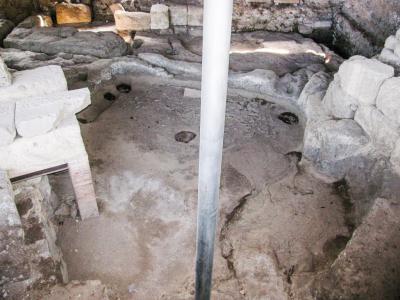
So where was the real thing? In 1946, archaeologists uncovered hut foundations (4.9 by 3.6 meters) carved into the Palatine’s tufa bedrock — roughly egg-shaped, with post holes like you’d expect for a straw-topped residence. Organic materials found at the site were dated to the Italian early Iron Age, roughly between 900 and 700 BC. Was it the Romulus home? The evidence seemed affirming (though the ancient paparazzi left no autographs behind).
Although further research and investigation are still needed to establish a definitive link, this discovery presents a compelling case to associate this finding with the dwelling of the legendary Romulus. It also serves as a powerful reminder: Rome may have conquered the world, but it all started with one legendary hut — and a founder who clearly wasn’t afraid to begin at ground level...
Perched near the slope that leads down to the Circus Maximus, the hut was the kind of simple dwelling traditional for the Latins — wattle and daub walls, thatched roof, rustic charm. If you’ve ever seen the cute little house-shaped funerary urns from the Latial culture (dating from 1000 to 600 BC) — those are basically real-estate ads for this structure...
And because this hut belonged to the very same Romulus, the Romans treated it like a national treasure. Throughout the centuries, it suffered multiple damages from fires and storms. In 38 BC, during a religious ceremony involving an altar-fire sacrifice to Romulus, the flame got out of control and destroyed the building. Still, on that and many other disastrous occasions, the hut was meticulously restored to its original state (like a very tiny version of the Colosseum — with more kindling...).
There was even a duplicate hut up on the Capitoline Hill — likely a replica of the original one — which lasted until around 78 AD, which is impressively long for a thatched roof...
So where was the real thing? In 1946, archaeologists uncovered hut foundations (4.9 by 3.6 meters) carved into the Palatine’s tufa bedrock — roughly egg-shaped, with post holes like you’d expect for a straw-topped residence. Organic materials found at the site were dated to the Italian early Iron Age, roughly between 900 and 700 BC. Was it the Romulus home? The evidence seemed affirming (though the ancient paparazzi left no autographs behind).
Although further research and investigation are still needed to establish a definitive link, this discovery presents a compelling case to associate this finding with the dwelling of the legendary Romulus. It also serves as a powerful reminder: Rome may have conquered the world, but it all started with one legendary hut — and a founder who clearly wasn’t afraid to begin at ground level...
9) Orti Farnesiani (Farnese Gardens)
Back in the 16th century, powerful cardinals didn’t just throw dinner parties — sometimes they built entire gardens to show off. The Farnese Gardens on Rome’s Palatine Hill are a prime example. Commissioned in 1550 by Cardinal Alessandro Farnese, these were among Europe’s very first private botanical gardens — a symbol of one's love for nature (only on one's private estate, curated by experts)...
Cardinal Farnese, offspring of one of Italy’s top-tier noble families, wanted a place where art, science, and a little bit of “self-importance statement” could all flourish together. So, he tasked the architect Giacomo Vignola with the job of creating a leafy paradise directly over ancient palace ruins.
Layered in grand terraces, the gardens offered premier balcony views over the Roman Forum. They came equipped with botanical collections, showy fountains, aviaries full of exotic birds, and ancient sculptures curated like the world’s fanciest yard sale. Hidden grottoes and winding paths gave visitors a delightfully maze-like reminder that wealth can equally buy both beauty and confusion...
The gardens also served as a museum of sorts, housing an extensive collection of frescoes and inscriptions. Many of these were pulled straight from the Palatine ruins, underscoring the garden's connection to the ancient past — a perfect blend of “new luxury” and “very old bragging rights.”
While the original splendor of the Farnese Gardens has faded over time, the remains have been partially restored and can be visited as part of the Palatine Hill archaeological site. Today, you can walk through the terraces and enjoy the sweeping views that once made ancient emperors and Renaissance elites swoon...
Cardinal Farnese, offspring of one of Italy’s top-tier noble families, wanted a place where art, science, and a little bit of “self-importance statement” could all flourish together. So, he tasked the architect Giacomo Vignola with the job of creating a leafy paradise directly over ancient palace ruins.
Layered in grand terraces, the gardens offered premier balcony views over the Roman Forum. They came equipped with botanical collections, showy fountains, aviaries full of exotic birds, and ancient sculptures curated like the world’s fanciest yard sale. Hidden grottoes and winding paths gave visitors a delightfully maze-like reminder that wealth can equally buy both beauty and confusion...
The gardens also served as a museum of sorts, housing an extensive collection of frescoes and inscriptions. Many of these were pulled straight from the Palatine ruins, underscoring the garden's connection to the ancient past — a perfect blend of “new luxury” and “very old bragging rights.”
While the original splendor of the Farnese Gardens has faded over time, the remains have been partially restored and can be visited as part of the Palatine Hill archaeological site. Today, you can walk through the terraces and enjoy the sweeping views that once made ancient emperors and Renaissance elites swoon...
10) Terrazza Belvedere del Palatino (Palatine Hill Viewing Platform)
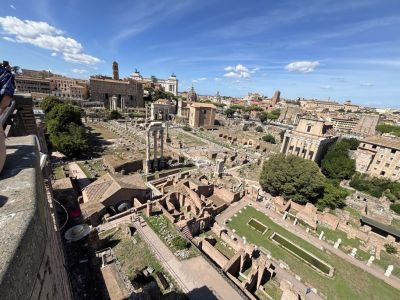
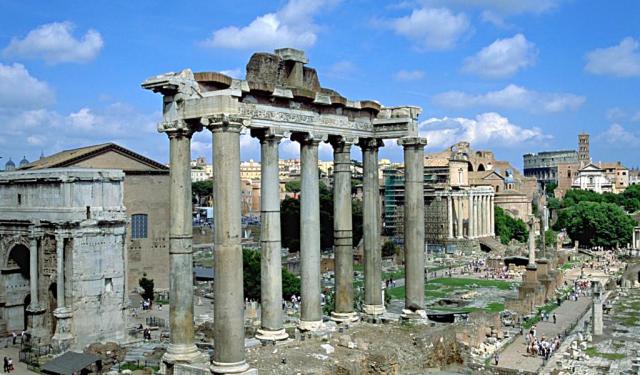
Seize the opportunity to stand exactly where ancient emperors once admired their real-estate empire — rooftops made of temples, basilicas, and political drama. That’s the essence of the Palatine Hill Viewing Platform. From this lofty terrace, the Roman Forum sprawls beneath you like a 2,000-year-old news feed: “Senate argues again,” “emperor builds giant stadium,” “gods demand new temple.” The Colosseum pops into frame, the Arch of Titus shows off, and the skyline does its timeless, postcard-perfect thing!
The terrace is a favorite stop for photographers and history enthusiasts alike. The former particularly adore this spot because Rome refuses to have a bad angle. Mornings arrive dipped in gold; sunsets turn the ruins into a theatrical stage set; and every hour in between reminds you that Rome invented the concept of atmospheric lighting long before Hollywood. Meanwhile, you get a rare moment of calm — high above the crowds, in the midst of ancient stones and legends… or perhaps just listening to your audio guide gasping for breath after that uphill stroll.
And yes, there is a bit of climbing involved — ancient power came with great elevation. But with the terrace included in the same ticket that gets you into the Colosseum and Forum, you’d be missing out on the most cinematic view in the Eternal City if you skip it. So take a deep breath, channel your inner emperor, and prepare to survey Rome in all its monumental glory!
The terrace is a favorite stop for photographers and history enthusiasts alike. The former particularly adore this spot because Rome refuses to have a bad angle. Mornings arrive dipped in gold; sunsets turn the ruins into a theatrical stage set; and every hour in between reminds you that Rome invented the concept of atmospheric lighting long before Hollywood. Meanwhile, you get a rare moment of calm — high above the crowds, in the midst of ancient stones and legends… or perhaps just listening to your audio guide gasping for breath after that uphill stroll.
And yes, there is a bit of climbing involved — ancient power came with great elevation. But with the terrace included in the same ticket that gets you into the Colosseum and Forum, you’d be missing out on the most cinematic view in the Eternal City if you skip it. So take a deep breath, channel your inner emperor, and prepare to survey Rome in all its monumental glory!
Walking Tours in Rome, Italy

Create Your Own Walk in Rome
Creating your own self-guided walk in Rome is easy and fun. Choose the city attractions that you want to see and a walk route map will be created just for you. You can even set your hotel as the start point of the walk.

Fountains and Squares Walking Tour
In Rome there is a lively piazza round almost every corner, each with its own unique atmosphere and its own story to tell. These public squares have been the center of Roman culture for centuries, and some of the city’s most popular attractions are located within them.
Most piazzas have a fountain in the center and a lot of cafes around. In fact, Rome holds the largest number of fountains in... view more
Tour Duration: 2 Hour(s)
Travel Distance: 4.1 Km or 2.5 Miles
Most piazzas have a fountain in the center and a lot of cafes around. In fact, Rome holds the largest number of fountains in... view more
Tour Duration: 2 Hour(s)
Travel Distance: 4.1 Km or 2.5 Miles
Holy Sites Walking Tour
As the cradle of the Catholic Church, one of the world's largest organizations, Rome has a large number of valuable, sacred places of worship. Crowded with architectural splendors from different periods of time, each of its churches and basilicas represent a significant part of culture and history.
Take this self-guided walking tour to discover Rome's magnificent religious heritage,... view more
Tour Duration: 3 Hour(s)
Travel Distance: 6.9 Km or 4.3 Miles
Take this self-guided walking tour to discover Rome's magnificent religious heritage,... view more
Tour Duration: 3 Hour(s)
Travel Distance: 6.9 Km or 4.3 Miles
Vatican Walking Tour
Consisting of a walled enclave within the city of Rome, the Vatican is the world’s smallest sovereign state, as well as a symbol (and headquarters) of the Roman Catholic faith. Although only 44 hectares in surface, one is amazed by the vastness of this place and the sheer size of everything. When gazing around in all directions, you realize how much can be achieved by people working in faith for... view more
Tour Duration: 2 Hour(s)
Travel Distance: 3.4 Km or 2.1 Miles
Tour Duration: 2 Hour(s)
Travel Distance: 3.4 Km or 2.1 Miles
Rome Introduction Walking Tour I
Often referred to as the Eternal City, Rome holds a unique place in the story of Western civilization. Its influence shaped European culture through language, governance, and monumental architecture.
The name “Rome” originates from Romulus, the mythical founder of the city, who, according to legend, was the son of the war god Mars and Rhea Silvia, the priestess of goddess Vesta. Both... view more
Tour Duration: 2 Hour(s)
Travel Distance: 3.7 Km or 2.3 Miles

The name “Rome” originates from Romulus, the mythical founder of the city, who, according to legend, was the son of the war god Mars and Rhea Silvia, the priestess of goddess Vesta. Both... view more
Tour Duration: 2 Hour(s)
Travel Distance: 3.7 Km or 2.3 Miles
Food Tasting Walking Tour
Whether it’s a long lunch or a stop-off for an ice cream on an evening stroll, eating in Rome is a very social activity. Culinary traditions run deep here, and it may well be one of Italy’s most pleasurable cities in which to eat. Deli shops, prosciutterias, pizzerias, fornos (bakeries) and caffès are also very popular and offer a great alternative to a restaurant meal.
On this... view more
Tour Duration: 2 Hour(s)
Travel Distance: 2.7 Km or 1.7 Miles
On this... view more
Tour Duration: 2 Hour(s)
Travel Distance: 2.7 Km or 1.7 Miles
Seven Pilgrim Churches of Rome Walking Tour
Rome has long played host to pilgrims-after all, it's home to the Pope, the Catholic Curia, and a treasure trove of relics linked to apostles, saints, and martyrs. Back in the day, the Via Francigena provided a straight shot for the faithful traveling from England to Rome. Upon arrival, it was tradition to visit the tombs of Saints Peter and Paul. When a Jubilee rolled around, the spiritual... view more
Tour Duration: 6 Hour(s)
Travel Distance: 17.4 Km or 10.8 Miles
Tour Duration: 6 Hour(s)
Travel Distance: 17.4 Km or 10.8 Miles
Useful Travel Guides for Planning Your Trip

10 Best Food Markets in Rome Italy
Of all the things Italy is most famous for (cars, music, fashion, movies, etc.), food is, undoubtedly, top of the list. Rome may well not be the whole Italy, but no Italy is whole without Rome... And the Romans, much as all their fellow-Italians, like it "fresco", hence the abundance of...
17 Best Gelaterias in Rome Italy
For ice cream lovers and dabblers this guide is a treasure chest of Rome’s best gelato shops. There are gelaterias everywhere. Many visitors to Rome only have a few days to explore the city. You owe it to yourself to make the most of your time and find the gelato locals eat. Often the authentic...

Souvenirs Shopping: 15 Authentic Italian Things To Buy in Rome
Rome is the Eternal City and, as such, the list of gift options available here is countless. Whether it's something edible, drinkable, wearable or pleasing to the eye that you want - you will find it all here in abundance. However, if time or budget is the factor, perhaps you might want to...
The Most Popular Cities
/ view all