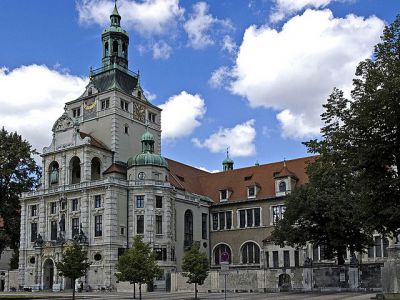


Bayerisches Nationalmuseum (Bavarian National Museum), Munich
The Bavarian National Museum, also known as Bayerisches Nationalmuseum, located in Munich, is a significant institution for decorative arts in Europe and one of the largest art museums in Germany. Its collection is primarily divided into two main categories: the art historical collection and the folklore collection.
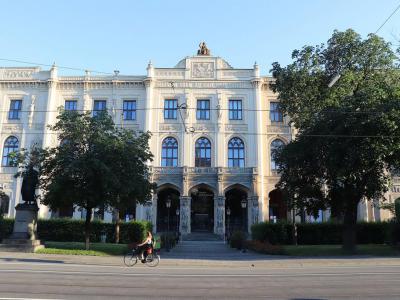
King Maximilian II of Bavaria established the museum in 1855. It holds an extensive array of European artifacts spanning from late antiquity to the early 20th century, with a strong focus on the medieval to early modern periods. The museum building, designed in the historicist style by Gabriel von Seidl between 1894 and 1900, is a notable architectural gem of its era. It stands on Prinzregentenstraße, one of Munich's prominent royal avenues.
The main building of the Bavarian National Museum encompasses exhibition rooms spread across three floors, totaling approximately 13,000 square meters of exhibition space. The core of its collection originates from the art collection of the Wittelsbach family. Over time, the museum collections have grown, and a new building was added to house the Bavarian State Archaeological Collection, featuring artifacts from Paleolithic to early Middle Ages.
The art collection spans over 40 rooms, encompassing a wide range of art styles from late antiquity to Neoclassicism. It includes the Bollert Collection in the western wing, known for its late medieval sculptures. The museum is famous for its ivory carvings, goldsmith works, textiles, glass paintings, tapestries, shrines, and courtly culture items like musical instruments, furniture, paintings, clocks, stoneware, porcelain, and statues. Notably, it holds one of the world's best collections of Nymphenburg porcelain figures by Franz Anton Bustelli (1723–63).
In addition to its art holdings, the museum's folklore collection showcases traditional Bavarian furniture, rural pottery, crockery, and religious folklore. This collection also includes an outstanding array of wood carvings from Neapolitan, Sicilian, Tyrolean, and Bavarian origins, featuring street scenes and Nativity Scenes.
Why You Should Visit:
Extensive and eclectic high-quality collections wherein everyday life and trade, commerce and industry are well-represented.
Tip:
€1 admission on Sundays (normally €7 for adults).
Most captions are not in English so take the audio guide.
King Maximilian II of Bavaria established the museum in 1855. It holds an extensive array of European artifacts spanning from late antiquity to the early 20th century, with a strong focus on the medieval to early modern periods. The museum building, designed in the historicist style by Gabriel von Seidl between 1894 and 1900, is a notable architectural gem of its era. It stands on Prinzregentenstraße, one of Munich's prominent royal avenues.
The main building of the Bavarian National Museum encompasses exhibition rooms spread across three floors, totaling approximately 13,000 square meters of exhibition space. The core of its collection originates from the art collection of the Wittelsbach family. Over time, the museum collections have grown, and a new building was added to house the Bavarian State Archaeological Collection, featuring artifacts from Paleolithic to early Middle Ages.
The art collection spans over 40 rooms, encompassing a wide range of art styles from late antiquity to Neoclassicism. It includes the Bollert Collection in the western wing, known for its late medieval sculptures. The museum is famous for its ivory carvings, goldsmith works, textiles, glass paintings, tapestries, shrines, and courtly culture items like musical instruments, furniture, paintings, clocks, stoneware, porcelain, and statues. Notably, it holds one of the world's best collections of Nymphenburg porcelain figures by Franz Anton Bustelli (1723–63).
In addition to its art holdings, the museum's folklore collection showcases traditional Bavarian furniture, rural pottery, crockery, and religious folklore. This collection also includes an outstanding array of wood carvings from Neapolitan, Sicilian, Tyrolean, and Bavarian origins, featuring street scenes and Nativity Scenes.
Why You Should Visit:
Extensive and eclectic high-quality collections wherein everyday life and trade, commerce and industry are well-represented.
Tip:
€1 admission on Sundays (normally €7 for adults).
Most captions are not in English so take the audio guide.
Want to visit this sight? Check out these Self-Guided Walking Tours in Munich. Alternatively, you can download the mobile app "GPSmyCity: Walks in 1K+ Cities" from Apple App Store or Google Play Store. The app turns your mobile device to a personal tour guide and it works offline, so no data plan is needed when traveling abroad.
Download The GPSmyCity App



Bayerisches Nationalmuseum (Bavarian National Museum) on Map
Sight Name: Bayerisches Nationalmuseum (Bavarian National Museum)
Sight Location: Munich, Germany (See walking tours in Munich)
Sight Type: Museum/Gallery
Sight Location: Munich, Germany (See walking tours in Munich)
Sight Type: Museum/Gallery
Nearby Sights



Walking Tours in Munich, Germany

Create Your Own Walk in Munich
Creating your own self-guided walk in Munich is easy and fun. Choose the city attractions that you want to see and a walk route map will be created just for you. You can even set your hotel as the start point of the walk.
Munich Introduction Walking Tour
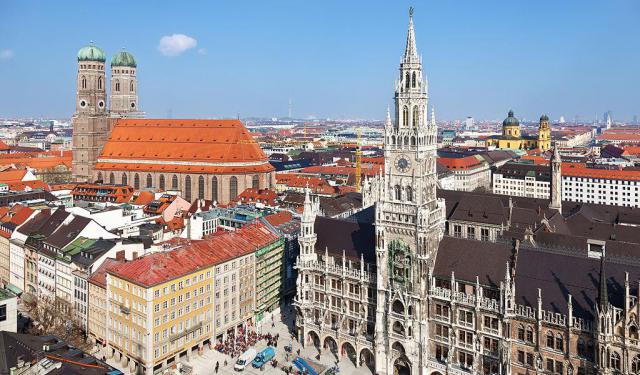
Set along the banks of the River Isar, just north of the Bavarian Alps, Munich is a city steeped in history, where centuries-old buildings meet a rich array of cultural landmarks and modern-day energy.
The first recorded mention dates back to 1158. The name is believed to come from the Old and Middle High German word “munichen”, meaning “by the monks.” It refers to the Benedictine monks... view more
Tour Duration: 2 Hour(s)
Travel Distance: 2.5 Km or 1.6 Miles
The first recorded mention dates back to 1158. The name is believed to come from the Old and Middle High German word “munichen”, meaning “by the monks.” It refers to the Benedictine monks... view more
Tour Duration: 2 Hour(s)
Travel Distance: 2.5 Km or 1.6 Miles
Third Reich Munich Walking Tour
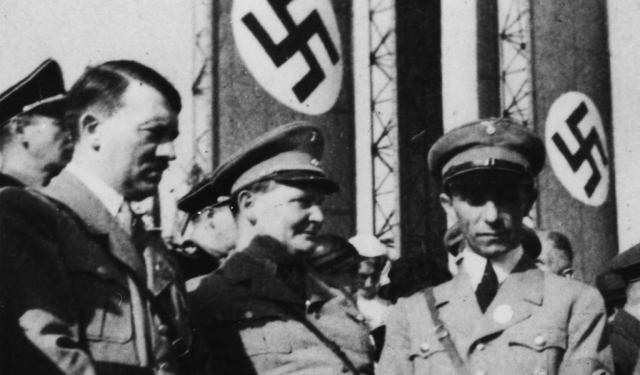
In the early decades of the 20th century, Munich became the birthplace of one of history’s darkest political movements. Long before the world knew what was coming, Bavaria’s capital had already laid the groundwork for the rise of the National Socialist German Workers' Party-better known as the Nazi Party.
From 1933 to 1945, the Third Reich took hold of Germany under Adolf Hitler’s... view more
Tour Duration: 2 Hour(s)
Travel Distance: 3.3 Km or 2.1 Miles
From 1933 to 1945, the Third Reich took hold of Germany under Adolf Hitler’s... view more
Tour Duration: 2 Hour(s)
Travel Distance: 3.3 Km or 2.1 Miles
Munich Food Tour
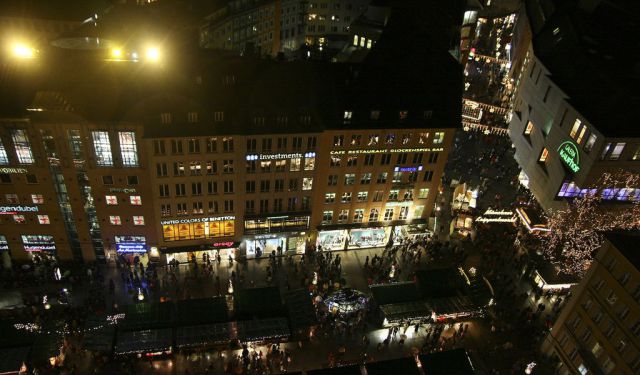
There is a long-standing Bavarian saying that goes like this: ‘Bier ist Brot.’ It translates to ‘beer is bread.’ You could not have asked for a better introduction to Munich's food scene.
In its early days as a settlement founded in 1158, Munich developed as a market town, where trade routes brought grains, meat, and salt into a growing local economy. By the late Middle Ages,... view more
Tour Duration: 1 Hour(s)
Travel Distance: 1.3 Km or 0.8 Miles
In its early days as a settlement founded in 1158, Munich developed as a market town, where trade routes brought grains, meat, and salt into a growing local economy. By the late Middle Ages,... view more
Tour Duration: 1 Hour(s)
Travel Distance: 1.3 Km or 0.8 Miles
Old Town Souvenir Shops
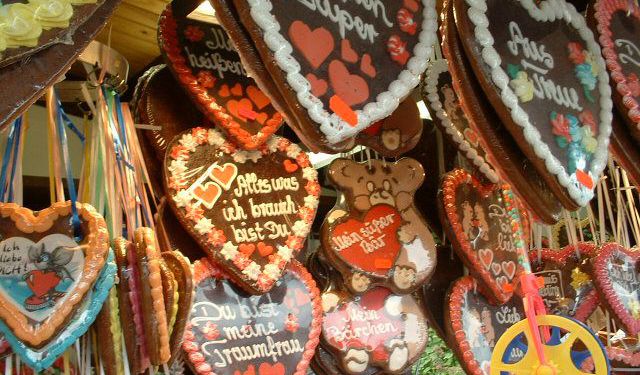
"Collect moments, not things," wise men say. In reference to travel, this may be interpreted as the prevalence of experiences and memories over material gains. Still, when it comes to travel mementos, albeit material they are, memories and experiences are primarily what these little (or not so little) tokens are all about.
And it would be a pity to leave Munich without bringing home... view more
Tour Duration: 1 Hour(s)
Travel Distance: 1.5 Km or 0.9 Miles
And it would be a pity to leave Munich without bringing home... view more
Tour Duration: 1 Hour(s)
Travel Distance: 1.5 Km or 0.9 Miles
Old Town Walking Tour
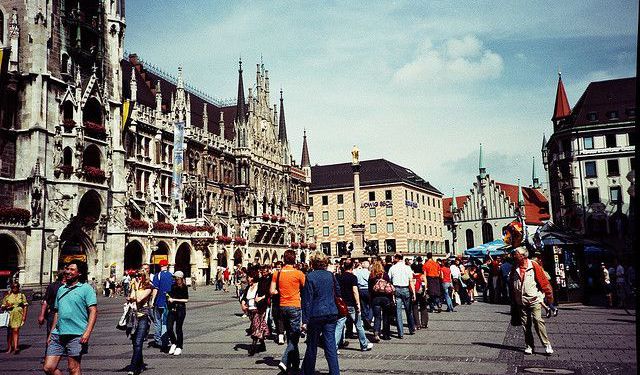
Munich’s Old Town, known as the Altstadt, unfolds across the western bank of the River Isar-a captivating blend of medieval charm, architectural brilliance, and deep cultural roots. As the historic heart of the Bavarian capital, it’s more than just a preserved district-it is is listed as a historical monument and is a living museum – “where the past harmonizes with the present in a grand... view more
Tour Duration: 2 Hour(s)
Travel Distance: 2.7 Km or 1.7 Miles
Tour Duration: 2 Hour(s)
Travel Distance: 2.7 Km or 1.7 Miles
Useful Travel Guides for Planning Your Trip
12 German-Made Things to Buy in Munich
The Bavarian capital Munich, much as the whole state of Bavaria, form an inseparable part of the German image, although a very unique part in its difference to the rest of the country, including the language. Bavarian beer occupies an important place in German heritage, from the infamous 1920s Beer...

Top 10 Cafes and Restaurants in Munich
While there are many restaurants and cafes in downtown Munich for a visitor to choose from, by far not all of them are truly worth visiting. Here's the solid list of quality cafes and restaurants that will add greatly to your Munich experience. Each restaurant and cafe featured here offers...