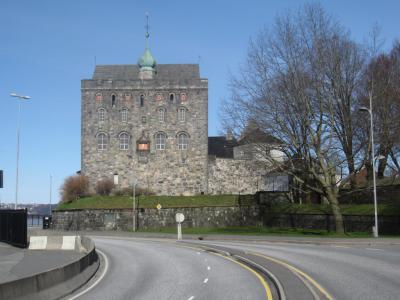


Bergenhus Fortress and Rosenkrantz Tower, Bergen (must see)
The Bergenhus Fortress has been a royal seat and residence, an ecclesiastical center, and a military power base. The grounds of Bergenhus comprise Holmen, Koengen, and Sverresborg. The history of the fortress reaches back to the Middle Ages, when Holmen developed into a royal and ecclesiastical center. In the 16th and 17th centuries, the complex was increasingly fortified, and during the 1600s Holmen, Koengen, and Sverresborg were joined into one large military site.
The fortress was under attack only once, during the Second Anglo-Dutch War. In the Second World War, Bergenhus was once again in military use. This time, however, it was the German occupying forces that used the fortress as one of their headquarters. Bergenhus has been under continuous commandantship since 1628. Presently, around 220 military and civilian personnel have their everyday place of work at the fortress.
The Rosenkrantz Tower is the dominant building of the fortress complex. It was named for governor Erik Rosenkrantz. The tower got its present form during Rosenkrantz's period as governor, 1560–1568. There is a much older part of the tower: a medieval structure known as the “Keep by the Sea.” It was built by King Magnus the Lawmender around 1270.
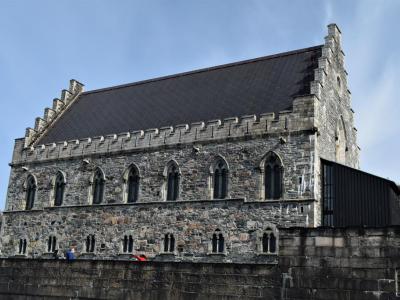
The other major medieval structure to survive is Håkon's Hall, built between 1247 and 1261 by King Håkon Håkonsson. Several churches also once stood on Holmen, including Bergen's medieval cathedral, Christ Church. The churches and other ecclesiastical buildings were demolished around 1530–1531, largely for military reasons, as Bergenhus was being strengthened. The fortress became a purely military establishment after the separation of civil and military authority in 1660.
The fortress was under attack only once, during the Second Anglo-Dutch War. In the Second World War, Bergenhus was once again in military use. This time, however, it was the German occupying forces that used the fortress as one of their headquarters. Bergenhus has been under continuous commandantship since 1628. Presently, around 220 military and civilian personnel have their everyday place of work at the fortress.
The Rosenkrantz Tower is the dominant building of the fortress complex. It was named for governor Erik Rosenkrantz. The tower got its present form during Rosenkrantz's period as governor, 1560–1568. There is a much older part of the tower: a medieval structure known as the “Keep by the Sea.” It was built by King Magnus the Lawmender around 1270.
The other major medieval structure to survive is Håkon's Hall, built between 1247 and 1261 by King Håkon Håkonsson. Several churches also once stood on Holmen, including Bergen's medieval cathedral, Christ Church. The churches and other ecclesiastical buildings were demolished around 1530–1531, largely for military reasons, as Bergenhus was being strengthened. The fortress became a purely military establishment after the separation of civil and military authority in 1660.
Want to visit this sight? Check out these Self-Guided Walking Tours in Bergen. Alternatively, you can download the mobile app "GPSmyCity: Walks in 1K+ Cities" from Apple App Store or Google Play Store. The app turns your mobile device to a personal tour guide and it works offline, so no data plan is needed when traveling abroad.
Download The GPSmyCity App



Bergenhus Fortress and Rosenkrantz Tower on Map
Sight Name: Bergenhus Fortress and Rosenkrantz Tower
Sight Location: Bergen, Norway (See walking tours in Bergen)
Sight Type: Attraction/Landmark
Guide(s) Containing This Sight:
Sight Location: Bergen, Norway (See walking tours in Bergen)
Sight Type: Attraction/Landmark
Guide(s) Containing This Sight:
Nearby Sights
Walking Tours in Bergen, Norway

Create Your Own Walk in Bergen
Creating your own self-guided walk in Bergen is easy and fun. Choose the city attractions that you want to see and a walk route map will be created just for you. You can even set your hotel as the start point of the walk.

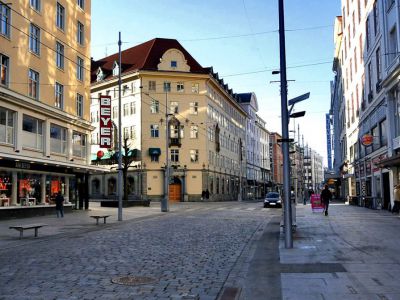
Bergen Shopping Tour
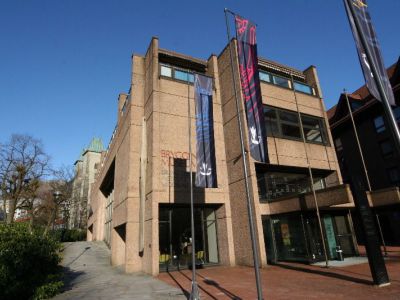
For centuries, since its establishment in the 1020s, Bergen has been an important commercial hub. As such, it is probably one of the oldest shopping destinations in Northern Europe. Today, Bergen features a variety of shops and markets scattered throughout the city.
One such notable location is Kjottbasaren, a historic market located near the city center. Here, visitors can explore a variety... view more
Tour Duration: 1 Hour(s)
Travel Distance: 0.9 Km or 0.6 Miles
One such notable location is Kjottbasaren, a historic market located near the city center. Here, visitors can explore a variety... view more
Tour Duration: 1 Hour(s)
Travel Distance: 0.9 Km or 0.6 Miles
Bergen's Architectural Jewels
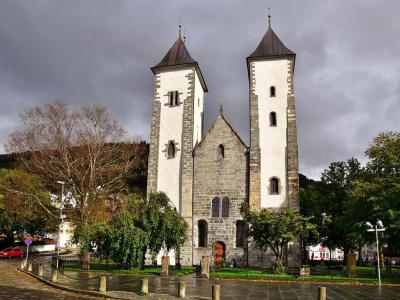
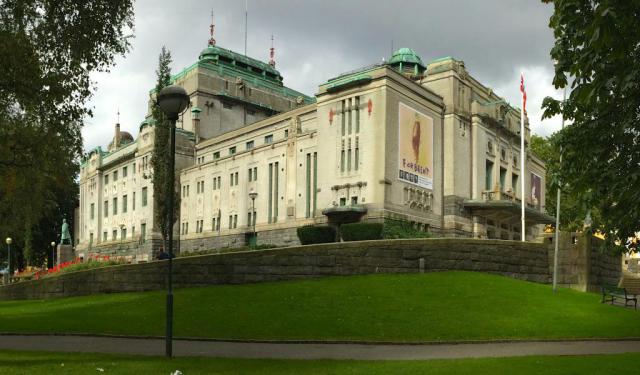
Surprising as it may appear, but the seemingly small city of Bergen for centuries had been the largest in all of the Nordic countries. It also remained so for Norway until the 1830s. Apart from being the country's former capital (back in the 13th century), Bergen is well-known primarily for its astoundingly beautiful cityscape, formed by the backdrop of mountains and serene waterfront, much... view more
Tour Duration: 2 Hour(s)
Travel Distance: 2.9 Km or 1.8 Miles
Tour Duration: 2 Hour(s)
Travel Distance: 2.9 Km or 1.8 Miles
Discover Bergen City Center on Foot
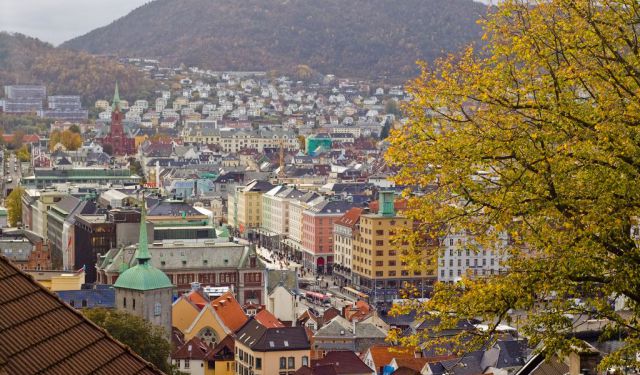
Bergen is a historic port city shaped by the sea, the mountains, and centuries of trade. Its wooden waterfront, busy harbor, and Hanseatic past give it a character unlike anywhere else in Norway. Yet one part of its history seems almost contradictory: Bergen is famous for rain, averaging around 200 wet days a year, but it has also suffered a remarkable number of devastating fires. So why the... view more
Tour Duration: 2 Hour(s)
Travel Distance: 3.0 Km or 1.9 Miles
Tour Duration: 2 Hour(s)
Travel Distance: 3.0 Km or 1.9 Miles