

Bridgewater Hall, Manchester
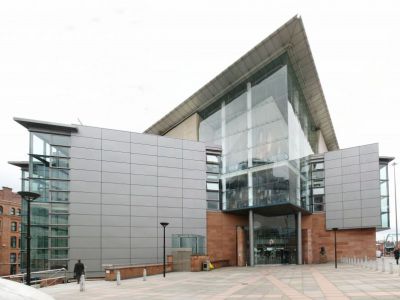
Bridgewater Hall is another of Manchester’s impressive array of esteemed modern concert halls. The venue opened in 1996 at the southern end of the city centre, directly opposite Manchester Central. Bridgewater Hall is the city’s premier venue for classical performances, and was constructed as a replacement for the Free Trade Hall, which was damaged by German bombs in World War 2 and never returned to its former glory.
Local architects Renton Howard Wood Levin designed the building, which aimed to create a perfect acoustic environment for classical recitals. The hall was built on noise reducing foundations, which cut out noise from nearby traffic and tram services. The architects also created a basin from the nearby Rochdale canal to give the hall a waterside location. Bridgewater Hall cost 42 million pounds to build, but has proved worthy of the expense, hosting up to 250 classical performances each year.
Bridgewater Hall is the home of Manchester’s renowned Halle orchestra, and Manchester Boys’ Choir. The BBC Philharmonic Orchestra also hold regular recitals at the hall. Bridgewater Hall is surrounded by bars, restaurants and galleries in an artistic corner of the city close to Deansgate railway station, and is one of the standout successes of the city’s recent regeneration plans.
Local architects Renton Howard Wood Levin designed the building, which aimed to create a perfect acoustic environment for classical recitals. The hall was built on noise reducing foundations, which cut out noise from nearby traffic and tram services. The architects also created a basin from the nearby Rochdale canal to give the hall a waterside location. Bridgewater Hall cost 42 million pounds to build, but has proved worthy of the expense, hosting up to 250 classical performances each year.
Bridgewater Hall is the home of Manchester’s renowned Halle orchestra, and Manchester Boys’ Choir. The BBC Philharmonic Orchestra also hold regular recitals at the hall. Bridgewater Hall is surrounded by bars, restaurants and galleries in an artistic corner of the city close to Deansgate railway station, and is one of the standout successes of the city’s recent regeneration plans.
Want to visit this sight? Check out these Self-Guided Walking Tours in Manchester. Alternatively, you can download the mobile app "GPSmyCity: Walks in 1K+ Cities" from Apple App Store or Google Play Store. The app turns your mobile device to a personal tour guide and it works offline, so no data plan is needed when traveling abroad.
Download The GPSmyCity App



Bridgewater Hall on Map
Sight Name: Bridgewater Hall
Sight Location: Manchester, England (See walking tours in Manchester)
Sight Type: Attraction/Landmark
Sight Location: Manchester, England (See walking tours in Manchester)
Sight Type: Attraction/Landmark
Nearby Sights
Walking Tours in Manchester, England

Create Your Own Walk in Manchester
Creating your own self-guided walk in Manchester is easy and fun. Choose the city attractions that you want to see and a walk route map will be created just for you. You can even set your hotel as the start point of the walk.
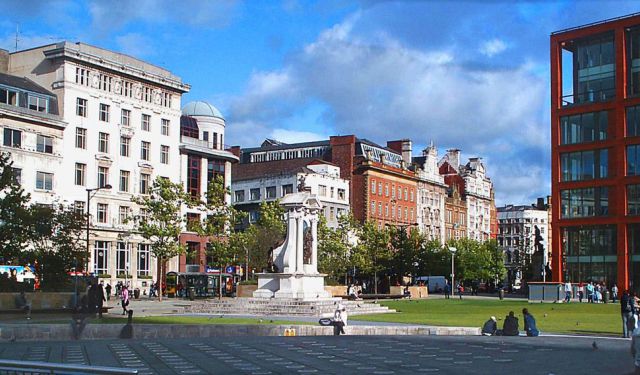
Manchester City Center Walking Tour
Manchester is a city known for people who changed things in practical ways, from scientists and industrialists to musicians and footballers. The Industrial Revolution reshaped daily life in its streets and mills, Alan Turing, the legendary mathematician and computer scientist, worked here after the war, and modern bands like Oasis started out in local venues. Their stories aren’t dramatic in the... view more
Tour Duration: 2 Hour(s)
Travel Distance: 2.5 Km or 1.6 Miles
Tour Duration: 2 Hour(s)
Travel Distance: 2.5 Km or 1.6 Miles
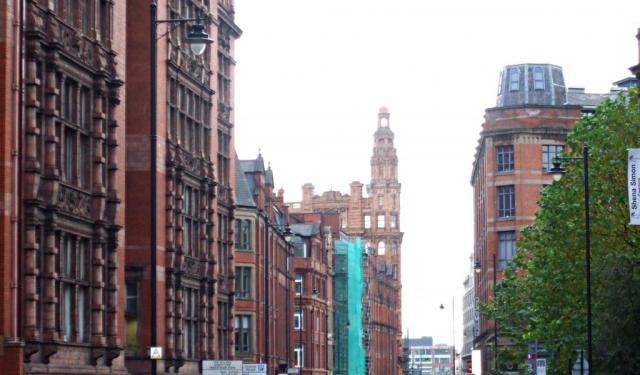
Edwardian Architecture Tour
A product of the Industrial Revolution, Manchester is noted for its warehouses, railway viaducts, cotton mills, and canals, reflecting the most ambitious and exciting phase of the city's history.
During the reign of King Edward VII, which spanned from 1901 to 1910, Manchester experienced a significant boom in architectural development. This period saw a shift towards more ornate and... view more
Tour Duration: 2 Hour(s)
Travel Distance: 2.6 Km or 1.6 Miles
During the reign of King Edward VII, which spanned from 1901 to 1910, Manchester experienced a significant boom in architectural development. This period saw a shift towards more ornate and... view more
Tour Duration: 2 Hour(s)
Travel Distance: 2.6 Km or 1.6 Miles
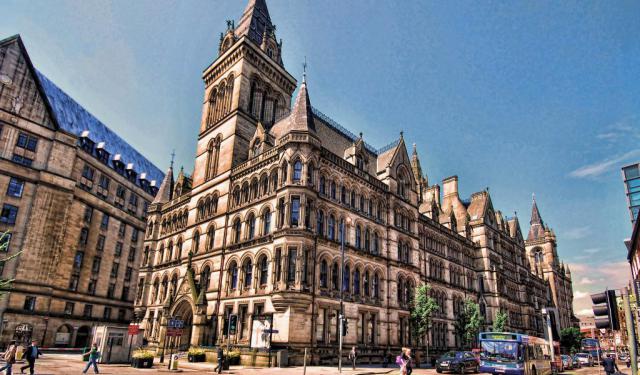
Manchester Historical Architecture Tour
Manchester’s architecture is rich in styles. Throughout centuries, the city has evolved in phases, each of which left its peculiar imprint on the city's architectural tapestry. Here, you can see medieval red-brick buildings coexisting harmoniously with concrete-and-glass structures from the modern era.
One notable landmark in Manchester is the Statue of Prince Albert, a regal monument... view more
Tour Duration: 1 Hour(s)
Travel Distance: 1.6 Km or 1 Miles
One notable landmark in Manchester is the Statue of Prince Albert, a regal monument... view more
Tour Duration: 1 Hour(s)
Travel Distance: 1.6 Km or 1 Miles
Useful Travel Guides for Planning Your Trip

Top 8 Cafes and Sweet Shops in Manchester
Heading up Oldham Street from Picadilly Gardens you arrive at The Northern Quarter; the ‘cool’ part of Manchester, think Brooklyn, Shoreditch, Le Marais; trendy young things with fancy haircuts frequent the coffee houses, boutique and vintage shops during the day and the bars once night-time...