

Manchester Introduction Walking Tour (Self Guided), Manchester
Manchester is a city known for people who changed things in practical ways, from scientists and industrialists to musicians and footballers. The Industrial Revolution reshaped daily life in its streets and mills, Alan Turing, the legendary mathematician and computer scientist, worked here after the war, and modern bands like Oasis started out in local venues. Their stories aren’t dramatic in the cinematic sense, but they show how Manchester has long been a place where new ideas and movements quietly take off.
The name “Manchester” comes from the Roman fort Mamucium or Mancunium, built around the 1st century CE. The exact meaning of Mamucium is debated, but many believe it referred to a “breast-shaped hill” near the original site. Over time, the name shifted through Old English and later Middle English until it became “Manchester.” The word Mancunian, still used today, also stems from these early roots.
Manchester’s major growth began in the 18th and 19th centuries, when it became one of the world’s first industrial cities. Textile mills, canals, warehouses, and railways transformed the town into a center of global trade. The city also played a role in political and social movements, including the push for workers’ rights and the campaign for parliamentary reform, marked by events such as the Peterloo Massacre in 1819. By the 20th century, Manchester continued to reinvent itself through education, science, culture, and sport.
Today the city is known for its straightforward energy and its compact, walkable center. Old industrial buildings sit alongside modern developments, and many former factories now house offices, galleries, or apartments. The city’s layout is easy to follow, with clear main streets and neighborhoods that each have their own character. Manchester feels busy but manageable, with plenty of places to stop for food, music, or a view of its older architecture mixed with new construction.
A few landmarks help give shape to the city’s story. The John Rylands Library is a standout, with its late-Victorian Gothic building and impressive reading rooms that hold rare books and historical documents. It shows the ambition and civic pride that shaped Manchester in the late 19th century. Not far away, the Manchester Town Hall remains one of the city’s most important buildings, known for its detailed stonework and role in local government since the 1870s. Together, these places offer a clear sense of Manchester’s blend of industry, learning, and public life.
As you walk through the city center, along its older streets and newer developments, you start to see how Manchester fits together. It’s practical, direct, and easy to get around, and that’s a big part of why people continue to live, work, and spend time here.
The name “Manchester” comes from the Roman fort Mamucium or Mancunium, built around the 1st century CE. The exact meaning of Mamucium is debated, but many believe it referred to a “breast-shaped hill” near the original site. Over time, the name shifted through Old English and later Middle English until it became “Manchester.” The word Mancunian, still used today, also stems from these early roots.
Manchester’s major growth began in the 18th and 19th centuries, when it became one of the world’s first industrial cities. Textile mills, canals, warehouses, and railways transformed the town into a center of global trade. The city also played a role in political and social movements, including the push for workers’ rights and the campaign for parliamentary reform, marked by events such as the Peterloo Massacre in 1819. By the 20th century, Manchester continued to reinvent itself through education, science, culture, and sport.
Today the city is known for its straightforward energy and its compact, walkable center. Old industrial buildings sit alongside modern developments, and many former factories now house offices, galleries, or apartments. The city’s layout is easy to follow, with clear main streets and neighborhoods that each have their own character. Manchester feels busy but manageable, with plenty of places to stop for food, music, or a view of its older architecture mixed with new construction.
A few landmarks help give shape to the city’s story. The John Rylands Library is a standout, with its late-Victorian Gothic building and impressive reading rooms that hold rare books and historical documents. It shows the ambition and civic pride that shaped Manchester in the late 19th century. Not far away, the Manchester Town Hall remains one of the city’s most important buildings, known for its detailed stonework and role in local government since the 1870s. Together, these places offer a clear sense of Manchester’s blend of industry, learning, and public life.
As you walk through the city center, along its older streets and newer developments, you start to see how Manchester fits together. It’s practical, direct, and easy to get around, and that’s a big part of why people continue to live, work, and spend time here.
How it works: Download the app "GPSmyCity: Walks in 1K+ Cities" from Apple App Store or Google Play Store to your mobile phone or tablet. The app turns your mobile device into a personal tour guide and its built-in GPS navigation functions guide you from one tour stop to next. The app works offline, so no data plan is needed when traveling abroad.
Manchester Introduction Walking Tour Map
Guide Name: Manchester Introduction Walking Tour
Guide Location: England » Manchester (See other walking tours in Manchester)
Guide Type: Self-guided Walking Tour (Sightseeing)
# of Attractions: 10
Tour Duration: 2 Hour(s)
Travel Distance: 2.5 Km or 1.6 Miles
Author: alexander
Sight(s) Featured in This Guide:
Guide Location: England » Manchester (See other walking tours in Manchester)
Guide Type: Self-guided Walking Tour (Sightseeing)
# of Attractions: 10
Tour Duration: 2 Hour(s)
Travel Distance: 2.5 Km or 1.6 Miles
Author: alexander
Sight(s) Featured in This Guide:
- Piccadilly Gardens
- Chinatown
- Manchester Art Gallery
- Manchester Town Hall
- John Rylands Library
- St. Ann's Church
- Royal Exchange Theatre
- New Cathedral Street
- Manchester Cathedral
- National Football Museum
1) Piccadilly Gardens
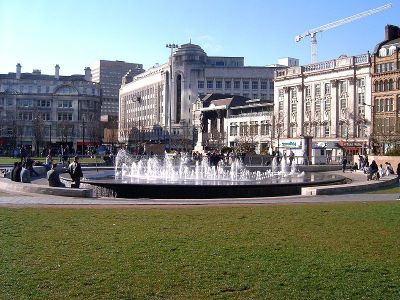
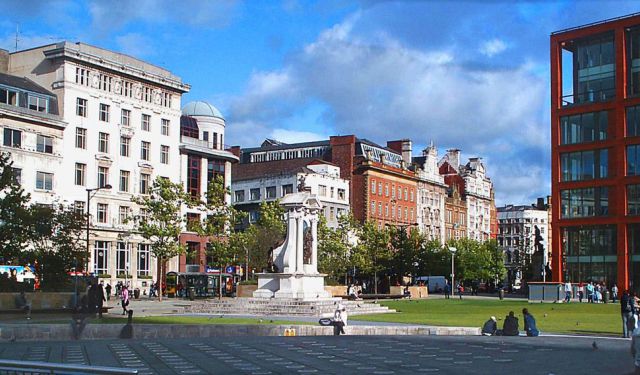
Piccadilly Gardens is an open public space shaped by several phases of redesign during the twentieth and early twenty-first centuries. What was once part of a former infirmary site evolved into a central meeting point with a mix of green areas, paved paths, and transport links. Its layout reflects changing ideas about public squares—combining open lawns with routes that support steady pedestrian movement.
The gardens include a broad lawn bordered by trees, with paths that cut across at practical angles rather than decorative ones. These routes follow the natural flow of foot traffic between nearby transport hubs, shops, and cultural venues. Seating areas are arranged along the edges, giving clear views across the open centre. The mixture of grass, stone, and water features shows an attempt to balance green space with durable surfaces suited for heavy daily use.
At one side stands a long concrete wall installed during a major redevelopment at the beginning of the century. Its straight lines and pale surface contrast with the softer elements of the gardens. Nearby fountains form a grid of low water jets set directly into the pavement. Their shallow design creates a changing soundscape and a gathering point, especially in warmer months.
Events and temporary installations often appear in the open sections, turning the space into a flexible site for public activity.
The gardens include a broad lawn bordered by trees, with paths that cut across at practical angles rather than decorative ones. These routes follow the natural flow of foot traffic between nearby transport hubs, shops, and cultural venues. Seating areas are arranged along the edges, giving clear views across the open centre. The mixture of grass, stone, and water features shows an attempt to balance green space with durable surfaces suited for heavy daily use.
At one side stands a long concrete wall installed during a major redevelopment at the beginning of the century. Its straight lines and pale surface contrast with the softer elements of the gardens. Nearby fountains form a grid of low water jets set directly into the pavement. Their shallow design creates a changing soundscape and a gathering point, especially in warmer months.
Events and temporary installations often appear in the open sections, turning the space into a flexible site for public activity.
2) Chinatown
Manchester’s Chinatown is a compact district shaped by migration from the mid-twentieth century onward, developing into one of the largest Chinese communities in Europe. The area combines restaurants, bakeries, supermarkets, and cultural associations arranged along a network of short streets. Its character reflects layers of influence from mainland China, Hong Kong, and Southeast Asia, expressed through signage, food traditions, and community events.
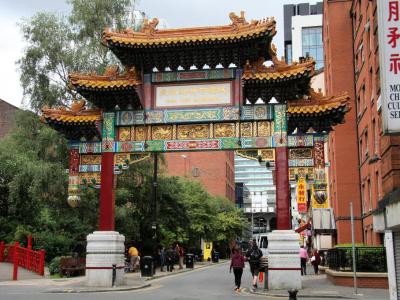
The most recognisable feature is the ornate paifang arch at the heart of the district. Built in the 1980s, it was assembled from materials crafted in China and decorated with carved dragons, guardian lions, and bright lacquered surfaces. The arch marks the symbolic entrance to the neighbourhood and serves as a focal point during celebrations. Its placement reflects the community’s effort to establish a visible cultural landmark within the wider city.
Shops and eateries cluster around the streets leading from the arch. Menus often combine Cantonese, Sichuan, regional northern dishes, and contemporary fusion options, showing the diverse backgrounds of the families who established the area. Supermarkets stock imported ingredients, herbal products, and festival goods, many arranged in narrow aisles that echo older trading patterns.
Window displays frequently change with the lunar calendar, highlighting food traditions and seasonal themes. During events such as Lunar New Year, the district becomes a gathering place for lion dances, music, and street stalls.
The most recognisable feature is the ornate paifang arch at the heart of the district. Built in the 1980s, it was assembled from materials crafted in China and decorated with carved dragons, guardian lions, and bright lacquered surfaces. The arch marks the symbolic entrance to the neighbourhood and serves as a focal point during celebrations. Its placement reflects the community’s effort to establish a visible cultural landmark within the wider city.
Shops and eateries cluster around the streets leading from the arch. Menus often combine Cantonese, Sichuan, regional northern dishes, and contemporary fusion options, showing the diverse backgrounds of the families who established the area. Supermarkets stock imported ingredients, herbal products, and festival goods, many arranged in narrow aisles that echo older trading patterns.
Window displays frequently change with the lunar calendar, highlighting food traditions and seasonal themes. During events such as Lunar New Year, the district becomes a gathering place for lion dances, music, and street stalls.
3) Manchester Art Gallery
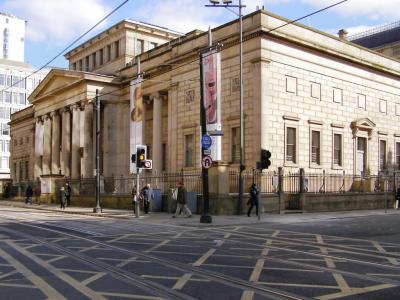
Manchester Art Gallery occupies a group of linked buildings, the oldest of which was completed in the 1820s as part of the city’s civic expansion. Its neoclassical façade, with tall columns and a broad staircase, reflects the period’s interest in presenting art and learning as public responsibilities. Later additions connect through internal corridors, creating a single complex that houses collections ranging from eighteenth-century paintings to contemporary works.
The gallery’s historic collections include British art from the Victorian and Edwardian periods, with portraits, narrative scenes, and landscapes reflecting social and industrial change. Works by the Pre-Raphaelites appear alongside examples of regional painting, allowing visitors to trace shifting ideas about craftsmanship, symbolism, and the role of artists within a rapidly growing city. Decorative arts also feature prominently, with ceramics, metalwork, and textiles displayed to show changes in design and technology.
Modern and contemporary galleries occupy the later wings. These spaces often host temporary exhibitions that explore current artistic themes or revisit earlier periods through new perspectives. The layout encourages visitors to move between different eras, highlighting connections between past and present. Clear signage and open sightlines make navigation straightforward.
Public programmes, including talks, workshops, and community projects, form a central part of the gallery’s mission. The building’s location near key transport routes helps integrate it into daily city life, drawing both regular visitors and those encountering it by chance. The mixture of historic architecture, varied collections, and active programming reflects the city’s long-standing commitment to public cultural spaces.
The gallery’s historic collections include British art from the Victorian and Edwardian periods, with portraits, narrative scenes, and landscapes reflecting social and industrial change. Works by the Pre-Raphaelites appear alongside examples of regional painting, allowing visitors to trace shifting ideas about craftsmanship, symbolism, and the role of artists within a rapidly growing city. Decorative arts also feature prominently, with ceramics, metalwork, and textiles displayed to show changes in design and technology.
Modern and contemporary galleries occupy the later wings. These spaces often host temporary exhibitions that explore current artistic themes or revisit earlier periods through new perspectives. The layout encourages visitors to move between different eras, highlighting connections between past and present. Clear signage and open sightlines make navigation straightforward.
Public programmes, including talks, workshops, and community projects, form a central part of the gallery’s mission. The building’s location near key transport routes helps integrate it into daily city life, drawing both regular visitors and those encountering it by chance. The mixture of historic architecture, varied collections, and active programming reflects the city’s long-standing commitment to public cultural spaces.
4) Manchester Town Hall (must see)
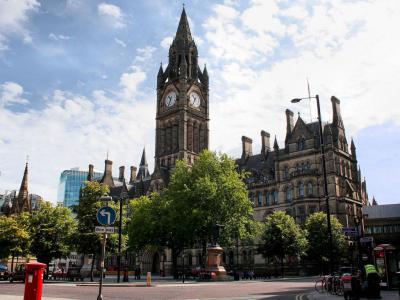
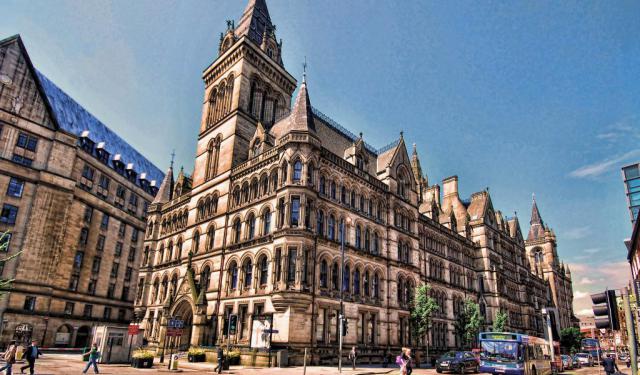
Manchester Town Hall is a nineteenth-century civic building designed by Alfred Waterhouse and completed in 1887. Built in a Neo-Gothic style, it reflects the confidence and ambition of Manchester during the height of the industrial era, using sandstone, pointed arches, and dramatic vertical lines to express civic identity and authority. Although the building is temporarily closed to the public, its surroundings still offer several points of interest that help tell the story of the city’s past.
As you stand at the front main entrance, notice the statue of the Roman Governor Agricola. He is credited with founding the original Roman fort of Mamucium, from which Manchester developed. The statue acts as a symbolic reminder of the city’s long history, linking its ancient origins with the powerful civic presence of the nineteenth-century town hall behind it. The placement of Agricola at the entrance emphasises continuity between early settlement and later urban growth.
Now turn your attention to Albert Square, the large open space in front of the building. The square is framed by historic architecture and features monuments and statues that celebrate key figures from Manchester’s political and cultural life. As you walk across the square, look at the central Albert Memorial, with its canopy-like Gothic design that echoes the architectural forms of the town hall itself. The open layout of the square allows the façade of the building to dominate the view, creating an impressive civic setting where public events, gatherings, and everyday city life unfold.
Outside, the building’s clock tower rises above the surrounding square. Reaching 280 feet (85 m), it houses a massive clock bell known as Great Abel, named after the mayor who officiated at the building’s opening. Its height and narrow proportions emphasise vertical lines, while the carved details around the windows reveal a blend of decorative and functional elements typical of Victorian civic architecture.
The exterior stone has weathered over time, giving the surface a textured appearance that contrasts with the sharper carving around the entrances. Even from a distance, the tower and façade show how the building expressed the ambitions of a rapidly expanding industrial city through its scale, materials, and public presence.
As you stand at the front main entrance, notice the statue of the Roman Governor Agricola. He is credited with founding the original Roman fort of Mamucium, from which Manchester developed. The statue acts as a symbolic reminder of the city’s long history, linking its ancient origins with the powerful civic presence of the nineteenth-century town hall behind it. The placement of Agricola at the entrance emphasises continuity between early settlement and later urban growth.
Now turn your attention to Albert Square, the large open space in front of the building. The square is framed by historic architecture and features monuments and statues that celebrate key figures from Manchester’s political and cultural life. As you walk across the square, look at the central Albert Memorial, with its canopy-like Gothic design that echoes the architectural forms of the town hall itself. The open layout of the square allows the façade of the building to dominate the view, creating an impressive civic setting where public events, gatherings, and everyday city life unfold.
Outside, the building’s clock tower rises above the surrounding square. Reaching 280 feet (85 m), it houses a massive clock bell known as Great Abel, named after the mayor who officiated at the building’s opening. Its height and narrow proportions emphasise vertical lines, while the carved details around the windows reveal a blend of decorative and functional elements typical of Victorian civic architecture.
The exterior stone has weathered over time, giving the surface a textured appearance that contrasts with the sharper carving around the entrances. Even from a distance, the tower and façade show how the building expressed the ambitions of a rapidly expanding industrial city through its scale, materials, and public presence.
5) John Rylands Library (must see)
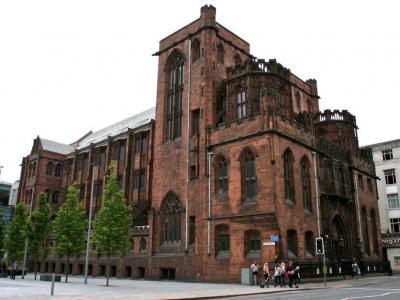
John Rylands Library was founded in the late nineteenth century by Enriqueta Rylands in memory of her husband, a prominent industrialist. Designed in a late Gothic Revival style, the building was intended to house rare books, manuscripts, and archival collections in secure and fire-resistant conditions. Its sandstone exterior, pointed arches, and carved details reflect the period’s interest in combining medieval forms with modern technology. Inside, a network of reading rooms, corridors, and staircases was arranged to protect the collections while welcoming scholars and the public.
As you enter the vestibule, look straight ahead toward the main staircase. The stone steps rise between high walls lined with carved niches and slender columns. Look up to see the lantern-like lamps and the tracery patterns set into the ceiling. Walk a few steps forward and look to your left at the carved doorframes that lead to smaller side rooms. Their stonework displays precise detailing, with leaf patterns and small figurative elements integrated into the structure.
Continue toward the historic reading room, passing through the antechamber. When you reach the centre of the long hall, pause and look to your right at the tall windows. Their stained glass filters light in soft tones, revealing the fine ribbing that supports the vaulted ceiling. Turn to your left to see the line of reading desks and the carved screens that separate the bays. If you look ahead toward the far end, a statue of John Rylands stands beneath a canopied niche, framed by stone pillars and bookcases.
The surrounding rooms and corridors hold a mixture of materials, including medieval manuscripts, early printed books, and personal papers from notable figures. Climate-controlled spaces and secure storage reflect the library’s continuing role as a research institution. The contrast between the elaborate historic architecture and the quiet working areas shows how the building has adapted over time while preserving its original purpose as a place for study, preservation, and public access to written history.
As you enter the vestibule, look straight ahead toward the main staircase. The stone steps rise between high walls lined with carved niches and slender columns. Look up to see the lantern-like lamps and the tracery patterns set into the ceiling. Walk a few steps forward and look to your left at the carved doorframes that lead to smaller side rooms. Their stonework displays precise detailing, with leaf patterns and small figurative elements integrated into the structure.
Continue toward the historic reading room, passing through the antechamber. When you reach the centre of the long hall, pause and look to your right at the tall windows. Their stained glass filters light in soft tones, revealing the fine ribbing that supports the vaulted ceiling. Turn to your left to see the line of reading desks and the carved screens that separate the bays. If you look ahead toward the far end, a statue of John Rylands stands beneath a canopied niche, framed by stone pillars and bookcases.
The surrounding rooms and corridors hold a mixture of materials, including medieval manuscripts, early printed books, and personal papers from notable figures. Climate-controlled spaces and secure storage reflect the library’s continuing role as a research institution. The contrast between the elaborate historic architecture and the quiet working areas shows how the building has adapted over time while preserving its original purpose as a place for study, preservation, and public access to written history.
6) St. Ann's Church
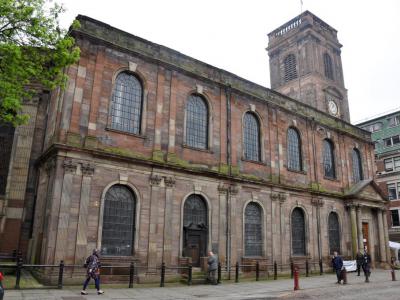
Saint Ann’s Church is an early eighteenth-century parish church built during a period when the surrounding area was becoming a commercial and civic centre. Completed in 1712, it reflects English Baroque influences adapted to local materials. The exterior is built from warm-toned sandstone, with a square tower rising above the west end. The tower’s clock and simple stone detailing mark the building’s public role within the growing town.
The interior follows a clear, rectangular plan. Round-arched windows bring in an even light that highlights the plain walls and wooden fittings. The galleries along the sides were added to accommodate a growing congregation during the city’s expansion. Their supported columns and simple balustrades show practical construction rather than elaborate ornament. The overall atmosphere remains consistent with early Georgian parish design: restrained, orderly, and focused on clarity.
The chancel contains later nineteenth-century additions, including stained-glass windows that introduce deeper colour into an otherwise pale interior. Their subjects include figures from the New Testament and scenes chosen to reflect the church’s long presence in the city. The font and pulpit also show later craftsmanship, combining stone and wood in a style that respects the building’s earlier character without overpowering it.
Around the church lies Saint Ann’s Square, shaped by eighteenth- and nineteenth-century development. The square’s layout and surrounding façades help explain why the church became an anchor point for the district.
The interior follows a clear, rectangular plan. Round-arched windows bring in an even light that highlights the plain walls and wooden fittings. The galleries along the sides were added to accommodate a growing congregation during the city’s expansion. Their supported columns and simple balustrades show practical construction rather than elaborate ornament. The overall atmosphere remains consistent with early Georgian parish design: restrained, orderly, and focused on clarity.
The chancel contains later nineteenth-century additions, including stained-glass windows that introduce deeper colour into an otherwise pale interior. Their subjects include figures from the New Testament and scenes chosen to reflect the church’s long presence in the city. The font and pulpit also show later craftsmanship, combining stone and wood in a style that respects the building’s earlier character without overpowering it.
Around the church lies Saint Ann’s Square, shaped by eighteenth- and nineteenth-century development. The square’s layout and surrounding façades help explain why the church became an anchor point for the district.
7) Royal Exchange Theatre
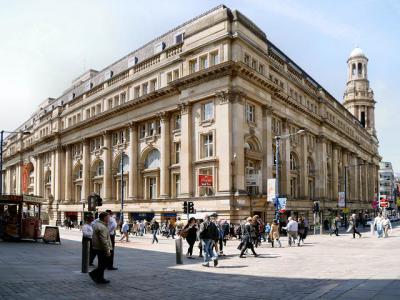
The Royal Exchange Theatre occupies a former commodities trading hall built in the nineteenth century, when the city was a major centre for the global cotton industry. The original structure is large and open, supported by cast-iron columns and covered by a high glass dome that once allowed natural light onto the bustling trading floor. Its scale reflects the economic forces that shaped the city’s development, and much of the historic architecture remains visible today.
In the late twentieth century, the building was adapted for theatrical use through the installation of a modern, self-contained performance module. This seven-sided structure sits within the old hall like a freestanding chamber, supported on legs so that the historic interior remains largely untouched. Its circular auditorium brings the audience close to the stage, creating an intimate setting that contrasts with the vast volume of the surrounding hall. The contrast between the glass-and-metal module and the older ironwork highlights the meeting of industrial heritage and contemporary design.
Public areas around the theatre retain the character of the former exchange. The high ceilings, long sightlines, and surviving decorative details show how traders once moved through the space in large numbers. Today these areas serve as foyers, exhibition spaces, and gathering points before performances, illustrating how the building’s function has shifted while its structure endures.The theatre’s programme spans classical plays, contemporary writing, and more experimental work, showing how it supports both established forms and new approaches.
In the late twentieth century, the building was adapted for theatrical use through the installation of a modern, self-contained performance module. This seven-sided structure sits within the old hall like a freestanding chamber, supported on legs so that the historic interior remains largely untouched. Its circular auditorium brings the audience close to the stage, creating an intimate setting that contrasts with the vast volume of the surrounding hall. The contrast between the glass-and-metal module and the older ironwork highlights the meeting of industrial heritage and contemporary design.
Public areas around the theatre retain the character of the former exchange. The high ceilings, long sightlines, and surviving decorative details show how traders once moved through the space in large numbers. Today these areas serve as foyers, exhibition spaces, and gathering points before performances, illustrating how the building’s function has shifted while its structure endures.The theatre’s programme spans classical plays, contemporary writing, and more experimental work, showing how it supports both established forms and new approaches.
8) New Cathedral Street
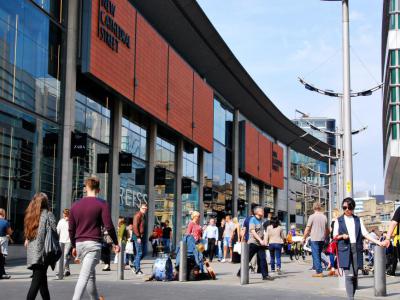
New Cathedral Street is a pedestrian-focused shopping avenue developed in the late 1990s and early 2000s as part of the city centre’s reconstruction. Its layout links major retail areas while creating a clear route between the cathedral district and the main squares. The street was designed with broad paving, uniform lighting, and consistent building lines to form a calm, uninterrupted walkway.
The architecture along the street reflects contemporary commercial design. Buildings feature large glass façades, clean stone surfaces, and narrow vertical divisions that frame the shopfronts. These elements create an even rhythm, allowing the storefront displays to stand out without competing with heavy ornament. The scale of the buildings is moderate, keeping the street accessible and maintaining views toward open public spaces at both ends.
Well-known brands occupy most of the units, and their frontages use wide windows to bring natural light deep into the interiors. The absence of vehicle traffic shapes the atmosphere: sound comes mainly from conversations, footsteps, and the movement of shoppers. Seating areas and small planted sections appear at intervals, offering places to pause without disrupting the flow of pedestrians.
New Cathedral Street also serves as a connector between older and newer districts. Its clear sightlines lead toward the cathedral, the main shopping centres, and nearby squares used for public events. The street’s design illustrates how modern urban planning can integrate commercial activity with open pedestrian routes, creating a functional corridor that remains easy to navigate.
The architecture along the street reflects contemporary commercial design. Buildings feature large glass façades, clean stone surfaces, and narrow vertical divisions that frame the shopfronts. These elements create an even rhythm, allowing the storefront displays to stand out without competing with heavy ornament. The scale of the buildings is moderate, keeping the street accessible and maintaining views toward open public spaces at both ends.
Well-known brands occupy most of the units, and their frontages use wide windows to bring natural light deep into the interiors. The absence of vehicle traffic shapes the atmosphere: sound comes mainly from conversations, footsteps, and the movement of shoppers. Seating areas and small planted sections appear at intervals, offering places to pause without disrupting the flow of pedestrians.
New Cathedral Street also serves as a connector between older and newer districts. Its clear sightlines lead toward the cathedral, the main shopping centres, and nearby squares used for public events. The street’s design illustrates how modern urban planning can integrate commercial activity with open pedestrian routes, creating a functional corridor that remains easy to navigate.
9) Manchester Cathedral (must see)
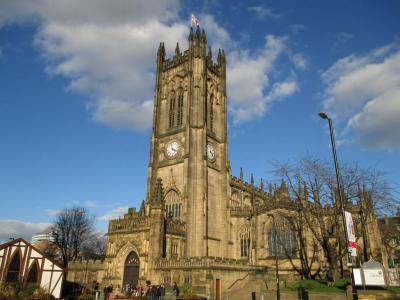
Manchester Cathedral developed gradually over many centuries, with much of its present form dating from the fifteenth century. Built largely in a late medieval English style, it first served as a collegiate church before becoming a cathedral in the nineteenth century. The building is characterised by its broad nave, extensive timber structure, and finely worked furnishings that reflect both religious ceremony and civic prestige.
Although the cathedral suffered damage during the Second World War, careful restoration preserved its historic layout while introducing thoughtfully designed modern elements that sit alongside the medieval fabric of the building.
As you enter the nave, walk straight ahead toward the choir screen and continue into the quire, where you will find the medieval quire stalls and misericords, the most celebrated artistic feature of the interior. Look to either side to see the tall wooden stall fronts and layered canopy work, whose delicate tracery and moulding reveal the craftsmanship of the fifteenth century. Now look beneath the folding seats to discover the misericords. These small but expressive carvings depict animals, foliage, moral tales, and humorous scenes drawn from everyday medieval life. Their sharp lines and lively figures offer a rare insight into the imagination, values, and storytelling traditions of the period.
Return to the nave and pause in the central aisle. When you look upward, the hammerbeam roof becomes the dominant feature of the space. The great timber beams project outward across the width of the nave, creating a bold structural rhythm while also supporting carved angels and decorative bosses. This roof is one of the most impressive surviving elements of the medieval church and gives the interior much of its warmth and character, contrasting with the pale stone of the walls and arcades below.
From here, continue along the side aisles toward the chapels to encounter the cathedral’s modern stained-glass windows, installed during the post-war reconstruction. The most striking of these is the Fire Window, whose vivid colours and abstract forms introduce a strong visual contrast to the surrounding medieval architecture.
Although the cathedral suffered damage during the Second World War, careful restoration preserved its historic layout while introducing thoughtfully designed modern elements that sit alongside the medieval fabric of the building.
As you enter the nave, walk straight ahead toward the choir screen and continue into the quire, where you will find the medieval quire stalls and misericords, the most celebrated artistic feature of the interior. Look to either side to see the tall wooden stall fronts and layered canopy work, whose delicate tracery and moulding reveal the craftsmanship of the fifteenth century. Now look beneath the folding seats to discover the misericords. These small but expressive carvings depict animals, foliage, moral tales, and humorous scenes drawn from everyday medieval life. Their sharp lines and lively figures offer a rare insight into the imagination, values, and storytelling traditions of the period.
Return to the nave and pause in the central aisle. When you look upward, the hammerbeam roof becomes the dominant feature of the space. The great timber beams project outward across the width of the nave, creating a bold structural rhythm while also supporting carved angels and decorative bosses. This roof is one of the most impressive surviving elements of the medieval church and gives the interior much of its warmth and character, contrasting with the pale stone of the walls and arcades below.
From here, continue along the side aisles toward the chapels to encounter the cathedral’s modern stained-glass windows, installed during the post-war reconstruction. The most striking of these is the Fire Window, whose vivid colours and abstract forms introduce a strong visual contrast to the surrounding medieval architecture.
10) National Football Museum (must see)
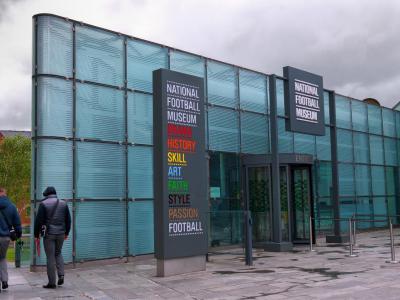
The National Football Museum is a museum at the Urbis building in Manchester city centre, founded to preserve, conserve and interpret important collections of football memorabilia. The museum was originally in Deepdale, Preston, Lancashire, but moved to Manchester in 2012. The National Football Museum holds a huge collection of football exhibits and memorabilia in a four-story building, and is the largest museum dedicated to the game of football in the world.
Here you will learn how football became the pass time of our lives. There are hundreds of fascinating photographs, memorable videos, and historic objects on display, including shirts worn by football greats such as Pele, Stanley Matthews, Diego Maradona and others.
The museum is very well-curated for visitors for learning the history of football as a game and the story behind the World Cup. For fun stuff, there is a penalty shootout zone for kids, so they can have hands-on, or more appropriately feet-on, experience of trying a penalty kick.
If you are football fan, the National Football Museum is a must-visit experience when in Manchester.
Here you will learn how football became the pass time of our lives. There are hundreds of fascinating photographs, memorable videos, and historic objects on display, including shirts worn by football greats such as Pele, Stanley Matthews, Diego Maradona and others.
The museum is very well-curated for visitors for learning the history of football as a game and the story behind the World Cup. For fun stuff, there is a penalty shootout zone for kids, so they can have hands-on, or more appropriately feet-on, experience of trying a penalty kick.
If you are football fan, the National Football Museum is a must-visit experience when in Manchester.
Walking Tours in Manchester, England

Create Your Own Walk in Manchester
Creating your own self-guided walk in Manchester is easy and fun. Choose the city attractions that you want to see and a walk route map will be created just for you. You can even set your hotel as the start point of the walk.
Edwardian Architecture Tour
A product of the Industrial Revolution, Manchester is noted for its warehouses, railway viaducts, cotton mills, and canals, reflecting the most ambitious and exciting phase of the city's history.
During the reign of King Edward VII, which spanned from 1901 to 1910, Manchester experienced a significant boom in architectural development. This period saw a shift towards more ornate and... view more
Tour Duration: 2 Hour(s)
Travel Distance: 2.6 Km or 1.6 Miles
During the reign of King Edward VII, which spanned from 1901 to 1910, Manchester experienced a significant boom in architectural development. This period saw a shift towards more ornate and... view more
Tour Duration: 2 Hour(s)
Travel Distance: 2.6 Km or 1.6 Miles
Manchester Historical Architecture Tour
Manchester’s architecture is rich in styles. Throughout centuries, the city has evolved in phases, each of which left its peculiar imprint on the city's architectural tapestry. Here, you can see medieval red-brick buildings coexisting harmoniously with concrete-and-glass structures from the modern era.
One notable landmark in Manchester is the Statue of Prince Albert, a regal monument... view more
Tour Duration: 1 Hour(s)
Travel Distance: 1.6 Km or 1 Miles
One notable landmark in Manchester is the Statue of Prince Albert, a regal monument... view more
Tour Duration: 1 Hour(s)
Travel Distance: 1.6 Km or 1 Miles
Useful Travel Guides for Planning Your Trip

Top 8 Cafes and Sweet Shops in Manchester
Heading up Oldham Street from Picadilly Gardens you arrive at The Northern Quarter; the ‘cool’ part of Manchester, think Brooklyn, Shoreditch, Le Marais; trendy young things with fancy haircuts frequent the coffee houses, boutique and vintage shops during the day and the bars once night-time...
The Most Popular Cities
/ view all