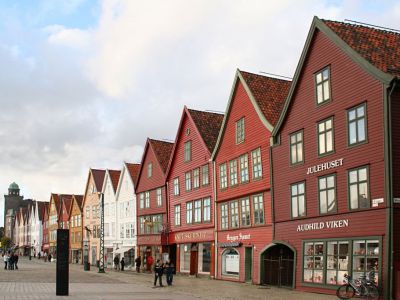


Bryggen (The Wharf), Bergen (must see)
The Wharf area originally covered all the buildings between the sea and Øvregaten. The earliest remains of harbor installations date to around the mid-1100s. Bergen itself is traditionally said to have been founded around 1070 by King Olav Kyrre, though people were already living in the area. Most of the surviving wooden buildings of the Wharf date from the rebuilding that followed the great fire of 1702.
The Hanseatic League established its office in Bergen around 1350. The merchants traded mostly imported cereal grains for stockfish from northern Norway. Bergen grew into an important center for international trade, and the buildings of the Wharf near the waterfront were, piece by piece, brought under the control of the Hanseatic merchants. The stockfish and the grain had found a home.
The great fire of 1702 destroyed almost all of the Wharf, but the Hanseatic merchants rebuilt the buildings on the old plots, largely following the traditional layout. Bryggen suffered another major fire in 1955. In the archaeological excavations that followed, hundreds of medieval runic inscriptions were discovered, mostly carved into pieces of wood. Nearly 700 runic objects have now been found in Bergen.
For a long time, runes were associated mainly with monumental inscriptions, religious texts, or solemn messages. These runes, however, were often concerned with much more mundane day-to-day business—trade, gossip, personal messages, and even love. One famous example reads: “My love, kiss me.” It is not known if the wish was granted. The runic finds are held by the University Museum of Bergen, while many are displayed at Bryggens Museum.
Hiding behind the Wharf façades is a little world of alleyways, shops, galleries, and studios. Local artists and designers have taken over many of the former storage spaces for stockfish and grain. The rooms now hold art, designs, jewelry, books and, wait for it, cafés. Artists and designers are hiding in the narrow passages among the houses. UNESCO notes that arts and crafts businesses began replacing the old stockfish and commodity trade here from the 1960s onward.
The Hanseatic League established its office in Bergen around 1350. The merchants traded mostly imported cereal grains for stockfish from northern Norway. Bergen grew into an important center for international trade, and the buildings of the Wharf near the waterfront were, piece by piece, brought under the control of the Hanseatic merchants. The stockfish and the grain had found a home.
The great fire of 1702 destroyed almost all of the Wharf, but the Hanseatic merchants rebuilt the buildings on the old plots, largely following the traditional layout. Bryggen suffered another major fire in 1955. In the archaeological excavations that followed, hundreds of medieval runic inscriptions were discovered, mostly carved into pieces of wood. Nearly 700 runic objects have now been found in Bergen.
For a long time, runes were associated mainly with monumental inscriptions, religious texts, or solemn messages. These runes, however, were often concerned with much more mundane day-to-day business—trade, gossip, personal messages, and even love. One famous example reads: “My love, kiss me.” It is not known if the wish was granted. The runic finds are held by the University Museum of Bergen, while many are displayed at Bryggens Museum.
Hiding behind the Wharf façades is a little world of alleyways, shops, galleries, and studios. Local artists and designers have taken over many of the former storage spaces for stockfish and grain. The rooms now hold art, designs, jewelry, books and, wait for it, cafés. Artists and designers are hiding in the narrow passages among the houses. UNESCO notes that arts and crafts businesses began replacing the old stockfish and commodity trade here from the 1960s onward.
Want to visit this sight? Check out these Self-Guided Walking Tours in Bergen. Alternatively, you can download the mobile app "GPSmyCity: Walks in 1K+ Cities" from Apple App Store or Google Play Store. The app turns your mobile device to a personal tour guide and it works offline, so no data plan is needed when traveling abroad.
Download The GPSmyCity App



Bryggen (The Wharf) on Map
Sight Name: Bryggen (The Wharf)
Sight Location: Bergen, Norway (See walking tours in Bergen)
Sight Type: Attraction/Landmark
Guide(s) Containing This Sight:
Sight Location: Bergen, Norway (See walking tours in Bergen)
Sight Type: Attraction/Landmark
Guide(s) Containing This Sight:
Nearby Sights

Walking Tours in Bergen, Norway

Create Your Own Walk in Bergen
Creating your own self-guided walk in Bergen is easy and fun. Choose the city attractions that you want to see and a walk route map will be created just for you. You can even set your hotel as the start point of the walk.

Bergen Shopping Tour
For centuries, since its establishment in the 1020s, Bergen has been an important commercial hub. As such, it is probably one of the oldest shopping destinations in Northern Europe. Today, Bergen features a variety of shops and markets scattered throughout the city.
One such notable location is Kjottbasaren, a historic market located near the city center. Here, visitors can explore a variety... view more
Tour Duration: 1 Hour(s)
Travel Distance: 0.9 Km or 0.6 Miles
One such notable location is Kjottbasaren, a historic market located near the city center. Here, visitors can explore a variety... view more
Tour Duration: 1 Hour(s)
Travel Distance: 0.9 Km or 0.6 Miles
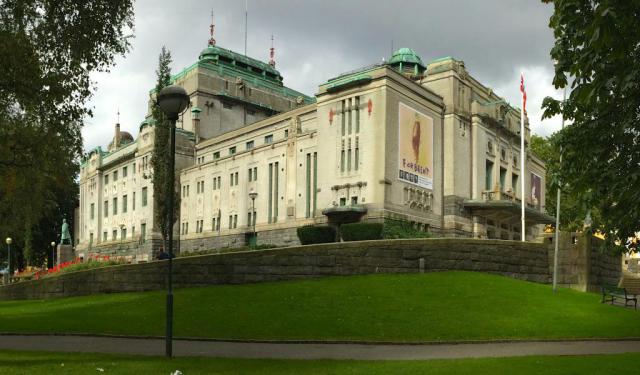
Bergen's Architectural Jewels
Surprising as it may appear, but the seemingly small city of Bergen for centuries had been the largest in all of the Nordic countries. It also remained so for Norway until the 1830s. Apart from being the country's former capital (back in the 13th century), Bergen is well-known primarily for its astoundingly beautiful cityscape, formed by the backdrop of mountains and serene waterfront, much... view more
Tour Duration: 2 Hour(s)
Travel Distance: 2.9 Km or 1.8 Miles
Tour Duration: 2 Hour(s)
Travel Distance: 2.9 Km or 1.8 Miles
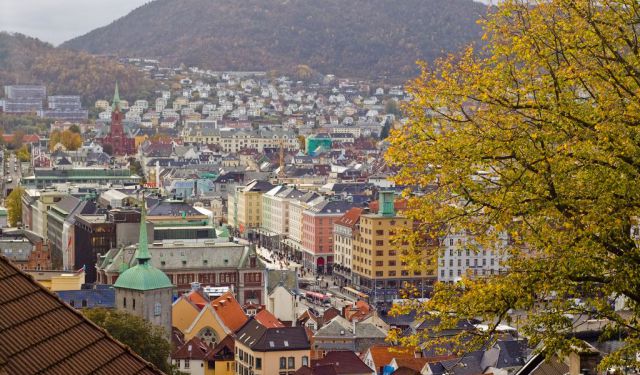
Discover Bergen City Center on Foot
Bergen is a historic port city shaped by the sea, the mountains, and centuries of trade. Its wooden waterfront, busy harbor, and Hanseatic past give it a character unlike anywhere else in Norway. Yet one part of its history seems almost contradictory: Bergen is famous for rain, averaging around 200 wet days a year, but it has also suffered a remarkable number of devastating fires. So why the... view more
Tour Duration: 2 Hour(s)
Travel Distance: 3.0 Km or 1.9 Miles
Tour Duration: 2 Hour(s)
Travel Distance: 3.0 Km or 1.9 Miles