

Buenos Aires House of Culture, Buenos Aires
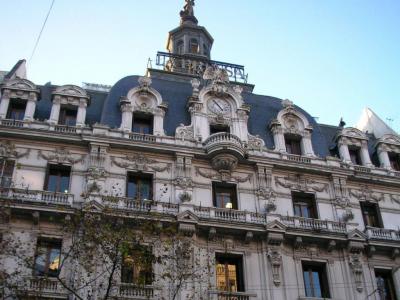
Originally built as the headquarters of the influential newspaper La Prensa, the Buenos Aires House of Culture will always catch your eye as you walk through the Montserrat district of Argentina’s capital. In 1894, José Clemente Paz, owner of the newspaper, replaced its old headquarters with a grand new building on May Avenue. Architects Carlos Agote and Alberto Gainza, both trained in Paris, designed it in the Beaux-Arts style, drawing inspiration from the work of French architect Charles Garnier.
The building was inaugurated in 1898 during a ceremony attended by approximately 20,000 people. Its facade is especially notable for its tall spire, crowned with a gilded bronze statue symbolizing freedom of the press.
Inside the spire is a historic siren, installed in 1900 to announce major world events. It was sounded only five times in the past century: after the assassination of King Umberto I in 1900, during the Apollo 11 moon landing in 1969, to celebrate Argentina’s 1978 FIFA World Cup victory, during the Falklands War in 1982, and at Raúl Alfonsín’s 1983 presidential inauguration, marking the return of democracy.
The building’s interior was meticulously crafted using mostly imported materials. It features Sprague elevators from the United States, Boulanger mosaic tiles you may observe under your feet as you move through the ground floor, clocks designed by the master horologist Paul Garnier, and wrought-iron work from Val d’Osne in France. The highlight of the first floor is the Golden Salon, decorated with frescoes by Italian-born painters Reynaldo Giudici and Nazareno Orlandi.
Recognized today as the House of Culture, the building was declared a National Historic Monument in 1995. The former passageway connecting it to Buenos Aires City Hall has been converted into the Ana Díaz Salon, which now hosts rotating art exhibitions featuring local and national artists, photography, painting, and contemporary installations. Labels and panels usually provide background in Spanish, and sometimes in English.
The building was inaugurated in 1898 during a ceremony attended by approximately 20,000 people. Its facade is especially notable for its tall spire, crowned with a gilded bronze statue symbolizing freedom of the press.
Inside the spire is a historic siren, installed in 1900 to announce major world events. It was sounded only five times in the past century: after the assassination of King Umberto I in 1900, during the Apollo 11 moon landing in 1969, to celebrate Argentina’s 1978 FIFA World Cup victory, during the Falklands War in 1982, and at Raúl Alfonsín’s 1983 presidential inauguration, marking the return of democracy.
The building’s interior was meticulously crafted using mostly imported materials. It features Sprague elevators from the United States, Boulanger mosaic tiles you may observe under your feet as you move through the ground floor, clocks designed by the master horologist Paul Garnier, and wrought-iron work from Val d’Osne in France. The highlight of the first floor is the Golden Salon, decorated with frescoes by Italian-born painters Reynaldo Giudici and Nazareno Orlandi.
Recognized today as the House of Culture, the building was declared a National Historic Monument in 1995. The former passageway connecting it to Buenos Aires City Hall has been converted into the Ana Díaz Salon, which now hosts rotating art exhibitions featuring local and national artists, photography, painting, and contemporary installations. Labels and panels usually provide background in Spanish, and sometimes in English.
Want to visit this sight? Check out these Self-Guided Walking Tours in Buenos Aires. Alternatively, you can download the mobile app "GPSmyCity: Walks in 1K+ Cities" from Apple App Store or Google Play Store. The app turns your mobile device to a personal tour guide and it works offline, so no data plan is needed when traveling abroad.
Download The GPSmyCity App



Buenos Aires House of Culture on Map
Sight Name: Buenos Aires House of Culture
Sight Location: Buenos Aires, Argentina (See walking tours in Buenos Aires)
Sight Type: Attraction/Landmark
Guide(s) Containing This Sight:
Sight Location: Buenos Aires, Argentina (See walking tours in Buenos Aires)
Sight Type: Attraction/Landmark
Guide(s) Containing This Sight:
Nearby Sights
Walking Tours in Buenos Aires, Argentina

Create Your Own Walk in Buenos Aires
Creating your own self-guided walk in Buenos Aires is easy and fun. Choose the city attractions that you want to see and a walk route map will be created just for you. You can even set your hotel as the start point of the walk.
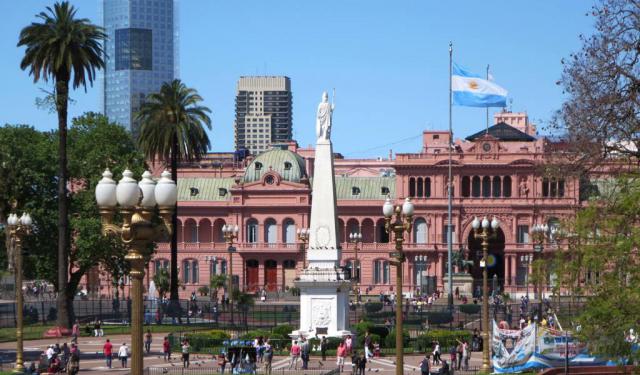
Buenos Aires City Center Walking Tour
Buenos Aires, the capital of Argentina, has a history marked by exploration, colonial rivalry, mass immigration, and political change. Its name derives from the Spanish dedication “Our Lady Saint Mary of the Good Air,” a title of the Virgin Mary venerated by sailors from Sardinia. The phrase “Buen Aire” originally referred to the clean, favorable winds near a sanctuary in the city of... view more
Tour Duration: 2 Hour(s)
Travel Distance: 4.7 Km or 2.9 Miles
Tour Duration: 2 Hour(s)
Travel Distance: 4.7 Km or 2.9 Miles
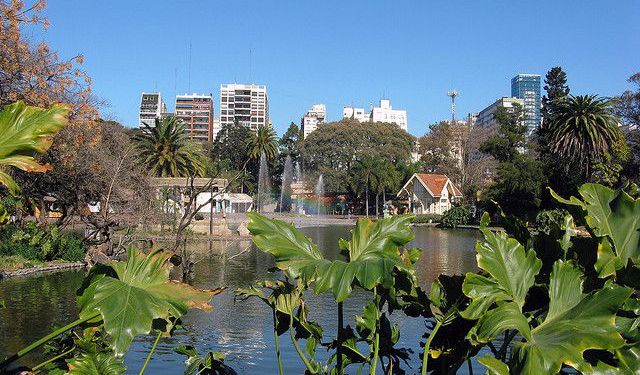
Palermo Area Walking Tour
Palermo is the largest neighborhood in Buenos Aires and one of its most historically layered areas, evolving from rural outskirts into a defining part of the city’s cultural life. The name “Palermo” dates to the early colonial period. One widely accepted explanation links it to a Franciscan monastery dedicated to Saint Benedict of Palermo, a Sicilian saint of African descent whose image was... view more
Tour Duration: 2 Hour(s)
Travel Distance: 3.5 Km or 2.2 Miles
Tour Duration: 2 Hour(s)
Travel Distance: 3.5 Km or 2.2 Miles
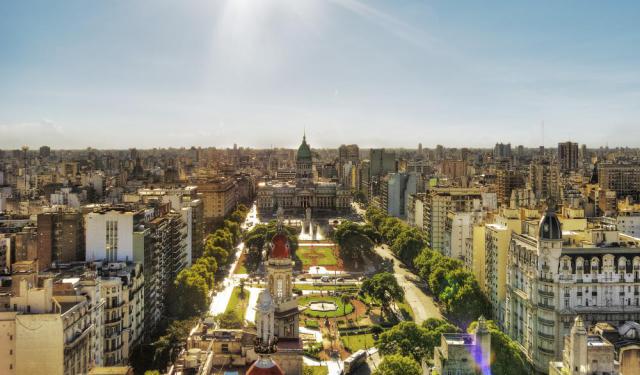
May Avenue Walking Tour
May Avenue is one of Buenos Aires’ most emblematic boulevards, a grand east–west axis that reflects the city’s political, cultural, and architectural evolution. Its name honors the May Revolution of 1810, when residents of Buenos Aires removed the Spanish viceroy and initiated the process that ultimately led to Argentina’s independence.
Plans for a monumental boulevard connecting the... view more
Tour Duration: 2 Hour(s)
Travel Distance: 2.3 Km or 1.4 Miles
Plans for a monumental boulevard connecting the... view more
Tour Duration: 2 Hour(s)
Travel Distance: 2.3 Km or 1.4 Miles
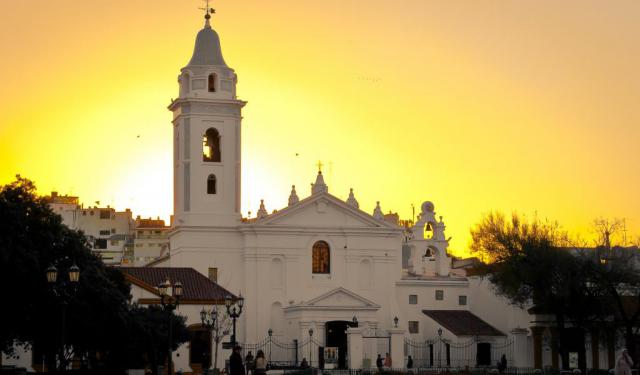
Recoleta Neighborhood Walking Tour
Imagine being so eye-catching that a whole city benefits. The Recoleta neighbourhood may well have been one of the reasons Buenos Aires earned its early-1900s nickname, “the Paris of South America.”
Recoleta’s name is literal history: it comes from the Recollect Fathers, a branch within the Franciscan tradition whose convent gave the area its early identity. In the early 1700s, these... view more
Tour Duration: 2 Hour(s)
Travel Distance: 3.4 Km or 2.1 Miles
Recoleta’s name is literal history: it comes from the Recollect Fathers, a branch within the Franciscan tradition whose convent gave the area its early identity. In the early 1700s, these... view more
Tour Duration: 2 Hour(s)
Travel Distance: 3.4 Km or 2.1 Miles
Useful Travel Guides for Planning Your Trip

Popular Palermo Restaurants, Buenos Aires
Although many visitors tend to think that Argentina is a meat and potatoes country, the rich cultural heritage from Italy, Spain, Portugal, and other European countries provide a veritable smorgasboard of dining options. Palermo is the barrio in Buenos Aires often referred to as 'The Restaurant...
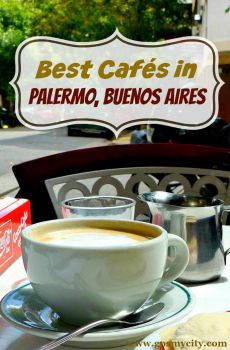
Top 7 Cafes in Palermo, Buenos Aires
The word "Palermo", believe it or not, may refer not just to Sicily, Italy, but also to Buenos Aires, Argentina. Indeed, this neighborhood (barrio) is largest in the city and is trendy and bohemian, renowned for its boutique shopping, cafes, restaurants, bars, and nightclubs. Oftentimes,...
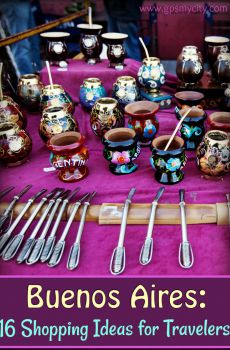
Buenos Aires: 16 Shopping Ideas for Travelers
Other than a cool place to be and a dream destination for many adventure-minded folk, Buenos Aires is a great culture hub where one can experience first-hand all that Argentina has to offer - great football, terrific wine, killer steaks, and much much more. This guide is to help you steer yourself...
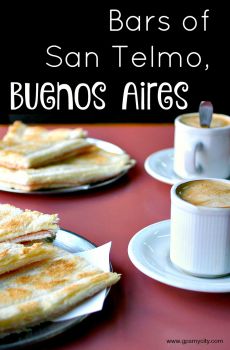
Top 5 Bars in San Telmo, Buenos Aires
With its cobbled streets, colonial era buildings and vibrant music and art scene, San Telmo is a great place to soak up the eclectic nature of Buenos Aires’ nightlife. The area boasts dozens of bars and cafes, with some of the city’s oldest lying next to the more modern. Indeed, San Telmo...