

Buenos Aires Introduction Walking Tour (Self Guided), Buenos Aires
Buenos Aires, the capital of Argentina, has a history marked by exploration, colonial rivalry, mass immigration, and political change. Its name derives from the Spanish dedication “Our Lady Saint Mary of the Good Air,” a title of the Virgin Mary venerated by sailors from Sardinia. The phrase “Buen Aire” originally referred to the clean, favorable winds near a sanctuary in the city of Cagliari in Italy, and Spanish navigators carried this devotion across the Atlantic.
The first attempt to establish a city occurred in 1536, when Spanish conquistador Pedro de Mendoza founded Our Lady Saint Mary of the Good Air near what is now the San Telmo neighborhood. Conflict with the local Querandí people, limited resources, and harsh conditions soon led to the settlement’s abandonment. A lasting settlement finally emerged in 1580, when conquistador Juan de Garay founded the “City of the Most Holy Trinity and Port of Santa María of the Good Air.” Though modest at first, this second Buenos Aires occupied a strategic position within the Viceroyalty of Peru. By the 17th and 18th centuries, cattle ranching and port commerce integrated the region into Atlantic trade networks.
A transformative moment arrived in 1776, when Spain created the Viceroyalty of the River Plate with Buenos Aires as its capital. The city grew rapidly, and the successful defense against two British invasions in 1806–1807 strengthened local identity. The May Revolution of 1810 removed the Spanish viceroy and set Argentina on the path to independence, achieved in 1816.
Throughout the 19th century, Buenos Aires became both a political battleground and a symbol of modernity. After decades of conflict between centralists and federalists, it became Argentina’s federal capital in 1880. A massive wave of immigration from Italy, Spain, Eastern Europe, and the Middle East transformed it into a cosmopolitan metropolis filled with cafés, theaters, wide boulevards, and vibrant intellectual life.
This influx of European communities left a lasting mark on the city’s architecture. Italian and French academic styles shaped grand public buildings and private residences alike, while Art Nouveau and Art Deco flourished in neighborhoods such as Recoleta and Congreso. Many streets evoke the atmosphere of Paris, Madrid, or Turin, reflecting the aspirations of a young nation eager to align itself with European cultural prestige. Walking through Buenos Aires today reveals an eclectic blend of Beaux-Arts palaces, ornate domes, neoclassical facades, and early modernist experiments—an urban tapestry woven from centuries of global influence.
Now that you know the story behind the city’s streets, it’s time to explore them for yourself. Lace up your walking shoes, follow the route ahead, and let Buenos Aires reveal its history—one plaza, palace, and shaded boulevard at a time.
The first attempt to establish a city occurred in 1536, when Spanish conquistador Pedro de Mendoza founded Our Lady Saint Mary of the Good Air near what is now the San Telmo neighborhood. Conflict with the local Querandí people, limited resources, and harsh conditions soon led to the settlement’s abandonment. A lasting settlement finally emerged in 1580, when conquistador Juan de Garay founded the “City of the Most Holy Trinity and Port of Santa María of the Good Air.” Though modest at first, this second Buenos Aires occupied a strategic position within the Viceroyalty of Peru. By the 17th and 18th centuries, cattle ranching and port commerce integrated the region into Atlantic trade networks.
A transformative moment arrived in 1776, when Spain created the Viceroyalty of the River Plate with Buenos Aires as its capital. The city grew rapidly, and the successful defense against two British invasions in 1806–1807 strengthened local identity. The May Revolution of 1810 removed the Spanish viceroy and set Argentina on the path to independence, achieved in 1816.
Throughout the 19th century, Buenos Aires became both a political battleground and a symbol of modernity. After decades of conflict between centralists and federalists, it became Argentina’s federal capital in 1880. A massive wave of immigration from Italy, Spain, Eastern Europe, and the Middle East transformed it into a cosmopolitan metropolis filled with cafés, theaters, wide boulevards, and vibrant intellectual life.
This influx of European communities left a lasting mark on the city’s architecture. Italian and French academic styles shaped grand public buildings and private residences alike, while Art Nouveau and Art Deco flourished in neighborhoods such as Recoleta and Congreso. Many streets evoke the atmosphere of Paris, Madrid, or Turin, reflecting the aspirations of a young nation eager to align itself with European cultural prestige. Walking through Buenos Aires today reveals an eclectic blend of Beaux-Arts palaces, ornate domes, neoclassical facades, and early modernist experiments—an urban tapestry woven from centuries of global influence.
Now that you know the story behind the city’s streets, it’s time to explore them for yourself. Lace up your walking shoes, follow the route ahead, and let Buenos Aires reveal its history—one plaza, palace, and shaded boulevard at a time.
How it works: Download the app "GPSmyCity: Walks in 1K+ Cities" from Apple App Store or Google Play Store to your mobile phone or tablet. The app turns your mobile device into a personal tour guide and its built-in GPS navigation functions guide you from one tour stop to next. The app works offline, so no data plan is needed when traveling abroad.
Buenos Aires Introduction Walking Tour Map
Guide Name: Buenos Aires Introduction Walking Tour
Guide Location: Argentina » Buenos Aires (See other walking tours in Buenos Aires)
Guide Type: Self-guided Walking Tour (Sightseeing)
# of Attractions: 11
Tour Duration: 2 Hour(s)
Travel Distance: 4.7 Km or 2.9 Miles
Author: irenes
Sight(s) Featured in This Guide:
Guide Location: Argentina » Buenos Aires (See other walking tours in Buenos Aires)
Guide Type: Self-guided Walking Tour (Sightseeing)
# of Attractions: 11
Tour Duration: 2 Hour(s)
Travel Distance: 4.7 Km or 2.9 Miles
Author: irenes
Sight(s) Featured in This Guide:
- Plaza de Mayo (May Square)
- Casa Rosada Museum (Pink House Museum)
- Metropolitan Cathedral
- Avenida de Mayo (May Avenue)
- Palacio Barolo (Barolo Palace)
- Plaza del Congreso (Congress Square)
- Plaza de la Republica (Republic Square)
- Teatro Colón (Colón Theatre)
- Galerías Pacífico Shopping Center
- Calle Florida (Florida Street)
- Corrientes Avenue
1) Plaza de Mayo (May Square) (must see)
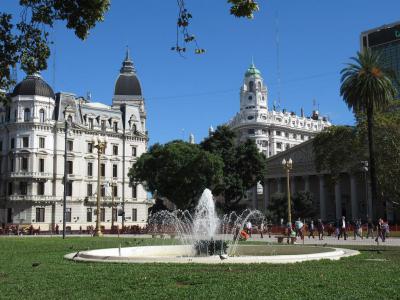
May Square is the oldest public square in Buenos Aires. Its story begins in 1580, when Juan de Garay founded the city. The plaza’s present form dates to 1884, when it was redesigned and named to honor the May Revolution of 1810, the movement that initiated Argentina’s break from Spanish rule.
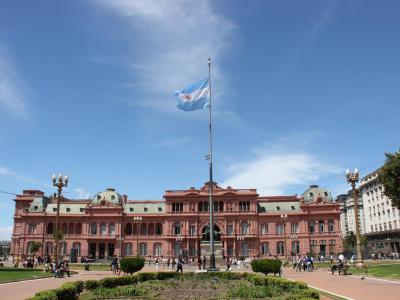
As you stand at the center of the plaza, the Pyramid of May rises directly beside you. This white monument, first erected in 1811 to commemorate the May Revolution, was moved to this central position in 1912. From here, turn your attention east: the pale pink facade of the Pink House, the seat of the national government, dominates the entire side of the square. Directly in front of it, also on the east side of the square, stands the Equestrian Monument to General Manuel Belgrano, leader of the May Revolution, dedicated in 1873.
Next, look west, where the long, white, arched building on the left is the Cabildo, the only surviving colonial government structure on the plaza. The original town council was built in 1608, and the current version—completed in 1751—has undergone several modifications. Today it houses the National Museum of the Cabildo and the May Revolution, featuring colonial-era art and furnishings.
From the same position near the Cabildo, turn northwest to see the Metropolitan Cathedral of Buenos Aires, the city’s principal Catholic church. Its neoclassical facade resembles a European temple, marking a contrast with the surrounding architecture. Finally, look toward the northeast corner of the square to spot the elegant Buenos Aires House of Culture, the building between the Cabildo and the Cathedral.
Standing here, with nearly four centuries of history surrounding you, May Square offers one of the clearest windows into the political and cultural life of Buenos Aires.
As you stand at the center of the plaza, the Pyramid of May rises directly beside you. This white monument, first erected in 1811 to commemorate the May Revolution, was moved to this central position in 1912. From here, turn your attention east: the pale pink facade of the Pink House, the seat of the national government, dominates the entire side of the square. Directly in front of it, also on the east side of the square, stands the Equestrian Monument to General Manuel Belgrano, leader of the May Revolution, dedicated in 1873.
Next, look west, where the long, white, arched building on the left is the Cabildo, the only surviving colonial government structure on the plaza. The original town council was built in 1608, and the current version—completed in 1751—has undergone several modifications. Today it houses the National Museum of the Cabildo and the May Revolution, featuring colonial-era art and furnishings.
From the same position near the Cabildo, turn northwest to see the Metropolitan Cathedral of Buenos Aires, the city’s principal Catholic church. Its neoclassical facade resembles a European temple, marking a contrast with the surrounding architecture. Finally, look toward the northeast corner of the square to spot the elegant Buenos Aires House of Culture, the building between the Cabildo and the Cathedral.
Standing here, with nearly four centuries of history surrounding you, May Square offers one of the clearest windows into the political and cultural life of Buenos Aires.
2) Casa Rosada Museum (Pink House Museum) (must see)
Pink House Museum is located inside the main office complex of the President of Argentina, known as Pink House. The museum features exhibits that explore more than 100 years of the Pink House’s role as the seat of power in Argentina.
The museum displays an extensive collection of objects belonging to Argentine leaders throughout the country’s history. The museum was created to exhibit presidential memorabilia. Among its holdings are artifacts from the remains of an old fort that once occupied the site, as well as elements from the former Customs House, designed by British architect Edward Taylor. At one time, the Customs House was the largest building in Argentina.
Exhibits include books, furniture, swords, uniforms, and carriages used by former presidents. More personal items—such as flatware and dolls used by presidential families—are also on display. Several underground rooms correspond to the foundations of earlier government structures that once stood here. In 2011, a modern extension was added to house a mural by Mexican artist David Alfaro Siqueiros—one of his most powerful and immersive works. There is also a dedicated section honoring Eva Perón, former First Lady of Argentina. A lesser-known highlight is the preserved section of colonial-era tunnels, offering a glimpse into the early defensive layout of Buenos Aires.
Tip:
Visitors must reserve in advance to join the free museum tours which are conducted in Spanish. These tours are absolutely worth it and easy to book online. On weekends, you can also visit the Pink House itself on a free guided tour available in both Spanish and English, also with a reservation.
The museum displays an extensive collection of objects belonging to Argentine leaders throughout the country’s history. The museum was created to exhibit presidential memorabilia. Among its holdings are artifacts from the remains of an old fort that once occupied the site, as well as elements from the former Customs House, designed by British architect Edward Taylor. At one time, the Customs House was the largest building in Argentina.
Exhibits include books, furniture, swords, uniforms, and carriages used by former presidents. More personal items—such as flatware and dolls used by presidential families—are also on display. Several underground rooms correspond to the foundations of earlier government structures that once stood here. In 2011, a modern extension was added to house a mural by Mexican artist David Alfaro Siqueiros—one of his most powerful and immersive works. There is also a dedicated section honoring Eva Perón, former First Lady of Argentina. A lesser-known highlight is the preserved section of colonial-era tunnels, offering a glimpse into the early defensive layout of Buenos Aires.
Tip:
Visitors must reserve in advance to join the free museum tours which are conducted in Spanish. These tours are absolutely worth it and easy to book online. On weekends, you can also visit the Pink House itself on a free guided tour available in both Spanish and English, also with a reservation.
3) Metropolitan Cathedral (must see)
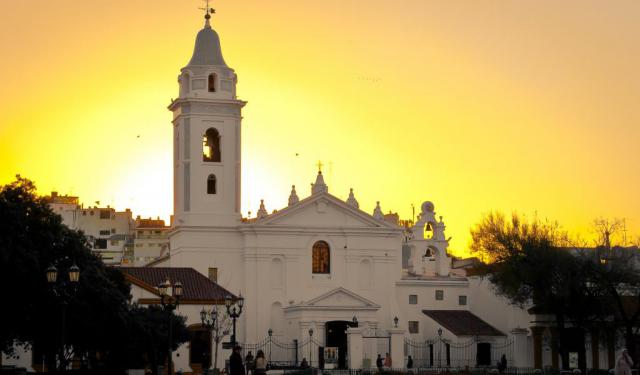
The Buenos Aires Metropolitan Cathedral is the most significant Catholic church in the city. The site was originally designated for a church in 1580, and several structures were built throughout the 1600s. However, the current building dates to the early 1700s, with a Greek Revival facade added in the early 1800s. In 1836, the church was formally designated as the cathedral.
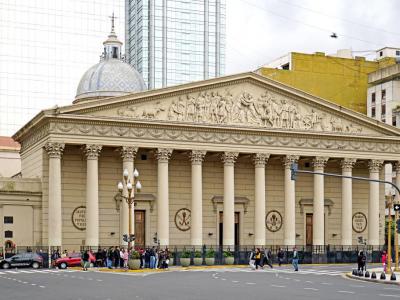
As you admire the cathedral's facade, you'll observe 12 Neo-Classical columns, symbolizing the twelve apostles. Its frontispiece features a large bas-relief depicting two important figures from the Old Testament: Jacob and Joseph in Egypt, intended as a metaphor for national reconciliation after periods of civil conflict. Walking inside, the cathedral impresses with a 134-foot vaulted ceiling and five naves. Pay attention to the Venetian mosaic flooring, covering the entire interior floor of the cathedral. It illustrates a series of religious motifs and geometric designs crafted by Italian artisans in the late 19th century.
The cathedral’s oldest artwork is the 1671 Christ of Buenos Aires. To find it, walk down the central nave and turn right, where the Chapel of the Holy Christ appears among the first on that side; the wooden 17th-century image stands in a small altar niche and is easy to spot thanks to its expressive colonial style. The main gilded wood altarpiece, dating to 1785, rises at the far end of the central nave, directly facing visitors as they enter the cathedral. The monumental 1871 organ, with more than 3,500 pipes, is positioned above the entrance on the choir balcony and becomes visible when you look back toward the main doors. The beautifully preserved 18th-century wooden pulpit, decorated with gold leaf, stands to the left of the central nave, raised on a carved base and easily noticed as you walk toward the altar.
Several important memorials are housed inside the cathedral, each easy to locate as you move through the nave. To the left of the main altar, an ornate marble mausoleum holds the remains of General José de San Martín, one of Latin America’s great liberators; the monument is guarded by statues representing Argentina, Peru, and Chile. Just beside it stands the Tomb of the Unknown Soldier of Argentine Independence, marked by a simple yet solemn inscription.
Pope Francis celebrated Mass here during his years as Archbishop Jorge Bergoglio before his election as Pope in 2013. Today, the cathedral houses the Pope Francis Museum, displaying some of his personal items, liturgical garments, and photographs documenting his time in Buenos Aires.
As you admire the cathedral's facade, you'll observe 12 Neo-Classical columns, symbolizing the twelve apostles. Its frontispiece features a large bas-relief depicting two important figures from the Old Testament: Jacob and Joseph in Egypt, intended as a metaphor for national reconciliation after periods of civil conflict. Walking inside, the cathedral impresses with a 134-foot vaulted ceiling and five naves. Pay attention to the Venetian mosaic flooring, covering the entire interior floor of the cathedral. It illustrates a series of religious motifs and geometric designs crafted by Italian artisans in the late 19th century.
The cathedral’s oldest artwork is the 1671 Christ of Buenos Aires. To find it, walk down the central nave and turn right, where the Chapel of the Holy Christ appears among the first on that side; the wooden 17th-century image stands in a small altar niche and is easy to spot thanks to its expressive colonial style. The main gilded wood altarpiece, dating to 1785, rises at the far end of the central nave, directly facing visitors as they enter the cathedral. The monumental 1871 organ, with more than 3,500 pipes, is positioned above the entrance on the choir balcony and becomes visible when you look back toward the main doors. The beautifully preserved 18th-century wooden pulpit, decorated with gold leaf, stands to the left of the central nave, raised on a carved base and easily noticed as you walk toward the altar.
Several important memorials are housed inside the cathedral, each easy to locate as you move through the nave. To the left of the main altar, an ornate marble mausoleum holds the remains of General José de San Martín, one of Latin America’s great liberators; the monument is guarded by statues representing Argentina, Peru, and Chile. Just beside it stands the Tomb of the Unknown Soldier of Argentine Independence, marked by a simple yet solemn inscription.
Pope Francis celebrated Mass here during his years as Archbishop Jorge Bergoglio before his election as Pope in 2013. Today, the cathedral houses the Pope Francis Museum, displaying some of his personal items, liturgical garments, and photographs documenting his time in Buenos Aires.
4) Avenida de Mayo (May Avenue)
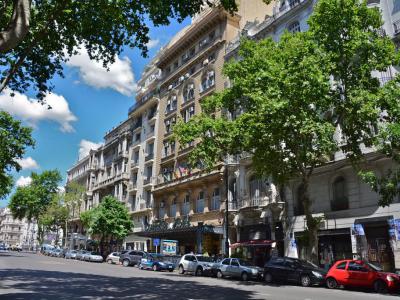
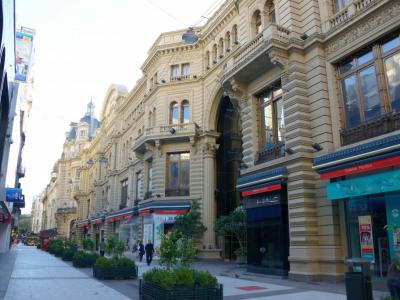
May Avenue is under a mile long and filled with Argentine history and sophisticated architecture. The avenue, inaugurated in 1894, was named in honor of the May Revolution of 1810. It stretches from May Square to Argentina’s National Congress, serving as one of the city’s most symbolic routes. Several impressive buildings representing a variety of architectural styles line the avenue.
The elegant “The Press” building, designed in Parisian Beaux-Arts style, was completed in 1898 as the headquarters of “The Press” newspaper. Today, it houses the Ministry of Culture. The Roverano Passage, opened in 1918, offers a charming shortcut to the parallel street Hipólito Yrigoyen. Inside this passage, you’ll even find Pope Francis’s former hairdresser—a quirky detail for visitors.
London City Cafe has been a beloved local and tourist spot since 1954. One table is dedicated to author Julio Cortázar, who used to write there over coffee. The former Vera Palace is now El Túnel, an excellent bookstore specializing in rare and unusual titles. Cafe Tortoni, founded in 1858, is the oldest cafe in Buenos Aires, where a coffee—or a glass of cider—feels like stepping back in time.
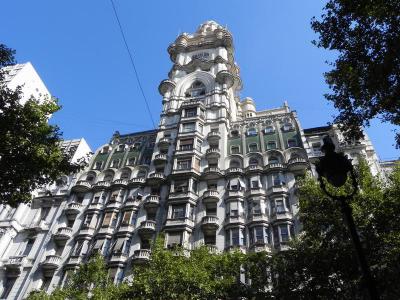
The Avenida Theater, opened in 1908, hosts opera, theater, and traditional Spanish performances. The Barolo Palace, completed in 1923, is one of the avenue’s most extraordinary landmarks, featuring stunning architecture inspired by Dante’s Divine Comedy. Finally, the 1910 Inmobiliaria building showcases an eclectic mix of styles, ranging from Art Nouveau to Neoclassical.
The elegant “The Press” building, designed in Parisian Beaux-Arts style, was completed in 1898 as the headquarters of “The Press” newspaper. Today, it houses the Ministry of Culture. The Roverano Passage, opened in 1918, offers a charming shortcut to the parallel street Hipólito Yrigoyen. Inside this passage, you’ll even find Pope Francis’s former hairdresser—a quirky detail for visitors.
London City Cafe has been a beloved local and tourist spot since 1954. One table is dedicated to author Julio Cortázar, who used to write there over coffee. The former Vera Palace is now El Túnel, an excellent bookstore specializing in rare and unusual titles. Cafe Tortoni, founded in 1858, is the oldest cafe in Buenos Aires, where a coffee—or a glass of cider—feels like stepping back in time.
The Avenida Theater, opened in 1908, hosts opera, theater, and traditional Spanish performances. The Barolo Palace, completed in 1923, is one of the avenue’s most extraordinary landmarks, featuring stunning architecture inspired by Dante’s Divine Comedy. Finally, the 1910 Inmobiliaria building showcases an eclectic mix of styles, ranging from Art Nouveau to Neoclassical.
5) Palacio Barolo (Barolo Palace) (must see)
The Barolo Palace, commissioned by Argentine textile magnate Luis Barolo, was designed to house offices and stood as the tallest building in Buenos Aires until 1936 . Barolo hired Italian architect Mario Palanti in 1910, sharing the common fear among some Europeans of the era that Europe might collapse under the pressures of war. Palanti, an admirer of Dante Alighieri, designed the building as a symbolic architectural interpretation of The Divine Comedy.
The structure has 24 floors—2 underground and 22 above—with the basements and ground floor representing Hell, the first through fifteenth floors symbolizing Purgatory, and the sixteenth through twenty-second floors representing Paradise. The building’s height of 100 meters exceeded the legal limit for May Avenue, but Mayor Luis Cantilo granted a special exception to allow its ambitious scale. Construction was completed in 1923, and the building was inaugurated with a blessing from the papal representative, Monsignor Giovanni Beda Cardinali.
A remarkable architectural detail is the building’s lighthouse, designed to mirror the one atop the now-demolished Salvo Palace in Montevideo—also a Palanti design—symbolizing the spiritual link between the two sides of the River Plate. The lighthouse once projected a powerful rotating beam out to sea; today, it operates during special events and night tours. The building’s interior is rich in symbolic numerology: 22 floors for the 22 stanzas of Dante’s cantos, and 9 vaults representing the nine circles, terraces, and spheres of the afterlife.
Bilingual English and Spanish tours guide visitors through the Dante-inspired design and the story of its visionary owner. The upper-floor balconies offer panoramic views of Buenos Aires, and the lighthouse balcony provides one of the most dramatic night viewpoints in the city. The Barolo Palace was declared a National Historic Monument in 1997.
Tip:
All tours require advance reservations—check the official website for exact dates and times. Night tours are well worth the extra cost, offering breathtaking views from the lighthouse and a relaxed wine tasting to end the experience.
The structure has 24 floors—2 underground and 22 above—with the basements and ground floor representing Hell, the first through fifteenth floors symbolizing Purgatory, and the sixteenth through twenty-second floors representing Paradise. The building’s height of 100 meters exceeded the legal limit for May Avenue, but Mayor Luis Cantilo granted a special exception to allow its ambitious scale. Construction was completed in 1923, and the building was inaugurated with a blessing from the papal representative, Monsignor Giovanni Beda Cardinali.
A remarkable architectural detail is the building’s lighthouse, designed to mirror the one atop the now-demolished Salvo Palace in Montevideo—also a Palanti design—symbolizing the spiritual link between the two sides of the River Plate. The lighthouse once projected a powerful rotating beam out to sea; today, it operates during special events and night tours. The building’s interior is rich in symbolic numerology: 22 floors for the 22 stanzas of Dante’s cantos, and 9 vaults representing the nine circles, terraces, and spheres of the afterlife.
Bilingual English and Spanish tours guide visitors through the Dante-inspired design and the story of its visionary owner. The upper-floor balconies offer panoramic views of Buenos Aires, and the lighthouse balcony provides one of the most dramatic night viewpoints in the city. The Barolo Palace was declared a National Historic Monument in 1997.
Tip:
All tours require advance reservations—check the official website for exact dates and times. Night tours are well worth the extra cost, offering breathtaking views from the lighthouse and a relaxed wine tasting to end the experience.
6) Plaza del Congreso (Congress Square)
Congress Square, inaugurated in 1910, anchors the western end of May Avenue. It is named after the Argentine Congress, whose imposing 1906 building rises directly in front of it. Congress Square forms the first section of a chain of three aligned public spaces running eastward: Congress Square, Mariano Moreno Square, and Lorea Square.
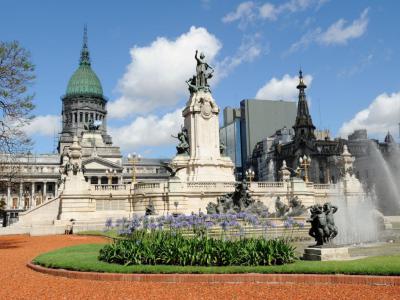
If you enter from the west side, the first major structure you’ll encounter—right in the center of Congress Square—is the Monument to the Two Congresses completed in 1914. The monument features the Allegory of the Republic, a bronze female figure posed on a Neoclassical stone platform. Below her, bronze representations of Neptune and surrounding sea creatures frame the fountain basin, symbolizing Argentina’s vast maritime borders.
Continue walking east and you’ll seamlessly step into Mariano Moreno Square, which directly adjoins Congress Square. This second plaza is home to several notable monuments. One of them is Kilometer Zero, the marker from which distances along Argentina’s national highways are measured. Just behind it stands the Monument to Alfredo L. Palacios, a prominent socialist politician. As you continue a few steps farther, you’ll encounter The Thinker by Auguste Rodin. This bronze sculpture is one of only eight cast from Rodin’s original mold, making it an extraordinary and unexpected feature in the city’s civic core.
As you move farther southeast, the open space narrows into Lorea Square, the final plaza in the trio. Here you’ll find a monument dedicated to José Manuel Estrada, a 19th-century Catholic intellectual known for his strong opposition to secular education reforms. Because Lorea Square is smaller and quieter than the previous two plazas, it offers a natural pause and a good spot to take in the linear design of the entire three-plaza layout.
If you enter from the west side, the first major structure you’ll encounter—right in the center of Congress Square—is the Monument to the Two Congresses completed in 1914. The monument features the Allegory of the Republic, a bronze female figure posed on a Neoclassical stone platform. Below her, bronze representations of Neptune and surrounding sea creatures frame the fountain basin, symbolizing Argentina’s vast maritime borders.
Continue walking east and you’ll seamlessly step into Mariano Moreno Square, which directly adjoins Congress Square. This second plaza is home to several notable monuments. One of them is Kilometer Zero, the marker from which distances along Argentina’s national highways are measured. Just behind it stands the Monument to Alfredo L. Palacios, a prominent socialist politician. As you continue a few steps farther, you’ll encounter The Thinker by Auguste Rodin. This bronze sculpture is one of only eight cast from Rodin’s original mold, making it an extraordinary and unexpected feature in the city’s civic core.
As you move farther southeast, the open space narrows into Lorea Square, the final plaza in the trio. Here you’ll find a monument dedicated to José Manuel Estrada, a 19th-century Catholic intellectual known for his strong opposition to secular education reforms. Because Lorea Square is smaller and quieter than the previous two plazas, it offers a natural pause and a good spot to take in the linear design of the entire three-plaza layout.
7) Plaza de la Republica (Republic Square)
Republic Square is a major urban plaza in Buenos Aires. The square’s name and history recall the former Saint Nicolás de Bari Church, which once stood here until it was demolished in the 1930s to make way for the construction of 9th of July Avenue. This was also the site where the Argentine flag was first hoisted.
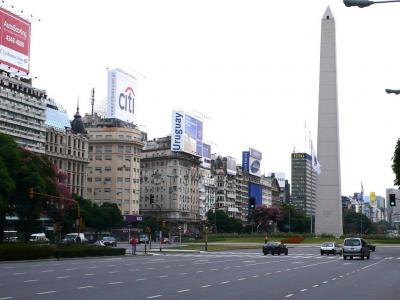
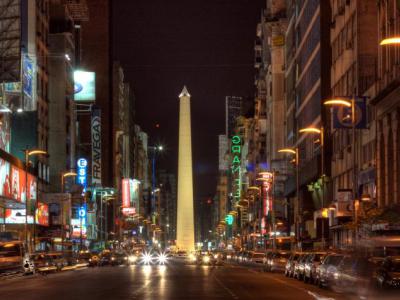
The plaza’s focal point is the Obelisk of Buenos Aires, designed by architect Alberto Prebisch and inaugurated in 1937. When first created, the square featured a circular stone esplanade. In 1962, the plaza was enlarged to its current size, and in 1971 the layout took on its modern form when Corrientes Avenue was redirected around the obelisk to ease traffic heading toward the city’s financial district.
Today, Republic Square is surrounded by cafes, bars, restaurants, nightclubs, and shops, remaining a lively gathering place for locals and visitors alike, especially in the evenings when the bright lights of the Corrientes theater district transform the area into one of the city’s most energetic hubs. The plaza is also a traditional site for public celebrations, football victories, and political demonstrations.
The plaza’s focal point is the Obelisk of Buenos Aires, designed by architect Alberto Prebisch and inaugurated in 1937. When first created, the square featured a circular stone esplanade. In 1962, the plaza was enlarged to its current size, and in 1971 the layout took on its modern form when Corrientes Avenue was redirected around the obelisk to ease traffic heading toward the city’s financial district.
Today, Republic Square is surrounded by cafes, bars, restaurants, nightclubs, and shops, remaining a lively gathering place for locals and visitors alike, especially in the evenings when the bright lights of the Corrientes theater district transform the area into one of the city’s most energetic hubs. The plaza is also a traditional site for public celebrations, football victories, and political demonstrations.
8) Teatro Colón (Colón Theatre) (must see)
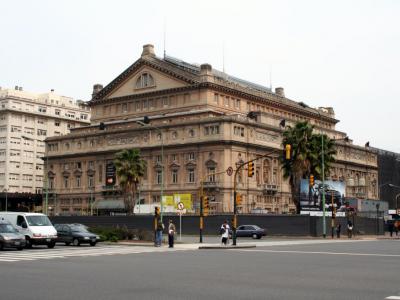
The Colón Theater is regarded as one of the finest opera houses in the world. Its construction took several years and involved multiple architects, but the result was an architectural masterpiece that continues to be ranked among the top three opera houses globally for acoustics and architectural quality. The design blends Italian Neoclassical, French Beaux-Arts, and German Renaissance influences, due to the succession of architects involved.
The flourishing opera scene in 19th-century Buenos Aires, driven by touring European companies, led to the construction of the first Colón Theater in 1857. It operated successfully for 30 years, but the growing popularity of opera soon made it clear that a larger and more modern venue was needed. After nearly 20 years of construction, the current theater opened in 1908.
The present structure was built using carefully selected materials from across Europe. It features Italian marble, French stained glass, Venetian mosaics, and Slavonic woodwork, reflecting a rich mixture of European craftsmanship. The main hall, shaped like a horseshoe, accommodates more than 2,500 seated spectators, with four levels of galleries and standing room for an additional 1,000. The orchestra pit can host up to 120 musicians. The hall’s acoustics are famously precise—so much so that the great tenor Luciano Pavarotti once remarked that it is one of the most challenging auditoriums in the world, where “even the slightest mistake can be heard”. Above the auditorium, the dome contains a hidden choir gallery, creating the effect of voices descending from the heavens.
An interesting feature of the theater is its historic stage machinery, which was some of the most advanced in the world at the time of its construction. This includes hidden trapdoors and a manual counterweight system used for quick scene changes during performances.
Tip:
Guided tours are offered daily in several languages; check at the box office for current schedules or availability. Don't miss the opportunity to visit the backstage area, where you can see the production rooms and get a behind-the-scenes look at how the theater prepares for its world-class performances.
The flourishing opera scene in 19th-century Buenos Aires, driven by touring European companies, led to the construction of the first Colón Theater in 1857. It operated successfully for 30 years, but the growing popularity of opera soon made it clear that a larger and more modern venue was needed. After nearly 20 years of construction, the current theater opened in 1908.
The present structure was built using carefully selected materials from across Europe. It features Italian marble, French stained glass, Venetian mosaics, and Slavonic woodwork, reflecting a rich mixture of European craftsmanship. The main hall, shaped like a horseshoe, accommodates more than 2,500 seated spectators, with four levels of galleries and standing room for an additional 1,000. The orchestra pit can host up to 120 musicians. The hall’s acoustics are famously precise—so much so that the great tenor Luciano Pavarotti once remarked that it is one of the most challenging auditoriums in the world, where “even the slightest mistake can be heard”. Above the auditorium, the dome contains a hidden choir gallery, creating the effect of voices descending from the heavens.
An interesting feature of the theater is its historic stage machinery, which was some of the most advanced in the world at the time of its construction. This includes hidden trapdoors and a manual counterweight system used for quick scene changes during performances.
Tip:
Guided tours are offered daily in several languages; check at the box office for current schedules or availability. Don't miss the opportunity to visit the backstage area, where you can see the production rooms and get a behind-the-scenes look at how the theater prepares for its world-class performances.
9) Galerías Pacífico Shopping Center (must see)
Galerías Pacífico is an elegant shopping center renowned for its stunning architecture and marked a national historical monument thanks to its admirable design. This Beaux-Arts style building was completed in 1889 and emulates the famous Galleria Vittorio Emanuele II in Milan. Originally constructed as a Le Bon Marché department store, Galerías Pacífico was transformed into a shopping center in 1990 and has since become one of the most beautiful malls in the world.
The centerpiece of the building is its impressive dome, adorned with murals by some of Argentina's most celebrated artists. To appreciate the art work, head towards the central atrium, where you can gaze up and appreciate the intricate frescoes that depict themes of Argentine history and culture.
Inside, visitors will find a range of stores, from international brands and high-end fashion to local clothing shops and leather crafts boutiques. To access the main shopping area, enter through the main entrance directly on Florida Street or via the entrance on Córdoba avenue. The food court is located on the lower level, beneath the dome. It is always lively, offering a variety of quick dining options, with several spots to enjoy ice-cream—a popular treat in Buenos Aires. To reach the food court, take one of the elevators located directly to the right and left of the central fountain in the middle of the main atrium.
Beyond shopping, Borges Cultural Center—located inside the building—adds cultural depth. To visit, head to the upper floors and look for signs leading to the “Centro Cultural Borges” entrance. This venue hosts a tango school where visitors can learn the passionate dance, as well as watch a tango show. The cultural center also features art exhibitions, workshops, and cultural events throughout the year, making it a must-visit for those interested in Argentine arts and heritage. The entrance to the tango shows is located in the back of the second floor, near the gallery spaces.
Tip:
If you plan to shop, be sure to look for the "tax-free" signs to take advantage of the tax refund system for foreign visitors before leaving Argentina.
The centerpiece of the building is its impressive dome, adorned with murals by some of Argentina's most celebrated artists. To appreciate the art work, head towards the central atrium, where you can gaze up and appreciate the intricate frescoes that depict themes of Argentine history and culture.
Inside, visitors will find a range of stores, from international brands and high-end fashion to local clothing shops and leather crafts boutiques. To access the main shopping area, enter through the main entrance directly on Florida Street or via the entrance on Córdoba avenue. The food court is located on the lower level, beneath the dome. It is always lively, offering a variety of quick dining options, with several spots to enjoy ice-cream—a popular treat in Buenos Aires. To reach the food court, take one of the elevators located directly to the right and left of the central fountain in the middle of the main atrium.
Beyond shopping, Borges Cultural Center—located inside the building—adds cultural depth. To visit, head to the upper floors and look for signs leading to the “Centro Cultural Borges” entrance. This venue hosts a tango school where visitors can learn the passionate dance, as well as watch a tango show. The cultural center also features art exhibitions, workshops, and cultural events throughout the year, making it a must-visit for those interested in Argentine arts and heritage. The entrance to the tango shows is located in the back of the second floor, near the gallery spaces.
Tip:
If you plan to shop, be sure to look for the "tax-free" signs to take advantage of the tax refund system for foreign visitors before leaving Argentina.
10) Calle Florida (Florida Street)
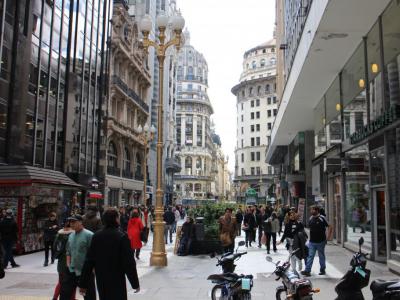
First appearing on a map in 1582, on Florida Street you'll find a variety of branded stores, flower stalls, souvenir shops, cafes, and restaurants. The street was cobbled in 1785 and became pedestrian-only in 1971. On weekdays, workers from the adjacent financial district pack the streets for lunch. In the evening, buskers perform, and tango dancers take to the streets, adding to the atmosphere.
There are several noteworthy buildings on Florida Street. Güemes Gallery boasts a stunning stained-glass dome and impressive marble columns. The neo-Gothic Elortondo-Alvear Palace, with its stained glass and intricate plaster molding, is now home to Burger King. The building was originally an upscale residence, blending French and Spanish styles.
At the north end of the street, you'll find San Martín Square. The plaza features a monument to José de San Martín, the hero of the Wars for Independence. The Monument for the Fallen in the Falklands War is also located here.
Several significant mansions surround the plaza. The Beaux-Arts San Martín Palace, the Second Empire Paz Palace, and the Neogothic Haedo Palace are all worth checking out. Don’t miss the 33-story Art Deco Kavanagh Building, which was once the tallest building in Latin America.
There are several noteworthy buildings on Florida Street. Güemes Gallery boasts a stunning stained-glass dome and impressive marble columns. The neo-Gothic Elortondo-Alvear Palace, with its stained glass and intricate plaster molding, is now home to Burger King. The building was originally an upscale residence, blending French and Spanish styles.
At the north end of the street, you'll find San Martín Square. The plaza features a monument to José de San Martín, the hero of the Wars for Independence. The Monument for the Fallen in the Falklands War is also located here.
Several significant mansions surround the plaza. The Beaux-Arts San Martín Palace, the Second Empire Paz Palace, and the Neogothic Haedo Palace are all worth checking out. Don’t miss the 33-story Art Deco Kavanagh Building, which was once the tallest building in Latin America.
11) Corrientes Avenue
Stretching across 69 blocks, Corrientes Avenue derives its name from one of Argentina's provinces. Over the centuries, it has undergone various name changes, initially known as Del Sol during the 17th century, then Saint Nicolás from 1738 to 1808, and De Incháurregui from 1808 to 1822, before finally adopting its present name.
Before its major widening in the 1930s, Corrientes was popularly called “Narrow Corrientes”. In 1936, the avenue was expanded, and this coincided with the construction of the Buenos Aires Obelisk. Despite being officially known as Corrientes Avenue, many still refer to it as "Corrientes Street", especially in its famous central section, which has been immortalized in tango lyrics.
The street's history is deeply intertwined with tango and the identity of the people of Buenos Aires. This connection is evident in the numerous commemorative plaques—around 40 in total—placed on street corners, honoring significant figures from the history of tango.
In the 20th century, Corrientes Street became Buenos Aires' lively nightlife hub, known as "the street that never sleeps". It's filled with theaters, cinemas, and stunning Art Deco architecture from the 1930s and 1940s. Since the 1950s, it has been a favorite spot for intellectuals due to its numerous bookshops. The famous pizza parlors and restaurants make it the go-to place for urban weekend entertainment.
At the far end of Corrientes, Luna Park remains a symbol of mass sports and entertainment events, hosting boxing matches, concerts, and other attractions.
Before its major widening in the 1930s, Corrientes was popularly called “Narrow Corrientes”. In 1936, the avenue was expanded, and this coincided with the construction of the Buenos Aires Obelisk. Despite being officially known as Corrientes Avenue, many still refer to it as "Corrientes Street", especially in its famous central section, which has been immortalized in tango lyrics.
The street's history is deeply intertwined with tango and the identity of the people of Buenos Aires. This connection is evident in the numerous commemorative plaques—around 40 in total—placed on street corners, honoring significant figures from the history of tango.
In the 20th century, Corrientes Street became Buenos Aires' lively nightlife hub, known as "the street that never sleeps". It's filled with theaters, cinemas, and stunning Art Deco architecture from the 1930s and 1940s. Since the 1950s, it has been a favorite spot for intellectuals due to its numerous bookshops. The famous pizza parlors and restaurants make it the go-to place for urban weekend entertainment.
At the far end of Corrientes, Luna Park remains a symbol of mass sports and entertainment events, hosting boxing matches, concerts, and other attractions.
Walking Tours in Buenos Aires, Argentina

Create Your Own Walk in Buenos Aires
Creating your own self-guided walk in Buenos Aires is easy and fun. Choose the city attractions that you want to see and a walk route map will be created just for you. You can even set your hotel as the start point of the walk.
Recoleta Neighborhood Walking Tour
One of Buenos Aires’ most beautiful neighborhoods, Recoleta is the city’s heart of art and elegance, grace and modernism, culture and leisure. Here you will find lots of things to do, like visiting museums, galleries and cultural centers; relaxing in one of the beautiful parks and plazas; or sampling the delicious local food.
This walking tour along Recoleta begins at the Ateneo Grand... view more
Tour Duration: 2 Hour(s)
Travel Distance: 3.4 Km or 2.1 Miles
This walking tour along Recoleta begins at the Ateneo Grand... view more
Tour Duration: 2 Hour(s)
Travel Distance: 3.4 Km or 2.1 Miles
Palermo Area Walking Tour
Situated just back from one of the main thoroughfares, Santa Fe Avenue (Avenida Santa Fe), Palermo is a relaxed and culturally delightful area full of restaurants, cafes, and wall murals. The tree-lined streets are shady and many of the older Spanish-style houses were converted into small shops without compromising their original character. It’s an excellent place in which to sample the city’s... view more
Tour Duration: 2 Hour(s)
Travel Distance: 3.5 Km or 2.2 Miles
Tour Duration: 2 Hour(s)
Travel Distance: 3.5 Km or 2.2 Miles
May Avenue Walking Tour
May Avenue (Avenida de Mayo) is one of the grandest and most important avenues in Buenos Aires, leading from Plaza de Mayo with the Pink House at one end, to Argentina’s National Congress building at the other. Named in honor of the May Revolution of 1810 which lead to the country’s independence from Spain, it is difficult not to compare this grand thoroughfare to other major boulevards around... view more
Tour Duration: 2 Hour(s)
Travel Distance: 2.3 Km or 1.4 Miles
Tour Duration: 2 Hour(s)
Travel Distance: 2.3 Km or 1.4 Miles
Useful Travel Guides for Planning Your Trip
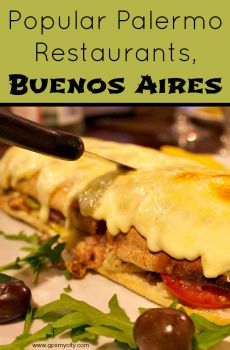
Popular Palermo Restaurants, Buenos Aires
Although many visitors tend to think that Argentina is a meat and potatoes country, the rich cultural heritage from Italy, Spain, Portugal, and other European countries provide a veritable smorgasboard of dining options. Palermo is the barrio in Buenos Aires often referred to as 'The Restaurant...
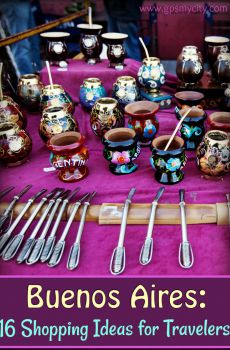
Buenos Aires: 16 Shopping Ideas for Travelers
Other than a cool place to be and a dream destination for many adventure-minded folk, Buenos Aires is a great culture hub where one can experience first-hand all that Argentina has to offer - great football, terrific wine, killer steaks, and much much more. This guide is to help you steer yourself...
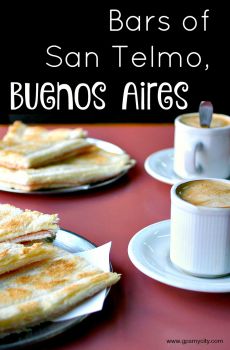
Top 5 Bars in San Telmo, Buenos Aires
With its cobbled streets, colonial era buildings and vibrant music and art scene, San Telmo is a great place to soak up the eclectic nature of Buenos Aires’ nightlife. The area boasts dozens of bars and cafes, with some of the city’s oldest lying next to the more modern. Indeed, San Telmo...
Top 7 Cafes in Palermo, Buenos Aires
The word "Palermo", believe it or not, may refer not just to Sicily, Italy, but also to Buenos Aires, Argentina. Indeed, this neighborhood (barrio) is largest in the city and is trendy and bohemian, renowned for its boutique shopping, cafes, restaurants, bars, and nightclubs. Oftentimes,...
The Most Popular Cities
/ view all