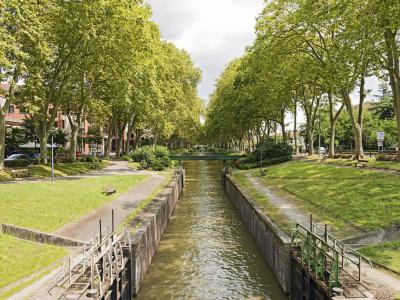


Canal de Brienne, Toulouse
Canal de Brienne, also known as the Canal de Saint-Pierre, is a historic waterway located in the heart of Toulouse, within the Midi-Pyrénées region of France. This canal serves as a crucial connector, linking the Garonne River with both the Canal du Midi and the Canal de Garonne. It extends over a relatively short distance of 1,560 meters (approximately 0.97 miles) from Bazacle on the Garonne to its terminal basin at the junction with the Canal du Midi, near the notable Ponts Jumeaux or "twin bridges."
The canal features two locks, with the Ecluse Saint-Pierre opening directly onto the Garonne, while the lock closer to the Canal du Midi typically remains open. This arrangement facilitates navigation and water management between the interconnected waterways.
Inaugurated on April 14, 1776, the Canal de Brienne was initially designed to transport water from the Garonne to the Canal latéral à la Garonne and to enable a navigable route to the port de la Daurade, which is centrally located on the Garonne in Toulouse. This strategic function highlights the canal's importance in supporting both the local infrastructure and the regional economy during its time.
The canal's name pays homage to Etienne Charles de Loménie de Brienne, who was the Archbishop of Toulouse from 1727 to 1794. His contributions to the region's development during the Enlightenment period are memorialized through this canal, marking a significant chapter in the architectural and cultural heritage of Toulouse.
The canal features two locks, with the Ecluse Saint-Pierre opening directly onto the Garonne, while the lock closer to the Canal du Midi typically remains open. This arrangement facilitates navigation and water management between the interconnected waterways.
Inaugurated on April 14, 1776, the Canal de Brienne was initially designed to transport water from the Garonne to the Canal latéral à la Garonne and to enable a navigable route to the port de la Daurade, which is centrally located on the Garonne in Toulouse. This strategic function highlights the canal's importance in supporting both the local infrastructure and the regional economy during its time.
The canal's name pays homage to Etienne Charles de Loménie de Brienne, who was the Archbishop of Toulouse from 1727 to 1794. His contributions to the region's development during the Enlightenment period are memorialized through this canal, marking a significant chapter in the architectural and cultural heritage of Toulouse.
Want to visit this sight? Check out these Self-Guided Walking Tours in Toulouse. Alternatively, you can download the mobile app "GPSmyCity: Walks in 1K+ Cities" from Apple App Store or Google Play Store. The app turns your mobile device to a personal tour guide and it works offline, so no data plan is needed when traveling abroad.
Download The GPSmyCity App



Canal de Brienne on Map
Sight Name: Canal de Brienne
Sight Location: Toulouse, France (See walking tours in Toulouse)
Sight Type: Attraction/Landmark
Sight Location: Toulouse, France (See walking tours in Toulouse)
Sight Type: Attraction/Landmark
Nearby Sights

Walking Tours in Toulouse, France

Create Your Own Walk in Toulouse
Creating your own self-guided walk in Toulouse is easy and fun. Choose the city attractions that you want to see and a walk route map will be created just for you. You can even set your hotel as the start point of the walk.
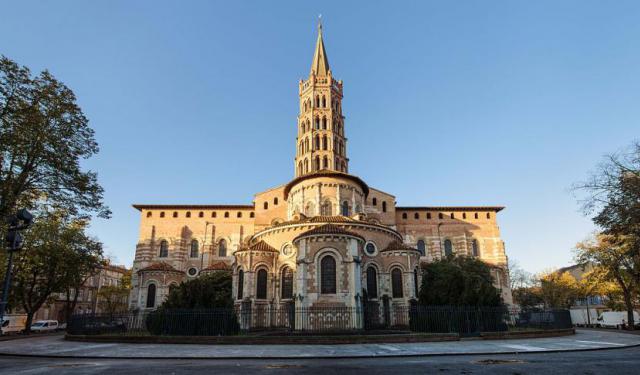
Historical Churches Tour
Toulouse's historical center is full of architectural marvels, many of which are churches. The variety of basilicas, cathedrals, and cloisters built in the city throughout the 11th-19th centuries is complemented by the richness of styles serving as a testament to both faith and craftsmanship.
The 12th-century Basilica of Saint Sernin is a masterpiece of Romanesque design. It's known... view more
Tour Duration: 2 Hour(s)
Travel Distance: 3.2 Km or 2 Miles
The 12th-century Basilica of Saint Sernin is a masterpiece of Romanesque design. It's known... view more
Tour Duration: 2 Hour(s)
Travel Distance: 3.2 Km or 2 Miles
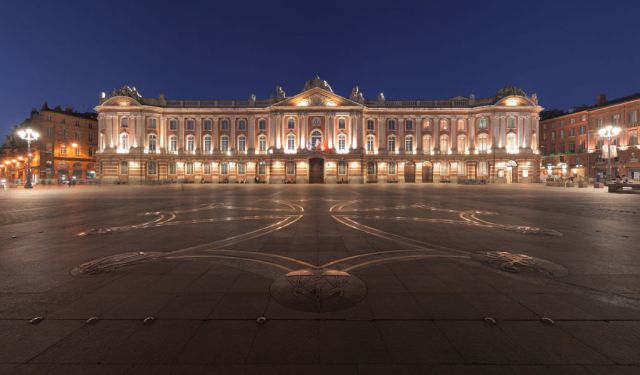
Architectural Jewels of Toulouse
It doesn't take an architectural expert to appreciate the beauty of Toulouse's historic buildings. Walking the city's streets one can't help admiring the galore of ancient architecture which has earned Toulouse, since as early as the 16th century, the title of "the most beautiful city in France".
Once a powerful provincial capital, Toulouse utilized its prosperity,... view more
Tour Duration: 2 Hour(s)
Travel Distance: 3.8 Km or 2.4 Miles
Once a powerful provincial capital, Toulouse utilized its prosperity,... view more
Tour Duration: 2 Hour(s)
Travel Distance: 3.8 Km or 2.4 Miles
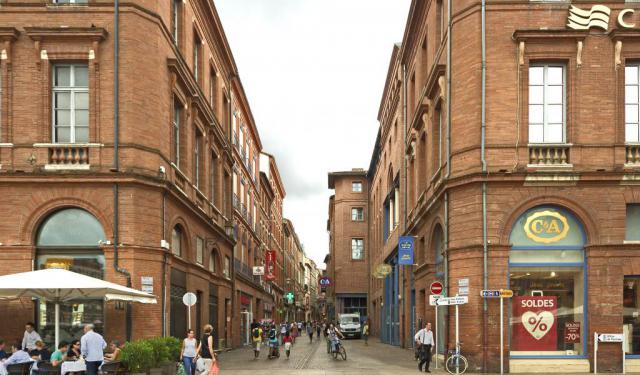
Toulouse Markets and Shopping Streets
Like many other cities in France and Southern France in particular, Toulouse boasts a delightful array of shopping areas. At Galeries Lafayette, a renowned department store, you can find exclusive French items for sale - no problem; however, to discover some truly great bargains - from organic vegetables to antiques, - a visit to Toulouse's street markets is a must.
One of the most iconic... view more
Tour Duration: 1 Hour(s)
Travel Distance: 1.2 Km or 0.7 Miles
One of the most iconic... view more
Tour Duration: 1 Hour(s)
Travel Distance: 1.2 Km or 0.7 Miles
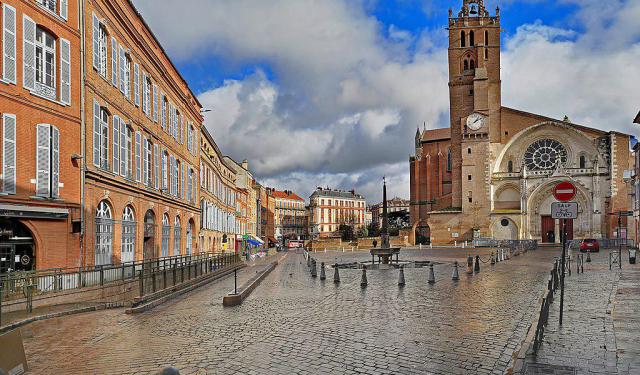
Toulouse Historic Old Town Walking Tour
Known affectionately as "The Pink City" (La Ville Rose) due to the terracotta bricks used in many of its buildings, the capital of the Occitania region of France - Toulouse - offers a blend of historical intrigue and modern dynamism. Originally known as Tolosa (the meaning of the name is unknown), it was established as a military outpost by the Romans in the 2nd century BC.
Strategic... view more
Tour Duration: 2 Hour(s)
Travel Distance: 3.1 Km or 1.9 Miles
Strategic... view more
Tour Duration: 2 Hour(s)
Travel Distance: 3.1 Km or 1.9 Miles
Useful Travel Guides for Planning Your Trip
Pub Crawl of Toulouse
There are some really great little pubs in Toulouse. This guide helps you find a few of the local favourites, one pint after the other. Discover good craic at Mulligans and The Killarney; be amazed at what's on tap at Bar l'Ancienne Belgique and Bar La Tireuse; and put the English back in...