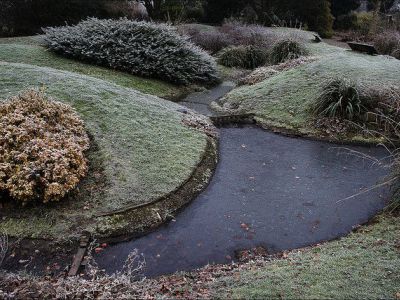


Cannon Hill Park, Birmingham
Cannon Hill Park, located in the south of Birmingham, is the city's most popular park, sprawling over 250 acres (101 hectares) and featuring a variety of areas including formal gardens, conservation zones, woodlands, and sports facilities. Established in 1873, the park offers numerous recreational activities such as boating, fishing, bowling, tennis, putting, and picnicking.
Miss Louisa Ann Ryland donated over 57 acres of Cannon Hill Fields to establish the park, also funding its drainage for public use. J.T. Gibson designed it with two large lakes, ornamental ponds, and a bathing pool, incorporating 35 acres of gardens and plants from Kew Gardens. It opened in September 1873. Subsequent expansions included 7 acres from brewer John Holder in 1897 and an additional 5 acres in 1898 for River Rea adjustments.
Cannon Hill Park features several notable memorials and historic structures. A key highlight is a Grade II* listed granite and bronze memorial by Albert Toft, honoring those who died in the Second Boer War, refurbished in 2012 and located on the park's western edge. The park also houses the Golden Lion Inn, a 16th-century timbered house now used as a cricket pavilion and refreshment room, despite its current state of disrepair. Additionally, the park includes other Grade II listed entities like the bandstand, the Red Carriage Bridge, and Cannon Hill House. A concrete memorial by William Haywood in the park honors Scouts who died in both World Wars.
Modern attractions in Cannon Hill Park include the Birmingham Wildlife Conservation Park, the Mac Theatre, and its proximity to Edgbaston Cricket Ground. A notable feature is the scale model of the Elan Valley Reservoirs in the form of ornamental ponds located in a Japanese garden near the Mac, built in 1962. In 2019, a memorial called Infinite Wave was unveiled by Prince Harry, Duke of Sussex, commemorating the British victims of the 2015 Bardo National Museum and Sousse attacks in Tunisia.
Miss Louisa Ann Ryland donated over 57 acres of Cannon Hill Fields to establish the park, also funding its drainage for public use. J.T. Gibson designed it with two large lakes, ornamental ponds, and a bathing pool, incorporating 35 acres of gardens and plants from Kew Gardens. It opened in September 1873. Subsequent expansions included 7 acres from brewer John Holder in 1897 and an additional 5 acres in 1898 for River Rea adjustments.
Cannon Hill Park features several notable memorials and historic structures. A key highlight is a Grade II* listed granite and bronze memorial by Albert Toft, honoring those who died in the Second Boer War, refurbished in 2012 and located on the park's western edge. The park also houses the Golden Lion Inn, a 16th-century timbered house now used as a cricket pavilion and refreshment room, despite its current state of disrepair. Additionally, the park includes other Grade II listed entities like the bandstand, the Red Carriage Bridge, and Cannon Hill House. A concrete memorial by William Haywood in the park honors Scouts who died in both World Wars.
Modern attractions in Cannon Hill Park include the Birmingham Wildlife Conservation Park, the Mac Theatre, and its proximity to Edgbaston Cricket Ground. A notable feature is the scale model of the Elan Valley Reservoirs in the form of ornamental ponds located in a Japanese garden near the Mac, built in 1962. In 2019, a memorial called Infinite Wave was unveiled by Prince Harry, Duke of Sussex, commemorating the British victims of the 2015 Bardo National Museum and Sousse attacks in Tunisia.
Want to visit this sight? Check out these Self-Guided Walking Tours in Birmingham. Alternatively, you can download the mobile app "GPSmyCity: Walks in 1K+ Cities" from Apple App Store or Google Play Store. The app turns your mobile device to a personal tour guide and it works offline, so no data plan is needed when traveling abroad.
Download The GPSmyCity App



Cannon Hill Park on Map
Sight Name: Cannon Hill Park
Sight Location: Birmingham, England (See walking tours in Birmingham)
Sight Type: Attraction/Landmark
Sight Location: Birmingham, England (See walking tours in Birmingham)
Sight Type: Attraction/Landmark
Nearby Sights
Walking Tours in Birmingham, England

Create Your Own Walk in Birmingham
Creating your own self-guided walk in Birmingham is easy and fun. Choose the city attractions that you want to see and a walk route map will be created just for you. You can even set your hotel as the start point of the walk.
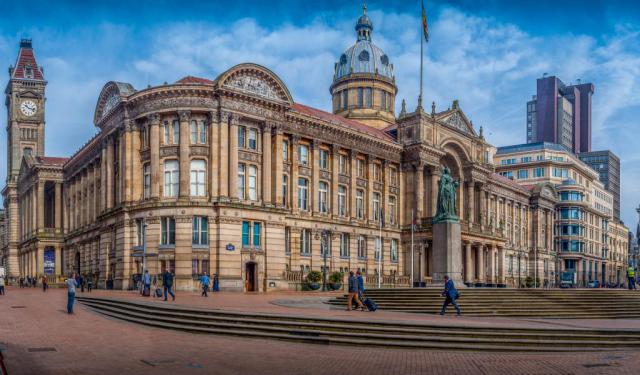
Birmingham Introduction Walking Tour
The name Birmingham derives from the Old English Beormingahām, meaning “the home or settlement of Beorma’s people.” The Beormingas were therefore the people or followers of someone called Beorma. Who exactly was Beorma? No one really knows. He may have been a local leader, an ancestor, or even a legendary figure. What is certain is that a small Anglo-Saxon settlement was established here... view more
Tour Duration: 2 Hours
Travel Distance: 3.2 Km or 2 Miles
Tour Duration: 2 Hours
Travel Distance: 3.2 Km or 2 Miles
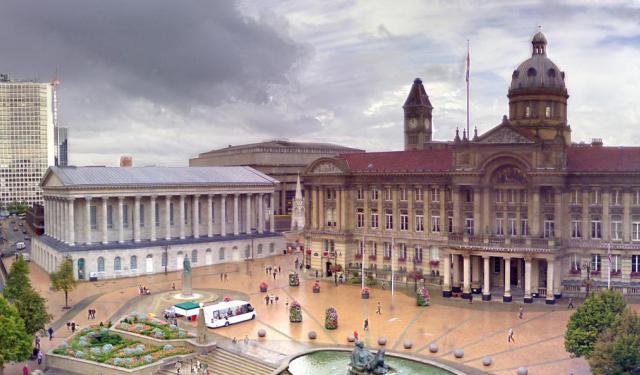
Birmingham Historical Buildings Tour
Although existent as a settlement since the early 7th century AD, Birmingham, UK is a relatively young city that has grown rapidly, as a result of the Industrial Revolution, from the 18th century onward. Thus, the local architecture is overwhelmingly a product of the 18th, 19th, and 20th centuries, with little survived from the earlier days.
Traces of the ancient settlement, dating back to... view more
Tour Duration: 2 Hours
Travel Distance: 4 Km or 2.5 Miles
Traces of the ancient settlement, dating back to... view more
Tour Duration: 2 Hours
Travel Distance: 4 Km or 2.5 Miles
City Walks Overview
