

Casa do Infante (Prince Henry's House), Porto
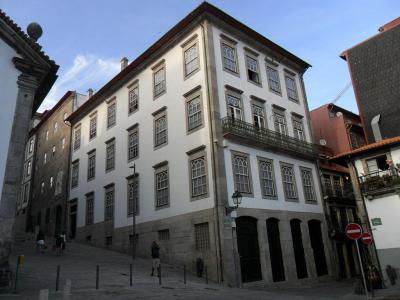
Prince Henry’s House-formally the old customs house, but with a name that sounds far more adventurous-was first built in the 14th century. Reshaped in the 1600s, it once handled the city’s trade, minted its coins, and kept a close eye on everything moving along the Douro. According to local tradition, it also happens to be the birthplace of Henry the Navigator in 1394-so yes, this modest-looking building has a surprisingly impressive track record.
Its story began in 1325, when a royal decree ordered a customs house to rise here, right over the remains of a Roman villa. By 1327, it was already up and running. A few decades later, tensions between King Afonso IV and the Bishop of Porto over river taxes led to the construction of a new, more imposing medieval complex. Positioned right by the water, the building pulled quadruple duty: customs office, mint, warehouse, and, for good measure, living quarters for staff.
Architecturally, it’s less about symmetry and more about layers. Four interconnected spaces unfold under different ceiling styles, while the façade stacks four levels of windows above a grand arched entrance marked with the royal coat of arms and a 1677 inscription. Inside, a central courtyard links the structure together, with arcades dividing the main hall into three naves and a staircase threading its way upward. At the back, tall windows flood the stone floors with light, tying the various sections into one continuous, slightly labyrinthine whole.
Over time, each new use left its mark, turning the building into a patchwork of styles rather than a single, clean statement. More recently, archaeology took action and went even deeper-literally-uncovering Roman foundations and mosaics now displayed on-site. Today, the space functions as a compact museum, where interactive exhibits trace Porto’s evolution from Roman outpost to maritime powerhouse.
It’s not a sprawling attraction, and that’s part of the appeal. You get history without the marathon, context without the overload-and a rare chance to stand in a place where trade, power, and exploration once quietly intersected.
Its story began in 1325, when a royal decree ordered a customs house to rise here, right over the remains of a Roman villa. By 1327, it was already up and running. A few decades later, tensions between King Afonso IV and the Bishop of Porto over river taxes led to the construction of a new, more imposing medieval complex. Positioned right by the water, the building pulled quadruple duty: customs office, mint, warehouse, and, for good measure, living quarters for staff.
Architecturally, it’s less about symmetry and more about layers. Four interconnected spaces unfold under different ceiling styles, while the façade stacks four levels of windows above a grand arched entrance marked with the royal coat of arms and a 1677 inscription. Inside, a central courtyard links the structure together, with arcades dividing the main hall into three naves and a staircase threading its way upward. At the back, tall windows flood the stone floors with light, tying the various sections into one continuous, slightly labyrinthine whole.
Over time, each new use left its mark, turning the building into a patchwork of styles rather than a single, clean statement. More recently, archaeology took action and went even deeper-literally-uncovering Roman foundations and mosaics now displayed on-site. Today, the space functions as a compact museum, where interactive exhibits trace Porto’s evolution from Roman outpost to maritime powerhouse.
It’s not a sprawling attraction, and that’s part of the appeal. You get history without the marathon, context without the overload-and a rare chance to stand in a place where trade, power, and exploration once quietly intersected.
Want to visit this sight? Check out these Self-Guided Walking Tours in Porto. Alternatively, you can download the mobile app "GPSmyCity: Walks in 1K+ Cities" from Apple App Store or Google Play Store. The app turns your mobile device to a personal tour guide and it works offline, so no data plan is needed when traveling abroad.
Download The GPSmyCity App



Casa do Infante (Prince Henry's House) on Map
Sight Name: Casa do Infante (Prince Henry's House)
Sight Location: Porto, Portugal (See walking tours in Porto)
Sight Type: Attraction/Landmark
Guide(s) Containing This Sight:
Sight Location: Porto, Portugal (See walking tours in Porto)
Sight Type: Attraction/Landmark
Guide(s) Containing This Sight:
Nearby Sights
Walking Tours in Porto, Portugal

Create Your Own Walk in Porto
Creating your own self-guided walk in Porto is easy and fun. Choose the city attractions that you want to see and a walk route map will be created just for you. You can even set your hotel as the start point of the walk.
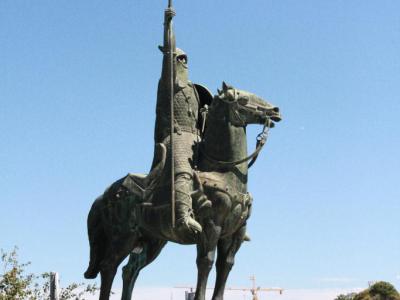
Porto's Monuments and Statues
In general, just like any other European nation, sunny Portugal is rich in history and matching love of monuments. This is more so evident in the country's second largest city of Porto, dotted with statues and sculptures of various sort, decorating the gardens, sidewalks, squares and various corners. Each of them has its own story; some are quite old, while others are not so much and rather... view more
Tour Duration: 1 Hour(s)
Travel Distance: 2.1 Km or 1.3 Miles
Tour Duration: 1 Hour(s)
Travel Distance: 2.1 Km or 1.3 Miles
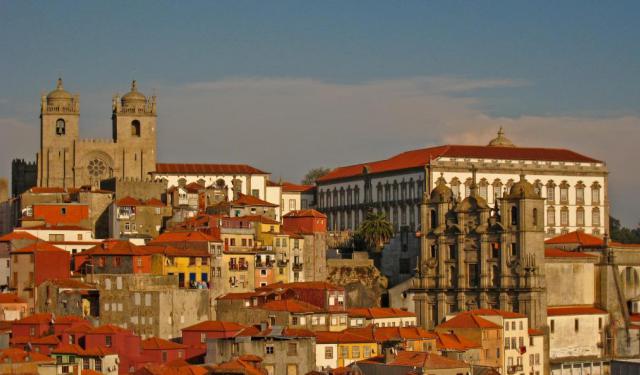
Porto Historic City Center Walking Tour
Set along the Douro River in northern Portugal, Porto is one of those places where history, trade, and identity overlap at every turn. Even the name carries weight. Back in Roman times, this was Portus Cale, meaning “the port of Cale” (in which Cale refers to today's Galicia region). Over time, the name shifted to Portucale, and from there… the term “Portugal” was born. So, yes,... view more
Tour Duration: 3 Hour(s)
Travel Distance: 4.0 Km or 2.5 Miles
Tour Duration: 3 Hour(s)
Travel Distance: 4.0 Km or 2.5 Miles
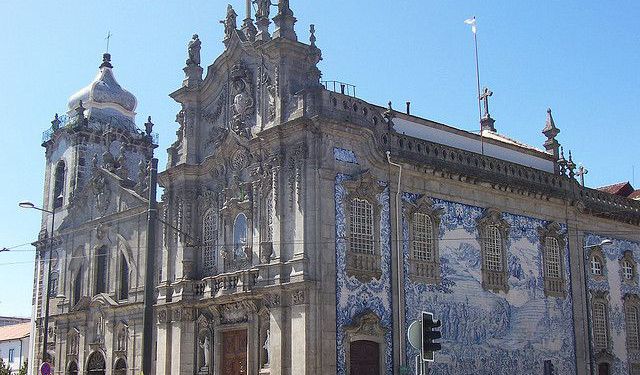
Historical Churches
Portugal is one of the oldest countries in Europe and is deeply rooted in Christianity, notably Catholicism. The latter explains the abundance of historic chapels, churches, and monasteries in the country. Porto, a city with a rich historical and cultural heritage, boasts several old churches of its own. Remarkable architectural gems, they reflect the city's profound religious tradition.
... view more
Tour Duration: 2 Hour(s)
Travel Distance: 3.9 Km or 2.4 Miles
... view more
Tour Duration: 2 Hour(s)
Travel Distance: 3.9 Km or 2.4 Miles
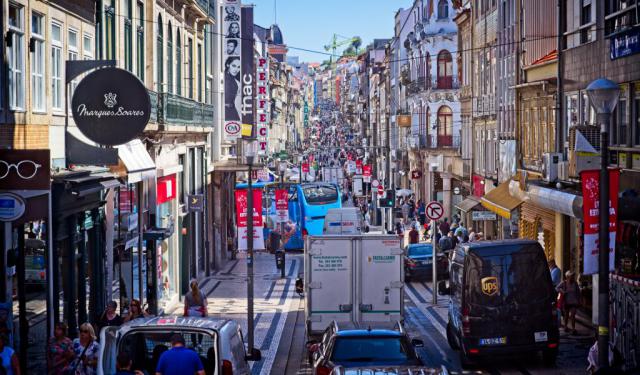
Shopping and Food Tour
Porto may be famous for its centuries-old streets and tiled façades, but it also knows how to tempt you with a shopping bag in one hand and a snack in the other. This is a city where old-world charm and modern appetite strike a comfortable deal-good news whether you're hunting for bargains, chasing flavors, or quietly justifying that “one last purchase.”
You won’t have to look far.... view more
Tour Duration: 1 Hour(s)
Travel Distance: 1.6 Km or 1 Miles
You won’t have to look far.... view more
Tour Duration: 1 Hour(s)
Travel Distance: 1.6 Km or 1 Miles