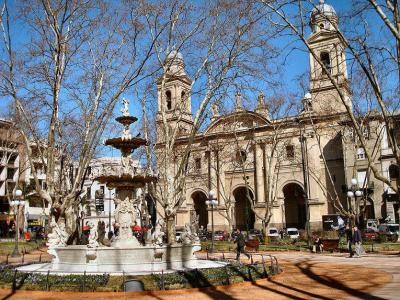


Catedral de Montevideo (Metropolitan Cathedral), Montevideo (must see)
The Metropolitan Cathedral of Montevideo is the principal Catholic church of the city and the seat of the Archdiocese of Montevideo. Standing on Constitution Square, the site has been used for religious worship since the Spanish colonial period, with the first brick church on this location dating from 1740.
Architecturally, the cathedral is a restrained example of Colonial Neoclassicism, reflecting late-colonial tastes rather than high European academic neoclassicism. The project is traditionally attributed to Spanish architect Tomás Toribio, though, as with many colonial works, it evolved through multiple phases and hands. The main facade was completed in 1860, giving the building its present external appearance.
The interior follows a basilica plan, with a main altar, several side chapels, memorials, tombs, patterned tiled floors, and hanging chandeliers that contribute to its sober, dignified atmosphere. Along the right-hand side of the nave, in a dedicated side chapel, stands a image of Our Lady of the Thirty-Three, Patroness of Uruguay. The title refers to the Thirty-Three Orientals who led the independence movement in 1825.
The cathedral also serves as a burial place for a number of notable figures from Uruguay’s history, including clergy, military leaders, and political personalities, reinforcing its role as both a religious and national monument. The building inspired the Paraguayan guitarist and composer Agustín Pío Barrios, who composed the work “La Catedral” after visiting Montevideo.
The cathedral houses artworks by prominent Uruguayan artists, including José Belloni and Juan Manuel Blanes, among others. Its bicentennial was celebrated in 2004, marking two hundred years since its consecration and underscoring its enduring place in Montevideo’s religious, cultural, and historical landscape.
Architecturally, the cathedral is a restrained example of Colonial Neoclassicism, reflecting late-colonial tastes rather than high European academic neoclassicism. The project is traditionally attributed to Spanish architect Tomás Toribio, though, as with many colonial works, it evolved through multiple phases and hands. The main facade was completed in 1860, giving the building its present external appearance.
The interior follows a basilica plan, with a main altar, several side chapels, memorials, tombs, patterned tiled floors, and hanging chandeliers that contribute to its sober, dignified atmosphere. Along the right-hand side of the nave, in a dedicated side chapel, stands a image of Our Lady of the Thirty-Three, Patroness of Uruguay. The title refers to the Thirty-Three Orientals who led the independence movement in 1825.
The cathedral also serves as a burial place for a number of notable figures from Uruguay’s history, including clergy, military leaders, and political personalities, reinforcing its role as both a religious and national monument. The building inspired the Paraguayan guitarist and composer Agustín Pío Barrios, who composed the work “La Catedral” after visiting Montevideo.
The cathedral houses artworks by prominent Uruguayan artists, including José Belloni and Juan Manuel Blanes, among others. Its bicentennial was celebrated in 2004, marking two hundred years since its consecration and underscoring its enduring place in Montevideo’s religious, cultural, and historical landscape.
Want to visit this sight? Check out these Self-Guided Walking Tours in Montevideo. Alternatively, you can download the mobile app "GPSmyCity: Walks in 1K+ Cities" from Apple App Store or Google Play Store. The app turns your mobile device to a personal tour guide and it works offline, so no data plan is needed when traveling abroad.
Download The GPSmyCity App



Catedral de Montevideo (Metropolitan Cathedral) on Map
Sight Name: Catedral de Montevideo (Metropolitan Cathedral)
Sight Location: Montevideo, Uruguay (See walking tours in Montevideo)
Sight Type: Religious
Guide(s) Containing This Sight:
Sight Location: Montevideo, Uruguay (See walking tours in Montevideo)
Sight Type: Religious
Guide(s) Containing This Sight:
Nearby Sights

Walking Tours in Montevideo, Uruguay

Create Your Own Walk in Montevideo
Creating your own self-guided walk in Montevideo is easy and fun. Choose the city attractions that you want to see and a walk route map will be created just for you. You can even set your hotel as the start point of the walk.
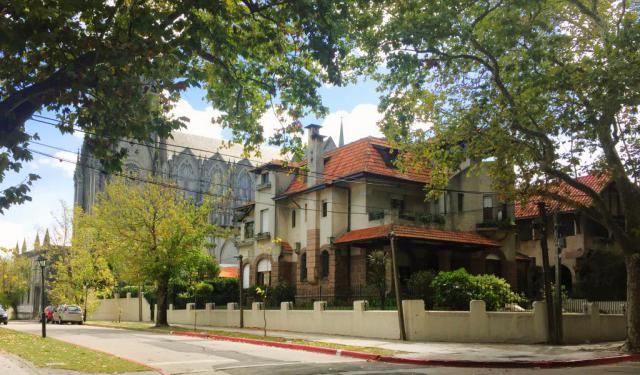
Prado District Walking Tour
The Prado is one of Montevideo’s oldest and most historically layered districts, shaped by a long transition from rural outskirts to a residential and cultural area closely linked to the city’s elite and intellectual life. The name Prado comes from the Spanish word for “meadow” or “pasture”, reflecting the area’s original landscape: open grasslands along the Miguelete Stream.
... view more
Tour Duration: 2 Hour(s)
Travel Distance: 3.6 Km or 2.2 Miles
... view more
Tour Duration: 2 Hour(s)
Travel Distance: 3.6 Km or 2.2 Miles
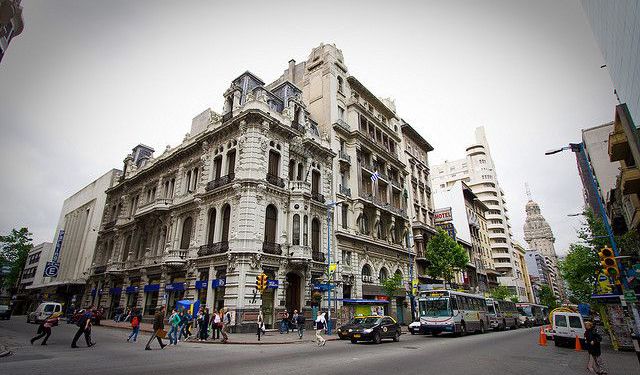
Montevideo Old Town Walking Tour
In Charles Darwin's journals, who visited Montevideo in the 1830s during the voyage of the Beagle, he observed that the city felt like “a town living in a state of perpetual expectation”, shaped by sieges, trade, and uncertainty.
Montevideo is the capital and largest city of Uruguay, shaped by its position on the northern bank of the River Plate and by centuries of rivalry between... view more
Tour Duration: 2 Hour(s)
Travel Distance: 2.5 Km or 1.6 Miles
Montevideo is the capital and largest city of Uruguay, shaped by its position on the northern bank of the River Plate and by centuries of rivalry between... view more
Tour Duration: 2 Hour(s)
Travel Distance: 2.5 Km or 1.6 Miles