

Cementerio Central (Central Cemetery), Montevideo
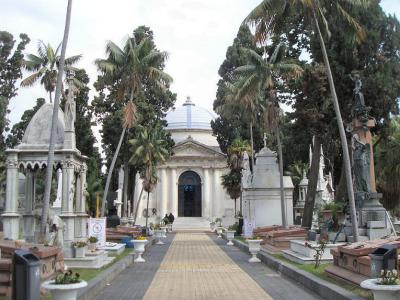
The Central Cemetery (Cementerio Central), situated in Montevideo is a significant historical and cultural landmark, recognized as one of the country's principal cemeteries. Since its establishment in 1835, it has become the final resting place for many of Uruguay's most distinguished individuals, which has contributed to its status as one of the most visited cemeteries in Uruguay.
Located in the southern part of Montevideo, the cemetery was originally founded on the outskirts of the city. Its establishment, far from the urban center, was a precautionary measure against potential epidemics-a common concern of the era. However, due to the rapid expansion of Montevideo throughout the 20th century, the Cementerio Central now finds itself enveloped by the city.
The cemetery's layout was commissioned by then-president Manuel Oribe, who entrusted the design to architect Carlos Zucchi. Notably, its striking entrance was designed by Bernardo Poncini, a Ticinese architect and sculptor, after the Uruguayan Civil War. This entrance became a symbol of the cemetery's architectural and artistic significance.
The Central Cemetery became increasingly popular after 1858, serving as one of the first secular cemeteries in Uruguay at a time when the Catholic Church predominantly managed burials. This marked a significant shift in burial practices within the country. The cemetery is renowned not only for its historical relevance but also for its artistic heritage. It houses various sculptures and mausoleums crafted by notable artists like José Belloni and José Luis Zorrilla de San Martín, making it a place of interest not only for its historical and cultural value but also for its artistic contributions.
Located in the southern part of Montevideo, the cemetery was originally founded on the outskirts of the city. Its establishment, far from the urban center, was a precautionary measure against potential epidemics-a common concern of the era. However, due to the rapid expansion of Montevideo throughout the 20th century, the Cementerio Central now finds itself enveloped by the city.
The cemetery's layout was commissioned by then-president Manuel Oribe, who entrusted the design to architect Carlos Zucchi. Notably, its striking entrance was designed by Bernardo Poncini, a Ticinese architect and sculptor, after the Uruguayan Civil War. This entrance became a symbol of the cemetery's architectural and artistic significance.
The Central Cemetery became increasingly popular after 1858, serving as one of the first secular cemeteries in Uruguay at a time when the Catholic Church predominantly managed burials. This marked a significant shift in burial practices within the country. The cemetery is renowned not only for its historical relevance but also for its artistic heritage. It houses various sculptures and mausoleums crafted by notable artists like José Belloni and José Luis Zorrilla de San Martín, making it a place of interest not only for its historical and cultural value but also for its artistic contributions.
Want to visit this sight? Check out these Self-Guided Walking Tours in Montevideo. Alternatively, you can download the mobile app "GPSmyCity: Walks in 1K+ Cities" from Apple App Store or Google Play Store. The app turns your mobile device to a personal tour guide and it works offline, so no data plan is needed when traveling abroad.
Download The GPSmyCity App



Cementerio Central (Central Cemetery) on Map
Sight Name: Cementerio Central (Central Cemetery)
Sight Location: Montevideo, Uruguay (See walking tours in Montevideo)
Sight Type: Attraction/Landmark
Sight Location: Montevideo, Uruguay (See walking tours in Montevideo)
Sight Type: Attraction/Landmark
Nearby Sights

Walking Tours in Montevideo, Uruguay

Create Your Own Walk in Montevideo
Creating your own self-guided walk in Montevideo is easy and fun. Choose the city attractions that you want to see and a walk route map will be created just for you. You can even set your hotel as the start point of the walk.
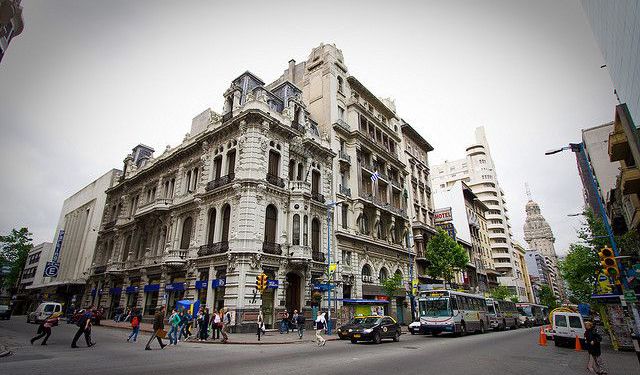
Montevideo Old Town Walking Tour
In Charles Darwin's journals, who visited Montevideo in the 1830s during the voyage of the Beagle, he observed that the city felt like “a town living in a state of perpetual expectation”, shaped by sieges, trade, and uncertainty.
Montevideo is the capital and largest city of Uruguay, shaped by its position on the northern bank of the River Plate and by centuries of rivalry between... view more
Tour Duration: 2 Hours
Travel Distance: 2.5 Km or 1.6 Miles
Montevideo is the capital and largest city of Uruguay, shaped by its position on the northern bank of the River Plate and by centuries of rivalry between... view more
Tour Duration: 2 Hours
Travel Distance: 2.5 Km or 1.6 Miles
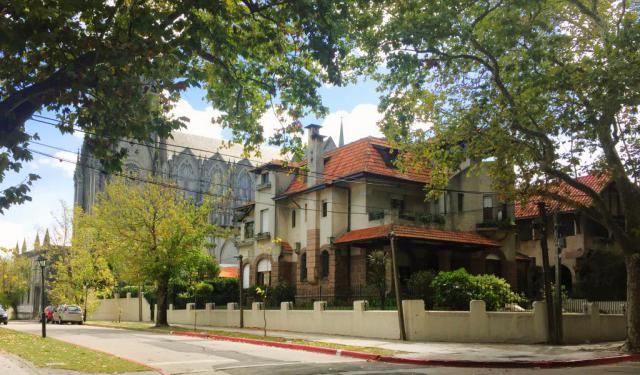
Prado District Walking Tour
The Prado is one of Montevideo’s oldest and most historically layered districts, shaped by a long transition from rural outskirts to a residential and cultural area closely linked to the city’s elite and intellectual life. The name Prado comes from the Spanish word for “meadow” or “pasture”, reflecting the area’s original landscape: open grasslands along the Miguelete Stream.
... view more
Tour Duration: 2 Hours
Travel Distance: 3.6 Km or 2.2 Miles
... view more
Tour Duration: 2 Hours
Travel Distance: 3.6 Km or 2.2 Miles