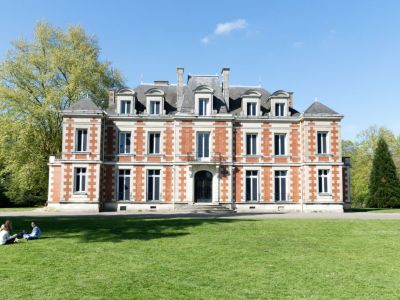


Chateau de la Gaudiniere (Gaudiniere Castle), Nantes
Located in the northern part of Nantes, Gaudinière Castle stands at the heart of a park that has evolved from a rural estate into an urban green space open to the public. The property’s transformation mirrors the city's broader urban development. Originally a modest 16th-century estate known as “Godinière,” it was home to the Rouvres family and changed hands several times, eventually becoming the elegant Second Empire residence visible today.
By the late 18th century, the estate was owned by Louis Chaurand, a wealthy Nantes shipowner, and his wife Thérèse Honorée Libault, who acquired it in 1791. The property at that time included a house, chapel, orangery, menageries, orchards, and wooded grounds. Throughout the 19th century, it passed through the hands of several prominent families, including the Perrien and Goüin families, who enhanced it with features such as an English garden and exotic plant species like magnolias and bald cypress, reflecting the period's enthusiasm for botanical experimentation.
A significant transformation occurred under banker Jules Brousset, who acquired the estate in 1857 and commissioned landscape architect Provost to redesign the grounds. Between 1864 and 1873, the current château was built using red brick and white tuffeau stone, typical of the architectural style favored by the Nantes bourgeoisie. The park grew to 17 hectares by 1881 and still features notable specimens like a giant sequoia planted in 1864. Today, Gaudinière Castle serves as a historical and horticultural landmark within Nantes’ urban landscape.
By the late 18th century, the estate was owned by Louis Chaurand, a wealthy Nantes shipowner, and his wife Thérèse Honorée Libault, who acquired it in 1791. The property at that time included a house, chapel, orangery, menageries, orchards, and wooded grounds. Throughout the 19th century, it passed through the hands of several prominent families, including the Perrien and Goüin families, who enhanced it with features such as an English garden and exotic plant species like magnolias and bald cypress, reflecting the period's enthusiasm for botanical experimentation.
A significant transformation occurred under banker Jules Brousset, who acquired the estate in 1857 and commissioned landscape architect Provost to redesign the grounds. Between 1864 and 1873, the current château was built using red brick and white tuffeau stone, typical of the architectural style favored by the Nantes bourgeoisie. The park grew to 17 hectares by 1881 and still features notable specimens like a giant sequoia planted in 1864. Today, Gaudinière Castle serves as a historical and horticultural landmark within Nantes’ urban landscape.
Want to visit this sight? Check out these Self-Guided Walking Tours in Nantes. Alternatively, you can download the mobile app "GPSmyCity: Walks in 1K+ Cities" from Apple App Store or Google Play Store. The app turns your mobile device to a personal tour guide and it works offline, so no data plan is needed when traveling abroad.
Download The GPSmyCity App



Chateau de la Gaudiniere (Gaudiniere Castle) on Map
Sight Name: Chateau de la Gaudiniere (Gaudiniere Castle)
Sight Location: Nantes, France (See walking tours in Nantes)
Sight Type: Attraction/Landmark
Sight Location: Nantes, France (See walking tours in Nantes)
Sight Type: Attraction/Landmark
Nearby Sights




Walking Tours in Nantes, France

Create Your Own Walk in Nantes
Creating your own self-guided walk in Nantes is easy and fun. Choose the city attractions that you want to see and a walk route map will be created just for you. You can even set your hotel as the start point of the walk.
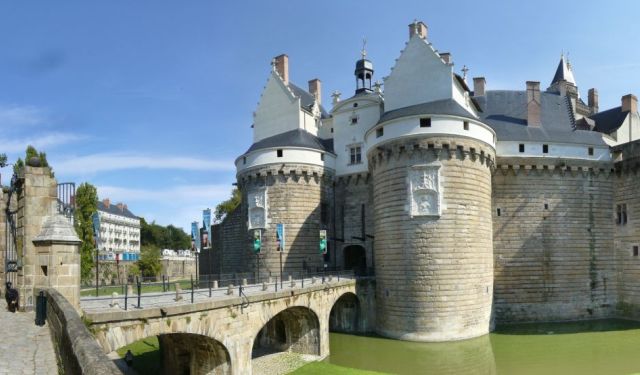
Nantes Introduction Walking Tour
Dubbed “The Sleeping Beauty of France,” Nantes is a city that found rebirth through culture and creativity. Straddling the Loire River in western France, its history stretches across two millennia. The city's name comes from the Namnetes, a Celtic tribe that made their home here before the Romans arrived. The latter incorporated the settlement into their empire in the 1st century BC,... view more
Tour Duration: 2 Hour(s)
Travel Distance: 2.1 Km or 1.3 Miles
Tour Duration: 2 Hour(s)
Travel Distance: 2.1 Km or 1.3 Miles