

Chiesa Cattolica Parrocchiale Ss Salvatore, Palermo
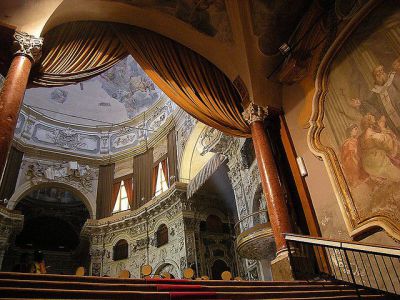
The Church of Most Holy Saviour (Chiesa del Santissimo Salvatore) in Palermo is a notable example of Baroque architecture and bears a rich history tied to the evolving religious and cultural landscape of the region. Located on the Cassaro, now Vittorio Emanuele Street, this church is positioned in the historical Albergaria quarter and has its origins in a Basilian monastery founded in 1072 by the Norman conqueror Robert Guiscard. Initially dedicated to the Saviour under the Eastern Rite, it received royal patronage that persisted through the Hohenstaufen dynasty, including a significant narrative involving Constance, Queen of Sicily, who was confined here due to ominous prophecies regarding her marriage.
Transitioning to the Latin Rite in 1501, the site underwent considerable transformations, culminating in the erection of a new church in 1528, which was reoriented from the original structure. The church's current layout, conceived in 1682 by architect Paolo Amato with assistance from Jesuit Angelo Italia, was inaugurated in 1700 and consecrated in 1704. The 18th century saw extensive interior embellishments, although a 1726 earthquake necessitated significant structural reinforcements and restoration, especially to its large dome and main altar.
The interior, severely damaged during WWII Allied bombings, showcases a blend of restoration and preservation of its historical elements. It features precious Sicilian polychrome marbles and stuccoes, enhancing its rich Baroque character. The church houses three chapels, with notable artworks such as the dome fresco by Filippo Tancredi, the entrance staircase frescoes by Vito D'Anna, and a significant marble group in the apse. A 1725 painting by Cedri, depicting the Coronation of Santa Rosalia, links the church to local sainthood narratives, emphasizing its deep religious and cultural significance in Palermo.
Transitioning to the Latin Rite in 1501, the site underwent considerable transformations, culminating in the erection of a new church in 1528, which was reoriented from the original structure. The church's current layout, conceived in 1682 by architect Paolo Amato with assistance from Jesuit Angelo Italia, was inaugurated in 1700 and consecrated in 1704. The 18th century saw extensive interior embellishments, although a 1726 earthquake necessitated significant structural reinforcements and restoration, especially to its large dome and main altar.
The interior, severely damaged during WWII Allied bombings, showcases a blend of restoration and preservation of its historical elements. It features precious Sicilian polychrome marbles and stuccoes, enhancing its rich Baroque character. The church houses three chapels, with notable artworks such as the dome fresco by Filippo Tancredi, the entrance staircase frescoes by Vito D'Anna, and a significant marble group in the apse. A 1725 painting by Cedri, depicting the Coronation of Santa Rosalia, links the church to local sainthood narratives, emphasizing its deep religious and cultural significance in Palermo.
Want to visit this sight? Check out these Self-Guided Walking Tours in Palermo. Alternatively, you can download the mobile app "GPSmyCity: Walks in 1K+ Cities" from Apple App Store or Google Play Store. The app turns your mobile device to a personal tour guide and it works offline, so no data plan is needed when traveling abroad.
Download The GPSmyCity App



Chiesa Cattolica Parrocchiale Ss Salvatore on Map
Sight Name: Chiesa Cattolica Parrocchiale Ss Salvatore
Sight Location: Palermo, Italy (See walking tours in Palermo)
Sight Type: Religious
Sight Location: Palermo, Italy (See walking tours in Palermo)
Sight Type: Religious
Nearby Sights
Walking Tours in Palermo, Italy

Create Your Own Walk in Palermo
Creating your own self-guided walk in Palermo is easy and fun. Choose the city attractions that you want to see and a walk route map will be created just for you. You can even set your hotel as the start point of the walk.
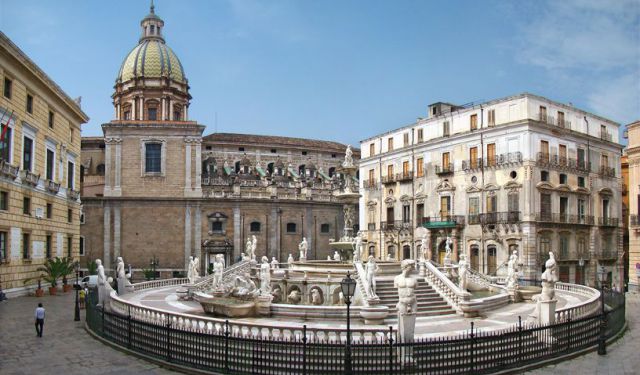
A Walk In Palermo's Historic Yet Lively City Center
The German polymath Johann Wolfgang von Goethe, who visited Sicily in 1787, wrote: “To have seen Italy without having seen Sicily is not to have seen Italy at all, for Sicily is the key to everything.”, Palermo being his main reference point.
Palermo’s story begins with a trading post established by the ancient Phoenician civilization around the 8th century BCE. The Phoenicians called it... view more
Tour Duration: 2 Hours
Travel Distance: 3.1 Km or 1.9 Miles
Palermo’s story begins with a trading post established by the ancient Phoenician civilization around the 8th century BCE. The Phoenicians called it... view more
Tour Duration: 2 Hours
Travel Distance: 3.1 Km or 1.9 Miles
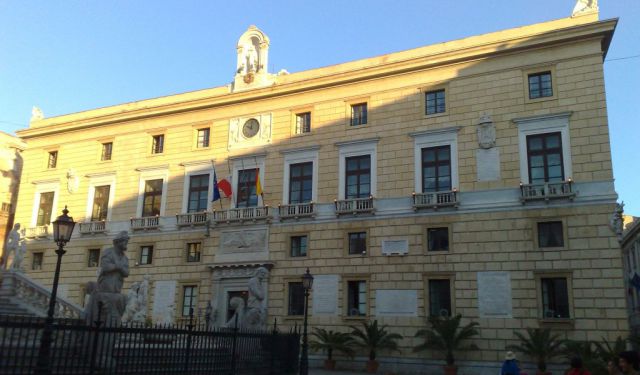
Palaces of Palermo
For centuries, Sicilian capital Palermo has been a focal point for the construction of noble dwellings and palaces. The latter were and still are a fine manifestation of the historical life in the region. They are a few hundred of them still in place, ranging chronologically from the medieval period to the first decades of the 20th century, and comprising an impressive collection of architectural... view more
Tour Duration: 1 Hour
Travel Distance: 2.6 Km or 1.6 Miles
Tour Duration: 1 Hour
Travel Distance: 2.6 Km or 1.6 Miles
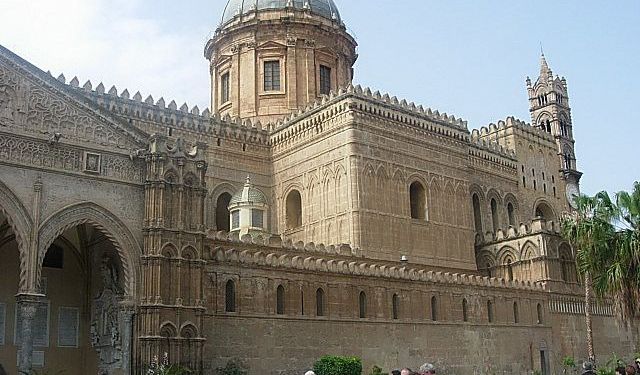
Historical Religious Buildings
Religion has always played an important role in the lives of the Italians - and the Sicilians are no exception. Thus, it is little wonder that the main city of the island, Palermo, boasts a plethora of religious buildings. The collection of historical churches found here ranges from the Arab-Norman-Byzantine to the Medieval, Gothic, Baroque and the Renaissance.
In the course of history, many of... view more
Tour Duration: 2 Hours
Travel Distance: 3.2 Km or 2 Miles
In the course of history, many of... view more
Tour Duration: 2 Hours
Travel Distance: 3.2 Km or 2 Miles
City Walks Overview
