

Chiesa del Gesù (Church of Jesus), Palermo (must see)
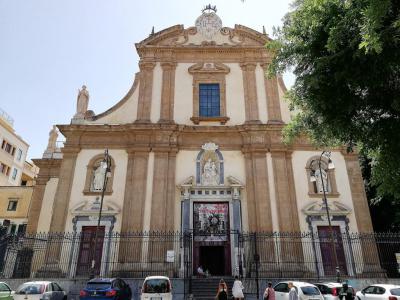
The Church of Jesus, often called Professed House, is one of the most spectacular examples of Sicilian Baroque anywhere in Italy. While its exterior is relatively restrained, the interior is overwhelmingly rich and theatrical.
Approaching the church, the facade presents three portals at ground level. Above them, niches contain statues of Saint Ignatius of Loyola, the Madonna and Child, and Saint Francis Xavier. Inside, the visual impact is immediate. The rebuilt interior is defined by its extensive marble inlay decoration, which covers nearly every structural surface. Walls, pillars, arches, and balustrades are faced with panels of white, red, yellow, and green marble arranged in geometric patterns, floral motifs, and sculptural compositions.
Moving along the nave, the pillars themselves become part of the decorative program. Their marble surfaces are carved with dense reliefs and allegorical figures, interwoven with scrollwork and symbolic motifs typical of Jesuit Baroque decoration. Behind the high altar, in the apse, are some of the most important surviving sculptural works. Here are the large marble reliefs of the Adoration of the Shepherds and the Adoration of the Magi, conceived within the artistic circle of Giacomo Serpotta and executed by Gioacchino Vitagliano.
Much of what visitors see today is the result of careful reconstruction. In 1943, an Allied bombing raid caused the collapse of the dome and destroyed large sections of the church, along with many frescoes and decorative elements. The survival of the marble decoration and apse reliefs is therefore especially significant, preserving key elements of the original program within a reconstructed architectural shell.
As the space opens at the crossing, attention shifts upward toward the dome, which today reflects a postwar reconstruction of the original decorative scheme. The original Baroque dome frescoes were destroyed. However, original frescoes by Filippo Tancredi survive in the upper vaults of the nave, depicting Marian triumphal themes with angels and allegorical figures.
Approaching the church, the facade presents three portals at ground level. Above them, niches contain statues of Saint Ignatius of Loyola, the Madonna and Child, and Saint Francis Xavier. Inside, the visual impact is immediate. The rebuilt interior is defined by its extensive marble inlay decoration, which covers nearly every structural surface. Walls, pillars, arches, and balustrades are faced with panels of white, red, yellow, and green marble arranged in geometric patterns, floral motifs, and sculptural compositions.
Moving along the nave, the pillars themselves become part of the decorative program. Their marble surfaces are carved with dense reliefs and allegorical figures, interwoven with scrollwork and symbolic motifs typical of Jesuit Baroque decoration. Behind the high altar, in the apse, are some of the most important surviving sculptural works. Here are the large marble reliefs of the Adoration of the Shepherds and the Adoration of the Magi, conceived within the artistic circle of Giacomo Serpotta and executed by Gioacchino Vitagliano.
Much of what visitors see today is the result of careful reconstruction. In 1943, an Allied bombing raid caused the collapse of the dome and destroyed large sections of the church, along with many frescoes and decorative elements. The survival of the marble decoration and apse reliefs is therefore especially significant, preserving key elements of the original program within a reconstructed architectural shell.
As the space opens at the crossing, attention shifts upward toward the dome, which today reflects a postwar reconstruction of the original decorative scheme. The original Baroque dome frescoes were destroyed. However, original frescoes by Filippo Tancredi survive in the upper vaults of the nave, depicting Marian triumphal themes with angels and allegorical figures.
Want to visit this sight? Check out these Self-Guided Walking Tours in Palermo. Alternatively, you can download the mobile app "GPSmyCity: Walks in 1K+ Cities" from Apple App Store or Google Play Store. The app turns your mobile device to a personal tour guide and it works offline, so no data plan is needed when traveling abroad.
Download The GPSmyCity App



Chiesa del Gesù (Church of Jesus) on Map
Sight Name: Chiesa del Gesù (Church of Jesus)
Sight Location: Palermo, Italy (See walking tours in Palermo)
Sight Type: Religious
Guide(s) Containing This Sight:
Sight Location: Palermo, Italy (See walking tours in Palermo)
Sight Type: Religious
Guide(s) Containing This Sight:
Nearby Sights
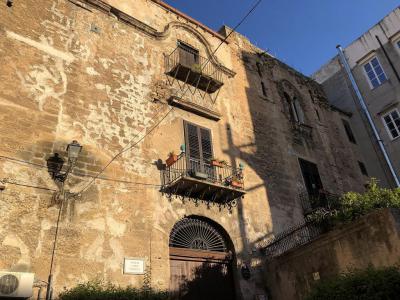
Walking Tours in Palermo, Italy

Create Your Own Walk in Palermo
Creating your own self-guided walk in Palermo is easy and fun. Choose the city attractions that you want to see and a walk route map will be created just for you. You can even set your hotel as the start point of the walk.
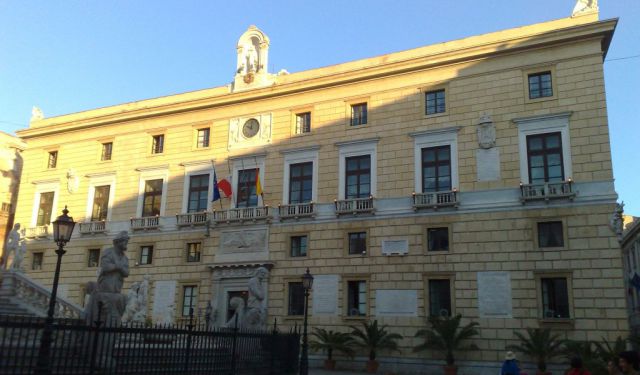
Palaces of Palermo
For centuries, Sicilian capital Palermo has been a focal point for the construction of noble dwellings and palaces. The latter were and still are a fine manifestation of the historical life in the region. They are a few hundred of them still in place, ranging chronologically from the medieval period to the first decades of the 20th century, and comprising an impressive collection of architectural... view more
Tour Duration: 1 Hour(s)
Travel Distance: 2.6 Km or 1.6 Miles
Tour Duration: 1 Hour(s)
Travel Distance: 2.6 Km or 1.6 Miles
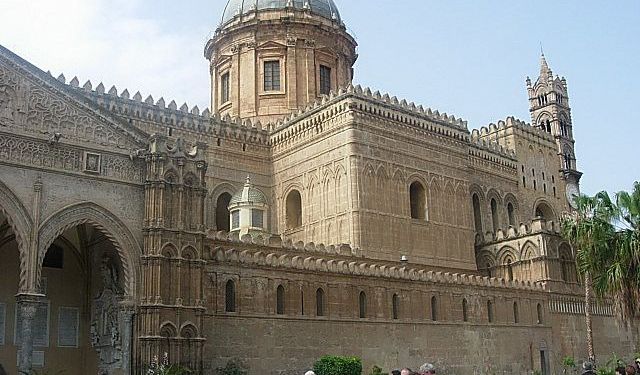
Historical Religious Buildings
Religion has always played an important role in the lives of the Italians – and the Sicilians are no exception. Thus, it is little wonder that the main city of the island, Palermo, boasts a plethora of religious buildings. The collection of historical churches found here ranges from the Arab-Norman-Byzantine to the Medieval, Gothic, Baroque and the Renaissance.
In the course of history, many... view more
Tour Duration: 2 Hour(s)
Travel Distance: 3.2 Km or 2 Miles
In the course of history, many... view more
Tour Duration: 2 Hour(s)
Travel Distance: 3.2 Km or 2 Miles
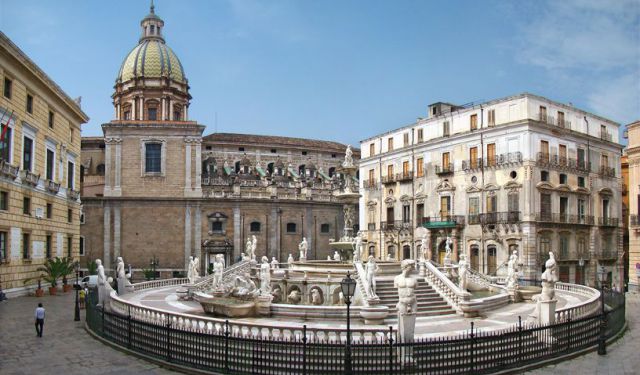
A Walk In Palermo's Historic Yet Lively City Center
The German polymath Johann Wolfgang von Goethe, who visited Sicily in 1787, wrote: “To have seen Italy without having seen Sicily is not to have seen Italy at all, for Sicily is the key to everything.”, Palermo being his main reference point.
Palermo’s story begins with a trading post established by the ancient Phoenician civilization around the 8th century BCE. The Phoenicians called it... view more
Tour Duration: 2 Hour(s)
Travel Distance: 3.1 Km or 1.9 Miles
Palermo’s story begins with a trading post established by the ancient Phoenician civilization around the 8th century BCE. The Phoenicians called it... view more
Tour Duration: 2 Hour(s)
Travel Distance: 3.1 Km or 1.9 Miles