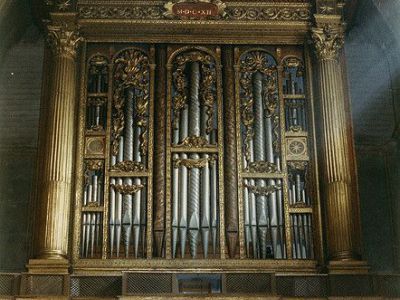


Chiesa di Santa Maria Nuova (Church of Santa Maria Nuova), Perugia
The Church of Santa Maria Nuova, nestled in Perugia's Porta Sole district along Pinturicchio Street (Via Pinturicchio), is a historical gem with roots stretching back to the 13th century. Originally built on the site of a Benedictine monastic complex documented as early as 1285, the church has undergone significant transformations over the centuries, evolving in both form and function.
The original Gothic complex featured a centrally placed church flanked by monastic buildings, with remnants like a pointed arch portal and two arches still visible. Damaged in 1372 during the Citadel of Porta Sole's construction, it was restored after the fortress's destruction in 1375. By 1404, the Silvestrini monks expanded it, adding a three-nave structure, a heptagonal apse, side chapels, and a large sacristy.
In the 15th century, Andrea Fortebraccio’s sponsorship earned the church the name "Nuova." After the 1540 Salt War, Pope Paul III moved the Servite Order to Santa Maria Nuova, bringing artworks and elements from the demolished Santa Maria dei Servi. The convent was expanded with cells, a refectory, a library, and a garden. Renovations in 1568 adapted the church to the Counter-Reformation style, adding Corinthian pillars, a vaulted roof, a double staircase, and a fountain, shaping its present architectural character.
The bell tower, added in 1644, may reflect a design by Galeazzo Alessi. During the Napoleonic campaigns of 1797, many artworks were taken, some never returned, and further pieces were claimed as state property after Italy's unification. Today, the church is part of the Parish of Saint Andrea and Saint Lucia, while the former monastery houses private residences. The renovated Chapter House, accessible via the cloister at 87 Via Pinturicchio, hosts conferences and events.
The interior of Santa Maria Nuova reflects a blend of late Renaissance style with traces of its Gothic origins, such as the heptagonal apse and side chapel layouts. The church retains furniture and fragments of its once vast artistic collection, which includes works transferred by the Servites from their previous church on Colle Landone.
The Church of Santa Maria Nuova stands as a testament to Perugia's rich religious and architectural history, embodying centuries of adaptation and resilience.
The original Gothic complex featured a centrally placed church flanked by monastic buildings, with remnants like a pointed arch portal and two arches still visible. Damaged in 1372 during the Citadel of Porta Sole's construction, it was restored after the fortress's destruction in 1375. By 1404, the Silvestrini monks expanded it, adding a three-nave structure, a heptagonal apse, side chapels, and a large sacristy.
In the 15th century, Andrea Fortebraccio’s sponsorship earned the church the name "Nuova." After the 1540 Salt War, Pope Paul III moved the Servite Order to Santa Maria Nuova, bringing artworks and elements from the demolished Santa Maria dei Servi. The convent was expanded with cells, a refectory, a library, and a garden. Renovations in 1568 adapted the church to the Counter-Reformation style, adding Corinthian pillars, a vaulted roof, a double staircase, and a fountain, shaping its present architectural character.
The bell tower, added in 1644, may reflect a design by Galeazzo Alessi. During the Napoleonic campaigns of 1797, many artworks were taken, some never returned, and further pieces were claimed as state property after Italy's unification. Today, the church is part of the Parish of Saint Andrea and Saint Lucia, while the former monastery houses private residences. The renovated Chapter House, accessible via the cloister at 87 Via Pinturicchio, hosts conferences and events.
The interior of Santa Maria Nuova reflects a blend of late Renaissance style with traces of its Gothic origins, such as the heptagonal apse and side chapel layouts. The church retains furniture and fragments of its once vast artistic collection, which includes works transferred by the Servites from their previous church on Colle Landone.
The Church of Santa Maria Nuova stands as a testament to Perugia's rich religious and architectural history, embodying centuries of adaptation and resilience.
Want to visit this sight? Check out these Self-Guided Walking Tours in Perugia. Alternatively, you can download the mobile app "GPSmyCity: Walks in 1K+ Cities" from Apple App Store or Google Play Store. The app turns your mobile device to a personal tour guide and it works offline, so no data plan is needed when traveling abroad.
Download The GPSmyCity App



Chiesa di Santa Maria Nuova (Church of Santa Maria Nuova) on Map
Sight Name: Chiesa di Santa Maria Nuova (Church of Santa Maria Nuova)
Sight Location: Perugia, Italy (See walking tours in Perugia)
Sight Type: Religious
Sight Location: Perugia, Italy (See walking tours in Perugia)
Sight Type: Religious
Nearby Sights

Walking Tours in Perugia, Italy

Create Your Own Walk in Perugia
Creating your own self-guided walk in Perugia is easy and fun. Choose the city attractions that you want to see and a walk route map will be created just for you. You can even set your hotel as the start point of the walk.
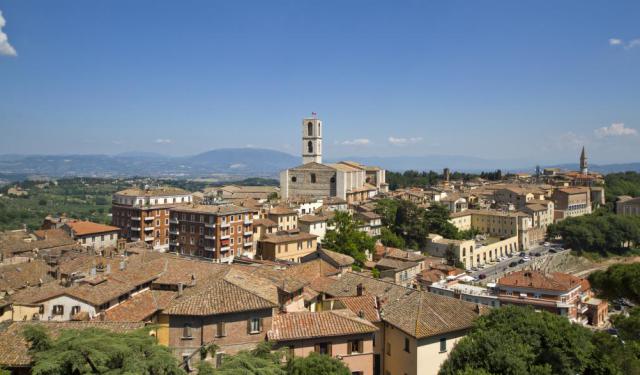
A Walk Through Perugia's Medieval Old Town
Perugia was one of the twelve foremost cities of the Etruscan Federation. It was mentioned by Quintus Fabius Pictor, a Roman historian. He tells of a military expedition of Fabius Maximus Rullianus against the Etruscan League and Perugia in 309 BC.
By 216 BC, Perugia had seen the light and allied itself with Rome in the Second Punic War against Carthage. Things went swimmingly until 41 BC.... view more
Tour Duration: 2 Hour(s)
Travel Distance: 2.1 Km or 1.3 Miles
By 216 BC, Perugia had seen the light and allied itself with Rome in the Second Punic War against Carthage. Things went swimmingly until 41 BC.... view more
Tour Duration: 2 Hour(s)
Travel Distance: 2.1 Km or 1.3 Miles
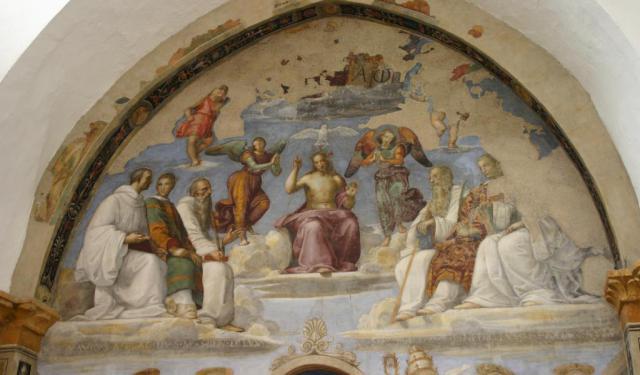
Perugino and Renaissance Art Walk
Perugia today is a well-known cultural and artistic center in Italy that regularly plays host to a multitude of annual festivals and events. The most glorious period in the history of the city, from an artistic standpoint, lasted from the 13th to the 16th centuries.
Perugia’s most celebrated artist, Pietro Vannucci (1450–1523), better known as “il Perugino”, nicknamed so after his... view more
Tour Duration: 1 Hour(s)
Travel Distance: 2.3 Km or 1.4 Miles
Perugia’s most celebrated artist, Pietro Vannucci (1450–1523), better known as “il Perugino”, nicknamed so after his... view more
Tour Duration: 1 Hour(s)
Travel Distance: 2.3 Km or 1.4 Miles