

Church of Hosios David, Thessaloniki
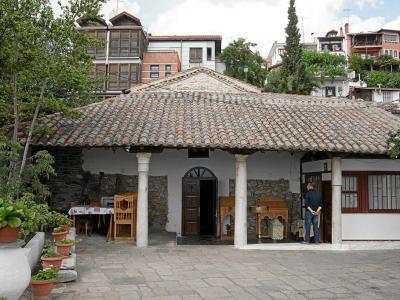
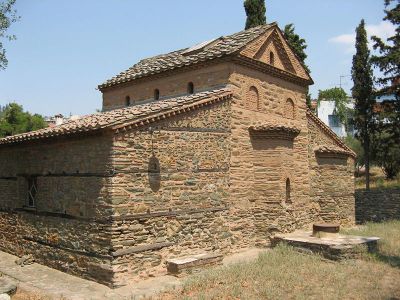
The Church of Hosios David dates to the late 5th or early 6th century and originally formed part of the Latomos Monastery, an important Byzantine monastic complex. As you step inside, the church’s compact, inward-focused plan becomes immediately clear. The space follows a cross-in-square layout, with square bays occupying the corners and drawing your attention toward the eastern end, where the sanctuary is located.
Move toward the apse at the eastern side of the church and look upward. Here you’ll find the building’s apse mosaic, often described as a Theophany or Christophany. Christ appears as a youthful, beardless figure seated on a rainbow, holding an open scroll. Around Him are symbolic elements linked to the Evangelists and visionary imagery drawn from the Old Testament. Unlike later Byzantine mosaics, this composition is not strictly narrative but symbolic, and its survival from the late 5th century makes it unique in Byzantine art.
As you turn back toward the side walls and upper surfaces, you’ll notice later layers of decoration. These frescoes, dating mainly from the 12th and 13th centuries, reflect subsequent phases of worship. Look for scenes depicting the Nativity, the Baptism of Christ, and Christ’s Entry into Jerusalem, as well as representations of the Virgin associated with the Passion.
While moving through the church, signs of damage are also visible. Earthquakes, later structural changes, and the plastering-over of images during the Ottoman period all took their toll. During Ottoman rule, the building was converted into a mosque known as Suleiman Tzami. If you step outside afterward, you can still spot the base and spiral staircase of the former minaret, the only remaining traces of that phase. The church was reconsecrated for Orthodox worship in 1921, and today it forms part of the UNESCO-listed Paleochristian and Byzantine Monuments of Thessaloniki.
Move toward the apse at the eastern side of the church and look upward. Here you’ll find the building’s apse mosaic, often described as a Theophany or Christophany. Christ appears as a youthful, beardless figure seated on a rainbow, holding an open scroll. Around Him are symbolic elements linked to the Evangelists and visionary imagery drawn from the Old Testament. Unlike later Byzantine mosaics, this composition is not strictly narrative but symbolic, and its survival from the late 5th century makes it unique in Byzantine art.
As you turn back toward the side walls and upper surfaces, you’ll notice later layers of decoration. These frescoes, dating mainly from the 12th and 13th centuries, reflect subsequent phases of worship. Look for scenes depicting the Nativity, the Baptism of Christ, and Christ’s Entry into Jerusalem, as well as representations of the Virgin associated with the Passion.
While moving through the church, signs of damage are also visible. Earthquakes, later structural changes, and the plastering-over of images during the Ottoman period all took their toll. During Ottoman rule, the building was converted into a mosque known as Suleiman Tzami. If you step outside afterward, you can still spot the base and spiral staircase of the former minaret, the only remaining traces of that phase. The church was reconsecrated for Orthodox worship in 1921, and today it forms part of the UNESCO-listed Paleochristian and Byzantine Monuments of Thessaloniki.
Want to visit this sight? Check out these Self-Guided Walking Tours in Thessaloniki. Alternatively, you can download the mobile app "GPSmyCity: Walks in 1K+ Cities" from Apple App Store or Google Play Store. The app turns your mobile device to a personal tour guide and it works offline, so no data plan is needed when traveling abroad.
Download The GPSmyCity App



Church of Hosios David on Map
Sight Name: Church of Hosios David
Sight Location: Thessaloniki, Greece (See walking tours in Thessaloniki)
Sight Type: Religious
Guide(s) Containing This Sight:
Sight Location: Thessaloniki, Greece (See walking tours in Thessaloniki)
Sight Type: Religious
Guide(s) Containing This Sight:
Nearby Sights
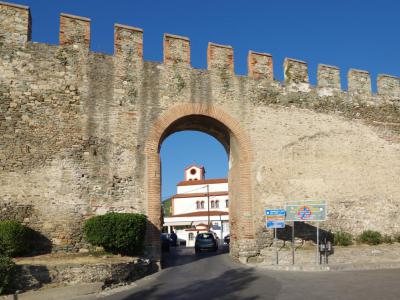
Walking Tours in Thessaloniki, Greece

Create Your Own Walk in Thessaloniki
Creating your own self-guided walk in Thessaloniki is easy and fun. Choose the city attractions that you want to see and a walk route map will be created just for you. You can even set your hotel as the start point of the walk.
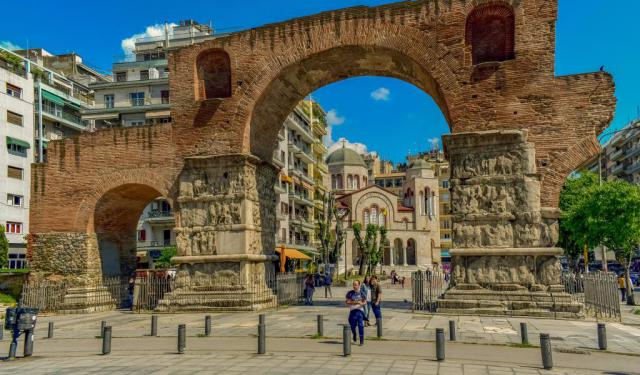
Thessaloniki Downtown Walking Tour
Thessaloniki has been shaped by layers of empire, trade, and migration for more than two millennia. It was founded in 315 BCE by Cassander, king of Macedon, who merged several smaller settlements around the Thermaic Gulf into a single city. He named it after his wife, Thessalonike, the half-sister of Alexander the Great. The name Thessalonikē combines Thessaloi and nikē, meaning victory,... view more
Tour Duration: 2 Hour(s)
Travel Distance: 3.7 Km or 2.3 Miles
Tour Duration: 2 Hour(s)
Travel Distance: 3.7 Km or 2.3 Miles
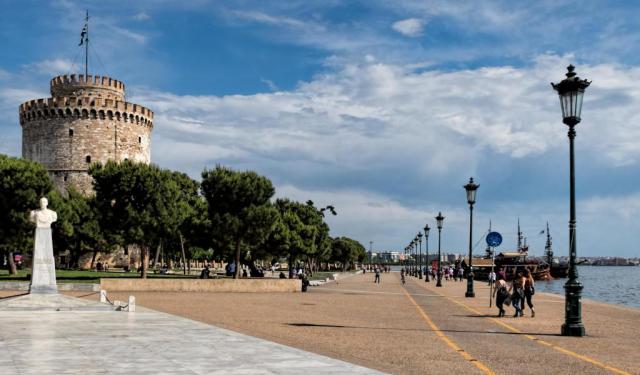
Thessaloniki Waterfront Tour
The Mediterranean has always been an integral part of Thessaloniki’s appeal. The city's orientation toward the sea is largely due to the vision of Ernest Hébrard, the French urban planner and architect, who redesigned the downtown area after the devastating fire of 1917.
To really get the taste of Thessaloniki you need to visit not just its historical landmarks, but also those spots... view more
Tour Duration: 1 Hour(s)
Travel Distance: 2.6 Km or 1.6 Miles
To really get the taste of Thessaloniki you need to visit not just its historical landmarks, but also those spots... view more
Tour Duration: 1 Hour(s)
Travel Distance: 2.6 Km or 1.6 Miles
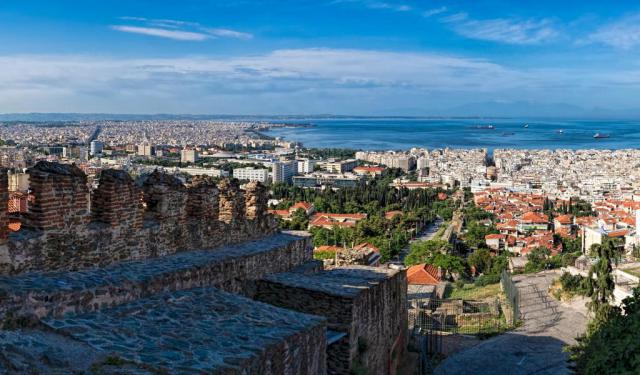
Thessaloniki Upper Town Walking Tour
Thessaloniki’s Upper Town, known locally as Ano Poli, which literally translates as “Upper City” is the city’s oldest continuously inhabited district and the only area to survive the Great Fire of 1917 largely intact. While the lower city was rebuilt along modern, planned lines in the early 20th century, Ano Poli retained its Byzantine street layout, Ottoman-era houses, and defensive... view more
Tour Duration: 2 Hour(s)
Travel Distance: 4.0 Km or 2.5 Miles
Tour Duration: 2 Hour(s)
Travel Distance: 4.0 Km or 2.5 Miles