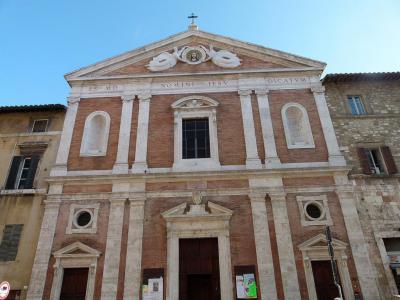


Church of Jesus, Perugia
The Church of Jesus in Perugia, located in the Porta Sole district at Piazza Matteotti, is a fascinating monument blending history, art, and societal dynamics. Built on the site of two earlier churches, Sant’Andrea, and the Compagnia del San Salvatore, its construction began in 1562 under Cardinal Fulvio della Corgna. Designed by Jesuit architect Giovanni Tristano, the church was expanded by Valentino Martelli and completed in 1620, with its upper façade finished in 1938 by Edoardo Vignaroli.
This Baroque gem boasts a richly adorned interior with three naves, gilded altars, and Corinthian columns. Highlights include Michele Desubleo's Circumcision of Jesus, 17th-century canvases by Stefano Amadei, and Bartolomeo Tronchi's bronze Crucifix. Frescoes by Giovanni Andrea Carlone grace the presbytery vault, while a modern altar by Artemio Giovagnoni blends harmoniously with the historic decor.
The church also holds a complex historical legacy. Following the suppression of the Jesuit order in 1775, the church’s art and treasures were dispersed, with some pieces relocated to Rome. Under Napoleonic rule and later the Italian unification, the church’s assets were nationalized, though its management remained with the Barnabites until 2020. Today, it is overseen by the Archdiocese of Perugia-Città della Pieve.
Beneath the apse are three hierarchically arranged oratories built into the Etruscan wall, reflecting Jesuit-era social stratification. The Oratory of the Nobles, at the top, was for the elite; the Oratory of Artists and Merchants, below, served city residents; and the Oratory of Peasants, at the lowest level, was for those outside the city. Though now closed to the public, they reveal the Jesuits' impact on culture and society during the Counter-Reformation.
The Church of Jesus combines architectural ingenuity with artistic splendor. From its extraordinary 16th-century lacunar ceiling-rebuilt after a 1989 fire-to Pietro da Cortona’s Nativity of Mary and Andrea Pozzo’s frescoes in the sacristy, it reflects centuries of evolving religious and artistic heritage. The structure's adaptation over time, from a Jesuit stronghold to a diocesan-managed landmark, encapsulates the layers of history that make it one of Perugia’s most enigmatic and secretive sites.
This Baroque gem boasts a richly adorned interior with three naves, gilded altars, and Corinthian columns. Highlights include Michele Desubleo's Circumcision of Jesus, 17th-century canvases by Stefano Amadei, and Bartolomeo Tronchi's bronze Crucifix. Frescoes by Giovanni Andrea Carlone grace the presbytery vault, while a modern altar by Artemio Giovagnoni blends harmoniously with the historic decor.
The church also holds a complex historical legacy. Following the suppression of the Jesuit order in 1775, the church’s art and treasures were dispersed, with some pieces relocated to Rome. Under Napoleonic rule and later the Italian unification, the church’s assets were nationalized, though its management remained with the Barnabites until 2020. Today, it is overseen by the Archdiocese of Perugia-Città della Pieve.
Beneath the apse are three hierarchically arranged oratories built into the Etruscan wall, reflecting Jesuit-era social stratification. The Oratory of the Nobles, at the top, was for the elite; the Oratory of Artists and Merchants, below, served city residents; and the Oratory of Peasants, at the lowest level, was for those outside the city. Though now closed to the public, they reveal the Jesuits' impact on culture and society during the Counter-Reformation.
The Church of Jesus combines architectural ingenuity with artistic splendor. From its extraordinary 16th-century lacunar ceiling-rebuilt after a 1989 fire-to Pietro da Cortona’s Nativity of Mary and Andrea Pozzo’s frescoes in the sacristy, it reflects centuries of evolving religious and artistic heritage. The structure's adaptation over time, from a Jesuit stronghold to a diocesan-managed landmark, encapsulates the layers of history that make it one of Perugia’s most enigmatic and secretive sites.
Want to visit this sight? Check out these Self-Guided Walking Tours in Perugia. Alternatively, you can download the mobile app "GPSmyCity: Walks in 1K+ Cities" from Apple App Store or Google Play Store. The app turns your mobile device to a personal tour guide and it works offline, so no data plan is needed when traveling abroad.
Download The GPSmyCity App



Church of Jesus on Map
Sight Name: Church of Jesus
Sight Location: Perugia, Italy (See walking tours in Perugia)
Sight Type: Religious
Sight Location: Perugia, Italy (See walking tours in Perugia)
Sight Type: Religious
Nearby Sights

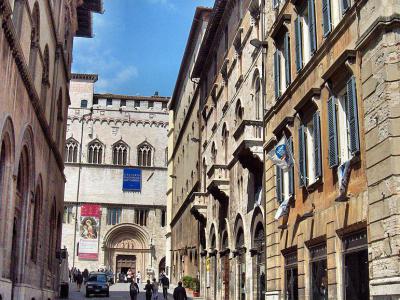
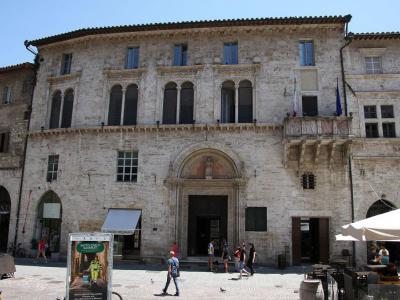
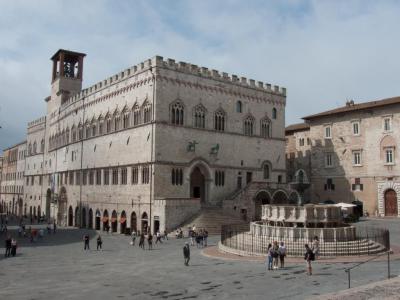

Walking Tours in Perugia, Italy

Create Your Own Walk in Perugia
Creating your own self-guided walk in Perugia is easy and fun. Choose the city attractions that you want to see and a walk route map will be created just for you. You can even set your hotel as the start point of the walk.
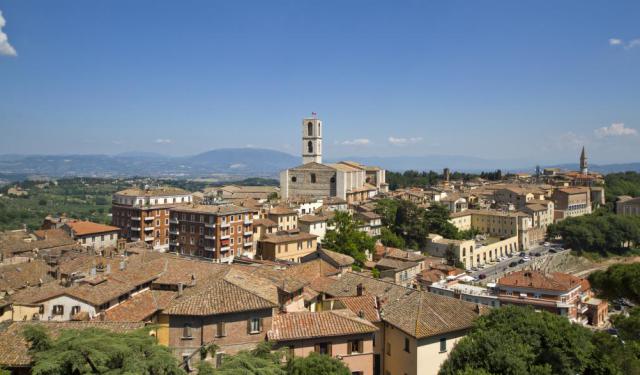
A Walk Through Perugia's Medieval Old Town
Perugia was one of the twelve foremost cities of the Etruscan Federation. It was mentioned by Quintus Fabius Pictor, a Roman historian. He tells of a military expedition of Fabius Maximus Rullianus against the Etruscan League and Perugia in 309 BC.
By 216 BC, Perugia had seen the light and allied itself with Rome in the Second Punic War against Carthage. Things went swimmingly until 41 BC.... view more
Tour Duration: 2 Hour(s)
Travel Distance: 2.1 Km or 1.3 Miles
By 216 BC, Perugia had seen the light and allied itself with Rome in the Second Punic War against Carthage. Things went swimmingly until 41 BC.... view more
Tour Duration: 2 Hour(s)
Travel Distance: 2.1 Km or 1.3 Miles
Perugino and Renaissance Art Walk
Perugia today is a well-known cultural and artistic center in Italy that regularly plays host to a multitude of annual festivals and events. The most glorious period in the history of the city, from an artistic standpoint, lasted from the 13th to the 16th centuries.
Perugia’s most celebrated artist, Pietro Vannucci (1450–1523), better known as “il Perugino”, nicknamed so after his... view more
Tour Duration: 1 Hour(s)
Travel Distance: 2.3 Km or 1.4 Miles
Perugia’s most celebrated artist, Pietro Vannucci (1450–1523), better known as “il Perugino”, nicknamed so after his... view more
Tour Duration: 1 Hour(s)
Travel Distance: 2.3 Km or 1.4 Miles