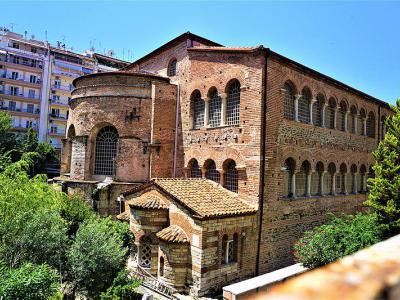


Church of Panagia Acheiropoietos, Thessaloniki
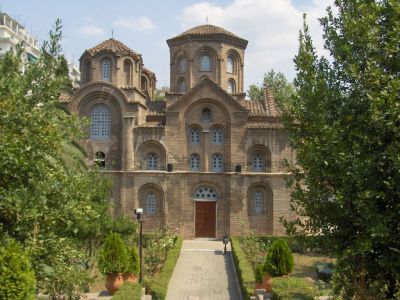
The Church of Panagia Acheiropoietos, located in the center of Thessaloniki, is a remarkable example of early Byzantine architecture. Dating back to the 5th century, it sits prominently on Agias Sofias Street across from Makedonomachon Square, adding to the city's rich historical heritage. Recognized for its architectural and cultural importance, it was listed as a UNESCO World Heritage Site in 1988.
Built between 450 and 470 AD, the Acheiropoietos is one of the oldest surviving churches in Thessaloniki. It has undergone renovations over the centuries. Originally named Panagia Theotokos during the Byzantine era, it was dedicated to Mary. Its current name, Acheiropoietos, was adopted around 1320, likely due to a miraculous icon of Panagia Hodegetria believed to have been created without human hands. Additionally, the church played a role in the veneration of Saint Demetrius, the city's patron saint.
Architecturally, the Acheiropoietos is a basilica with three aisles, measuring 28 meters wide and 36.5 meters long, featuring a distinctive wooden roof. Its structure includes a semicircular vault at the eastern end, a narthex with towers on the western side, and remnants of an exonarthex. The aisles are separated by columns, with galleries above the side aisles. Adjacent to the northern aisle is a chapel dedicated to Saint Irene from the Middle Byzantine period, accessible via a stairway in the northwestern corner. The main entrance is through a triple-arched tribelon, and it likely had a grand southern entrance connecting it to the main street of the Byzantine era.
Inside, the church boasts exquisite decorations dating back to its origins, including 5th-century Ionian capitals, green Thessalian marble columns, Proconnesian marble flooring, and remnants of decorative mosaics. Notably, the southern side features frescoes from the early 13th century depicting the Forty Martyrs of Sebaste, while Roman-era bathhouse mosaics have been found beneath the north aisle.
Following the Ottoman conquest in 1430, the Acheiropoietos was converted into a mosque, known as the Old Mosque, by Sultan Murad II. Today, the Church of Panagia Acheiropoietos stands as a significant religious site and a cherished symbol of Thessaloniki's rich history and architectural heritage.
Built between 450 and 470 AD, the Acheiropoietos is one of the oldest surviving churches in Thessaloniki. It has undergone renovations over the centuries. Originally named Panagia Theotokos during the Byzantine era, it was dedicated to Mary. Its current name, Acheiropoietos, was adopted around 1320, likely due to a miraculous icon of Panagia Hodegetria believed to have been created without human hands. Additionally, the church played a role in the veneration of Saint Demetrius, the city's patron saint.
Architecturally, the Acheiropoietos is a basilica with three aisles, measuring 28 meters wide and 36.5 meters long, featuring a distinctive wooden roof. Its structure includes a semicircular vault at the eastern end, a narthex with towers on the western side, and remnants of an exonarthex. The aisles are separated by columns, with galleries above the side aisles. Adjacent to the northern aisle is a chapel dedicated to Saint Irene from the Middle Byzantine period, accessible via a stairway in the northwestern corner. The main entrance is through a triple-arched tribelon, and it likely had a grand southern entrance connecting it to the main street of the Byzantine era.
Inside, the church boasts exquisite decorations dating back to its origins, including 5th-century Ionian capitals, green Thessalian marble columns, Proconnesian marble flooring, and remnants of decorative mosaics. Notably, the southern side features frescoes from the early 13th century depicting the Forty Martyrs of Sebaste, while Roman-era bathhouse mosaics have been found beneath the north aisle.
Following the Ottoman conquest in 1430, the Acheiropoietos was converted into a mosque, known as the Old Mosque, by Sultan Murad II. Today, the Church of Panagia Acheiropoietos stands as a significant religious site and a cherished symbol of Thessaloniki's rich history and architectural heritage.
Want to visit this sight? Check out these Self-Guided Walking Tours in Thessaloniki. Alternatively, you can download the mobile app "GPSmyCity: Walks in 1K+ Cities" from Apple App Store or Google Play Store. The app turns your mobile device to a personal tour guide and it works offline, so no data plan is needed when traveling abroad.
Download The GPSmyCity App



Church of Panagia Acheiropoietos on Map
Sight Name: Church of Panagia Acheiropoietos
Sight Location: Thessaloniki, Greece (See walking tours in Thessaloniki)
Sight Type: Religious
Sight Location: Thessaloniki, Greece (See walking tours in Thessaloniki)
Sight Type: Religious
Nearby Sights


Walking Tours in Thessaloniki, Greece

Create Your Own Walk in Thessaloniki
Creating your own self-guided walk in Thessaloniki is easy and fun. Choose the city attractions that you want to see and a walk route map will be created just for you. You can even set your hotel as the start point of the walk.
Thessaloniki Downtown Walking Tour
Thessaloniki has been shaped by layers of empire, trade, and migration for more than two millennia. It was founded in 315 BCE by Cassander, king of Macedon, who merged several smaller settlements around the Thermaic Gulf into a single city. He named it after his wife, Thessalonike, the half-sister of Alexander the Great. The name Thessalonikē combines Thessaloi and nikē, meaning victory,... view more
Tour Duration: 2 Hour(s)
Travel Distance: 3.7 Km or 2.3 Miles
Tour Duration: 2 Hour(s)
Travel Distance: 3.7 Km or 2.3 Miles
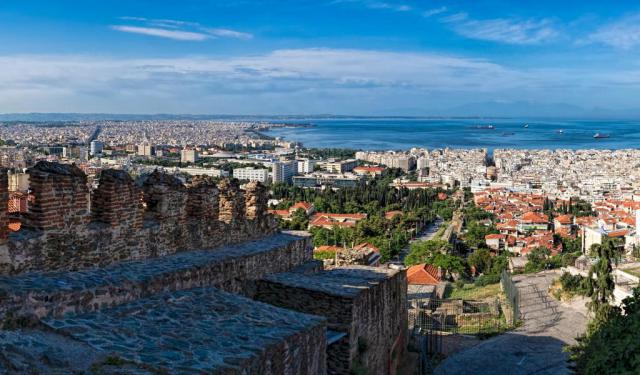
Thessaloniki Upper Town Walking Tour
Thessaloniki’s Upper Town, known locally as Ano Poli, which literally translates as “Upper City” is the city’s oldest continuously inhabited district and the only area to survive the Great Fire of 1917 largely intact. While the lower city was rebuilt along modern, planned lines in the early 20th century, Ano Poli retained its Byzantine street layout, Ottoman-era houses, and defensive... view more
Tour Duration: 2 Hour(s)
Travel Distance: 4.0 Km or 2.5 Miles
Tour Duration: 2 Hour(s)
Travel Distance: 4.0 Km or 2.5 Miles
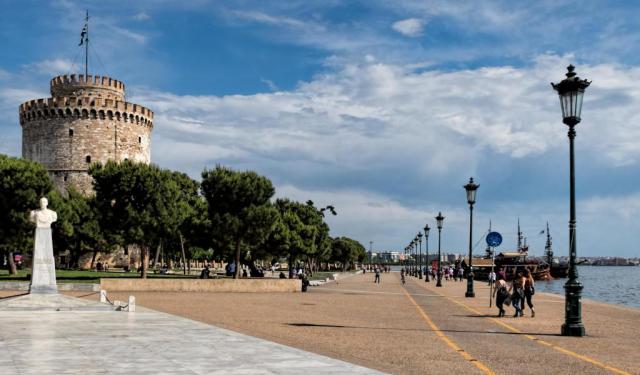
Thessaloniki Waterfront Tour
The Mediterranean has always been an integral part of Thessaloniki’s appeal. The city's orientation toward the sea is largely due to the vision of Ernest Hébrard, the French urban planner and architect, who redesigned the downtown area after the devastating fire of 1917.
To really get the taste of Thessaloniki you need to visit not just its historical landmarks, but also those spots... view more
Tour Duration: 1 Hour(s)
Travel Distance: 2.6 Km or 1.6 Miles
To really get the taste of Thessaloniki you need to visit not just its historical landmarks, but also those spots... view more
Tour Duration: 1 Hour(s)
Travel Distance: 2.6 Km or 1.6 Miles