


Church of Saint Ercolano, Perugia
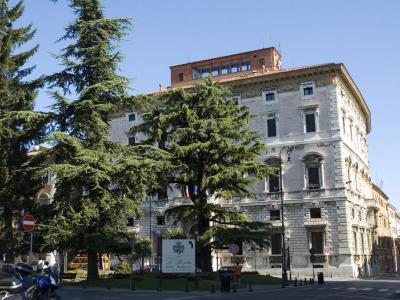
The Church of Saint Ercolano in Perugia is a fascinating Catholic site with a rich history and striking architectural features. Situated at the intersection of Saint Ercolano Street (Via Saint Ercolano) and Independence Avenue (Viale Indipendenza), the church was constructed at the end of the 13th century and officially dedicated in 1317 to Saint Ercolano, Perugia's patron saint. The martyr met his end in 540 during the siege of the city by Totila.
The church’s construction began in 1297, with Fidanzuola di Bongiovanni and Ambrogio Maitani completing the supporting walls and adding an external staircase in 1326. Initially featuring two stacked chapels, the upper chapel was demolished in 1542 to enhance the view of Rocca Paolina. The lower church saw significant changes over the centuries, including its 1381 allocation to the monks of the Body of Christ and, later, its care by the Dominicans in the 1400s.
After periods of neglect, the church was restored in 1591 by Bishop Napoleone Comitoli. Entrusted to the Barnabite Fathers in 1607, it regained its status as a worship site. The relics of Saint Ercolano were ceremoniously transferred here in 1609.
Built against Etruscan walls, the church’s octagonal design gives it a fortress-like look. Gothic elements remain under Baroque renovations, with Giovanni Andrea Carlone’s frescoes (1675) depicting The Glory of Saint Paul and scenes from his life. Stucco work by Jean Regnaud adorns the dimly lit interior, including side chapels honoring Saints Martin of Tours and Charles Borromeo. The apse holds a 17th-century copy of Perugino’s Altarpiece of the Decemvirs, flanked by canvases of Saint Ercolano by Matteuccio Salvucci.
Restored extensively between 2003 and 2006, Saint Ercolano stands as a testament to Perugia's resilience and artistic legacy, blending medieval Gothic foundations with Baroque grandeur. Its unique history and remarkable artistry make it an enduring symbol of the city's cultural and spiritual heritage.
The church’s construction began in 1297, with Fidanzuola di Bongiovanni and Ambrogio Maitani completing the supporting walls and adding an external staircase in 1326. Initially featuring two stacked chapels, the upper chapel was demolished in 1542 to enhance the view of Rocca Paolina. The lower church saw significant changes over the centuries, including its 1381 allocation to the monks of the Body of Christ and, later, its care by the Dominicans in the 1400s.
After periods of neglect, the church was restored in 1591 by Bishop Napoleone Comitoli. Entrusted to the Barnabite Fathers in 1607, it regained its status as a worship site. The relics of Saint Ercolano were ceremoniously transferred here in 1609.
Built against Etruscan walls, the church’s octagonal design gives it a fortress-like look. Gothic elements remain under Baroque renovations, with Giovanni Andrea Carlone’s frescoes (1675) depicting The Glory of Saint Paul and scenes from his life. Stucco work by Jean Regnaud adorns the dimly lit interior, including side chapels honoring Saints Martin of Tours and Charles Borromeo. The apse holds a 17th-century copy of Perugino’s Altarpiece of the Decemvirs, flanked by canvases of Saint Ercolano by Matteuccio Salvucci.
Restored extensively between 2003 and 2006, Saint Ercolano stands as a testament to Perugia's resilience and artistic legacy, blending medieval Gothic foundations with Baroque grandeur. Its unique history and remarkable artistry make it an enduring symbol of the city's cultural and spiritual heritage.
Want to visit this sight? Check out these Self-Guided Walking Tours in Perugia. Alternatively, you can download the mobile app "GPSmyCity: Walks in 1K+ Cities" from Apple App Store or Google Play Store. The app turns your mobile device to a personal tour guide and it works offline, so no data plan is needed when traveling abroad.
Download The GPSmyCity App



Church of Saint Ercolano on Map
Sight Name: Church of Saint Ercolano
Sight Location: Perugia, Italy (See walking tours in Perugia)
Sight Type: Religious
Sight Location: Perugia, Italy (See walking tours in Perugia)
Sight Type: Religious
Nearby Sights

Walking Tours in Perugia, Italy

Create Your Own Walk in Perugia
Creating your own self-guided walk in Perugia is easy and fun. Choose the city attractions that you want to see and a walk route map will be created just for you. You can even set your hotel as the start point of the walk.
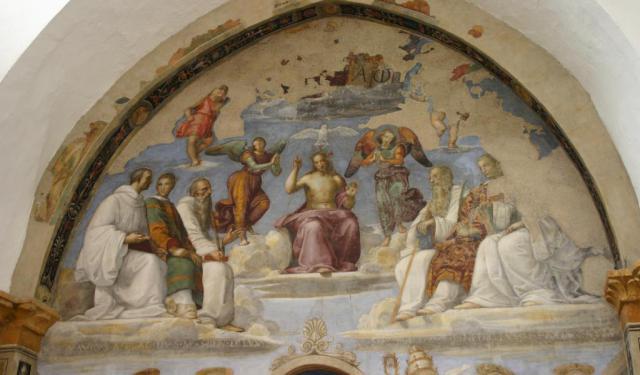
Perugino and Renaissance Art Walk
Perugia today is a well-known cultural and artistic center in Italy that regularly plays host to a multitude of annual festivals and events. The most glorious period in the history of the city, from an artistic standpoint, lasted from the 13th to the 16th centuries.
Perugia’s most celebrated artist, Pietro Vannucci (1450-1523), better known as “il Perugino”, nicknamed so after his... view more
Tour Duration: 1 Hour
Travel Distance: 2.3 Km or 1.4 Miles
Perugia’s most celebrated artist, Pietro Vannucci (1450-1523), better known as “il Perugino”, nicknamed so after his... view more
Tour Duration: 1 Hour
Travel Distance: 2.3 Km or 1.4 Miles
A Walk Through Perugia's Medieval Old Town
Perugia was one of the twelve foremost cities of the Etruscan Federation. It was mentioned by Quintus Fabius Pictor, a Roman historian. He tells of a military expedition of Fabius Maximus Rullianus against the Etruscan League and Perugia in 309 BC.
By 216 BC, Perugia had seen the light and allied itself with Rome in the Second Punic War against Carthage. Things went swimmingly until 41 BC.... view more
Tour Duration: 2 Hours
Travel Distance: 2.1 Km or 1.3 Miles
By 216 BC, Perugia had seen the light and allied itself with Rome in the Second Punic War against Carthage. Things went swimmingly until 41 BC.... view more
Tour Duration: 2 Hours
Travel Distance: 2.1 Km or 1.3 Miles
City Walks Overview
