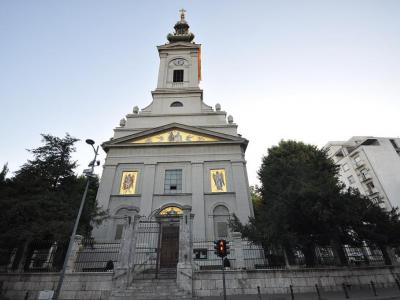


Church of St. Archangel Michael, Belgrade
The Cathedral Church of Saint Michael the Archangel is a prominent Serbian Orthodox cathedral located in the old part of Belgrade, at the intersection of Kralja Petra and Kneza Sime Markovića streets. Constructed between 1837 and 1840 on the site of an older church dedicated to Archangel Michael, it stands as one of the most significant places of worship in Serbia and was declared a Cultural Monument of Exceptional Importance in 1979.
The church is one of the few remaining monuments in Belgrade from the first half of the 19th century, a period marked by the struggle for independence from Turkish centralism to final freedom from Ottoman rule. The original church on this site, described by Protestant priest and travel writer Stjepan Gerlach in the 16th century, was spacious but not large enough to accommodate all the Christian citizens of Belgrade.
The cathedral's construction features a single nave design with a semi-circular apse to the east and a narthex to the west, above which a high bell tower rises. The interior is divided into the altar space, nave, and narthex, which contains a baptistery and stairs leading to the bell tower. The architecture reflects neoclassical influences with a recognizable baroque tower, inspired by contemporaneous church designs in Austria and possibly modeled after the older cathedral church in Sremski Karlovci.
Dimitrije Petrović crafted the gold-plated carved iconostasis, while the distinguished 19th-century Serbian painter Dimitrije Avramović painted the icons and wall compositions between 1841 and 1845. Avramović's work, influenced by the historical school of Vienna and the German Nazarenes, features a dramatic color scheme and plastic-dramatic rhythm that create a unique Serbian manner. His monumental religious compositions are highly regarded in Serbian art history.
The cathedral also houses a valuable treasury containing applied art objects, including golden items from the 18th and 19th centuries, priests' garments, crosses, individual icons from the latter half of the 19th century, and other culturally and historically significant objects.
The church is one of the few remaining monuments in Belgrade from the first half of the 19th century, a period marked by the struggle for independence from Turkish centralism to final freedom from Ottoman rule. The original church on this site, described by Protestant priest and travel writer Stjepan Gerlach in the 16th century, was spacious but not large enough to accommodate all the Christian citizens of Belgrade.
The cathedral's construction features a single nave design with a semi-circular apse to the east and a narthex to the west, above which a high bell tower rises. The interior is divided into the altar space, nave, and narthex, which contains a baptistery and stairs leading to the bell tower. The architecture reflects neoclassical influences with a recognizable baroque tower, inspired by contemporaneous church designs in Austria and possibly modeled after the older cathedral church in Sremski Karlovci.
Dimitrije Petrović crafted the gold-plated carved iconostasis, while the distinguished 19th-century Serbian painter Dimitrije Avramović painted the icons and wall compositions between 1841 and 1845. Avramović's work, influenced by the historical school of Vienna and the German Nazarenes, features a dramatic color scheme and plastic-dramatic rhythm that create a unique Serbian manner. His monumental religious compositions are highly regarded in Serbian art history.
The cathedral also houses a valuable treasury containing applied art objects, including golden items from the 18th and 19th centuries, priests' garments, crosses, individual icons from the latter half of the 19th century, and other culturally and historically significant objects.
Want to visit this sight? Check out these Self-Guided Walking Tours in Belgrade. Alternatively, you can download the mobile app "GPSmyCity: Walks in 1K+ Cities" from Apple App Store or Google Play Store. The app turns your mobile device to a personal tour guide and it works offline, so no data plan is needed when traveling abroad.
Download The GPSmyCity App



Church of St. Archangel Michael on Map
Sight Name: Church of St. Archangel Michael
Sight Location: Belgrade, Serbia (See walking tours in Belgrade)
Sight Type: Religious
Sight Location: Belgrade, Serbia (See walking tours in Belgrade)
Sight Type: Religious
Nearby Sights
Walking Tours in Belgrade, Serbia

Create Your Own Walk in Belgrade
Creating your own self-guided walk in Belgrade is easy and fun. Choose the city attractions that you want to see and a walk route map will be created just for you. You can even set your hotel as the start point of the walk.
Belgrade Old Town Walking Tour
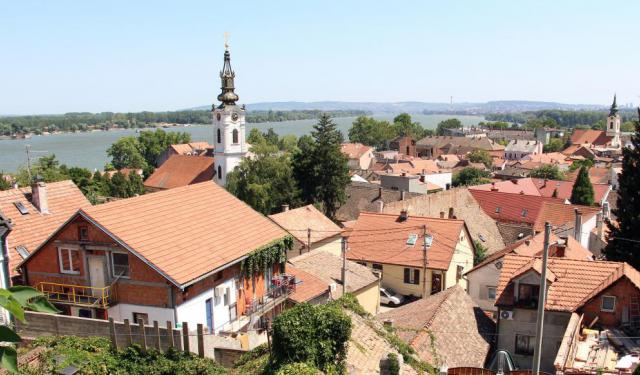
Belgrade's Old Town, also known as Zemun, spread around Gardos Hill, is one of the city's oldest parts. Throughout the centuries, as the Balkans were part first of the Roman, then the Byzantine, and then the Austro-Hungarian empires, this area transformed into a beautiful neighborhood with narrow streets, cute buildings, and breathtaking views opening from the hill onto the Old Town and... view more
Tour Duration: 2 Hour(s)
Travel Distance: 2.4 Km or 1.5 Miles
Tour Duration: 2 Hour(s)
Travel Distance: 2.4 Km or 1.5 Miles
Belgrade's Top Attractions Walking Tour
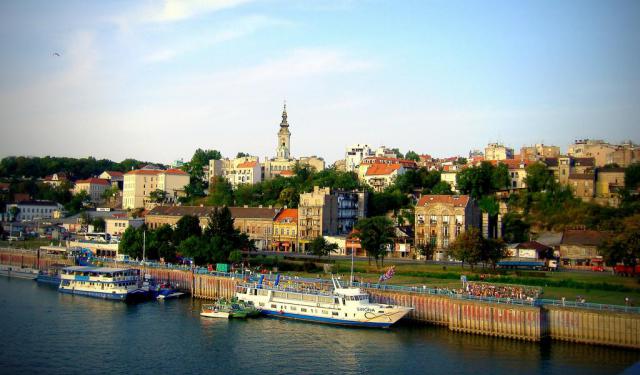
Belgrade has been a city of strategic importance for millennia with its location at the confluence of the Sava and Danube rivers. In fact, it is one of the oldest continually inhabited cities on the planet.
Nomadic tribes inhabited the area as far back as 20,000 to 50,000 years ago. Some of these may have been Neanderthals rather than modern humans. By the sixth century BC, the Vinca culture... view more
Tour Duration: 2 Hour(s)
Travel Distance: 4.0 Km or 2.5 Miles
Nomadic tribes inhabited the area as far back as 20,000 to 50,000 years ago. Some of these may have been Neanderthals rather than modern humans. By the sixth century BC, the Vinca culture... view more
Tour Duration: 2 Hour(s)
Travel Distance: 4.0 Km or 2.5 Miles
Kalemegdan Park and Belgrade Fortress Walking Tour
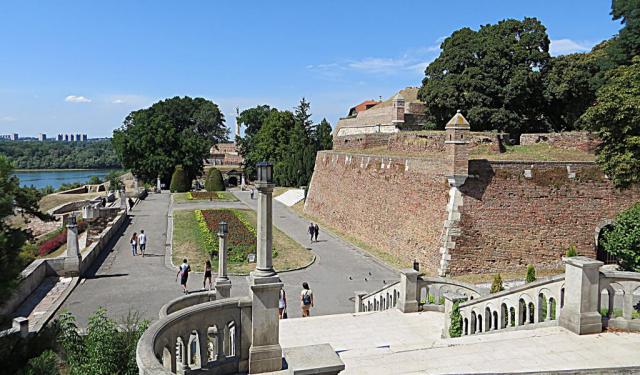
The most beautiful park in Belgrade, Kalemegdan Park, or simply Kalemegdan, is also the largest park and the most important cultural and historical complex in the city. The actual park occupies a smaller portion, in the southern corner, of another, grander monument – the Belgrade Fortress (which is some two millennia older).
The fortress itself, often erroneously referred to, even by the... view more
Tour Duration: 2 Hour(s)
Travel Distance: 2.1 Km or 1.3 Miles
The fortress itself, often erroneously referred to, even by the... view more
Tour Duration: 2 Hour(s)
Travel Distance: 2.1 Km or 1.3 Miles