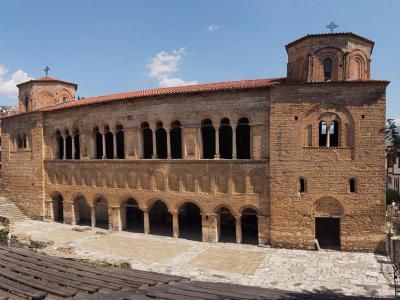


Church of St. Sophia, Ohrid (must see)
The Cathedral Church of Saint Sophia is one of Ohrid’s most important medieval monuments. Its early history is uncertain, standing on the remains of an older Christian building. Saint Sophia probably served as a cathedral during the reign of Tsar Samuel around the end of the 10th century. In the mid-11th century, under Archbishop Leo of Ohrid, the church was extensively rebuilt and decorated with the magnificent frescoes for which it is famous today.
As you approach the sanctuary, look toward the apse at the far end of the church. High above the altar, the Virgin Enthroned holds Christ Emmanuel before her. Just below, the Communion of the Apostles unfolds across the curved wall, with Christ standing behind the altar as the apostles approach him from both sides.
Now look around the surrounding sanctuary walls. Here you can pick out unusual liturgical scenes, including the Liturgy of Saint Basil the Great, the Hospitality and Sacrifice of Abraham, and a scene associated with Saint John Chrysostom. In the northern side chapel, known as the prothesis, a cycle depicts the Forty Martyrs of Sebaste.
The church is dedicated not to a saint named Sophia, but to Holy Wisdom-Hagia Sophia-the divine wisdom of Christ. In the second half of the 15th century, during Ottoman rule, it was converted into a mosque. Architectural alterations were made, and its medieval frescoes were covered with layers of plaster and lime. Although this concealed the paintings for centuries, it also helped preserve substantial portions of them.
In 1912, Saint Sophia returned to use as an Orthodox church. Major conservation work began after World War II, with the frescoes systematically uncovered, cleaned, and conserved between 1949 and 1956. Their rediscovery revealed one of the most complete surviving programs of 11th-century Byzantine wall painting.
Want to visit this sight? Check out these Self-Guided Walking Tours in Ohrid. Alternatively, you can download the mobile app "GPSmyCity: Walks in 1K+ Cities" from Apple App Store or Google Play Store. The app turns your mobile device to a personal tour guide and it works offline, so no data plan is needed when traveling abroad.
Download The GPSmyCity App



Church of St. Sophia on Map
Sight Name: Church of St. Sophia
Sight Location: Ohrid, North Macedonia (See walking tours in Ohrid)
Sight Type: Religious
Guide(s) Containing This Sight:
Sight Location: Ohrid, North Macedonia (See walking tours in Ohrid)
Sight Type: Religious
Guide(s) Containing This Sight:
Nearby Sights



Walking Tours in Ohrid, North Macedonia

Create Your Own Walk in Ohrid
Creating your own self-guided walk in Ohrid is easy and fun. Choose the city attractions that you want to see and a walk route map will be created just for you. You can even set your hotel as the start point of the walk.
Walking Through Ohrid's Historical Old Town
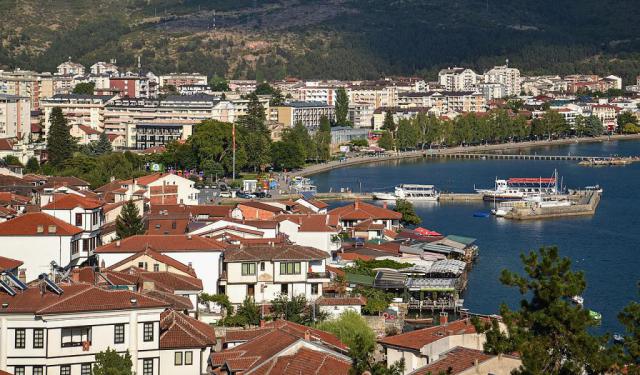
Ohrid is a city best discovered on foot. Its Old Town rises from the clear blue waters of Lake Ohrid toward the walls of Tsar Samuel’s Fortress, with narrow streets, stone houses, medieval churches, archaeological remains, cafés, and viewpoints appearing along the way.
In antiquity, Ohrid was known as Lychnidos, a name traditionally associated with light. By the late 9th century, the Slavic... view more
Tour Duration: 2 Hours
Travel Distance: 2.3 Km or 1.4 Miles
In antiquity, Ohrid was known as Lychnidos, a name traditionally associated with light. By the late 9th century, the Slavic... view more
Tour Duration: 2 Hours
Travel Distance: 2.3 Km or 1.4 Miles
Ohrid's Historical Churches
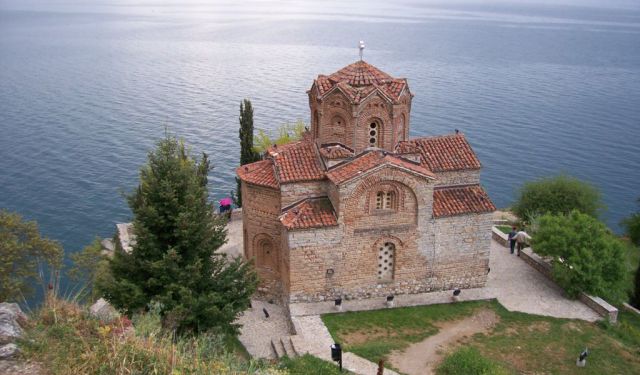
According to the legend based on the observations of 15th-century Ottoman traveler Evlia Celebia, the town of Ohrid used to have within its boundaries 365 chapels - one for every day of the year. At some point during Medieval times, Ohrid was even dubbed Slavic Jerusalem. Today, although the number of churches is considerably smaller, the architectural and historical value of those that remain... view more
Tour Duration: 1 Hour
Travel Distance: 2.7 Km or 1.7 Miles
Tour Duration: 1 Hour
Travel Distance: 2.7 Km or 1.7 Miles
City Walks Overview
