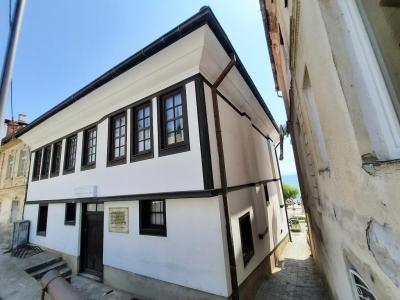


Memorial House of Hristo Uzunov, Ohrid
The Memorial House of Hristo Uzunov, located in the historic Varosha district of Ohrid, is a significant cultural site that commemorates the life and legacy of the revolutionary Hristo Uzunov. This house, originally known as the Uzunova house or Uzunova huča, dates back to the mid-19th century and is a prime example of revival architecture in the region.
Built most likely by Hristo Uzunov himself or his son Dimitar Uzunov, both prominent Renaissance educators, the house was a pivotal birthplace and residence for key figures of the Internal Macedonian-Odrina Revolutionary Organization. The house has witnessed the lives of Dimitar's sons-Andon and Hristo Uzunov-who were integral to the revolutionary movements in Ohrid. Following their deaths in the early 1900s, the house experienced several changes in ownership until it was nationalized in 1953 by the People's Committee in Ohrid.
Declared a monument of culture in 1968, and re-affirmed in 1996, the Uzunov house was extensively renovated in the late 1970s. The restoration preserved many of the original architectural features while ensuring the building's structural integrity. The house now features a basement known locally as "the dungeon," a ground floor with marble slabs, and a first floor with traditional wooden flooring. The facade retains the typical Ohrid style-painted white with a projecting bay window and richly profiled cornices.
Today, the house operates as a museum managed by the Institute for the Protection of Cultural Monuments and Museum - Ohrid. It houses a permanent exhibition called "The National Liberation Movement in Ohrid and Ohridsko," which includes documents and objects related to the revolutionary activities in the region. A specific room is dedicated to Hristo Uzunov, preserving his personal and revolutionary memorabilia. The museum also hosts temporary exhibitions and scientific events, making it a dynamic center for cultural and historical education.
The Memorial House of Hristo Uzunov not only serves as a tribute to the Uzunov family's contributions to Macedonian history but also stands as a testament to the rich cultural heritage of Ohrid, drawing visitors from across the globe to this picturesque and historically rich corner of North Macedonia.
Want to visit this sight? Check out these Self-Guided Walking Tours in Ohrid. Alternatively, you can download the mobile app "GPSmyCity: Walks in 1K+ Cities" from Apple App Store or Google Play Store. The app turns your mobile device to a personal tour guide and it works offline, so no data plan is needed when traveling abroad.
Download The GPSmyCity App



Memorial House of Hristo Uzunov on Map
Sight Name: Memorial House of Hristo Uzunov
Sight Location: Ohrid, North Macedonia (See walking tours in Ohrid)
Sight Type: Museum/Gallery
Sight Location: Ohrid, North Macedonia (See walking tours in Ohrid)
Sight Type: Museum/Gallery
Nearby Sights


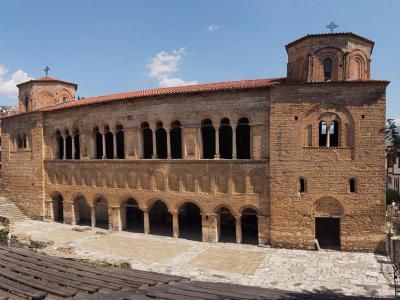
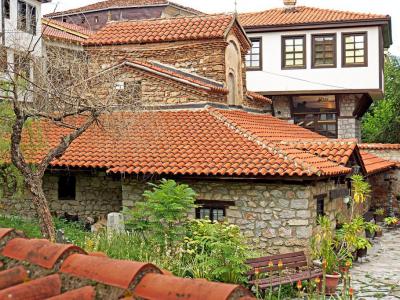

Walking Tours in Ohrid, North Macedonia

Create Your Own Walk in Ohrid
Creating your own self-guided walk in Ohrid is easy and fun. Choose the city attractions that you want to see and a walk route map will be created just for you. You can even set your hotel as the start point of the walk.
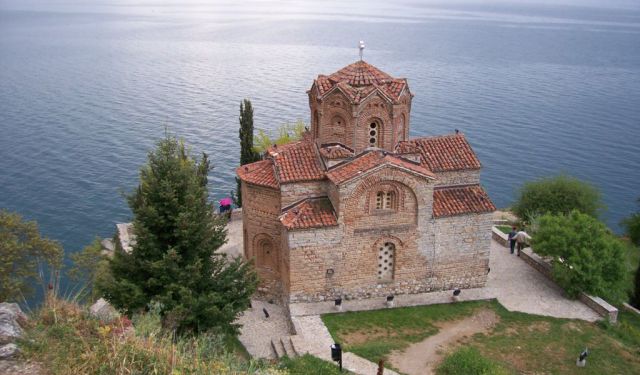
Ohrid's Historical Churches
According to the legend based on the observations of 15th-century Ottoman traveler Evlia Celebia, the town of Ohrid used to have within its boundaries 365 chapels - one for every day of the year. At some point during Medieval times, Ohrid was even dubbed Slavic Jerusalem. Today, although the number of churches is considerably smaller, the architectural and historical value of those that remain... view more
Tour Duration: 1 Hour
Travel Distance: 2.7 Km or 1.7 Miles
Tour Duration: 1 Hour
Travel Distance: 2.7 Km or 1.7 Miles
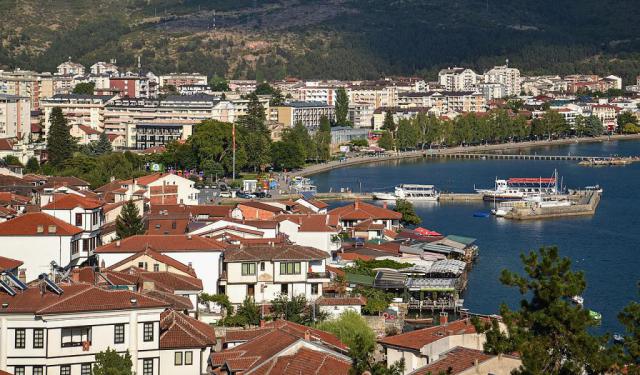
Walking Through Ohrid's Historical Old Town
Ohrid is a city best discovered on foot. Its Old Town rises from the clear blue waters of Lake Ohrid toward the walls of Tsar Samuel’s Fortress, with narrow streets, stone houses, medieval churches, archaeological remains, cafés, and viewpoints appearing along the way.
In antiquity, Ohrid was known as Lychnidos, a name traditionally associated with light. By the late 9th century, the Slavic... view more
Tour Duration: 2 Hours
Travel Distance: 2.3 Km or 1.4 Miles
In antiquity, Ohrid was known as Lychnidos, a name traditionally associated with light. By the late 9th century, the Slavic... view more
Tour Duration: 2 Hours
Travel Distance: 2.3 Km or 1.4 Miles
City Walks Overview
