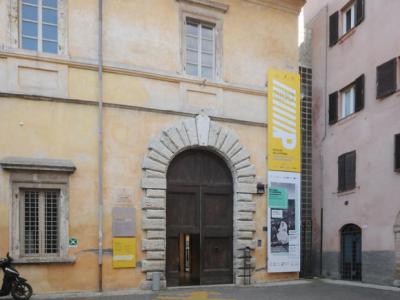


Civic Museum (Museo Civico), Perugia
The Civic Museum of the Penna Palace (Palazzo della Penna) in Perugia masterfully blends history, art, and modernity. Once the residence of the noble Arcipreti della Penna family, this historic building is now a hub for contemporary art and the preservation of Perugia’s rich cultural heritage.
The palace, built on the remains of the Roman Marzio Amphitheatre (1st century AD), incorporates medieval walls and streets. Its architecture spans centuries, blending Renaissance and Neoclassical styles. In the 1800s, Antonio Castelletti added mythological frescoes, while Pasquale Angelini painted landscapes in the Sala dei Paesaggi. A 20th-century highlight is Franco Minissi's helical staircase, seamlessly linking three floors and merging ancient and modern design.
The museum features two notable collections: Gerardo Dottori and the Umbrian Futurists, showcasing Dottori's journey from academic art to Futurist aero-painting and sacred masterpieces, alongside works by other Umbrian Futurists; and Joseph Beuys in Perugia, presenting six monumental blackboards from Beuys’ 1980 performance at Rocca Paolina, reflecting his social and political ideas. A documentary exhibition highlights Beuys’ historic encounter with Alberto Burri, a key moment in Perugia's contemporary art history.
In addition to the permanent exhibits, the museum hosts temporary exhibitions focused on contemporary art, photography, and Perugia's cultural history. Notable works include multi-material sculptures by Brajo Fuso from his Hellenes series, placed in the courtyard. The courtyard also features Minissi’s iconic staircase and a poignant installation honoring Perugian poet Paolo Vinti.
Another significant piece is "Without Chains" (2019), a red and gold sculpture symbolizing the fight against violence toward women, created by students of the Bernardino Di Betto Art High School.
Located at the foot of the Rocca Paolina, the Civic Museum of the Penna Palace offers a unique journey through time and art. Its harmonious blend of ancient Roman remnants, Renaissance elegance, and contemporary installations make it a must-visit destination for those seeking to explore Perugia’s multifaceted heritage.
The palace, built on the remains of the Roman Marzio Amphitheatre (1st century AD), incorporates medieval walls and streets. Its architecture spans centuries, blending Renaissance and Neoclassical styles. In the 1800s, Antonio Castelletti added mythological frescoes, while Pasquale Angelini painted landscapes in the Sala dei Paesaggi. A 20th-century highlight is Franco Minissi's helical staircase, seamlessly linking three floors and merging ancient and modern design.
The museum features two notable collections: Gerardo Dottori and the Umbrian Futurists, showcasing Dottori's journey from academic art to Futurist aero-painting and sacred masterpieces, alongside works by other Umbrian Futurists; and Joseph Beuys in Perugia, presenting six monumental blackboards from Beuys’ 1980 performance at Rocca Paolina, reflecting his social and political ideas. A documentary exhibition highlights Beuys’ historic encounter with Alberto Burri, a key moment in Perugia's contemporary art history.
In addition to the permanent exhibits, the museum hosts temporary exhibitions focused on contemporary art, photography, and Perugia's cultural history. Notable works include multi-material sculptures by Brajo Fuso from his Hellenes series, placed in the courtyard. The courtyard also features Minissi’s iconic staircase and a poignant installation honoring Perugian poet Paolo Vinti.
Another significant piece is "Without Chains" (2019), a red and gold sculpture symbolizing the fight against violence toward women, created by students of the Bernardino Di Betto Art High School.
Located at the foot of the Rocca Paolina, the Civic Museum of the Penna Palace offers a unique journey through time and art. Its harmonious blend of ancient Roman remnants, Renaissance elegance, and contemporary installations make it a must-visit destination for those seeking to explore Perugia’s multifaceted heritage.
Want to visit this sight? Check out these Self-Guided Walking Tours in Perugia. Alternatively, you can download the mobile app "GPSmyCity: Walks in 1K+ Cities" from Apple App Store or Google Play Store. The app turns your mobile device to a personal tour guide and it works offline, so no data plan is needed when traveling abroad.
Download The GPSmyCity App



Civic Museum (Museo Civico) on Map
Sight Name: Civic Museum (Museo Civico)
Sight Location: Perugia, Italy (See walking tours in Perugia)
Sight Type: Museum/Gallery
Sight Location: Perugia, Italy (See walking tours in Perugia)
Sight Type: Museum/Gallery
Nearby Sights


Walking Tours in Perugia, Italy

Create Your Own Walk in Perugia
Creating your own self-guided walk in Perugia is easy and fun. Choose the city attractions that you want to see and a walk route map will be created just for you. You can even set your hotel as the start point of the walk.
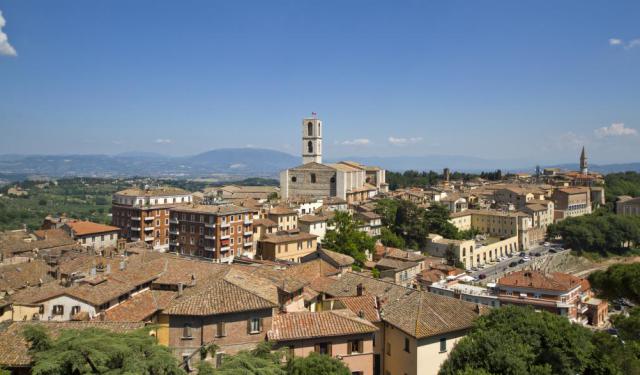
A Walk Through Perugia's Medieval Old Town
Perugia was one of the twelve foremost cities of the Etruscan Federation. It was mentioned by Quintus Fabius Pictor, a Roman historian. He tells of a military expedition of Fabius Maximus Rullianus against the Etruscan League and Perugia in 309 BC.
By 216 BC, Perugia had seen the light and allied itself with Rome in the Second Punic War against Carthage. Things went swimmingly until 41 BC.... view more
Tour Duration: 2 Hour(s)
Travel Distance: 2.1 Km or 1.3 Miles
By 216 BC, Perugia had seen the light and allied itself with Rome in the Second Punic War against Carthage. Things went swimmingly until 41 BC.... view more
Tour Duration: 2 Hour(s)
Travel Distance: 2.1 Km or 1.3 Miles
Perugino and Renaissance Art Walk
Perugia today is a well-known cultural and artistic center in Italy that regularly plays host to a multitude of annual festivals and events. The most glorious period in the history of the city, from an artistic standpoint, lasted from the 13th to the 16th centuries.
Perugia’s most celebrated artist, Pietro Vannucci (1450–1523), better known as “il Perugino”, nicknamed so after his... view more
Tour Duration: 1 Hour(s)
Travel Distance: 2.3 Km or 1.4 Miles
Perugia’s most celebrated artist, Pietro Vannucci (1450–1523), better known as “il Perugino”, nicknamed so after his... view more
Tour Duration: 1 Hour(s)
Travel Distance: 2.3 Km or 1.4 Miles