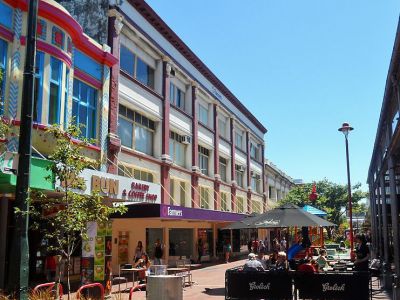


Cuba Street, Wellington (must see)
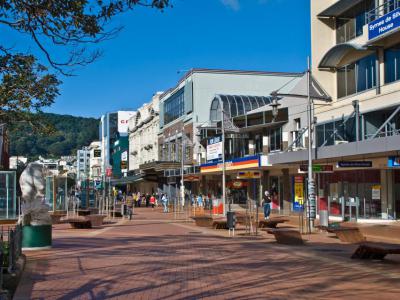
Cuba Street is the central street of the Cuba Quarter, a lively area associated with cafés, restaurants, music venues, bookshops, record stores, vintage shops, galleries, and street performance. Compared with the more formal government and business streets around Lambton Quay, Cuba Street feels more informal and creative, making it one of the clearest places to experience Wellington’s everyday street culture.
The street was named by Captain William Mein Smith, New Zealand Company surveyor, after the settler ship Cuba, which arrived in Wellington Harbor on 3 January 1840. The area developed on land close to Te Aro Pā and became a busy colonial street of homes, shops, and small businesses. From the late 19th and early 20th centuries, many buildings in and around Cuba Street were rebuilt in Edwardian, Classical, and Art Deco styles, leaving the street with a varied historic streetscape. Since 1995, Cuba Street has been recognized as a historic area, with more than 40 buildings considered historically significant, including the former Bank of New Zealand building.
A central feature is Cuba Mall, the pedestrian section between Manners and Ghuznee streets. Cuba Street once carried trams, but after the tramlines were removed in the 1960s, public pressure helped turn the middle section into a pedestrian mall, which opened in 1969. The mall’s best-known landmark is the Bucket Fountain, installed the same year. Its brightly colored buckets fill, tip, and splash with a slightly chaotic energy that has made it one of Wellington’s most beloved public artworks.
Cuba Street also carries memories of Wellington’s nightlife and social history. In the 1970s and 1980s, the wider area around Cuba, Vivian, and Marion streets was associated with the city’s red-light district, bars, clubs, and late-night venues. One of its best-known figures was Carmen Rupe, the drag queen performer, businesswoman, and activist who ran Carmen’s International Coffee House on nearby Vivian Street. Today, her legacy is remembered through themed pedestrian lights in the Cuba Quarter.
The street was named by Captain William Mein Smith, New Zealand Company surveyor, after the settler ship Cuba, which arrived in Wellington Harbor on 3 January 1840. The area developed on land close to Te Aro Pā and became a busy colonial street of homes, shops, and small businesses. From the late 19th and early 20th centuries, many buildings in and around Cuba Street were rebuilt in Edwardian, Classical, and Art Deco styles, leaving the street with a varied historic streetscape. Since 1995, Cuba Street has been recognized as a historic area, with more than 40 buildings considered historically significant, including the former Bank of New Zealand building.
A central feature is Cuba Mall, the pedestrian section between Manners and Ghuznee streets. Cuba Street once carried trams, but after the tramlines were removed in the 1960s, public pressure helped turn the middle section into a pedestrian mall, which opened in 1969. The mall’s best-known landmark is the Bucket Fountain, installed the same year. Its brightly colored buckets fill, tip, and splash with a slightly chaotic energy that has made it one of Wellington’s most beloved public artworks.
Cuba Street also carries memories of Wellington’s nightlife and social history. In the 1970s and 1980s, the wider area around Cuba, Vivian, and Marion streets was associated with the city’s red-light district, bars, clubs, and late-night venues. One of its best-known figures was Carmen Rupe, the drag queen performer, businesswoman, and activist who ran Carmen’s International Coffee House on nearby Vivian Street. Today, her legacy is remembered through themed pedestrian lights in the Cuba Quarter.
Want to visit this sight? Check out these Self-Guided Walking Tours in Wellington. Alternatively, you can download the mobile app "GPSmyCity: Walks in 1K+ Cities" from Apple App Store or Google Play Store. The app turns your mobile device to a personal tour guide and it works offline, so no data plan is needed when traveling abroad.
Download The GPSmyCity App



Cuba Street on Map
Sight Name: Cuba Street
Sight Location: Wellington, New Zealand (See walking tours in Wellington)
Sight Type: Attraction/Landmark
Guide(s) Containing This Sight:
Sight Location: Wellington, New Zealand (See walking tours in Wellington)
Sight Type: Attraction/Landmark
Guide(s) Containing This Sight:
Nearby Sights


Walking Tours in Wellington, New Zealand

Create Your Own Walk in Wellington
Creating your own self-guided walk in Wellington is easy and fun. Choose the city attractions that you want to see and a walk route map will be created just for you. You can even set your hotel as the start point of the walk.
Historical Buildings Walking Tour
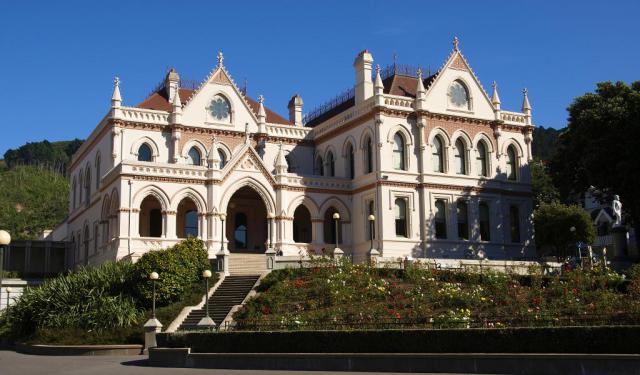
The first immigrants to New Zealand brought along their sense of style. Most of the country's first settlers, if not all of them, were Britishers; the capital city was no exception. The latter fact is duly reflected in Wellington's historical architecture. These buildings offer a glimpse into the city's past and add a great deal of charm to the cityscape. Let's take a quick... view more
Tour Duration: 2 Hours
Travel Distance: 3.5 Km or 2.2 Miles
Tour Duration: 2 Hours
Travel Distance: 3.5 Km or 2.2 Miles
Wellington City Center Walking Tour
New Zealand writer Katherine Mansfield saw Wellington as a town set at the edge of a deep harbor, with hills rising behind it and timber houses climbing into view. More than a century later, the city still feels arranged by the same forces: water, wind, slopes, and human stubbornness.
Wellington has a history shaped by harbor, migration, colonization, earthquakes, and government. Its Maori... view more
Tour Duration: 2 Hours
Travel Distance: 3.6 Km or 2.2 Miles
Wellington has a history shaped by harbor, migration, colonization, earthquakes, and government. Its Maori... view more
Tour Duration: 2 Hours
Travel Distance: 3.6 Km or 2.2 Miles
City Walks Overview
