

Earnscliffe, Ottawa
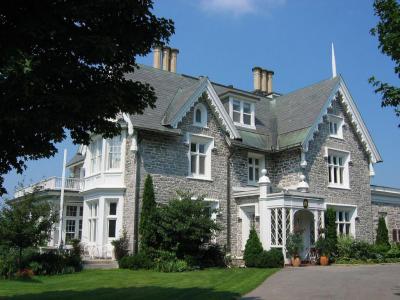
Earnscliffe, situated in Ottawa, is an exquisite Victorian manor constructed in the captivating Gothic Revival architectural style. Notably, it once served as the cherished abode of Canada's inaugural Prime Minister, Sir John A. Macdonald, during the late 19th century. Since 1930, it has assumed the role of the official residence for the British High Commissioner to Canada.
Positioned overlooking the Ottawa River, the manor is located just east of the Macdonald-Cartier Bridge. Nestled northwest of Sussex Drive, it stands opposite the distinguished Lester B. Pearson Building.
The construction of this grand manor was undertaken by Thomas McKay's company between 1855 and 1857 for his son-in-law, John McKinnon. Subsequently, the property changed hands and was acquired by Thomas Reynolds, an esteemed railroad developer. Reynolds occupied the estate for several years, during which time it acquired the name Earnscliffe-a term steeped in history, symbolizing an "eagle's cliff".
In 1930, William Henry Clark, the inaugural British High Commissioner to Canada, orchestrated the purchase of the property on behalf of the British government. Ever since Earnscliffe has been the esteemed residence of the British High Commissioner.
Acknowledging its historical significance, Earnscliffe has been designated a National Historic Site and is adorned with a plaque erected by the Historic Sites and Monuments Board of Canada. Regrettably, due to its diplomatic function, the manor is not open to the general public for visitation, except during special occasions like Doors Open Ottawa. On May 30, 1960, it received the prestigious designation of "Earnscliffe National Historic Site of Canada."
Positioned overlooking the Ottawa River, the manor is located just east of the Macdonald-Cartier Bridge. Nestled northwest of Sussex Drive, it stands opposite the distinguished Lester B. Pearson Building.
The construction of this grand manor was undertaken by Thomas McKay's company between 1855 and 1857 for his son-in-law, John McKinnon. Subsequently, the property changed hands and was acquired by Thomas Reynolds, an esteemed railroad developer. Reynolds occupied the estate for several years, during which time it acquired the name Earnscliffe-a term steeped in history, symbolizing an "eagle's cliff".
In 1930, William Henry Clark, the inaugural British High Commissioner to Canada, orchestrated the purchase of the property on behalf of the British government. Ever since Earnscliffe has been the esteemed residence of the British High Commissioner.
Acknowledging its historical significance, Earnscliffe has been designated a National Historic Site and is adorned with a plaque erected by the Historic Sites and Monuments Board of Canada. Regrettably, due to its diplomatic function, the manor is not open to the general public for visitation, except during special occasions like Doors Open Ottawa. On May 30, 1960, it received the prestigious designation of "Earnscliffe National Historic Site of Canada."
Want to visit this sight? Check out these Self-Guided Walking Tours in Ottawa. Alternatively, you can download the mobile app "GPSmyCity: Walks in 1K+ Cities" from Apple App Store or Google Play Store. The app turns your mobile device to a personal tour guide and it works offline, so no data plan is needed when traveling abroad.
Download The GPSmyCity App



Earnscliffe on Map
Sight Name: Earnscliffe
Sight Location: Ottawa, Canada (See walking tours in Ottawa)
Sight Type: Attraction/Landmark
Sight Location: Ottawa, Canada (See walking tours in Ottawa)
Sight Type: Attraction/Landmark
Nearby Sights

Walking Tours in Ottawa, Canada

Create Your Own Walk in Ottawa
Creating your own self-guided walk in Ottawa is easy and fun. Choose the city attractions that you want to see and a walk route map will be created just for you. You can even set your hotel as the start point of the walk.
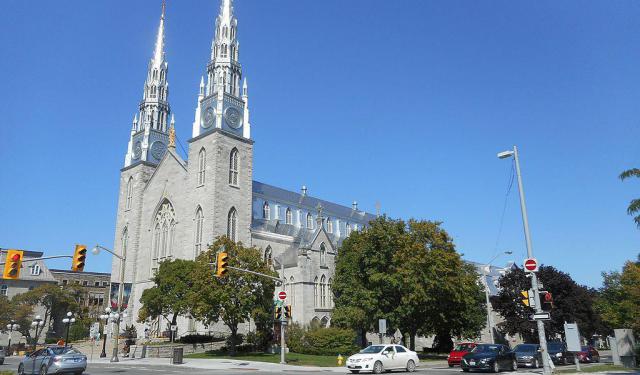
Ottawa's Historical Churches Walking Tour
The city of Ottawa has a number of notable religious sites fit to spark interest in both ardent believers and those keen on ecclesiastical architecture. With most of the churches located in the downtown area or nearby, one can visit these locations without trouble.
The Notre Dame Cathedral Basilica, a splendid Gothic Revival masterpiece, is a centerpiece of Ottawa's spiritual landscape.... view more
Tour Duration: 2 Hour(s)
Travel Distance: 3.2 Km or 2 Miles
The Notre Dame Cathedral Basilica, a splendid Gothic Revival masterpiece, is a centerpiece of Ottawa's spiritual landscape.... view more
Tour Duration: 2 Hour(s)
Travel Distance: 3.2 Km or 2 Miles
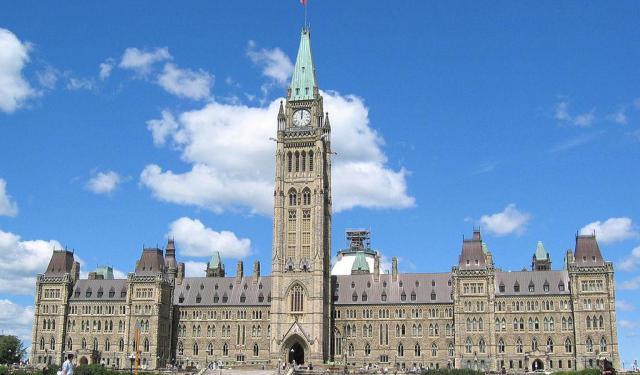
Ottawa Downtown Walking Tour
Perched on the banks of the Ottawa River, the Canadian capital has story that began long before Parliament’s iconic Gothic towers pierced the skyline. For thousands of years, this land was home to the Algonquin Anishinaabe people, whose traditional territory stretched along the river’s length. The word “Ottawa” itself comes from adawe, meaning “to trade,” a nod to the waterway’s... view more
Tour Duration: 2 Hour(s)
Travel Distance: 2.8 Km or 1.7 Miles
Tour Duration: 2 Hour(s)
Travel Distance: 2.8 Km or 1.7 Miles
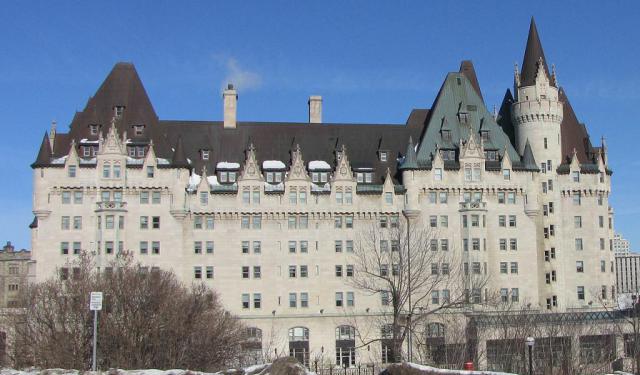
Historical Buildings Walking Tour
The architecture of Ottawa – formalistic and functional, for the most part – is marked by the city's role as the national capital of Canada. As such, it represents a mix of styles, varying considerably based on the era of construction of any particular object, and reflects the nation's heritage and political significance.
Centermost among these structures is the Parliament... view more
Tour Duration: 1 Hour(s)
Travel Distance: 1.9 Km or 1.2 Miles
Centermost among these structures is the Parliament... view more
Tour Duration: 1 Hour(s)
Travel Distance: 1.9 Km or 1.2 Miles
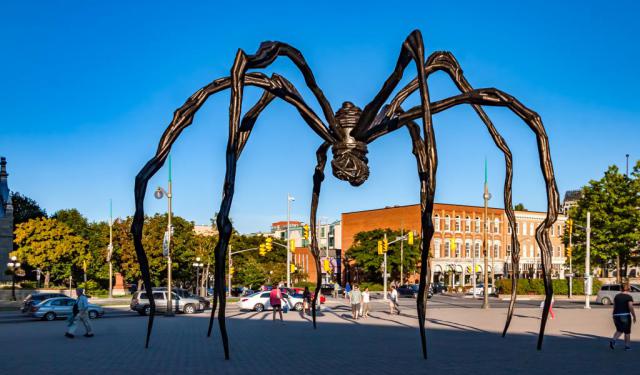
Statues and Sculptures Walk
As a cultural city, Ottawa abounds in monuments and statues of various sorts. In fact, there are so many of them that the locals, accustomed to their presence, jokingly claim they hardly notice them at all. Still, these artistic creations serve as visual storytellers, sharing tales of courage, peacekeeping, and commemoration.
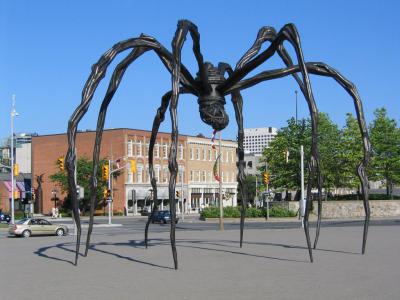
The Maman Statue, a prominent sculpture located outside the National... view more
Tour Duration: 1 Hour(s)
Travel Distance: 1.4 Km or 0.9 Miles
The Maman Statue, a prominent sculpture located outside the National... view more
Tour Duration: 1 Hour(s)
Travel Distance: 1.4 Km or 0.9 Miles