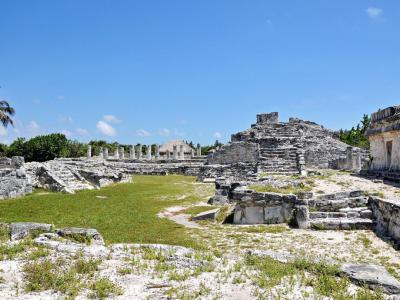


El Rey Ruins (Zona Arqueologica El Rey), Cancun
El Rey Ruins (Zona Arqueologica El Rey) is a notable pre-Columbian archaeological site of the Mayan culture, situated in the southeast of Mexico. It's located in the renowned tourist resort of Cancun, Quintana Roo, specifically on the Caribbean coast within the hotel zone of Cancun Island. This island, on the outskirts of Cancun's city center, is connected to the mainland by two bridges.
The original Mayan name of El Rey is unknown. Its current name, which means "the king," was inspired by a discovery in 1909 by English travelers Channing Arnold and Frederick Frost. They found an anthropomorphic sculpture at the site, interpreted as a monarch or noble, leading to its naming. A preserved head of this sculpture is now housed in the Archaeological Museum of Cancun.
El Rey's historical significance dates back to the early classical period (250-600 AD), with its first settlers constructing houses on platforms. These early structures were made of organic materials, which have not survived over the centuries. Between 200 and 1200 AD, the site's inhabitants engaged in fishing and salt extraction.
The site experienced a surge in importance between 1300 and 1500 AD due to an influx of immigrants from the interior of the Yucatan Peninsula. The current structures visible at El Rey date from this period. El Rey served as a vital port within the coastal commercial network, alongside other significant ports like Xcaret, Xelha, Tulum, and Muyil.
The arrival of the Spaniards in the sixteenth century led to the abandonment of El Rey by the Mayans. Today, it stands as the most important archaeological site on Cancun Island, comprising 47 structures with diverse functions. Archaeologists have uncovered remains of mural paintings and drawings from the post-classical period.
A significant discovery was made during a 1975 temple excavation, where the burial site of a high-ranking individual was found. This burial included artifacts such as a copper axe, a bracelet, and shell and bone ornaments, highlighting the historical and cultural significance of El Rey Ruins in the study of Mayan civilization.
The original Mayan name of El Rey is unknown. Its current name, which means "the king," was inspired by a discovery in 1909 by English travelers Channing Arnold and Frederick Frost. They found an anthropomorphic sculpture at the site, interpreted as a monarch or noble, leading to its naming. A preserved head of this sculpture is now housed in the Archaeological Museum of Cancun.
El Rey's historical significance dates back to the early classical period (250-600 AD), with its first settlers constructing houses on platforms. These early structures were made of organic materials, which have not survived over the centuries. Between 200 and 1200 AD, the site's inhabitants engaged in fishing and salt extraction.
The site experienced a surge in importance between 1300 and 1500 AD due to an influx of immigrants from the interior of the Yucatan Peninsula. The current structures visible at El Rey date from this period. El Rey served as a vital port within the coastal commercial network, alongside other significant ports like Xcaret, Xelha, Tulum, and Muyil.
The arrival of the Spaniards in the sixteenth century led to the abandonment of El Rey by the Mayans. Today, it stands as the most important archaeological site on Cancun Island, comprising 47 structures with diverse functions. Archaeologists have uncovered remains of mural paintings and drawings from the post-classical period.
A significant discovery was made during a 1975 temple excavation, where the burial site of a high-ranking individual was found. This burial included artifacts such as a copper axe, a bracelet, and shell and bone ornaments, highlighting the historical and cultural significance of El Rey Ruins in the study of Mayan civilization.
Want to visit this sight? Check out these Self-Guided Walking Tours in Cancun. Alternatively, you can download the mobile app "GPSmyCity: Walks in 1K+ Cities" from Apple App Store or Google Play Store. The app turns your mobile device to a personal tour guide and it works offline, so no data plan is needed when traveling abroad.
Download The GPSmyCity App



El Rey Ruins (Zona Arqueologica El Rey) on Map
Sight Name: El Rey Ruins (Zona Arqueologica El Rey)
Sight Location: Cancun, Mexico (See walking tours in Cancun)
Sight Type: Attraction/Landmark
Sight Location: Cancun, Mexico (See walking tours in Cancun)
Sight Type: Attraction/Landmark
Nearby Sights




Walking Tours in Cancun, Mexico

Create Your Own Walk in Cancun
Creating your own self-guided walk in Cancun is easy and fun. Choose the city attractions that you want to see and a walk route map will be created just for you. You can even set your hotel as the start point of the walk.
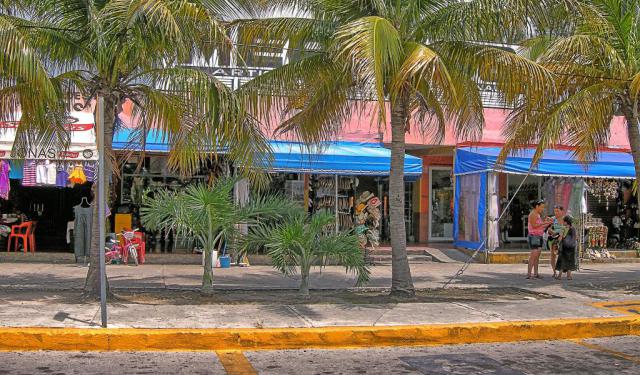
Downtown Walking Tour
Cancún is often linked to stories of turquoise water, spring break energy, and the rapid rise of a city built almost from scratch. It’s also tied to the wider history of the Maya world that once dominated this coast, with nearby ruins reminding visitors that this place mattered long before resorts arrived. What surprises many people is how planned the city is-and how different its local side... view more
Tour Duration: 1 Hour(s)
Travel Distance: 2.3 Km or 1.4 Miles
Tour Duration: 1 Hour(s)
Travel Distance: 2.3 Km or 1.4 Miles
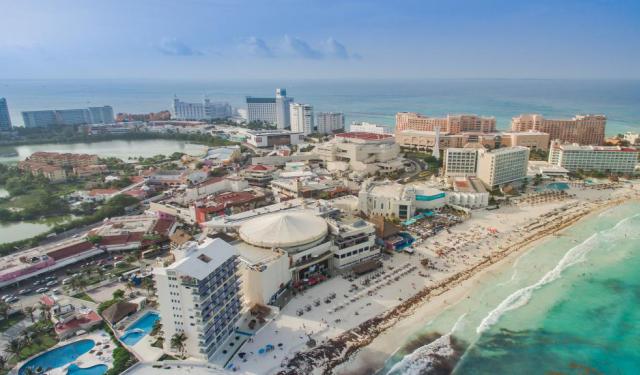
Hotel Zone Walking Tour
Cancún’s Hotel Zone is often recognized from aerial photos rather than history books: a thin ribbon of land bordered by bright water on both sides. Over the years, it has hosted global events, celebrity vacations, and millions of first-time visitors seeing the Caribbean for the first time. What makes it unusual is not just the scenery, but the fact that this entire area was designed to guide... view more
Tour Duration: 3 Hour(s)
Travel Distance: 5.6 Km or 3.5 Miles
Tour Duration: 3 Hour(s)
Travel Distance: 5.6 Km or 3.5 Miles
Useful Travel Guides for Planning Your Trip

Cancun Souvenir Shopping: 17 Mexican Things to Buy
Part of the Yucatán Peninsula, Cancun is a major tourist spot on the face of Mexico, drawing annually millions of tourists. Yucatan is a home to some of the Mexican delights, such as Xtabentún Liqueur, which makes it a true magnet for visitors looking to pick up something memorable and...