

Downtown Walking Tour (Self Guided), Cancun
Cancún is often linked to stories of turquoise water, spring break energy, and the rapid rise of a city built almost from scratch. It’s also tied to the wider history of the Maya world that once dominated this coast, with nearby ruins reminding visitors that this place mattered long before resorts arrived. What surprises many people is how planned the city is—and how different its local side feels once you step away from the beach.
The name “Cancún” comes from the Mayan language and is commonly translated as “nest of snakes.” The name likely referred to the shape of the island or the wildlife found in the area. Long before modern development, the name was already connected to the land and sea that define the region.
For most of its history, Cancún was a quiet, sparsely populated area. That changed in the early 1970s, when the Mexican government selected it as a site for a major tourism project. Infrastructure, hotels, and roads were built quickly, and within a few decades Cancún became one of the country’s most visited destinations. The city grew in two directions at once: a resort-focused strip along the coast and a working city on the mainland.
Today, Cancún is divided into clear zones. The Hotel Zone stretches along a narrow strip between the Caribbean Sea and the lagoon, while downtown—often called El Centro—feels more residential and local. The atmosphere shifts depending on where you are: relaxed and scenic near the water, busier and more everyday inland. Getting around is straightforward, with wide roads, frequent buses, and clear landmarks.
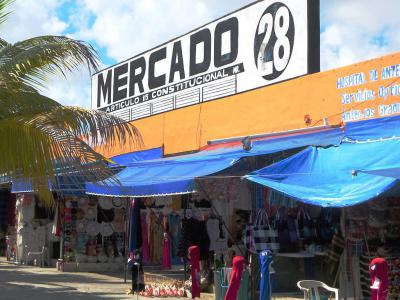
In the city center, Tulum Avenue serves as one of the main arteries, lined with shops, offices, and local businesses. Nearby, Market 28 offers a more traditional experience, with stalls selling handicrafts, souvenirs, and casual food. It’s a popular stop for seeing daily life beyond the resorts.
This walk takes you to discovery downtown Cancún, where the city’s everyday life takes shape. The area shows how Cancún operates beyond the hotel strip, with working streets, local businesses, and public spaces used by residents.
The name “Cancún” comes from the Mayan language and is commonly translated as “nest of snakes.” The name likely referred to the shape of the island or the wildlife found in the area. Long before modern development, the name was already connected to the land and sea that define the region.
For most of its history, Cancún was a quiet, sparsely populated area. That changed in the early 1970s, when the Mexican government selected it as a site for a major tourism project. Infrastructure, hotels, and roads were built quickly, and within a few decades Cancún became one of the country’s most visited destinations. The city grew in two directions at once: a resort-focused strip along the coast and a working city on the mainland.
Today, Cancún is divided into clear zones. The Hotel Zone stretches along a narrow strip between the Caribbean Sea and the lagoon, while downtown—often called El Centro—feels more residential and local. The atmosphere shifts depending on where you are: relaxed and scenic near the water, busier and more everyday inland. Getting around is straightforward, with wide roads, frequent buses, and clear landmarks.
In the city center, Tulum Avenue serves as one of the main arteries, lined with shops, offices, and local businesses. Nearby, Market 28 offers a more traditional experience, with stalls selling handicrafts, souvenirs, and casual food. It’s a popular stop for seeing daily life beyond the resorts.
This walk takes you to discovery downtown Cancún, where the city’s everyday life takes shape. The area shows how Cancún operates beyond the hotel strip, with working streets, local businesses, and public spaces used by residents.
How it works: Download the app "GPSmyCity: Walks in 1K+ Cities" from Apple App Store or Google Play Store to your mobile phone or tablet. The app turns your mobile device into a personal tour guide and its built-in GPS navigation functions guide you from one tour stop to next. The app works offline, so no data plan is needed when traveling abroad.
Downtown Walking Tour Map
Guide Name: Downtown Walking Tour
Guide Location: Mexico » Cancun (See other walking tours in Cancun)
Guide Type: Self-guided Walking Tour (Sightseeing)
# of Attractions: 6
Tour Duration: 1 Hour(s)
Travel Distance: 2.3 Km or 1.4 Miles
Author: anna
Sight(s) Featured in This Guide:
Guide Location: Mexico » Cancun (See other walking tours in Cancun)
Guide Type: Self-guided Walking Tour (Sightseeing)
# of Attractions: 6
Tour Duration: 1 Hour(s)
Travel Distance: 2.3 Km or 1.4 Miles
Author: anna
Sight(s) Featured in This Guide:
- Avenida Tulum (Tulum Avenue)
- Ki-Huic Market
- Parque del Artesano (Artisan Park)
- El Parque de las Palapas (Las Palapas Park)
- Mercado 28 (Market 28)
- Plaza Bonita Marketplace
1) Avenida Tulum (Tulum Avenue) (must see)
Tulum Avenue is one of downtown Cancún’s main thoroughfares and an essential street for understanding how the city works beyond the Hotel Zone. Cutting through the urban core, the avenue connects residential neighborhoods, business areas, and major transit routes. It’s a place shaped by everyday needs, offering a clear look at local life.
Take in the activity around you as you spend time along the avenue. Supermarkets, pharmacies, banks, and small storefronts line the street, often sharing space with food stands and casual eateries. Buses pass frequently, and foot traffic stays steady, creating a sense of constant movement. The atmosphere here is practical and efficient, reflecting how residents use the area throughout the day.
The street may feel different from block to block. Some stretches are dominated by offices and larger commercial buildings, while others are quieter and closer to residential zones. Glancing down the side streets reveals schools, small markets, and local neighborhoods branching off the main road. Most signs and services are aimed at residents, not visitors, which helps define the character of the avenue.
Tulum Avenue is useful for understanding how Cancún is organized on a practical level. Its role as a transit corridor, shopping street, and link between neighborhoods shows how the city was designed to handle daily movement and services. Being here makes it easier to see how residents navigate the city and how downtown supports life beyond the tourist areas.
Take in the activity around you as you spend time along the avenue. Supermarkets, pharmacies, banks, and small storefronts line the street, often sharing space with food stands and casual eateries. Buses pass frequently, and foot traffic stays steady, creating a sense of constant movement. The atmosphere here is practical and efficient, reflecting how residents use the area throughout the day.
The street may feel different from block to block. Some stretches are dominated by offices and larger commercial buildings, while others are quieter and closer to residential zones. Glancing down the side streets reveals schools, small markets, and local neighborhoods branching off the main road. Most signs and services are aimed at residents, not visitors, which helps define the character of the avenue.
Tulum Avenue is useful for understanding how Cancún is organized on a practical level. Its role as a transit corridor, shopping street, and link between neighborhoods shows how the city was designed to handle daily movement and services. Being here makes it easier to see how residents navigate the city and how downtown supports life beyond the tourist areas.
2) Ki-Huic Market
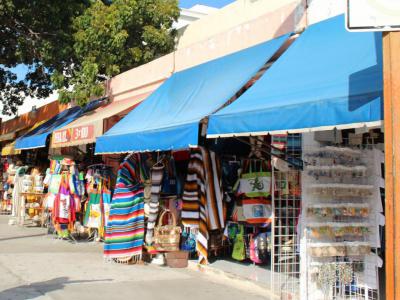
Ki-Huic Market is considered Cancún’s oldest arts and crafts market and offers a more traditional shopping experience than the city’s larger, tourist-oriented markets. Located away from the main resort areas, it’s known for its focus on authentic handicrafts and locally made items rather than mass-produced souvenirs.
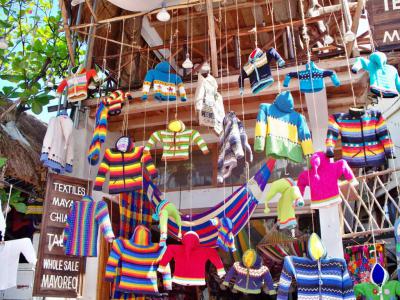
Most stalls at Ki-Huic specialize in traditional Mexican crafts, including handmade jewelry, embroidered textiles, woven bags, wooden carvings, ceramics, and decorative items inspired by Mayan designs. Many vendors are artisans or work directly with local producers, which gives the market a more personal feel. You’ll also find smaller food stands and snacks scattered throughout, making it easy to pause and take a break while browsing.
Ki-Huic Market appeals to visitors looking for meaningful souvenirs and a quieter atmosphere. It’s less crowded than central tourist markets and offers a closer look at traditional craftsmanship and everyday commerce. A short visit here adds variety to exploring Cancún, especially for travelers interested in local culture and handmade goods.
Most stalls at Ki-Huic specialize in traditional Mexican crafts, including handmade jewelry, embroidered textiles, woven bags, wooden carvings, ceramics, and decorative items inspired by Mayan designs. Many vendors are artisans or work directly with local producers, which gives the market a more personal feel. You’ll also find smaller food stands and snacks scattered throughout, making it easy to pause and take a break while browsing.
Ki-Huic Market appeals to visitors looking for meaningful souvenirs and a quieter atmosphere. It’s less crowded than central tourist markets and offers a closer look at traditional craftsmanship and everyday commerce. A short visit here adds variety to exploring Cancún, especially for travelers interested in local culture and handmade goods.
3) Parque del Artesano (Artisan Park)
Artisan Park is a small open-air artisan park in Cancún known for its relaxed, slightly bohemian atmosphere. Often described as having a “hippie” vibe, it attracts both locals and visitors looking for handmade crafts in a setting that feels informal and unhurried. The park typically comes to life from midweek through the weekend, when most vendors are present.
The stalls focus on locally made and handcrafted items, with a strong emphasis on quality. Handmade jewelry is especially popular here, particularly pieces made with colorful natural stones. You’ll also find crafts, decorative items, and souvenirs at a range of prices, making it a good place both for browsing and for finding affordable keepsakes. Compared to larger markets, shopping here feels more personal, with time to look closely at materials and designs.
Artisan Park isn’t only about shopping. There’s a small playground area with swings and a slide, which makes it easier to visit if you’re traveling with children. While there are no food vendors inside the park, several casual restaurants are located nearby, so it’s easy to step out for a quick meal or snack and return.
Live music is another part of what gives the park its character. A small stage hosts local bands from time to time, and performances can last for hours. When music is playing, many visitors choose to slow down, sit nearby, and enjoy the atmosphere.
The stalls focus on locally made and handcrafted items, with a strong emphasis on quality. Handmade jewelry is especially popular here, particularly pieces made with colorful natural stones. You’ll also find crafts, decorative items, and souvenirs at a range of prices, making it a good place both for browsing and for finding affordable keepsakes. Compared to larger markets, shopping here feels more personal, with time to look closely at materials and designs.
Artisan Park isn’t only about shopping. There’s a small playground area with swings and a slide, which makes it easier to visit if you’re traveling with children. While there are no food vendors inside the park, several casual restaurants are located nearby, so it’s easy to step out for a quick meal or snack and return.
Live music is another part of what gives the park its character. A small stage hosts local bands from time to time, and performances can last for hours. When music is playing, many visitors choose to slow down, sit nearby, and enjoy the atmosphere.
4) El Parque de las Palapas (Las Palapas Park)
Las Palapas Park is one of downtown Cancún’s most popular gathering places and a key spot for experiencing local daily life. Located away from the Hotel Zone, the park serves as a social center where residents come to relax, eat, and spend time together, especially in the evenings.
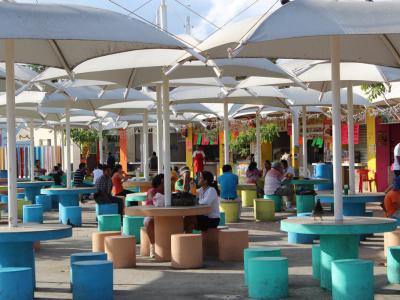
The park is best known for its food stalls, which line the walkways and offer a wide range of casual local dishes. Visitors can find tacos, empanadas, marquesitas, fresh juices, and other street-food favorites at affordable prices. Families, couples, and groups of friends gather here after work or school, creating a lively but relaxed atmosphere that feels distinctly local.
Las Palapas Park also functions as a cultural space. A small stage hosts regular events, including live music, dance performances, and community celebrations. These activities often draw large crowds and give visitors a chance to see how public events are woven into everyday life in Cancún. Children play in open areas while adults sit nearby, talk, and watch the activity around them.
In the evenings, Las Palapas Park becomes noticeably busier, with food stalls drawing lines and the central area filling with people stopping to eat or watch what’s happening on stage. Locals treat the park as an extension of their neighborhood rather than a special destination, and that’s what makes it authentic for visitors.
The park is best known for its food stalls, which line the walkways and offer a wide range of casual local dishes. Visitors can find tacos, empanadas, marquesitas, fresh juices, and other street-food favorites at affordable prices. Families, couples, and groups of friends gather here after work or school, creating a lively but relaxed atmosphere that feels distinctly local.
Las Palapas Park also functions as a cultural space. A small stage hosts regular events, including live music, dance performances, and community celebrations. These activities often draw large crowds and give visitors a chance to see how public events are woven into everyday life in Cancún. Children play in open areas while adults sit nearby, talk, and watch the activity around them.
In the evenings, Las Palapas Park becomes noticeably busier, with food stalls drawing lines and the central area filling with people stopping to eat or watch what’s happening on stage. Locals treat the park as an extension of their neighborhood rather than a special destination, and that’s what makes it authentic for visitors.
5) Mercado 28 (Market 28) (must see)
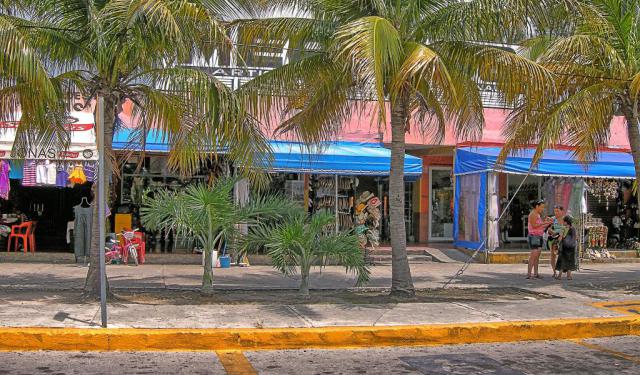
Market 28 is one of downtown Cancún’s most active shopping areas, bringing together more than a hundred small stores under one roof. The market is known for souvenirs, handicrafts, clothing, jewelry, and casual dining, all arranged in a busy, informal layout that encourages slow exploration rather than quick browsing.
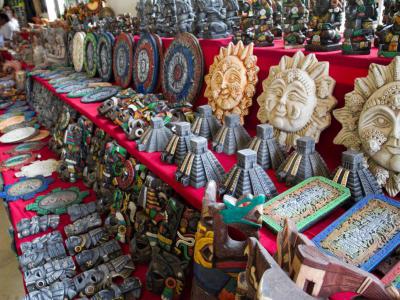
Start by walking along the wider main passages to get a sense of the market’s size and layout. From there, turn into the narrower aisles that branch off on both sides. These tighter sections are where most of the craft stalls are concentrated, selling hammocks, embroidered textiles, decorative items, leather goods, and fashion accessories. Similar products appear throughout the market, so moving between aisles makes it easier to compare quality and prices. Bargaining is common here, especially for souvenirs, and many vendors accept U.S. dollars, with some also taking credit cards.
As you move deeper inside, the atmosphere changes slightly around the food areas. Tables and chairs begin to appear, and you can notice people stopping to eat. These casual restaurants serve traditional Mexican dishes and are convenient places to take a break before continuing through the stalls. It’s easy to step in for a meal and then rejoin the flow of shoppers without leaving the market.
Market 28 works best when explored patiently. Early in the day, the aisles are less crowded, and vendors are often more open to deals during their first sales of the morning. The market’s looping paths and dense layout mean you’ll likely pass the same stalls more than once, which is part of the experience.
Start by walking along the wider main passages to get a sense of the market’s size and layout. From there, turn into the narrower aisles that branch off on both sides. These tighter sections are where most of the craft stalls are concentrated, selling hammocks, embroidered textiles, decorative items, leather goods, and fashion accessories. Similar products appear throughout the market, so moving between aisles makes it easier to compare quality and prices. Bargaining is common here, especially for souvenirs, and many vendors accept U.S. dollars, with some also taking credit cards.
As you move deeper inside, the atmosphere changes slightly around the food areas. Tables and chairs begin to appear, and you can notice people stopping to eat. These casual restaurants serve traditional Mexican dishes and are convenient places to take a break before continuing through the stalls. It’s easy to step in for a meal and then rejoin the flow of shoppers without leaving the market.
Market 28 works best when explored patiently. Early in the day, the aisles are less crowded, and vendors are often more open to deals during their first sales of the morning. The market’s looping paths and dense layout mean you’ll likely pass the same stalls more than once, which is part of the experience.
6) Plaza Bonita Marketplace
Plaza Bonita Marketplace is one of Cancún’s better-known indoor shopping spaces, designed to feel more like a small village than a typical mall. Instead of long corridors, the marketplace is laid out around open walkways, garden areas, and small plazas that resemble a traditional town square. This setup gives the space a relaxed flow and makes it comfortable to explore at an unhurried pace.
Shops and kiosks throughout Plaza Bonita focus heavily on local crafts and visitor-friendly shopping. Handmade bags and jewelry are especially common, alongside souvenir items and decorative pieces inspired by regional styles. At the same time, the selection goes beyond crafts—visitors will also find shoes, toys, and even electronics, often at competitive prices. The variety makes it easy to combine souvenir shopping with more practical purchases in one stop.
Entertainment is part of the experience here as well. Musicians and performers regularly appear in the common areas, sometimes wearing traditional Mayan-style costumes. These performances add background energy without overwhelming the space, giving visitors something to pause and watch while moving between shops or gardens.
Food options are spread throughout the marketplace, making it easy to take a break without leaving the complex. Cafés and restaurants mainly serve Mexican dishes, offering both full meals and quick snacks depending on how much time you want to spend.
Shops and kiosks throughout Plaza Bonita focus heavily on local crafts and visitor-friendly shopping. Handmade bags and jewelry are especially common, alongside souvenir items and decorative pieces inspired by regional styles. At the same time, the selection goes beyond crafts—visitors will also find shoes, toys, and even electronics, often at competitive prices. The variety makes it easy to combine souvenir shopping with more practical purchases in one stop.
Entertainment is part of the experience here as well. Musicians and performers regularly appear in the common areas, sometimes wearing traditional Mayan-style costumes. These performances add background energy without overwhelming the space, giving visitors something to pause and watch while moving between shops or gardens.
Food options are spread throughout the marketplace, making it easy to take a break without leaving the complex. Cafés and restaurants mainly serve Mexican dishes, offering both full meals and quick snacks depending on how much time you want to spend.
Walking Tours in Cancun, Mexico
Create Your Own Walk in Cancun
Creating your own self-guided walk in Cancun is easy and fun. Choose the city attractions that you want to see and a walk route map will be created just for you. You can even set your hotel as the start point of the walk.
Hotel Zone Walking Tour
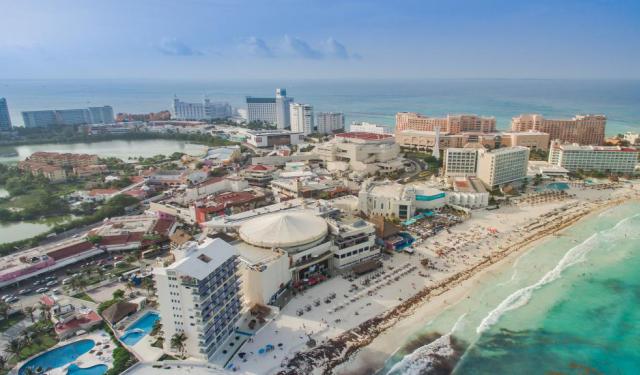
Cancun is more than just hotels and resorts, as the main tourist area also offers the chance of viewing several cultural and historical points of interest. Visitors may get acquainted with Maya civilization through the ruins of Yamil Lu'um (“hilly land”), located on Cancun’s highest point, or buy local souvenirs at the Mercado Coral Negro.
The area also has a number of modern,... view more
Tour Duration: 3 Hour(s)
Travel Distance: 5.6 Km or 3.5 Miles
The area also has a number of modern,... view more
Tour Duration: 3 Hour(s)
Travel Distance: 5.6 Km or 3.5 Miles
Useful Travel Guides for Planning Your Trip
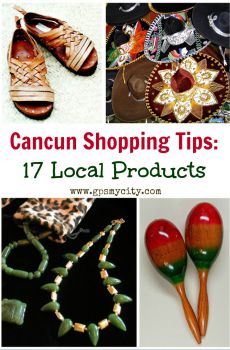
Cancun Souvenir Shopping: 17 Mexican Things to Buy
Part of the Yucatán Peninsula, Cancun is a major tourist spot on the face of Mexico, drawing annually millions of tourists. Yucatan is a home to some of the Mexican delights, such as Xtabentún Liqueur, which makes it a true magnet for visitors looking to pick up something memorable and...
The Most Popular Cities
/ view all