

Escher in Het Paleis (Escher in The Palace), Hague (must see)
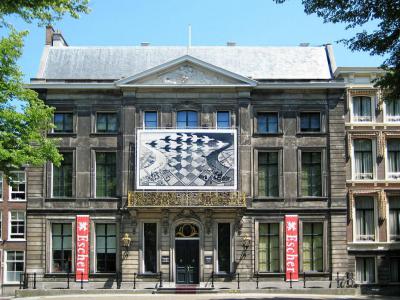
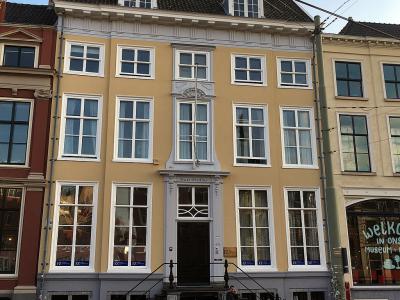
Escher in The Palace is dedicated to the work of Dutch graphic artist M. C. Escher and is housed in a former royal residence. The building was constructed in 1760, designed by architect Pieter de Swart, and later served as the winter palace of Queen Emma of the Netherlands, who used it until her death in 1934. In 1990, the palace was transferred to the city with the condition that it be used for cultural purposes, leading to its conversion into a museum dedicated to Escher’s work.
The collection focuses on Escher’s graphic art, including woodcuts, lithographs, and mezzotints. His early works often depict detailed landscapes and natural forms, while later pieces explore mathematical concepts such as symmetry, tessellation, and infinite patterns. Among the best-known works on display are Relativity, Ascending and Descending, and Day and Night, each illustrating his interest in visual paradox and spatial illusion. Escher himself once remarked on the fascination of boundaries between forms, reflecting his ongoing exploration of transformation and repetition.
Inside, the original layout of the palace has been preserved, with period features such as decorated ceilings, chandeliers, and wall finishes still visible. One unusual element is a staircase installed during Queen Emma’s time, designed in a way that creates a misleading sense of direction, aligning with the visual themes found in Escher’s work. Interactive displays are also included, allowing visitors to experiment with optical effects and better understand the techniques behind the images. For visitors, the museum offers a focused experience centered on a single artist within a manageable space.
The collection focuses on Escher’s graphic art, including woodcuts, lithographs, and mezzotints. His early works often depict detailed landscapes and natural forms, while later pieces explore mathematical concepts such as symmetry, tessellation, and infinite patterns. Among the best-known works on display are Relativity, Ascending and Descending, and Day and Night, each illustrating his interest in visual paradox and spatial illusion. Escher himself once remarked on the fascination of boundaries between forms, reflecting his ongoing exploration of transformation and repetition.
Inside, the original layout of the palace has been preserved, with period features such as decorated ceilings, chandeliers, and wall finishes still visible. One unusual element is a staircase installed during Queen Emma’s time, designed in a way that creates a misleading sense of direction, aligning with the visual themes found in Escher’s work. Interactive displays are also included, allowing visitors to experiment with optical effects and better understand the techniques behind the images. For visitors, the museum offers a focused experience centered on a single artist within a manageable space.
Want to visit this sight? Check out these Self-Guided Walking Tours in Hague. Alternatively, you can download the mobile app "GPSmyCity: Walks in 1K+ Cities" from Apple App Store or Google Play Store. The app turns your mobile device to a personal tour guide and it works offline, so no data plan is needed when traveling abroad.
Download The GPSmyCity App



Escher in Het Paleis (Escher in The Palace) on Map
Sight Name: Escher in Het Paleis (Escher in The Palace)
Sight Location: Hague, Netherlands (See walking tours in Hague)
Sight Type: Museum/Gallery
Guide(s) Containing This Sight:
Sight Location: Hague, Netherlands (See walking tours in Hague)
Sight Type: Museum/Gallery
Guide(s) Containing This Sight:
Nearby Sights

Walking Tours in Hague, Netherlands

Create Your Own Walk in Hague
Creating your own self-guided walk in Hague is easy and fun. Choose the city attractions that you want to see and a walk route map will be created just for you. You can even set your hotel as the start point of the walk.
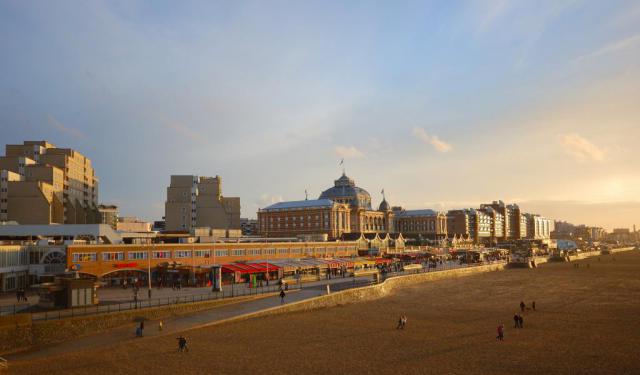
Scheveningen Walking Tour
Originally an independent fishing village, today Scheveningen is one of The Hague's eight districts. With its long beaches loved by both the young and old in all seasons, Scheveningen gets particularly crowded in summer.
Modern as it is, this seaside resort, the most popular in Holland, boasts a great deal of history - stretching all the way back to 1280 - with the locals still... view more
Tour Duration: 1 Hour
Travel Distance: 2.7 Km or 1.7 Miles
Modern as it is, this seaside resort, the most popular in Holland, boasts a great deal of history - stretching all the way back to 1280 - with the locals still... view more
Tour Duration: 1 Hour
Travel Distance: 2.7 Km or 1.7 Miles
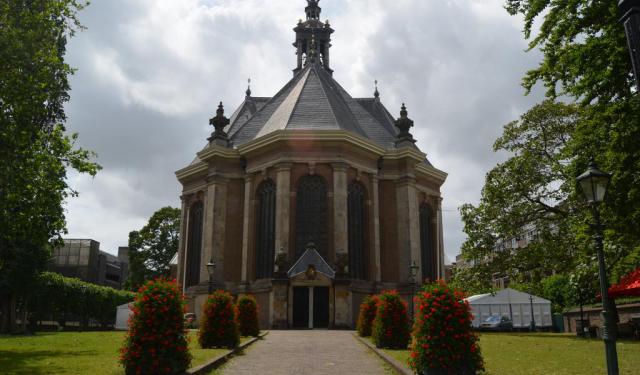
Hague's Classic Architectural Jewels
As the third largest metropolis in the Netherlands, The Hague has plenty to offer architecturally discerning travelers. The city is a living proof of a harmonious coexistence between a modern, easy on the eye skyline and a steeped in history downtown. Owing to its fascinating (political) past, The Hague has a plethora of historic buildings associated with worship, governance, royalty and... view more
Tour Duration: 2 Hours
Travel Distance: 2.9 Km or 1.8 Miles
Tour Duration: 2 Hours
Travel Distance: 2.9 Km or 1.8 Miles
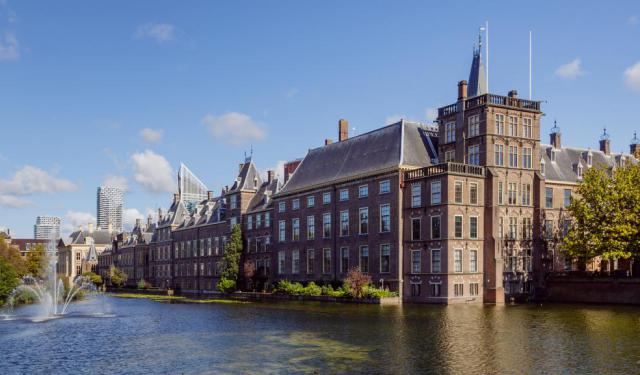
The Hague Old Town Walking Tour
In the 16th century, Italian writer Lodovico Guicciardini described The Hague as “the most beautiful, richest, and biggest village in Europe.”
The origins of The Hague date back to around 1230, when Count Floris IV of Holland purchased land near a dune lake, later known as the Hofvijver. The city name, The Hague, traces its origin to “the Count’s hedge”, referring to a wooded hunting... view more
Tour Duration: 2 Hours
Travel Distance: 3.5 Km or 2.2 Miles
The origins of The Hague date back to around 1230, when Count Floris IV of Holland purchased land near a dune lake, later known as the Hofvijver. The city name, The Hague, traces its origin to “the Count’s hedge”, referring to a wooded hunting... view more
Tour Duration: 2 Hours
Travel Distance: 3.5 Km or 2.2 Miles