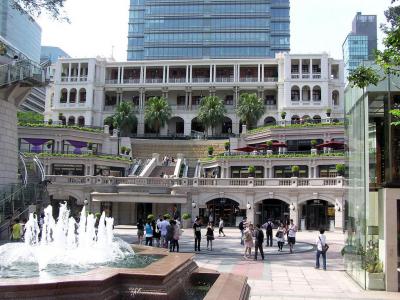


Former Marine Police Headquarters, Hong Kong
The Former Marine Police Headquarters is one of Hong Kong’s oldest surviving colonial compounds, dating back to 1884. For more than a century-until 1996-it served as the headquarters of the Marine Police, who patrolled Victoria Harbor and protected Hong Kong’s busy maritime trade routes. After the force relocated, the hilltop compound underwent extensive conservation and adaptive reuse, reopening in 2009 as 1881 Heritage, a cultural, commercial, and hospitality complex.
The compound originally consisted of five major structures arranged on a raised terrace overlooking Tsim Sha Tsui’s waterfront. The Main Building-now known as Hullett House-was a two-story colonial residence that housed married officers and the superintendent. Following restoration, it became a boutique hotel and later rebranded as the House 1881 hotel before ceasing hotel operations in 2021. Now it accommodates dining venues and event spaces. Other historic structures include the Stable Block, once used for police horses; the Signal Tower, built in 1885 to help ships set their marine chronometers by dropping a time ball daily at precisely 1 pm; the Old Kowloon Fire Station, which dates to 1920; and the adjacent Fire Station Accommodation Block that housed firefighters.
Approaching from Canton Road, you first encounter the Main Building centered at the top of the grand staircase, occupying the highest and most prominent position on the terrace. To your right, on the eastern side, stands the Stable Block, a long, lower structure set slightly behind the main facade. Moving westward across the courtyard from the Main Building, you reach the Old Kowloon Fire Station, distinguishable by its simple utilitarian form, with the Fire Station Accommodation Block positioned directly behind it on the northwestern edge of the compound. The Signal Tower sits on the southwestern corner.
Today, 1881 Heritage blends these restored buildings with landscaped terraces, courtyards, and new additions that respect the original architectural style. Luxury boutiques-such as Van Cleef & Arpels, Montblanc, and Mikimoto-occupy the arcaded ground floors, while restaurants serve a mix of Cantonese, Japanese, and Western fine dining. Seasonal displays, open-air events, and the atmospheric lighting of the historic facades make the complex a popular evening destination. And in the end, we observe a rare example of successful heritage conservation in Hong Kong.
The compound originally consisted of five major structures arranged on a raised terrace overlooking Tsim Sha Tsui’s waterfront. The Main Building-now known as Hullett House-was a two-story colonial residence that housed married officers and the superintendent. Following restoration, it became a boutique hotel and later rebranded as the House 1881 hotel before ceasing hotel operations in 2021. Now it accommodates dining venues and event spaces. Other historic structures include the Stable Block, once used for police horses; the Signal Tower, built in 1885 to help ships set their marine chronometers by dropping a time ball daily at precisely 1 pm; the Old Kowloon Fire Station, which dates to 1920; and the adjacent Fire Station Accommodation Block that housed firefighters.
Approaching from Canton Road, you first encounter the Main Building centered at the top of the grand staircase, occupying the highest and most prominent position on the terrace. To your right, on the eastern side, stands the Stable Block, a long, lower structure set slightly behind the main facade. Moving westward across the courtyard from the Main Building, you reach the Old Kowloon Fire Station, distinguishable by its simple utilitarian form, with the Fire Station Accommodation Block positioned directly behind it on the northwestern edge of the compound. The Signal Tower sits on the southwestern corner.
Today, 1881 Heritage blends these restored buildings with landscaped terraces, courtyards, and new additions that respect the original architectural style. Luxury boutiques-such as Van Cleef & Arpels, Montblanc, and Mikimoto-occupy the arcaded ground floors, while restaurants serve a mix of Cantonese, Japanese, and Western fine dining. Seasonal displays, open-air events, and the atmospheric lighting of the historic facades make the complex a popular evening destination. And in the end, we observe a rare example of successful heritage conservation in Hong Kong.
Want to visit this sight? Check out these Self-Guided Walking Tours in Hong Kong. Alternatively, you can download the mobile app "GPSmyCity: Walks in 1K+ Cities" from Apple App Store or Google Play Store. The app turns your mobile device to a personal tour guide and it works offline, so no data plan is needed when traveling abroad.
Download The GPSmyCity App



Former Marine Police Headquarters on Map
Sight Name: Former Marine Police Headquarters
Sight Location: Hong Kong, Hong Kong (See walking tours in Hong Kong)
Sight Type: Attraction/Landmark
Guide(s) Containing This Sight:
Sight Location: Hong Kong, Hong Kong (See walking tours in Hong Kong)
Sight Type: Attraction/Landmark
Guide(s) Containing This Sight:
Nearby Sights
Kee Wah Bakery
Image Courtesy of Jessica Ng.
Walking Tours in Hong Kong, Hong Kong

Create Your Own Walk in Hong Kong
Creating your own self-guided walk in Hong Kong is easy and fun. Choose the city attractions that you want to see and a walk route map will be created just for you. You can even set your hotel as the start point of the walk.
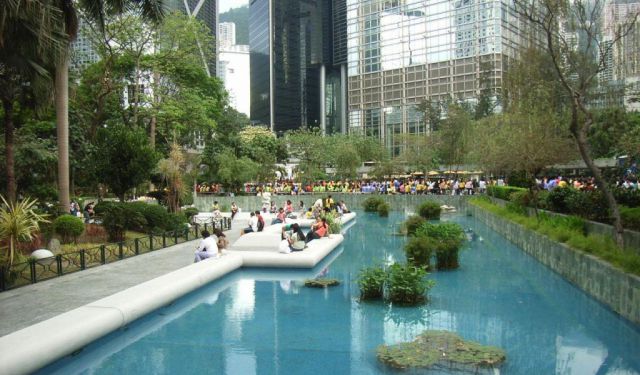
Hong Kong Downtown Walking Tour
Hong Kong is a city defined by contrasts-towering glass skylines rising beside quiet temples and centuries of culture. Even its name, from the Cantonese Heung Gong, meaning “Fragrant Harbor”, hints at its early role as a trading point for incense woods and aromatic goods moving through the Pearl River Delta. What began as the name of a small village near the present-day Aberdeen area... view more
Tour Duration: 2 Hours
Travel Distance: 3.7 Km or 2.3 Miles
Tour Duration: 2 Hours
Travel Distance: 3.7 Km or 2.3 Miles
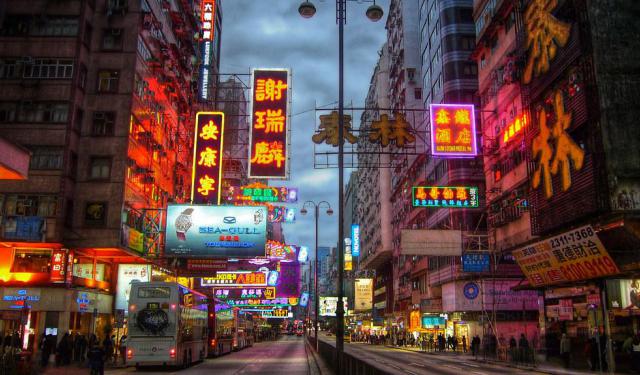
Kowloon Walking Tour
Kowloon is the urban peninsula directly north of Victoria Harbor, forming one of Hong Kong’s most densely populated and historically significant districts. The name Kowloon translates to “Nine Dragons”. According to legend, the Song-dynasty Emperor Bing once observed eight surrounding hills and proclaimed them dragons; an attendant reminded him that the emperor himself counted as a dragon,... view more
Tour Duration: 2 Hours
Travel Distance: 4.6 Km or 2.9 Miles
Tour Duration: 2 Hours
Travel Distance: 4.6 Km or 2.9 Miles
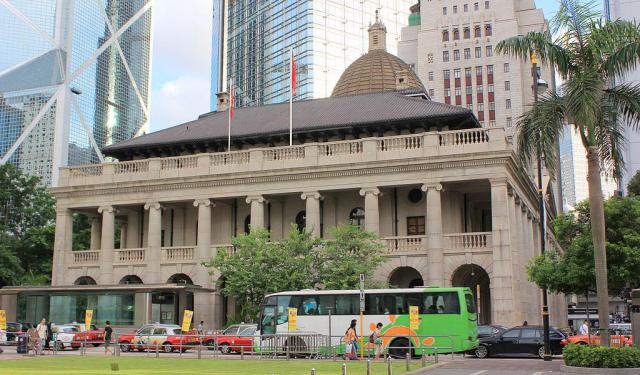
Colonial Buildings in Central Hong Kong
Hong Kong’s Central district is one of the rare places in Asia where traces of a colonial past stand visibly beside glass towers and global financial institutions. Moving through these streets reveals a network of buildings that once shaped governance, religion, trade, and everyday life during more than 150 years of British administration. Together, they chart Hong Kong’s evolution from a... view more
Tour Duration: 2 Hours
Travel Distance: 2.5 Km or 1.6 Miles
Tour Duration: 2 Hours
Travel Distance: 2.5 Km or 1.6 Miles
Causeway Bay Walking Tour
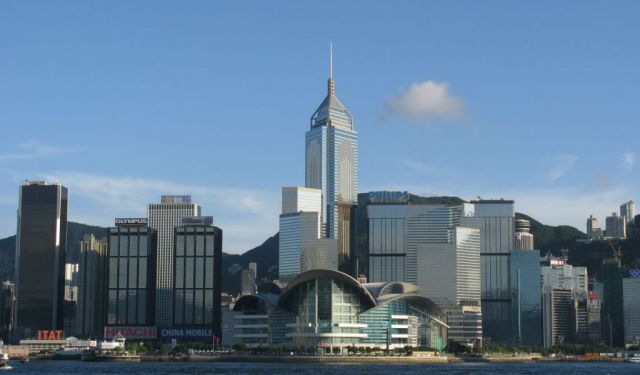
If you're looking for a taste of Hong Kong's energetic urban life, Causeway Bay is the place to be. Well known for its mega shopping malls and skyscrapers “rubbing shoulders” with rustic streets and picturesque corners, this bustling district is one of the city's most popular shopping and entertainment hubs.
The foremost among its landmarks is Times Square. Despite the name,... view more
Tour Duration: 1 Hour
Travel Distance: 2.8 Km or 1.7 Miles
The foremost among its landmarks is Times Square. Despite the name,... view more
Tour Duration: 1 Hour
Travel Distance: 2.8 Km or 1.7 Miles
Useful Travel Guides for Planning Your Trip
The Seafood Mile, Hong Kong
Cheung Chau is one of a cluster of Islands off the coast of Hong Kong. It has a fishing harbor to the front, which is lit up at night with tiny green, blue and white boat lights. The harbor is overlooked by many restaurants and street food can be bought from many vendors, who line up throwing an...
15 Hong Kong Products A Traveller Shouldn't Miss
The image of Hong Kong has been much popular with tourists since the late 1960s-early 70s, in large part due to the Bruce Lee movies, and has remained so after the city was ceded back to China in 1997. Still, despite such popularity, there're quite a few things, originally made in Hong Kong,...
City Walks Overview
