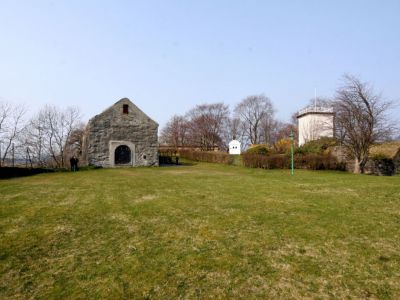


Fredriksberg Fortress, Bergen
Fredriksberg Fortress is a historic military fortification located in Bergen, specifically atop the highest point of the Nordnes peninsula. This fortress holds strategic importance due to its commanding position with a sheer cliff facing the sea on the west, providing extensive views and defensive advantages. The fortress construction began in 1666 under the direction of Dutch Engineer Major General Henrik Ruse and was primarily constructed because of the insights gained after the Battle of Vågen. It was completed in its initial form in 1667 and named in honor of King Fredrik III of Norway.
The fortress featured a design that included three bastions and a half bastion on the landward side, while a sturdy wall bordered the sea-facing cliff side. However, the construction faced delays and deterioration until a significant inspection by Christian Gyldenløve, son of Christian V of Denmark, in 1695 revitalized the efforts, leading to its completion by 1706 in a simplified format.
Over the centuries, Fredriksberg Fortress served various functions including a place of execution until 1876, with the last executed being Swedish counterfeiter Jacob Wallin. Additionally, parts of the fortress, such as the Lavette houses built in 1810 and 1843, originally used for military storage, were repurposed as temporary housing after the devastating city fire in 1916.
The Nordnes Park, developed between 1888 and 1898, incorporates areas of the former fortifications, contributing to the cultural and recreational landscape of the area. The fortress also played a role in the city’s firefighting efforts, serving as a fire watch station starting in 1667 and later as a fire station from 1905 until 1926.
Today, Fredriksberg Fortress is partially leased to the Nordnæs Bataillon, a social club/buekorps, indicating its continued use and significance within the community. This historic site remains a testament to the military and civic history of Bergen, reflecting centuries of adaptation and change.
The fortress featured a design that included three bastions and a half bastion on the landward side, while a sturdy wall bordered the sea-facing cliff side. However, the construction faced delays and deterioration until a significant inspection by Christian Gyldenløve, son of Christian V of Denmark, in 1695 revitalized the efforts, leading to its completion by 1706 in a simplified format.
Over the centuries, Fredriksberg Fortress served various functions including a place of execution until 1876, with the last executed being Swedish counterfeiter Jacob Wallin. Additionally, parts of the fortress, such as the Lavette houses built in 1810 and 1843, originally used for military storage, were repurposed as temporary housing after the devastating city fire in 1916.
The Nordnes Park, developed between 1888 and 1898, incorporates areas of the former fortifications, contributing to the cultural and recreational landscape of the area. The fortress also played a role in the city’s firefighting efforts, serving as a fire watch station starting in 1667 and later as a fire station from 1905 until 1926.
Today, Fredriksberg Fortress is partially leased to the Nordnæs Bataillon, a social club/buekorps, indicating its continued use and significance within the community. This historic site remains a testament to the military and civic history of Bergen, reflecting centuries of adaptation and change.
Want to visit this sight? Check out these Self-Guided Walking Tours in Bergen. Alternatively, you can download the mobile app "GPSmyCity: Walks in 1K+ Cities" from Apple App Store or Google Play Store. The app turns your mobile device to a personal tour guide and it works offline, so no data plan is needed when traveling abroad.
Download The GPSmyCity App



Fredriksberg Fortress on Map
Sight Name: Fredriksberg Fortress
Sight Location: Bergen, Norway (See walking tours in Bergen)
Sight Type: Attraction/Landmark
Sight Location: Bergen, Norway (See walking tours in Bergen)
Sight Type: Attraction/Landmark
Nearby Sights
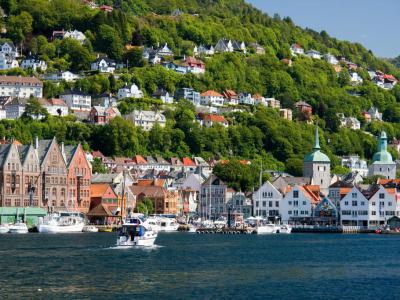
Walking Tours in Bergen, Norway

Create Your Own Walk in Bergen
Creating your own self-guided walk in Bergen is easy and fun. Choose the city attractions that you want to see and a walk route map will be created just for you. You can even set your hotel as the start point of the walk.
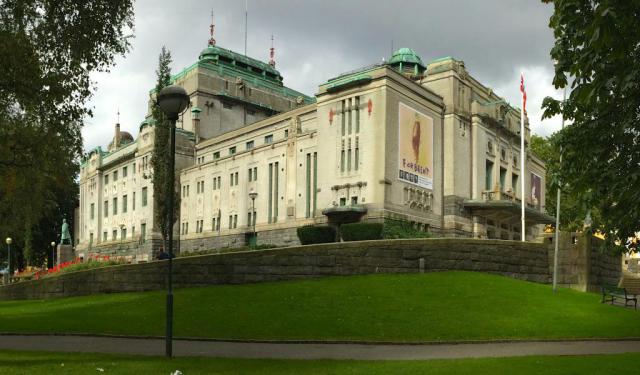
Bergen's Architectural Jewels
Surprising as it may appear, but the seemingly small city of Bergen for centuries had been the largest in all of the Nordic countries. It also remained so for Norway until the 1830s. Apart from being the country's former capital (back in the 13th century), Bergen is well-known primarily for its astoundingly beautiful cityscape, formed by the backdrop of mountains and serene waterfront, much... view more
Tour Duration: 2 Hours
Travel Distance: 2.9 Km or 1.8 Miles
Tour Duration: 2 Hours
Travel Distance: 2.9 Km or 1.8 Miles

Bergen Shopping Tour
For centuries, since its establishment in the 1020s, Bergen has been an important commercial hub. As such, it is probably one of the oldest shopping destinations in Northern Europe. Today, Bergen features a variety of shops and markets scattered throughout the city.
One such notable location is Kjottbasaren, a historic market located near the city center. Here, visitors can explore a variety... view more
Tour Duration: 1 Hour
Travel Distance: 0.9 Km or 0.6 Miles
One such notable location is Kjottbasaren, a historic market located near the city center. Here, visitors can explore a variety... view more
Tour Duration: 1 Hour
Travel Distance: 0.9 Km or 0.6 Miles
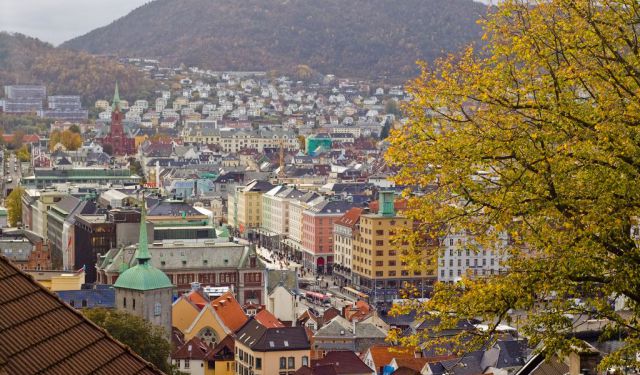
Discover Bergen City Center on Foot
Bergen is a historic port city shaped by the sea, the mountains, and centuries of trade. Its wooden waterfront, busy harbor, and Hanseatic past give it a character unlike anywhere else in Norway. Yet one part of its history seems almost contradictory: Bergen is famous for rain, averaging around 200 wet days a year, but it has also suffered a remarkable number of devastating fires. So why the... view more
Tour Duration: 2 Hours
Travel Distance: 3 Km or 1.9 Miles
Tour Duration: 2 Hours
Travel Distance: 3 Km or 1.9 Miles
City Walks Overview
