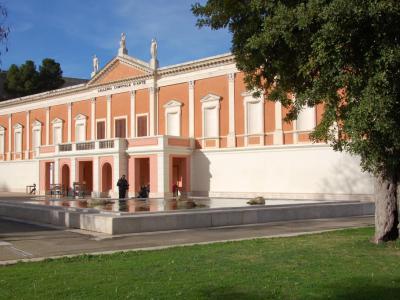


Galleria Comunale D'Arte (Municipal Art Gallery of Cagliari), Cagliari
The Municipal Art Gallery of Cagliari is a museum institution located in Cagliari in a historic structure in the public gardens, in Largo Dessì. Inaugurated in 1933, it is the main seat of the civic museums of Cagliari which also include the Palazzo di Città, the Stefano Cardu Siamese Art Museum and the Ethnographic Museum. The Sardinian civic collection represents the first nucleus of works acquired by the Municipality of Cagliari starting from the early 1930s, when the municipal gallery was established. The acquisition of part of the works exhibited in the regional exhibitions of the Fine Arts Union dates back to this first period. Subsequently, in June 1939, the bronze Bontà and a group of seven original plaster casts by Francesco Ciusa (1883-1949) were purchased, including the famous sculpture La madre dell'ucciso (1907), which represents, in a symbolic image, the complex identity of the Sardinian people. La Pietà was added to this important body of sculptures by Ciusa in 1995. An entire room of the museum is dedicated to Ciusa. With the other works of Sardinian artists acquired in the following years, the collection has gathered an exhaustive panorama of the art, history and culture of 20th century Sardinia. Inaugurated in 1975, the Contemporary Art Collection was assembled on the initiative of the then Director Ugo Ugo who aimed to represent the main trends in contemporary research between the Sixties and Seventies. Starting from 1968, the Municipality of Cagliari acquired seventy works by artists and thirteen by local artists, created, with a few exceptions, between 1968 and 1974. The Ingrao collection takes its name from Francesco Paolo Ingrao, who collected the corpus of works donated in 1999, after his death, to the city of Cagliari by choice of Elisa Mulas, his assistant and universal heir. The gallery is located in the powder magazine of the Savoy arsenal, dating back to the end of the eighteenth century. The main neoclassical façade, which became the perspective backdrop of the avenue of the Public Gardens, was created in 1828 by Carlo Boyl of Putifigari.
The building, once home to the royal powder magazine, was built at the end of the 18th century; the neoclassical style façade, designed by Carlo Boyl of Putifigari, dates back to 1828. Renovated by the designer Ubaldo Badas, it became a Civic Museum in 1933. The Museum currently houses the Ingrao Collection, a permanent exhibition made up of the works of the greatest Italian masters of the twentieth century, from Umberto Boccioni to Giorgio Morandi, from Filippo De Pisis to Mario Mafai, and the sculptures of Francesco Ciusa.
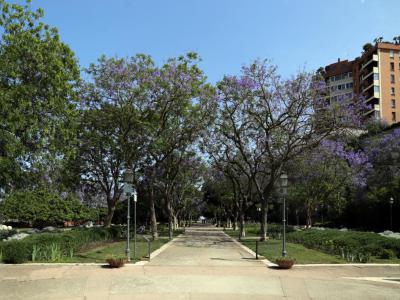
A collection of works of art not to be missed in the rooms of an elegant building, surrounded by the picturesque public gardens of Cagliari, a space where culture and nature live side by side. One of Cagliari’s most beautiful green areas stretches across a ridge of the Buoncammino hill: a sort of ‘hanging garden’, with a long, spectacular tree-lined avenue. At the end of the avenue, you will notice the elegant Neoclassical façade of the former royal munitions depot, which has accommodated the Municipal Art Gallery since 1933. The military building was destroyed by an explosion and was rebuilt in 1828 based on a design by military engineer Carlo Boyl. After a century of use as a barracks and a warehouse and after further modernisation works, it became a museum. After crossing the garden, before entering, you can admire the façade of the building, with limestone friezes and a tympanum with three statues carved in Carrara marble above it. ***PH***
The building, once home to the royal powder magazine, was built at the end of the 18th century; the neoclassical style façade, designed by Carlo Boyl of Putifigari, dates back to 1828. Renovated by the designer Ubaldo Badas, it became a Civic Museum in 1933. The Museum currently houses the Ingrao Collection, a permanent exhibition made up of the works of the greatest Italian masters of the twentieth century, from Umberto Boccioni to Giorgio Morandi, from Filippo De Pisis to Mario Mafai, and the sculptures of Francesco Ciusa.
A collection of works of art not to be missed in the rooms of an elegant building, surrounded by the picturesque public gardens of Cagliari, a space where culture and nature live side by side. One of Cagliari’s most beautiful green areas stretches across a ridge of the Buoncammino hill: a sort of ‘hanging garden’, with a long, spectacular tree-lined avenue. At the end of the avenue, you will notice the elegant Neoclassical façade of the former royal munitions depot, which has accommodated the Municipal Art Gallery since 1933. The military building was destroyed by an explosion and was rebuilt in 1828 based on a design by military engineer Carlo Boyl. After a century of use as a barracks and a warehouse and after further modernisation works, it became a museum. After crossing the garden, before entering, you can admire the façade of the building, with limestone friezes and a tympanum with three statues carved in Carrara marble above it. ***PH***
Want to visit this sight? Check out these Self-Guided Walking Tours in Cagliari. Alternatively, you can download the mobile app "GPSmyCity: Walks in 1K+ Cities" from Apple App Store or Google Play Store. The app turns your mobile device to a personal tour guide and it works offline, so no data plan is needed when traveling abroad.
Download The GPSmyCity App



Galleria Comunale D'Arte (Municipal Art Gallery of Cagliari) on Map
Sight Name: Galleria Comunale D'Arte (Municipal Art Gallery of Cagliari)
Sight Location: Cagliari, Italy (See walking tours in Cagliari)
Sight Type: Museum/Gallery
Sight Location: Cagliari, Italy (See walking tours in Cagliari)
Sight Type: Museum/Gallery
Nearby Sights

Walking Tours in Cagliari, Italy

Create Your Own Walk in Cagliari
Creating your own self-guided walk in Cagliari is easy and fun. Choose the city attractions that you want to see and a walk route map will be created just for you. You can even set your hotel as the start point of the walk.
Cagliari Introduction Walking Tour
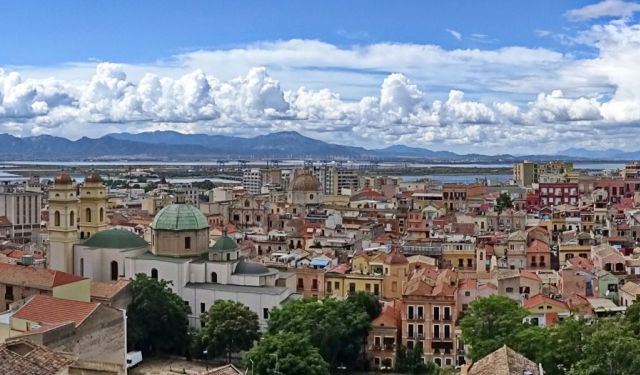
Welcome to Cagliari, Sardinia’s beating heart! Perched along the shimmering Mediterranean, this sun-soeaked city blends centuries-old history with modern charm. With stunning beaches, colorful lagoons, and lush greenery, it’s also a place where natural beauty meets cultural riches.
Cagliari’s story began long before our time. Around the 8th century BC, the Phoenicians founded Karaly as a... view more
Tour Duration: 2 Hours
Travel Distance: 2.9 Km or 1.8 Miles
Cagliari’s story began long before our time. Around the 8th century BC, the Phoenicians founded Karaly as a... view more
Tour Duration: 2 Hours
Travel Distance: 2.9 Km or 1.8 Miles