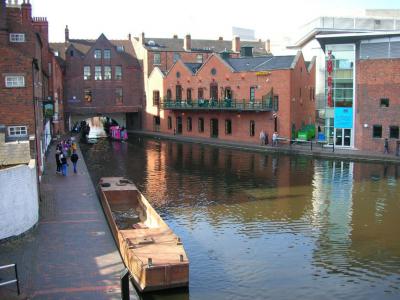


Gas Street Basin, Birmingham (must see)
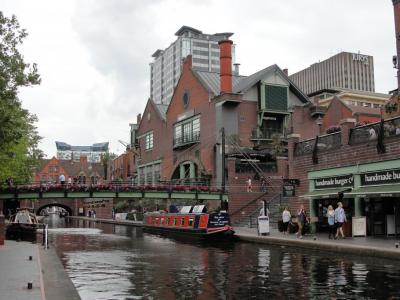
The squares, shops, crowds, and traffic of central Birmingham can eventually wear you out. If you want a quieter break without leaving the city center, head down to the canal towpath and walk toward Gas Street Basin. The atmosphere changes quickly: the traffic fades, the water opens up ahead, and restaurants and bars line the canal around the Basin.
You can also see Birmingham from the water. Trip boats and waterbuses operate along parts of the canal network, passing beneath bridges and between old warehouses, modern apartments, and regenerated industrial buildings. It is a very different view of the city from the busy streets above.
Gas Street Basin is an important meeting point in Birmingham's canal system. Here, the Worcester and Birmingham Canal joins the Birmingham Canal Navigations Main Line. The two waterways originally met at Worcester Bar, a solid barrier built in 1792. Its purpose was to stop the Worcester and Birmingham Canal Company from taking water from the Birmingham Canal Navigations.
For many years, boats could not pass directly from one canal to the other. Cargo had to be unloaded on one side of the barrier, carried across, and loaded onto another boat. In 1815, a narrow opening with a stop lock was finally created, allowing boats to move between the two canals while still controlling the flow of water.
If you want a longer walk, follow the canal west from Gas Street Basin toward Smethwick. The route takes you along sections of Birmingham's historic Old and New Main Lines, with former industrial sites, locks, bridges, and junctions along the way.
You can also see Birmingham from the water. Trip boats and waterbuses operate along parts of the canal network, passing beneath bridges and between old warehouses, modern apartments, and regenerated industrial buildings. It is a very different view of the city from the busy streets above.
Gas Street Basin is an important meeting point in Birmingham's canal system. Here, the Worcester and Birmingham Canal joins the Birmingham Canal Navigations Main Line. The two waterways originally met at Worcester Bar, a solid barrier built in 1792. Its purpose was to stop the Worcester and Birmingham Canal Company from taking water from the Birmingham Canal Navigations.
For many years, boats could not pass directly from one canal to the other. Cargo had to be unloaded on one side of the barrier, carried across, and loaded onto another boat. In 1815, a narrow opening with a stop lock was finally created, allowing boats to move between the two canals while still controlling the flow of water.
If you want a longer walk, follow the canal west from Gas Street Basin toward Smethwick. The route takes you along sections of Birmingham's historic Old and New Main Lines, with former industrial sites, locks, bridges, and junctions along the way.
Want to visit this sight? Check out these Self-Guided Walking Tours in Birmingham. Alternatively, you can download the mobile app "GPSmyCity: Walks in 1K+ Cities" from Apple App Store or Google Play Store. The app turns your mobile device to a personal tour guide and it works offline, so no data plan is needed when traveling abroad.
Download The GPSmyCity App



Gas Street Basin on Map
Sight Name: Gas Street Basin
Sight Location: Birmingham, England (See walking tours in Birmingham)
Sight Type: Attraction/Landmark
Guide(s) Containing This Sight:
Sight Location: Birmingham, England (See walking tours in Birmingham)
Sight Type: Attraction/Landmark
Guide(s) Containing This Sight:
Nearby Sights
Walking Tours in Birmingham, England
Create Your Own Walk in Birmingham
Creating your own self-guided walk in Birmingham is easy and fun. Choose the city attractions that you want to see and a walk route map will be created just for you. You can even set your hotel as the start point of the walk.
Birmingham Historical Buildings Tour
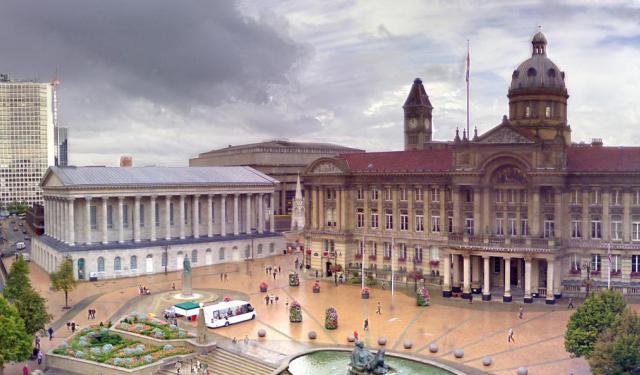
Although existent as a settlement since the early 7th century AD, Birmingham, UK is a relatively young city that has grown rapidly, as a result of the Industrial Revolution, from the 18th century onward. Thus, the local architecture is overwhelmingly a product of the 18th, 19th, and 20th centuries, with little survived from the earlier days.
Traces of the ancient settlement, dating back to... view more
Tour Duration: 2 Hours
Travel Distance: 4 Km or 2.5 Miles
Traces of the ancient settlement, dating back to... view more
Tour Duration: 2 Hours
Travel Distance: 4 Km or 2.5 Miles
Birmingham Introduction Walking Tour
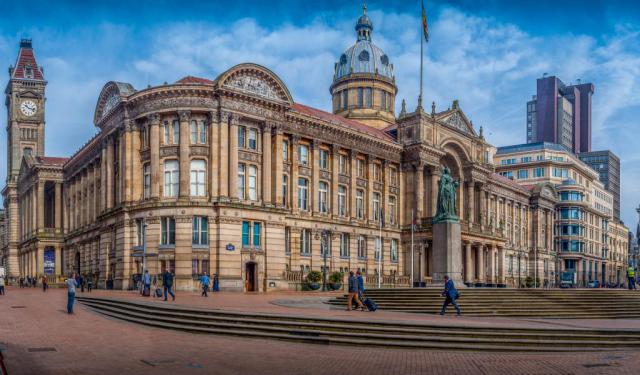
The name Birmingham derives from the Old English Beormingahām, meaning “the home or settlement of Beorma’s people.” The Beormingas were therefore the people or followers of someone called Beorma. Who exactly was Beorma? No one really knows. He may have been a local leader, an ancestor, or even a legendary figure. What is certain is that a small Anglo-Saxon settlement was established here... view more
Tour Duration: 2 Hours
Travel Distance: 3.2 Km or 2 Miles
Tour Duration: 2 Hours
Travel Distance: 3.2 Km or 2 Miles